 ID
ID IT
IT DE
DE ZH
ZH ES
ES FR
FR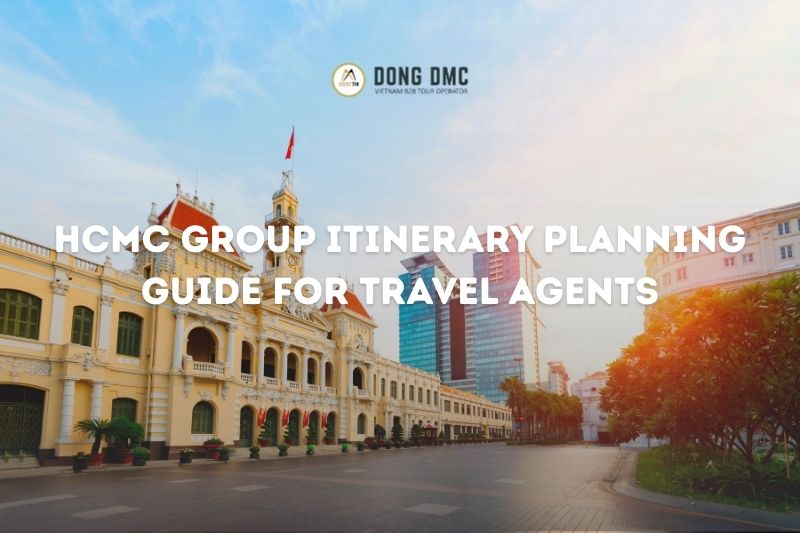
HCMC Group Itinerary Planning Guide for Travel Agents
Ho Chi Minh City groups itinerary planning is usually a race between guest expectations (must-see District 1 icons plus Cu Chi plus Mekong) and on-the-ground realities (traffic, heat, queues, boat capacities, and tight coach access). This guide is built for travel agents running 20-50 pax leisure groups who need rebrandable program flows, clear timing, and fewer operational surprises. Use it to choose the right 3-6 day structure, protect pacing, and brief clients with confident, logistics-backed decisions.
1. Planner context / market insight for Ho Chi Minh City groups itinerary planning
Typical first-time Vietnam group demand in Ho Chi Minh City follows a predictable pattern: a District 1 highlights cluster (the icons guests recognize) plus one signature day excursion (Cu Chi Tunnels or Mekong Delta). This pattern sells well for short-stay markets because it is easy to understand, easy to price, and feels complete in a limited number of nights. For agents, it also creates a clean program logic: one city day to orient, one day to go deeper, one full day out of town.
Operationally, Ho Chi Minh City behaves differently from other Vietnam hubs in ways that matter for 20-50 pax movement. Traffic congestion is the constant variable, and it is not only about drive time - it is about access. District 1 coach parking is limited, loading zones are time-restricted, and some stops are better treated as drop-and-walk loops rather than “park and visit.” Add the heat and crowd peaks after 10:00, and the same itinerary that works smoothly for small private parties can start slipping for a 40-50 pax coach if you do not protect buffers and pace.
From a booking standpoint, many experiences and private touring elements are built around a 24+ hour lead time expectation. For groups, “morning departures” become a product feature, not a preference: it protects comfort, reduces queue risk, and increases schedule reliability. This is also why “Cu Chi + Mekong in one day” is frequently perceived as rushed. It is often physically possible, but it compresses travel, meals, and on-site time into a long day where one delay can cascade into missed program value.
Agents can position the major choices in a client-friendly way without overpromising. Cu Chi is the stronger fit for history-led groups and for programs that need shorter transit. Mekong is the stronger fit for culture and scenery, especially when positioned as an overnight or a higher-value escape rather than a quick checklist. District 1 is the anchor for short stays, and it keeps add-ons flexible (food experiences, Cho Lon, museums) when you need to adjust for weather, group energy, or traffic.
2. Practical planning guidance (venues, itineraries, ideas, or tools relevant to the keyword)
2.1 “Core building blocks” (what nearly every group expects)
District 1 sightseeing is the core “highlights cluster” because it concentrates recognizable sites within a compact footprint. For groups, the packaging principle is simple: treat it as a controlled loop with planned regroup points, not as a series of independent stops that require repeated coach parking. Common cluster elements include Reunification Palace (often exterior-focused for speed and crowd control), the Notre Dame Cathedral area, Central Post Office, War Remnants Museum, and Ben Thanh Market. Depending on your group profile, you can add a Skydeck-style viewpoint as a time-controlled finale that reduces wandering risk.
Cu Chi Tunnels is the most common “one big excursion” from the city for groups who want a history-forward day. Transit is typically 1.5-2 hours each way, and morning is preferred for comfort and to reduce bus crowd peaks later in the day. For mixed groups, plan tunnel-optional routing from the beginning: the headline attraction can still be delivered while giving claustrophobic or heat-sensitive guests an alternative that preserves dignity and keeps the group moving.
Mekong Delta day touring is a different operational rhythm: approximately 2 hours each way to the My Tho and Ben Tre direction, with a mix of boat segments and on-land visits. Capacity constraints matter more here because sampans and smaller boats often operate in limited passenger ranges. Set the expectation correctly: a day trip is typically cultural sampling (canals, local production stops, fruit tasting, short performances) rather than a “deep Mekong” exploration. When a client expects “floating market intensity,” clarify early that the day structure is designed around the accessible routes from Ho Chi Minh City.
2.2 Ready-to-rebrand sample itineraries (agent-friendly program shells)
3-day HCMC group shell (20-50 pax):
Day 1: District 1 highlights plus orientation. Keep the day geographically tight and treat it as a controlled loop. If your group arrives the same day, make this a “soft start” with fewer timed entries and clear regroup points.
Day 2: Museum and temples plus a food experience in the evening. Use the daytime for indoor-heavy pacing (useful in heat or rain) and keep the evening as a guided experience to reduce decision fatigue and unmanaged wandering.
Day 3: Cu Chi or Mekong full day. Plan it as an 8-10 hour commitment including transit and lunch, with an honest return-time range so dinner planning is not disrupted.
4-5 day extension options to reduce “rush”: the simplest way to improve perceived quality is to add one lighter pacing day rather than stacking more drive time. Options include Cho Lon (Chinatown) as a geographically coherent half-day, an additional street food focus, a late-morning start day after a full excursion, or a second excursion day rather than compressing Cu Chi and Mekong together. This extension is also useful for groups with mixed ages because it creates recovery time and reduces heat exposure pressure.
6-day concept for agents needing more “texture”: consider positioning Mekong as an overnight or homestay-style experience (depending on your supplier design) rather than a single long day. This often sells as higher value because it reduces “windshield time per day” and creates a clearer narrative arc: city introduction, historic context, then a slower cultural experience outside the city.
Insert points for optional upgrades that agents can sell (comfort, speed, exclusivity) should be designed into the shell, not added last-minute. Typical upgrade levers include private van planning for sub-groups, earlier departures to protect experience quality, curated lunch venues that can seat groups efficiently, and small-group evening food tour alternatives (vehicle-based options rather than motorbikes if your group profile needs it). The goal is to give agents structured choices that improve execution, not “extras” that create operational complexity.
2.3 Program design notes for group satisfaction (what to brief before arrival)
Timing logic to share with clients: 7:00-8:00 departures protect comfort and quality because they reduce exposure to the hottest part of the day and typically avoid the most concentrated crowd windows. Afternoons carry higher risk of heavy heat and heavier crowds, which translates into slower movement, longer waits, and lower perceived value for guests who measure the day by “how much we got done.”
Pacing rules of thumb for Ho Chi Minh City groups itinerary planning: build 30-60 minute buffers between city stops when moving a large group, especially when you need to load, unload, regroup, and manage crossings. For excursion days, sell a “full day” honestly as 8-10 hours including transit. When expectations match reality, you reduce day-of friction and complaint risk.
Accessibility and guest preference planning should be explicit, not assumed. For Cu Chi, plan a tunnel-optional route from the start, brief on heat and tight spaces, and provide a clear alternative activity to prevent disengagement. For museums, brief on sensitive content and allow flexibility for guests who prefer to step out. For city touring, decide early whether the day is walking-led (more immersive, more heat exposure) or vehicle-led (more controlled, less flexible). Mixed-age groups often perform better with a hybrid loop: short walking clusters with planned shade and rest points.
3. Operational excellence & risk management (how to run it smoothly on the ground)
3.1 Group logistics specs (must-know numbers for 20-50 pax)
Capacity planning starts with realistic vehicle assumptions. Many common group tour formats operate with bus capacities in the 20-40 pax range per vehicle. For 40-50 pax groups, you should plan early whether to split into two vehicles. Operationally, splitting changes more than the transport line: it impacts guide ratios, timing control (two load/unload cycles), and regroup management at entrances and restrooms. If you split, define meeting points and time stamps clearly to prevent one vehicle “free-running” ahead of the other.
Mekong boat and sampan constraints often sit in the 20-30 pax per boat range, which means most 20-50 pax groups require staging. The operational approach that works best is sub-grouping with rotations: assign fixed sub-groups before arrival, sequence them through timed activity stations, and keep waiting guests shaded and hydrated. Avoid leaving “unassigned” time on the dock - it becomes a perception problem and increases wandering risk.
Venue throughput in District 1 is not usually a capacity limit, but a queue and access limit. Key attractions can handle 50+ pax, yet queues can spike 30-60 minutes in peak windows. For agents, the takeaway is not “avoid District 1,” but “avoid late-morning starts and protect buffers.” Where timed entry is possible through your operator structure, use it. Where it is not, design the loop so your group can re-sequence stops without losing the day.
3.2 Access, parking, and pickup plan (reduce day-of friction)
Hotel pickup boundaries must be confirmed early because it affects perceived service quality. Common pickup patterns focus on Districts 1, 3, 4, and 5 with defined pickup windows. Outer areas often require central meet points (the Saigon Opera House area is a common reference), which can create dissatisfaction if clients expected door-to-door coach pickup. Agents should brief this clearly in documents and pre-departure messages.
District 1 coach constraints require a deliberate approach. Parking is tight near Ben Thanh and Tao Dan, so plan to use short loading zones (often 15-20 minutes) and then switch to walking loops where feasible. This reduces the risk of unplanned delays from searching for parking and keeps your guide in control of the group flow.
Airport and arrival buffers should be built into day 1 logic. A practical planning standard is to allocate a buffer of 1 hour for immigration and traffic at Tan Son Nhat Airport before you attach any timed touring element. Also clarify upfront whether airport pickup is included in your group quote or quoted separately, so there is no day-of payment or scope confusion.
3.3 Timing playbook (operational schedule that protects the experience)
Morning-first operating standard: for Cu Chi and Mekong, the typical start windows are around 7:00-7:40, with expected return around 4:30-5:00 depending on traffic and routing. Lunch usually sits en route or within the excursion flow, and it is a critical control point for group satisfaction. If lunch is poorly timed or under-seated, the whole day feels “messy,” even if the sightseeing was strong.
Traffic-proofing the city day comes down to three habits: build 30-60 minute buffers between sites, avoid cross-city transfers mid-day, and cluster activities by geography. If you must cross the city, do it once and then stay within that zone. This reduces the chance that one unexpected jam disrupts multiple timed elements.
Change control is an execution discipline. Vehicle upgrades or switches typically require at least 24-hour notice, which means agents should lock decisions before the operational team is forced into last-minute rework. To reduce chaos, define when final passenger counts and rooming lists are considered “locked,” and use that lock point to confirm vehicles, pickup windows, guide assignments, and daily run sheets.
3.4 Risk register + contingencies (agent-facing, client-friendly)
Weather and seasonality: Ho Chi Minh City runs hot year-round, and rain is more likely in the June to November period. Tet (Lunar New Year) can introduce closures and traffic surges that change normal operating assumptions. For agents, the practical approach is to include a simple pre-trip advisory template that sets expectations: earlier starts, flexible sequencing, and the possibility of replacing outdoor-heavy segments with indoor alternatives if needed.
Safety and comfort: Cu Chi tunnels can be tight and hot, so manage claustrophobia and heat by briefing early, setting a no-pressure “skip” option, and ensuring guests can still participate meaningfully. For motorbike-based food experiences, consider client profile and provide a car or bus alternative when the group composition requires it. For canal and boat segments in Mekong, use clear risk messaging and recommend group travel insurance, especially for guests with mobility concerns or anxiety around water-based activities.
Plan B options when delays hit should be designed into the program, not invented on the day. Common swaps include moving to indoor museums in rain or peak heat, replacing Mekong with city-based experiences if transit becomes unreliable, or shortening District 1 stop time to protect an evening program (which is often where guest satisfaction spikes). A controlled shortening plan is usually better than a late return that triggers dinner issues and complaint escalation.
3.5 Tech-enabled coordination (only where it supports execution)
Agents should ask their DMC for operational tech that reduces friction rather than “nice-to-have” features. Practical items include digital vouchers, real-time driver and guide contact, group location updates during excursion days, and push notifications if pickup windows or regroup points change. These tools protect your reputation because they reduce uncertainty and allow you to communicate with confidence.
A simple workflow to reduce document chaos is to maintain one master itinerary (client-friendly) and one daily ops sheet (execution-focused). The ops sheet should include pickup windows, coach plate, guide name and phone, regroup points, and emergency contacts. This keeps the client version clean while ensuring your on-ground execution team is working from a single source of truth.
4. Partner success / case study ideas (where the planner shines, DMC supports)
4.1 “Win themes” agents can replicate (case-study-ready angles)
Case idea: 40-50 pax first-timers, 3 days. Operational theme: splitting vehicles plus earlier departures reduced queue exposure and improved on-time performance. How to frame it: show the operational logic (two-vehicle staging, defined regroup points, and protected time buffers) and how it prevented cascading delays on the city day and the excursion day.
Case idea: mixed-age group. Operational theme: tunnel-optional Cu Chi routing plus shaded pacing created higher satisfaction without cutting the headline attraction. How to frame it: the group still “did Cu Chi,” but participation was designed around comfort and choice, which reduced dropouts and reduced medical or anxiety incidents.
Case idea: Mekong day with boat capacity constraints. Operational theme: sub-group rotations plus timed activity stations prevented bottlenecks. How to frame it: clear sub-group assignments, staggered embarkation, and shade and hydration control while waiting, creating a smooth feel even when the physical capacity required splitting.
4.2 What to request from the DMC to protect your margin and reputation
Quote structure you can resell: request clarity on itemized vs packaged pricing, and insist on inclusions clarity (meals, guide language, water, entrance fees). Margin room often sits in controllable variables such as vehicle class, timing exclusivity (early starts, private pacing), and meal upgrades. The key is not “more inclusions,” but “clean scope,” so your branded offer is consistent and defensible.
Service-level expectations that prevent lost deals: ask for response-time commitments, a 24/7 operations line for in-trip support, and a pre-trip reconfirmation process. A practical operational habit is pickup reconfirmation shortly before the scheduled time so agents and clients are not guessing, especially when multiple hotels or sub-groups are involved.
Rebrand kit checklist: request editable itinerary PDFs, client-friendly FAQs that explain early starts, traffic buffers, and tunnel-optional policies, plus photo libraries that match the specific District 1, Cu Chi, and Mekong experiences being delivered. This reduces agent workload and ensures your client comms do not drift from the actual operating plan.
5. Optional: Agent checklists & templates (destination-travel-experience-guides)
5.1 Pre-quote checklist (fast, accurate pricing)
Inputs to collect before requesting pricing: pax count range, hotel districts (and whether pickup is multi-hotel), preferred start times, mobility notes, language needs, and whether you intend to split vehicles for 40-50 pax. These inputs prevent re-quoting cycles and reduce the risk that an operational constraint appears late in the sales process.
Add-on menu to standardize upsells: private vans (sub-group control), earlier departures (queue and heat protection), upgraded lunch (seating reliability), second guide (control for large groups), and an evening food experience (motorbike vs car depending on guest profile). A standardized menu helps agents protect margin without introducing operational ambiguity.
5.2 Operations checklist (day-by-day run sheet)
District 1 day checklist: confirm parking and loading approach, define a walking loop, set regroup points, build queue buffers, and plan heat breaks in shaded areas or indoor stops. Include a “shorten plan” (which stop can be reduced) if traffic consumes buffer time.
Cu Chi and Mekong day checklist: confirm departure window, plan rest stops, finalize boat grouping plan for Mekong, manage hydration, communicate return-time realism, and protect dinner timing back in the city by avoiding overcommitted evening add-ons on the same day.
5.3 Client-facing briefing notes (copy blocks agents can reuse)
Why we start early: “Ho Chi Minh City operates best in the morning. Early departures help us avoid peak heat and the busiest visitor windows, which means a more comfortable pace and less waiting.”
Traffic and buffers: “City traffic can be unpredictable, so we build buffer time between stops. This is intentional and helps protect the overall program rather than rushing each visit.”
Tunnel optional: “At Cu Chi, entering the tunnels is optional. Guests who prefer not to go inside can follow the guide for alternative viewing points and explanations and still get the full story of the site.”
Tet and rain season advisories: “During Tet holidays, some venues may adjust hours and traffic can be heavier. In the rainy season, we may resequence outdoor and indoor visits to keep the day comfortable and safe.”
6. FAQ ideas + CTA angle for
6.1 FAQ ideas (built from common agent questions)
Can we do Cu Chi and Mekong in one day with 40-50 pax? It can be possible as a long full-day format, but it is often perceived as rushed because both experiences require significant transit and have their own on-site sequencing needs. For 40-50 pax, the operational risk is higher: one delay can reduce meaningful time at the second stop. Best alternatives are to choose one as the signature day, or extend the program to add a second excursion day.
Where can a coach park in District 1? Parking is limited near key stops such as Ben Thanh and Tao Dan. The practical approach is to use short loading zones for drop-off and pick-up (time-controlled) and then operate a walking loop between clustered sites. This reduces time lost to searching for parking and keeps the group under guide control.
What time should we depart for Cu Chi or Mekong? A 7:00-8:00 departure window is the most reliable for groups because it reduces heat exposure and helps avoid the densest crowd periods. It also protects return timing, which matters for dinner planning and evening activities.
What if guests do not want to enter the tunnels? Build an optional routing plan: brief that tunnels are tight and warm, confirm it is not mandatory, and ensure the guide delivers value through alternative viewing points and interpretation. This prevents discomfort from turning into group-level dissatisfaction.
What lead time do you need for private group tours and vehicle changes? Common expectations are 24+ hours for private group tour confirmations and for vehicle upgrades or switches. To lock the plan cleanly, agents should provide hotel details, pickup windows, passenger counts, language requirements, and any mobility notes early, then confirm final numbers by an agreed lock point.
6.2 CTA angle (awareness-stage, agent-focused)
Offer: Request a rebrandable 3-6 day Ho Chi Minh City group itinerary plus an operations run sheet, with options for Cu Chi vs Mekong, designed for 20-50 pax.
Trust builder: Ask for a quote with clear inclusions and an execution-first coordination plan, with optional tech support (digital vouchers and real-time operations updates) to reduce agent risk.
If you need a working shell with net rates, route options, and day-by-day operating notes, you can request an itinerary and net rate quotation package for your group brief.