
 ID
ID IT
IT DE
DE ZH
ZH ES
ES FR
FRPrograms · MICE & corporate events
Vietnam MICE & Corporate Events: How Execution Works Under Real Conditions
How MICE and corporate event programs are planned and delivered in Vietnam — covering destination fit, event scale, movement flow, and on-site execution control.
Corporate meetings · Conference operations · Execution governance · Risk-aware planning
1. Definition
Vietnam MICE refers to the planning and execution of meetings, incentives, conferences, and corporate events under conditions where timing, venue readiness, movement control, and supplier coordination determine whether the program succeeds or fails.
In practice, Vietnam MICE is not defined by venue inventory alone. It is defined by how meetings, delegate flow, social functions, transport staging, and on-site decision-making are synchronized under real operating pressure.
Vietnam MICE at a Glance
Vietnam is recognized as one of Asia's leading MICE destinations, with Ho Chi Minh City named Asia's Leading MICE Destination at the World Travel Awards multiple times. The country combines competitive per-person costs ($120–$500+ per day depending on tier), world-class venue infrastructure, and a 1,650 km coastline that supports both urban conferences and beachfront incentive programs within a single itinerary.
Key industry bodies: Vietnam MICE Association (VMA) connects 100+ event organizers, hotels, and service providers. Vietnam National Authority of Tourism (VNAT) oversees national MICE strategy and manages the MICE Standard Checklist for service quality certification. Dong DMC operates within this framework and participates in VNAT roadshows as Buyers' Advisor.
Budgeting reference (2026 estimates, per person/day): Standard MICE: $120–$180 (4-star hotels, standard meeting rooms, group meals, coach transfers). Premium MICE: $200–$320 (5-star hotels, full AV/staging, themed gala dinners, private transfers). Executive MICE: $350–$500+ (luxury resorts, custom production, VIP multi-venue movement design).
2. What is Vietnam MICE?
+ Vietnam MICE is not a list of event services. It is an execution system where venues, arrivals, technical production, hotel flow, dining waves, and delegate movement must align within fixed time windows.
+ A conference program in Ho Chi Minh City, a ballroom-led gala in Da Nang, and a capital-city meeting in Hanoi may all look similar in proposal format, but each operates under different transport, venue, and timing constraints.
+ MICE programs do not fail because a venue is weak. They fail when the connections between venue, hotel, transport, and event timing are under-designed.
See structural context in Vietnam DMC and execution logic in Vietnam DMC Operations.
3. Why It Matters
Corporate programs in Vietnam are execution-sensitive. Fixed session start times, arrival windows, ballroom reset periods, meal release waves, and delegate movement must all be protected at the same time.
If arrivals are delayed → transport dispatch shifts → venue access timing compresses → plenary or gala sequencing becomes unstable → visible disruption appears in front of delegates.
Once these failures occur during live operations, recovery is limited. The event continues, but the program is absorbed as compromise rather than fully corrected.
For planners, this is not only operational inconvenience. It becomes reputational risk, because visible failure affects client trust, internal stakeholder confidence, and future program continuity.
Regional MICE Planning Windows
Weather and seasonal factors directly affect MICE program quality. Choose your destination based on the best weather windows to minimize disruption risk.
| Region | Best months | Avoid | Notes |
|---|---|---|---|
| Northern Vietnam (Hanoi, Halong Bay) | October–April | May–August (hot, rainy) | Cooler months ideal for formal conferences. Tet holiday (Jan/Feb) = limited availability. |
| Central Vietnam (Da Nang, Hoi An, Hue) | February–August | September–November (typhoon season) | Peak beach weather for incentive + meeting combos. Ariyana hosts events year-round (indoor). |
| Southern Vietnam (HCMC, Phu Quoc) | November–April | May–October (rainy season, manageable for indoor events) | HCMC indoor venues unaffected by rain. Phu Quoc best Nov–Mar for outdoor galas. |
4. Destination Fit Depends on Event Format
Best suited to business-led schedules, short corporate gatherings, city meetings, client events, and programs requiring dense hotel inventory with strong air access.
Better aligned with formal meetings, institutional tone, leadership gatherings, and conference programs that benefit from a capital-city context.
Often preferred for integrated meeting-plus-social formats, beachfront gala design, and programs needing resort atmosphere without losing operational structure.
Destination choice should follow event logic, not destination popularity. The right city is the one whose access, venue rhythm, and movement pattern match the structure of the event.
Vietnam MICE Venue Reference
Capacity, access time, and best-fit use for the venues most commonly used in B2B MICE programs. Numbers are based on standard configurations — actual setups vary by event design.
| Venue | City | Theater | Banquet | Airport transit | Best for |
|---|---|---|---|---|---|
| SECC (Convention Hall) | HCMC | 2,000 | 1,200 | 45 min from SGN | Large conferences, exhibitions, multi-day events |
| GEM Center | HCMC | 1,200 | 850 | 20 min from SGN | Gala dinners, award ceremonies, corporate launches |
| InterContinental Saigon (Grand Ballroom) | HCMC | 700 | 450 | 25 min from SGN | Hotel-based meetings with integrated accommodation |
| Sheraton Saigon (Grand Ballroom) | HCMC | 600 | 400 | 25 min from SGN | Corporate meetings, breakout-heavy programs |
| National Convention Center (NCC) | Hanoi | 3,500 | 1,000 | 40 min from HAN | Government-level conferences, large-scale plenary |
| JW Marriott Hanoi (Grand Ballroom) | Hanoi | 950 | 700 | 35 min from HAN | Premium corporate events, integrated hotel programs |
| Sheraton Hanoi (Grand Ballroom) | Hanoi | 500 | 350 | 40 min from HAN | Mid-size meetings, lakeside gala atmosphere |
| ARIYANA Convention Centre | Da Nang | 3,500 | 2,000 | 15 min from DAD | Large resort-integrated MICE, beachfront access |
| InterContinental Danang (Ballroom) | Da Nang | 500 | 300 | 30 min from DAD | Luxury incentive-MICE hybrids, intimate galas |
| Sheraton Grand Danang (Ballroom) | Da Nang | 600 | 400 | 15 min from DAD | Resort meetings with social evening integration |
Budget Planning Ranges for Vietnam MICE Programs
Budget conversations stall when planners have no frame of reference. The ranges below reflect B2B net pricing for standard MICE program structures. They are planning-grade estimates — actual quotations depend on dates, group size, venue choice, and program complexity.
All figures are per person per day, in USD, net to agency. Excludes international airfare and visa fees.
per person / day
- 4-star hotel, twin share
- Standard meeting room + basic AV
- Group meals (buffet or set menu)
- Coach transfers within city
- English-speaking guide/coordinator
per person / day
- 5-star hotel, twin or single
- Ballroom with full AV + staging
- Gala dinner with themed setup
- Private transfers + standby vehicle
- Dedicated ops coordinator on-site
per person / day
- Luxury resort or leading 5-star
- Custom stage, lighting, production
- Multi-venue program with movement design
- VIP transfers + backup fleet
- Full event team: ops lead, AV tech, F&B captain
What moves the price most: Hotel class and room block size account for 40–50% of total program cost. After that, AV/staging production and gala dinner complexity are the biggest variables. A 100-pax gala with basic setup and a 100-pax gala with custom staging, LED walls, and entertainment can differ by $8,000–$15,000 in production cost alone.
These ranges are intended to help planners set realistic expectations before requesting a formal quotation. For a program-specific budget breakdown, share your event brief:
Request budget estimateKey MICE Venues by Destination
Vietnam's venue infrastructure spans convention centers, luxury hotel ballrooms, resort event spaces, and unique outdoor settings. Below are the primary venues that support professional MICE programs at scale.
Ho Chi Minh City — Asia's Leading MICE Destination
| Venue | Capacity | Best for |
|---|---|---|
| Saigon Exhibition & Convention Centre (SECC) | 40,000 sqm exhibition space | Large-scale exhibitions, trade fairs, international conferences |
| GEM Center | 2,500 pax (banquet) / 4,000 pax (standing) | Gala dinners, award ceremonies, product launches |
| InterContinental Saigon — Grand Ballroom | 800 pax (banquet) | Corporate meetings, executive dinners, incentive galas |
| New World Saigon — Grand Ballroom | 700 pax (banquet) | Group conferences, incentive events, series groups |
| Park Hyatt Saigon | 250 pax (banquet) | Executive meetings, VIP dinners, intimate corporate events |
| Landmark 81 — Sky Event Spaces | Varies (multiple floors) | Iconic sky-high events, product launches, experiential venues |
Da Nang — Beach + Conference Integration
| Venue | Capacity | Best for |
|---|---|---|
| Ariyana Convention Centre (Furama-Ariyana Complex) | 2,500 pax — largest MICE facility in Vietnam | International conferences, large-scale incentives, government summits (hosted APEC 2017) |
| Sheraton Grand Danang Resort — Grand Ballroom | 1,000 pax (banquet) | Resort-based conferences, beachfront galas, incentive programs |
| InterContinental Danang Sun Peninsula Resort | 400 pax (banquet) + outdoor terraces | Premium executive retreats, VIP gala dinners, incentive reward events |
| Hyatt Regency Danang — Grand Ballroom | 600 pax (banquet) | Mid-large conferences, team-building + meeting programs |
Hanoi — Capital-City Institutional Presence
| Venue | Capacity | Best for |
|---|---|---|
| National Convention Center (NCC) | 3,500 pax (main hall) — hosted Vietnam MICE Expo | Government conferences, political forums, large-scale corporate events |
| JW Marriott Hotel Hanoi — Grand Ballroom | 950 pax (theatre) / 700 pax (banquet) | International conferences, executive meetings, diplomatic events |
| Sofitel Legend Metropole Hanoi | 250 pax (Le Metropole Ballroom) | Executive dinners, VIP meetings, heritage-setting events |
| InterContinental Hanoi Landmark72 | 500 pax (banquet) | Corporate conferences, skyline events, executive programs |
Phu Quoc — Incentive Island
| Venue | Capacity | Best for |
|---|---|---|
| JW Marriott Phu Quoc Emerald Bay — Ballroom | 600 pax (banquet) + outdoor event lawn | High-end incentives, gala dinners, beach team-building |
| Vinpearl Convention Center Phu Quoc | 1,500 pax | Large conferences, exhibitions, corporate summits |
| Regent Phu Quoc | 200 pax (banquet) + beach event space | Executive retreats, intimate incentive galas, celebration events |
Ops note: Venue selection should follow event format, not venue prestige alone. A 2,500-pax convention center creates different movement and logistics challenges than a 250-pax boutique hotel ballroom. Dong DMC site-inspects venues and provides planners with access logistics (coach staging, loading bay, setup/teardown windows) before confirmation. For hotel options beyond event venues, see Vietnam Luxury Hotel & Resort Partners.
5. Scale Changes Everything: Risk & Complexity in Vietnam MICE Programs
Operational complexity in Vietnam increases non-linearly as program size grows.
- Programs exceeding single-hotel room block or event capacity
- Groups distributed across multiple hotels
- Parallel airport arrivals within limited time windows
- Fixed-time plenary, conference, or gala commitments
- Event elements spread across more than one venue
- Arrival handling and welcome desk activation
- Urban traffic and coach dispatch timing
- Ballroom turnover and technical reset time
- Large-scale meal service and synchronized seating
- Weather exposure for outdoor functions
These risks are usually predictable. The issue is not whether they exist, but whether they are identified early enough to shape event design before commitments become fixed.
6. Event-Specific Proof: What Planners Usually Need Confirmed
Confidence in Vietnam as a MICE destination comes less from general destination appeal and more from proof that individual event components can be controlled reliably on the ground.
- Registration desk flow and delegate distribution
- Plenary start-time protection and speaker readiness
- Breakout room sequencing and movement between sessions
- AV, staging, interpretation, and backstage reset windows
- Coffee break and lunch release timing by wave
- Gala venue access, load-in, and reset timing
- Guest arrival sequencing from multiple hotels
- Table plan stability and VIP handling
- Show-call discipline across dinner and entertainment
- Weather fallback logic for outdoor functions
- Airport–hotel–venue movement without cascade delays
- Separate timing logic for delegates, staff, and suppliers
- Cross-checking between rooming, transport, and venue teams
- Escalation ownership during live delivery
- Brand-protected signage and guest-facing consistency
These are the details that reduce planner anxiety. When they are clarified early, Vietnam feels stable. When they remain vague, even strong destinations feel risky.
7. Operational Logic Behind Successful Vietnam MICE Programs
Successful MICE programs are built on execution logic rather than itinerary ambition.
- Arrival wave management
- Staggered movement design
- Venue and hotel capacity alignment
- Invisible buffer timing
- Single-point authority on site
- Structured escalation paths
These principles reduce compounding delays, protect event sequencing, preserve delegate experience, and make the program feel controlled even when multiple moving parts are active at the same time.
See system execution in Vietnam DMC Operations and group scaling logic in Vietnam Group Travel.
MICE Planning Timeline
Professional MICE planners typically follow an 8–18 month cycle. This timeline reflects how Dong DMC structures planning milestones for programs in Vietnam.
| Phase | Timeline | Key actions |
|---|---|---|
| Strategic scoping | 12–18 months out | Define objectives, target audience, group size, budget tier. Set KPIs (attendance, engagement, ROI). Select destination shortlist based on event format — not destination popularity. |
| Destination & DMC selection | 8–12 months out | Select destination and venue. Secure DMC partner for local permits, vendor liaison, and site inspection. Dong DMC provides virtual or in-person site inspection, venue capacity reports, and preliminary budget within 7 days of briefing. |
| Program design | 4–8 months out | Detailed program design: AV/staging specs, transport mapping, catering menus, entertainment, team-building modules. Run sheet draft with timing buffers. Hotel rooming block confirmed. |
| Pre-event execution | 1–3 months out | Finalize delegate registrations, secure e-visas for international attendees, confirm supplier contracts, conduct rehearsal walk-through for complex events. Dong DMC delivers final run sheet with contingency plans. |
| Live delivery | Event days | On-site ops commander (Dong DMC), real-time coordination with venue/hotel/transport, escalation protocol active, branded signage deployed, daily debrief with planner. |
| Post-event | 1–2 weeks after | Post-event report with incident log, satisfaction data, cost reconciliation, and recommendations for future programs. |
Fast-track option: For programs with compressed timelines (under 4 months), Dong DMC operates an accelerated planning track with priority venue holds, expedited supplier confirmation, and dedicated ops coordinator. Quote turnaround: under 60 minutes for MICE priority requests via Agent App.
8. When Each Decision Needs to Happen
Vietnam MICE programs fail when decisions are made in the wrong order. This timeline shows what needs to be locked — and when — based on how programs actually run on the ground.
- Define event type: conference, meeting, gala, incentive-with-MICE, or hybrid format
- Set group size range — this determines venue shortlist, hotel block feasibility, and coach allocation
- Choose destination based on event format, not popularity (HCMC for business-led, Da Nang for resort-integrated, Hanoi for institutional tone)
- Align budget envelope with program ambition — hotel class, venue tier, and F&B standards set the cost floor
- Request venue availability and hold dates for primary + backup options
- Secure preliminary room block at anchor hotel — peak season blocks disappear 4–5 months out
- Confirm venue can handle your technical requirements: AV, staging, breakout rooms, load-in access
- Sign venue contract with confirmed dates, room setup, reset windows, and cancellation terms
- Finalize hotel room block with rooming cut-off date, rate, and attrition clause
- Lock transport supplier: coach size, number of vehicles, staging locations, standby allocation
- Confirm DMC scope of work: what is controlled on-site vs. what the client or agency manages
- Engage AV and staging supplier — confirm equipment list, power requirements, and technical rehearsal slot
- Brief F&B team on meal format: seated dinner, buffet waves, coffee break timing, dietary requirements
- If outdoor elements exist (welcome reception, rooftop gala), define weather-fallback venue and decision trigger
- Map full movement flow: airport → hotel → venue → social events → hotel, with timing for every transfer
- Design arrival wave plan if delegates land on multiple flights — stagger meet-and-assist teams accordingly
- Build coach dispatch schedule with buffer time for HCMC/Hanoi urban traffic patterns
- Assign guide and escort roles for each movement segment
- Build run-of-show (minute-by-minute) for plenary sessions, gala dinner, and social functions
- Define ballroom reset windows between day sessions and evening events — minimum 90 minutes for full turnover
- Set meal release timing: wave 1, wave 2, VIP table, and dietary station flow
- Confirm registration desk layout, signage placement, and delegate kit distribution point
- Reconfirm every supplier: venue, hotel, transport, AV, F&B, entertainment, photographer
- Submit final rooming list to hotel — confirm room types, VIP upgrades, early check-in requests
- Finalize delegate name badges, table assignments, and seating plan for gala
- Distribute operational briefing document to all on-site team members
- Walk through the full program timeline and identify every point where a 30-minute delay would cascade
- Confirm backup venue or indoor fallback for any outdoor element
- Define escalation chain: who makes the call if weather, transport, or supplier issues arise on-site
- Pre-position backup transport (standby coach or van) for VIP movement flexibility
- Conduct venue site inspection with DMC ops lead, AV team, and hotel events manager together in the room
- Walk the full delegate journey: arrival point → registration → session room → break area → dining → exit
- Test all AV equipment, microphones, screen visibility from back row, and lighting cues
- Confirm signage placement, branding elements, and any client-specific visual requirements
- Hold ops briefing with full on-site team: guides, transport captain, hotel liaison, event coordinator
- Distribute contact sheet with every team member's mobile number and role
- Confirm airport meet-and-assist team deployment times for first and last arriving flights
- Final check: weather forecast review and go/no-go decision for outdoor elements
- DMC ops lead on-site 90 minutes before first delegate arrival
- Confirm registration desk is staffed, badges sorted, and delegate kits ready
- Monitor arrival flow and adjust coach dispatch in real-time if flights are delayed
- Maintain 15-minute check-in rhythm with venue, hotel, and transport teams throughout the day
- Single point of authority (DMC ops lead) for all real-time adjustments
- Weather call for outdoor elements: decision made by pre-agreed trigger time, not in the moment
- Escalation path clear: ops lead → DMC account manager → client contact, with defined response windows
- Post-event: transport staging begins 15 minutes before session end to avoid lobby congestion
This timeline adapts to your program's scale and complexity. Share your event brief and we will map the specific milestones for your dates, group size, and format.
Share your event brief View operations referenceGovernment MICE Incentive Policies (2026–2030)
Vietnam's municipal governments now back MICE arrivals with formal, documented support — moving beyond goodwill gestures into legislated policy. Ho Chi Minh City leads with the first MICE-support resolution in the country written into law. Da Nang runs the lowest qualifying thresholds in Vietnam. Both programmes reward the organising travel company, not the end traveller, and both are designed around the program shapes that large incentive and conference groups already take.
Ho Chi Minh City — Resolution 62/2025/NQ-HĐND (effective 20 Dec 2025 through 31 Dec 2030): The first MICE-support policy in Vietnam codified as legislation. Qualifying programmes need a minimum of 100 participants, at least 3 nights in Ho Chi Minh City, and a sightseeing component of at least 2 days. Support is delivered across four components — attraction entrance tickets (15–25%, capped at VND 20M), hall and meeting-room rental (15–30%, capped at VND 20M), a welcome art performance in traditional Vietnamese forms (20%, capped at VND 10M), and OCOP welcome gifts (capped at VND 1M) — with a combined ceiling of VND 51 million (~US$2,000) per group. Larger delegations draw the higher percentage in each band.
Da Nang — "Elevating Your MICE Experience" (2026 programme): Support is in-kind rather than cash: airport welcome, gifts, event-organising consultation, and media connection. The qualifying threshold is the lowest in Vietnam — 30 participants for international groups, 70 for domestic. The 2026 cycle adds business recognition (organiser name and logo on the city MICE portal with 6–12 months of free promotional placement) and a repeat-group track that designates returning programmes "Loyal MICE Partner" with experience vouchers and partner pricing. Da Nang maintains a dedicated MICE Promotion Centre within the city tourism department.
Phu Quoc advantage: 30-day visa-free entry for all international arrivals regardless of nationality eliminates visa friction for mixed-nationality incentive groups. Combined with the JW Marriott and Vinpearl Convention Center infrastructure, Phu Quoc is the preferred island-format incentive venue in Vietnam.
National e-visa: Available to citizens of all countries (90 days, multiple entry). Many nationalities also qualify for 14–45 day visa-free entry. Dong DMC coordinates visa documentation for mixed-nationality groups as a standard service. See the Vietnam Visa Group Ops Guide.
The planning reality: Against a six-figure MICE budget, the cash ceiling of VND 51 million is not a material cost lever. What the policies deliver is governmental prioritisation of the group — smoother on-ground facilitation, a documented reason the destination wants the programme, and a multi-year planning framework that holds to 2030. The threshold gap (30 international pax in Da Nang vs. 100 in Ho Chi Minh City) is itself a routing consideration for mid-size programmes. Dong DMC handles eligibility assessment, Vietnamese-language registration, and sequencing the support claim alongside venue, hotel, and movement holds.
Further reading: Vietnam's First Legislated MICE Incentive Policy: Resolution 62, Decoded →
9. How to Evaluate a Vietnam MICE Program
Test 1: Is destination fit matched to event type?
If destination selection is based only on popularity → high probability of routing or venue mismatch → operational friction appears during delivery.
Test 2: Is movement logic clearly designed?
If arrival waves, bus flow, and venue access are vague → high probability of delegate congestion → session timing becomes unstable.
Test 3: Is event timing protected?
If ballroom reset, meal release, or show-call timing is under-defined → high probability of visible program disruption.
Test 4: Is authority clear during live operations?
If decision ownership is fragmented → high probability of slow response → issues spread across multiple layers before correction begins.
Once these failures occur during live operations, correction is limited. The event may continue, but experience quality is reduced rather than fully restored.
For evaluation structure, see How to Choose a Vietnam DMC.
10. MICE Programs vs Incentive Travel in Vietnam
Although the terms are often grouped together, MICE and incentive travel do not solve the same planning problem.
MICE programs usually involve meetings, conferences, structured agendas, fixed-time sessions, and tighter operational control. Incentive travel is centered more on recognition value, destination appeal, emotional payoff, and shared reward experiences.
For reward-trip design and destination-led recognition programs, see our Vietnam Incentive Travel planning guide.
Vietnam MICE Trends 2026
Heritage + technology integration: Events like MICE EXPO 2025 (held at NCC Hanoi) highlighted digital transformation combined with cultural preservation as primary industry drivers. Planners are integrating AR/VR experiences, digital delegate engagement platforms, and live-stream hybrid components into traditional conference formats.
Green MICE: A growing shift toward sustainable event practices. Venues like Citadines Marina Ha Long and Grand Pioneers Cruise are pioneering eco-friendly event standards — carbon-neutral catering, zero single-use plastics, and waste diversion tracking. Dong DMC supports planners with sustainability reporting for events where ESG compliance is required.
Hybrid event capability: Major venues (SECC, Ariyana, NCC) now offer professional-grade hybrid event infrastructure — multi-camera livestreaming, virtual delegate platforms, and simultaneous interpretation feeds. This extends program reach beyond in-person attendance.
Incentive experience evolution: Corporate incentives in Vietnam are moving beyond sightseeing toward curated experiences — Michelin dining circuits, active outdoor modules (cycling, trekking, kayaking), and private yacht charters as gala alternatives. Da Nang's "Loyal MICE Partners" program for returning groups reflects this shift toward experiential incentive design.
AI-powered operations: Dong DMC integrates AI-assisted quoting, itinerary generation, and real-time pricing into MICE workflows via the Agent App — reducing quote turnaround to under 60 minutes for MICE priority requests.
Corporate Retreats
For work-focused offsites — leadership, strategy, and team retreats that blend private meeting space, facilitated team building, wellness, and nature settings rather than gala-led reward.
🧭 Vietnam Corporate Retreat Planning
Leadership, strategy, and team offsites across Da Lat, Phu Quoc, Hoi An, and near-hub nature. 20–300 pax, exclusive-use venues, facilitated sessions.
View corporate retreats →MICE Program Collection
The following program directions show how Vietnam MICE planning is applied in practice, where venue logic, delegate flow, timing protection, and event sequencing are translated into real program structures.
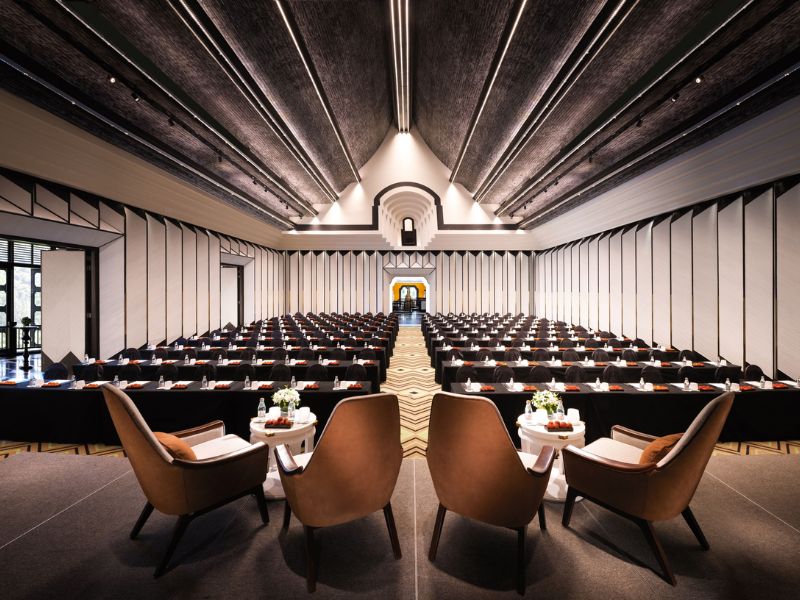
City Conference Format
Conference-led • Urban access • Meeting density
Suitable for city-based meetings, plenary sessions, breakout structures, and hosted corporate schedules with stronger venue dependence.
View MICE examples →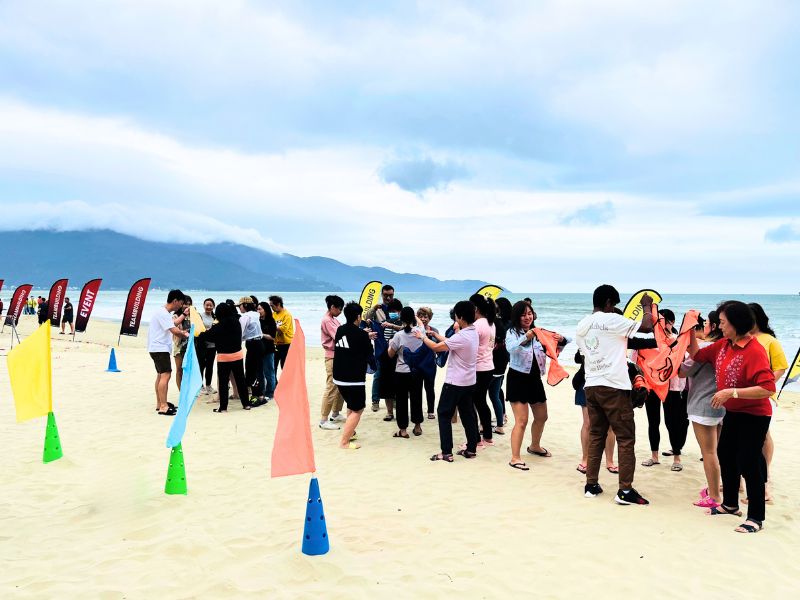
Resort-Based Meeting Program
Meeting + social flow • Resort venue • Gala integration
Best for groups combining structured sessions with social evenings, beachside events, or integrated gala components.
View MICE examples →
Multi-Venue Corporate Format
Parallel movement • Venue sequencing • High coordination
Designed for programs requiring more than one venue, multiple hotels, or complex guest movement under fixed event timing.
View MICE examples →Once the planning logic is clear, these itinerary examples help translate event structure, venue fit, and delegate movement into real MICE program directions. See the Vietnam MICE Program Collection.
11. Related Operational References
- Vietnam DMC
- Vietnam DMC Operations
- Vietnam Group Travel
- Vietnam Incentive Travel
- Vietnam Corporate Retreat Planning — leadership, strategy, and team offsites
- How to Choose a Vietnam DMC
- Operational Case Studies
- Vietnam MICE Venue Capacity Guide
- Vietnam MICE Planning Timeline
- Vietnam MICE Budget Ranges
- MICE vs Incentive Travel
Last updated: April 2026. For corrections or operational clarifications, contact ops@dongdmc.com.
Frequently Asked Questions
Questions planners and agencies ask most often when evaluating Vietnam for MICE programs.
Does Vietnam offer government incentives for international MICE groups?
Yes. Ho Chi Minh City provides financial support of up to VND 51 million per group under Resolution 62 (2025–2030) for groups of 100+ staying 3+ nights, and Da Nang offers in-kind support for international groups from 30 participants under its 2026 promotion program.
Who receives the MICE support — the agent or the client?
The organizing travel company or event organizer is the beneficiary in both programs. The agent controls how, or whether, the value is passed through to the end client.
Is airport fast-track or immigration priority part of the policy?
No. Resolution 62 is a defined financial-support package covering tickets, venue rental, welcome performance, and gifts. Immigration or airport-priority handling is arranged separately on a per-program basis and is not a codified entitlement.
FAQ
What is the largest MICE venue in Vietnam?
Ariyana Convention Centre in Da Nang is the largest MICE facility in Vietnam, accommodating up to 2,500 guests. It hosted APEC 2017 and is part of the Furama-Ariyana tourism complex with integrated resort accommodation. In Ho Chi Minh City, SECC offers 40,000 sqm of exhibition space for large-scale trade fairs.
How much does a MICE event in Vietnam cost per person?
Standard MICE (4-star): $120–$180 per person/day. Premium MICE (5-star): $200–$320. Executive MICE (luxury resort): $350–$500+. These include hotel, venue, meals, transport, and basic AV. Custom production, gala entertainment, and VIP handling are additional.
What is the best city for a corporate conference in Vietnam?
Ho Chi Minh City for large-scale exhibitions and international business events (SECC, GEM Center). Da Nang for resort-integrated conferences with beach incentive components (Ariyana, Sheraton). Hanoi for formal government and institutional conferences (NCC, JW Marriott). Phu Quoc for exclusive corporate retreats and outdoor galas (JW Marriott, Vinpearl).
What is the best time of year for MICE events in Vietnam?
Northern Vietnam: October–April. Central Vietnam: February–August. Southern Vietnam: November–April. Indoor venues in HCMC operate year-round. Avoid Central Vietnam's typhoon season (Sep–Nov) and Tet holiday period (Jan/Feb) when supplier availability is limited.
How far in advance should I plan a MICE event in Vietnam?
Large conferences (500+ pax): 12–18 months. Mid-size events (100–500 pax): 8–12 months. Small executive meetings (under 100 pax): 4–8 months. Dong DMC also offers fast-track planning for compressed timelines under 4 months with priority venue holds and dedicated ops coordinator.
Does Vietnam offer government incentives for MICE events?
Yes. Da Nang provides airport welcome ceremonies for groups of 500+ and convention hall discounts. HCMC offers financial support for groups of 100+ staying 3+ nights. Phu Quoc has a 30-day visa-free policy for all nationalities. Dong DMC assists with policy verification and application as part of planning.
Can Dong DMC handle hybrid and virtual event components?
Yes. Major venues (SECC, Ariyana, NCC) now offer multi-camera livestreaming, virtual delegate platforms, and simultaneous interpretation feeds. Dong DMC coordinates AV partners for hybrid setups and provides technical run sheets for combined in-person and virtual programs.
What makes Dong DMC different from other Vietnam MICE DMCs?
Pure B2B model (no B2C channel conflict), under-60-minute MICE quote turnaround, 50–70 Group programs a month, brand-protected execution (your brand at every touchpoint), single ops coordinator from planning through post-event reporting, and AI-powered quoting via the Agent App. See How We Work With Partners.