


Vietnam Airlines Launches Direct Vietnam–Netherlands Flights: Operational Context for Travel Agencies
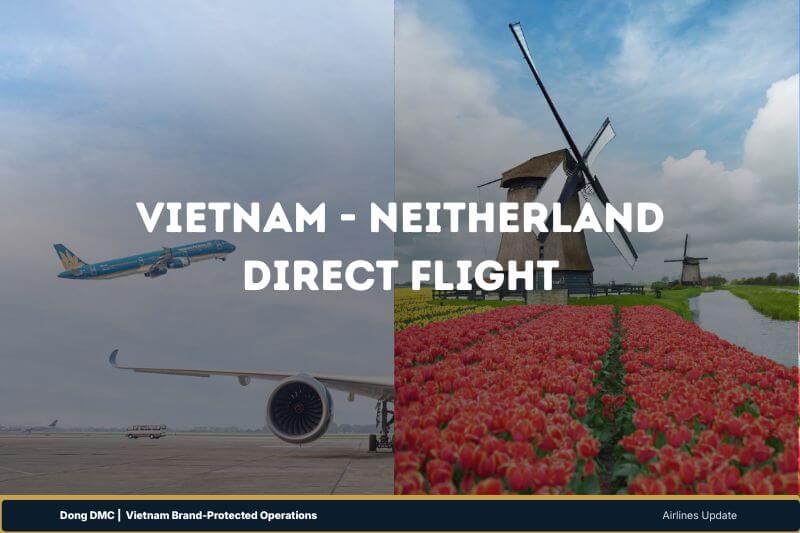
Vietnam Airlines will officially operate the first nonstop air route between Vietnam and the Netherlands starting 16 June 2026, with three round-trip flights per week on Tuesdays, Thursdays, and Saturdays, using wide-body Airbus A350 aircraft. The flight schedule is designed to support long-haul travelers from Europe to Vietnam, while maintaining smooth onward connections to Vietnam’s domestic network and key regional routes across Asia. This includes major leisure and economic destinations such as Ho Chi Minh City, Da Nang, Nha Trang, Phu Quoc, and other large cities. For Dutch and EU travel agencies, these technical details matter: aircraft type, frequency, and connection logic directly influence group feasibility, arrival pacing, and operational stability on the ground.
For travel professionals
Practical implications for adjusting team speed, airport handling, allocation planning, and partner accountability.
This is not a press summary.
We convert route information into planning signals that are ready for agencies.
Preferred risk analysis framework
We point out potential problems—before they affect customers.
Class of responsibility
Clearly define the boundaries between flight routing, destination management services (DMC), and agent commitments.
Vietnam Airlines launches direct flights to the Netherlands — Why should travel agents care?
Vietnam Airlines has just launched its first direct flight connecting Vietnam and the Netherlands. For Dutch and EU travel companies in general, this is not only noteworthy news but also changes the "level of difficulty" in selling and operating Vietnam tour packages, especially for long-haul groups, scheduled flights, and corporate travel.
Below is a practical explanation: what improvements have been made, what new limitations have emerged, and how agencies can collaborate with DMC B2B Vietnam to maintain the stability of field operations during peak season.
Source note
This article is based on news reports about the deployment of the flight route and has been compiled into a planning guide for agencies.
What opportunities does the direct flight route between Vietnam and the Netherlands open up for Dutch and EU travel companies?
1) Minimize difficulties in planning routes for Vietnam tour packages.
Direct flights reduce the complexity of connecting flights for first-time visitors to Vietnam, premium class passengers, and senior citizens. Fewer layovers also reduce the risk of missing flights – one of the most common causes of repeated travel disruptions.
2) Higher feasibility for event planning and team operation.
Having direct long-haul flights improves predictability for group tours, seating allocation strategies, and guide/coach schedules. This is especially important during peak seasons in Vietnam when accommodation is scarce and travel time becomes less flexible.
3) A clearer profile for MICE & business travel.
Business delegations will benefit from a more concentrated and predictable arrival schedule: arranging airport reception, quick coordination, and logistics for the first night become easier with fewer uncertainties.
Operational implications: Practical changes in Vietnam
Direct flights often alter the operational profile of passenger arrivals: passengers are more likely to arrive fatigued after a long flight, and the pace of the first day becomes a greater determinant of satisfaction. For agents, the biggest improvement isn't speed but predictability throughout the entire process of airport handling, transportation transfers, and hotel check-in coordination.
- Adjust the pace upon arrival: designing a schedule can minimize overload on the first day and reduce the likelihood of complaints.
- Airport management: minimizing connectivity variables improves the reliability of receiving guest groups.
- Rotating coaches/instructors: consistent arrival times help ensure staffing stability during peak hours.
- Design contingency plans: clearer backup logic for bad weather, late arrivals, and peak season congestion.
Clear boundaries (who owns what)
- Airline: flight schedules, baggage regulations, incident resolution policies.
- DMC: Airport services, transportation coordination, hotel/guide bookings, on-site incident handling.
- Company: setting customer expectations, product commitments, preparing documentation.
Why is this route important for collaboration between airlines and destination management companies (and how do agents benefit)?
1) More stable demand signals for group order processing in Vietnam.
Direct connectivity improves the ability to forecast visitor traffic. With clearer demand signals, partners can plan hotel allocation, transportation capacity, and contract with suppliers with less last-minute disruption.
2) Better operational coordination across the entire “reception chain”
When flight schedules change, the ground services chain must adapt: deploying airport staff during peak hours, prioritizing lanes, arranging buses, and preparing hotels for the first night. A destination management company (DMC) helps translate these route-level changes into smooth operations.
What does this look like in reality?
- Design a reception area that is group-friendly and includes contingency time.
- Standard Operating Procedures (SOPs) for airport handling of long-haul flights
- Coordinate the hotel check-in procedure for early arriving guests.
- The procedure for escalating flight disruptions has been clearly defined.
- Develop a traffic congestion response plan for peak season (route + time).
- Clearly define responsibilities to minimize blame-shifting.
The role of a B2B destination management company in Vietnam in creating value for agents based in the Netherlands.
For travel companies selling Vietnam tours from the Netherlands and other European countries, the biggest operational risk is not “finding hotels” but rather the quality of the delivery throughout the service chain: airport → transportation → hotel → first day's program. The role of a destination management company (DMC) in Vietnam is to minimize volatility and protect the travel company's promise through operational controls and contingency planning.
Dong DMC's approach (prioritizing self-confidence)
- Risk mapping: identifying typical failure points early on (peak hour congestion, shortened response times, supplier bottlenecks).
- Limitations and accountability: clearly define what is guaranteed, what is conditional, and what requires agency confirmation.
- Operational stability: standardized airport operating procedures, phased transportation plans, and contingency systems for schedule changes.
Agency checklist: How to use direct Vietnam-Netherlands flights in program design
Suitable for groups and entertainment events.
- Design a more relaxed and peaceful period on the first day (a time to reduce fatigue upon arrival).
- Confirm hotel availability during peak season and check-in strategy.
- Plan realistic bus routes and calculate traffic buffer zones within the city.
- Define the phrase "what happens if a flight is delayed" in writing.
Suitable for MICE & business trips.
- Adjust the flight configuration to match the event timing and established time slots.
- Coordinate passenger handling capacity at the airport (fast lanes, assembly areas)
- Finalize contracts with "key suppliers" earlier (audiovisual equipment, venue, transportation).
- Use backup routing options to handle traffic congestion during peak hours.
Do you need a low-risk investment program structure for the Dutch market in Vietnam?
Please share your planned itinerary, group information, and travel timeframe. We will send back a risk-priority planning note (arrival speed, activity limits, and contingency assumptions) to ensure your proposal is deemed safe for approval.