 ID
ID IT
IT DE
DE ZH
ZH ES
ES FR
FR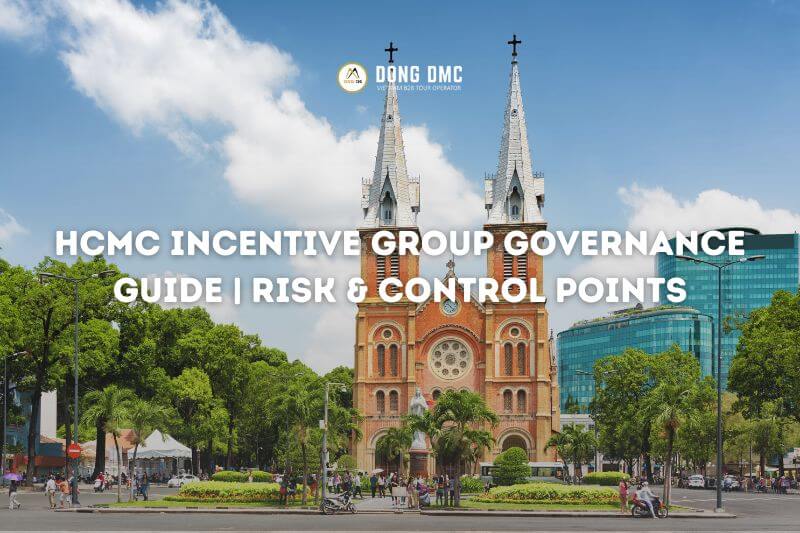
HCMC Incentive Group Governance: Risk & Control Points
Ho Chi Minh City groups itinerary planning: governance-led framework for incentive programs
Designing and delivering multi-supplier programs in Vietnam requires explicit governance-especially where the end client’s duty of care intersects with agency contracting and on-the-ground execution. This authority framework for Ho Chi Minh City groups itinerary planning clarifies who owns which responsibilities (client, travel agency, DMC, and suppliers), where failures typically occur, and what control points protect program continuity. It is structured to help travel professionals define boundaries early, document decisions, and set escalation protocols that stand up to internal audit, participant expectations, and local regulatory realities.
1. Context and relevance for Ho Chi Minh City groups itinerary planning
Why HCMC is operationally “high-dependency”
Ho Chi Minh City group programs tend to be high-dependency because a typical itinerary must synchronize dense urban movement with long day-trip corridors while still respecting fixed venue hours and supplier capacity. In practice, a single delay can cascade across multiple suppliers because the program is built on timing dependencies rather than independent, stand-alone services.
Common structural drivers include:
- Dense urban transfers within the core districts where traffic variability affects meeting times, museum entry, and meal seatings.
- Long day-trip corridors such as Cu Chi and Mekong where late departures compress activity time and increase fatigue exposure.
- Fixed opening hours, including venue lunch breaks, that create “hard stops” in the operating day.
- Group-size constraints that force split operations (multiple coaches, guide ratios, split dining seatings) at defined thresholds.

What changes for group vs. FIT programs
For group programs, operational feasibility is less about “what is interesting” and more about “what can be delivered predictably at a defined scale.” Compared to FIT, group delivery typically adds formal control points and capacity planning requirements, including:
- Capacity blocks (hotel room blocks, allocated coach capacity, reserved dining seatings, reserved show seats).
- Guide ratios and the need for structured group control (headcounts, regroup points, timeboxed movement).
- Coach access and positioning (drop-off and pick-up feasibility, staging points, limitations near venues).
- Queue/entry management (pre-notice to venues, timed entry where available, group ticketing discipline).
- Meal seatings and service pacing (private room capacity, split seating strategy, dietary labeling discipline).
Why governance matters specifically to travel professionals
In an incentive environment, governance is the mechanism that allows travel professionals to protect the incentive buyer’s duty-of-care outcomes without overstepping contractual roles. Clarity on “who owns what” is not administrative overhead-it is the basis for lawful, auditable delivery when disruptions occur.
Governance reduces ambiguity on “who fixes what” by pre-defining:
- Decision authority during incidents (immediate operational response vs. commercial re-approval).
- Escalation thresholds (what must be elevated to the travel agency and to the incentive buyer).
- Documentation standards (confirmations, logs, and sign-offs that support refunds, claims, and internal audit).
Typical friction points that create avoidable risk
Avoidable risk commonly appears where itinerary logic relies on informal assumptions rather than explicit dependencies.
- Timing dependencies across suppliers - hotel check-in alignment with arrivals, attraction time windows, transport cycles, and meal service capacity.
- Documentation gaps - missing written confirmations, unclear cancellation windows, incomplete rooming lists, and untracked decision changes that later undermine refunds, claims, or approvals.
Decision outcomes this section supports
This context is intended to support buyer-side and agency-side decisions that reduce downstream friction:
- Clear scope definition for RFQs and statements of work (SOWs), including what is assumed vs. explicitly included.
- Consistent client-facing explanations of constraints, buffers, and re-approval triggers to reduce “surprise decisions” on-site.
2. Roles, scope, and structural considerations
Definitions used in group program governance (keep consistent across contracts and briefing packs)
Use consistent definitions across the RFQ, SOW, confirmations, and briefing pack. The same term should not imply different authority in different documents.
- Incentive buyer (end client) - The organization commissioning the reward program; holds ultimate duty-of-care responsibility for participant safety and experience delivery.
- Travel agency / incentive house - The intermediary designing the program, managing the RFQ process, and coordinating with local operators; typically acts as primary liaison and may be the contract holder.
- DMC - The local operator responsible for ground logistics, supplier relationships, permits, and on-site execution.
- Suppliers - Hotels, transport companies, venues, restaurants, and activity operators delivering specific services under local regulations and licensing.
- Specialized tour operators / activity providers - Suppliers contracted for defined experiences (for example, day trips and performances) that often run on fixed schedules and capacity rules.
Boundary-setting: what each actor owns by default (industry standard expectations)
These are typical responsibility boundaries used in multi-party travel delivery. They should be adapted to the contracting model, but not left implicit.
- Program intent and participant communications (buyer/agency) - Objectives, success criteria, audience profile, participant-facing communications, and final approvals for material changes.
- Local feasibility, permits, supplier access, and on-site execution (DMC) - Ground delivery plan, supplier coordination, local compliance artifacts collection, and real-time operations management.
- Licensed delivery of the specific service (supplier/operator) - Execution of the contracted service to specification and within the supplier’s licensed scope and venue rules.
Responsibility ownership map (conceptual, not execution detail)
Three “owners” matter in governance, and they can differ by workstream:
- Contract holder - The entity holding the commercial agreement(s) with the local operator and/or suppliers.
- Execution owner - The party responsible for coordinating delivery on the ground (including supplier sequencing and issue resolution).
- Duty-of-care owner - The party ultimately accountable for participant welfare and escalation decisions that affect participant safety and program integrity.
When these roles are not explicitly separated, disruption handling often becomes delayed because parties debate authority rather than executing a pre-agreed response path.
Scope control for “what is included” in HCMC ground programs
Scope control is the primary tool for reducing disputes during delivery. For Ho Chi Minh City group programs, clarify inclusions and decision rights across these categories:
Hotels (room blocks, rooming lists, accessibility requests)
- Room block scope and the format of the final rooming list submission.
- Late arrival rules and room hold policy.
- Accessibility, special requests, and the cut-off date for acceptance.
- Handling rules for rooming changes after confirmation (including re-approval triggers if inventory changes).
Transport (licensed operators, backup capacity expectations)
- Licensed operator requirement and driver credential expectations.
- Coach capacity assumptions and when additional vehicles are required.
- Backup capacity expectations for critical days and corridors.
- Staging and positioning assumptions (pick-up windows, regroup discipline, luggage handling).
Activities (museums, performances, day trips, dining events)
- Fixed schedule items vs. flexible items and their cancellation windows.
- Group entry approach (advance notice, group ticketing, timed entry where applicable).
- Dining seating model (single seating vs. split seating) and service pacing expectations.
- Accessibility constraints and alternative options when required.
Compliance artifacts (licenses, guide certification, food safety where applicable)
- Which licenses/certifications must be provided prior to final confirmation.
- Who stores the copies for audit (typically the travel agency briefing pack, populated by DMC records).
- How exceptions are handled if documentation is incomplete (for example, substitution requirement or buyer re-approval).
Structural considerations that affect feasibility and approvals (use main keyword naturally)
In Ho Chi Minh City groups itinerary planning, feasibility is often determined by scale and timing rather than distance alone. The following structural considerations should be treated as governance inputs because they change approval requirements, supplier selection, and contingency design.
Group size bands and when split operations become necessary (coaches, guides, restaurants, venues)
As group size increases, the program typically shifts from “single-thread delivery” to “multi-thread delivery” (multiple moving parts operating in parallel). This affects:
- Coaches and convoy timing (multiple vehicles must maintain consistent sequencing).
- Guide coverage (multiple guides required to prevent participant fragmentation and to maintain safe crossing/regrouping discipline).
- Dining operations (split seating, set menus, pre-assigned seating, dietary labeling).
- Venue entry management (staggered entry, pre-issued tickets, group headcount controls).
Seasonality framing (dry vs. monsoon) as a governance input, not a sales talking point
Seasonality should be framed in risk terms: cancellation likelihood, rerouting probability, and indoor alternative availability. In wet months, define weather policies and alternative plans in writing rather than relying on informal “we will adjust” language.
Fixed-schedule attractions and their impact on itinerary governance
Fixed-schedule items (for example, set performance times and day-trip departure windows) are governance anchors. When these anchors are moved, multiple suppliers may need re-confirmation. Therefore, fixed items should carry explicit rules for:
- Booking lead time and reconfirmation cadence.
- Cancellation windows and substitution rules.
- Decision authority for rescheduling vs. replacing with alternatives.
3. Risk ownership and control points
Where failures typically occur in HCMC group programs (failure modes)
Failure modes should be discussed in a governance lens: what type of failure, who is positioned to prevent it, and what documentation supports remedy or escalation.
- Capacity shortfalls - attractions, coaches, guides, restaurants, and hotel room inventory not matching the confirmed group specification.
- Timing collapse - traffic variability, late arrivals, long transfers, venue operating hours and lunch breaks compressing the itinerary to an undeliverable sequence.
- Compliance or credential gaps - missing or invalid operator licensing, driver/guide credentials, venue rules not met, or insurance alignment not confirmed.
- Communication breakdown - unclear escalation authority, conflicting instructions to participants, and no single “current version” of the itinerary.
Risk ownership model by disruption category (governance lens)
The purpose of a risk ownership model is not to assign blame; it is to reduce decision latency during disruptions by pre-defining who decides, who executes, and who documents.
Flight disruption
Typical ownership pattern: buyer-owned booking risk; agency contingency planning; DMC ground adjustment.
Governance implications include: participant flight data cut-off, hotel late check-in policy clarity, and Day 1 “fixed vs. flexible” classification so that on-site decisions can be made without re-negotiating scope.
Hotel overbooking/rooming mismatch
Typical ownership pattern: DMC supplier accountability; agency contract oversight; buyer communications approvals when the change is participant-visible.
Governance implications include: final rooming list submission deadlines, written inventory confirmations, and a pre-agreed fallback model (same district or equivalent category) with defined approval triggers.
Medical incident
Typical ownership pattern: DMC immediate response; agency escalation/communications; buyer duty-of-care and insurance coordination.
Governance implications include: consent-aware handling of participant data, notification timeline expectations, and a clear split between operational actions (transport to clinic/hospital) and commercial decisions (insurance coordination, program modification approvals).
Transport disruption
Typical ownership pattern: DMC transport supplier management; agency schedule trade-offs; suppliers re-slot decisions.
Governance implications include: backup transport activation rules, maximum tolerable delay thresholds before itinerary substitution, and documented flexibility windows with affected venues/activities.
Weather disruption
Typical ownership pattern: activity supplier site access decisions; DMC alternatives; agency participant updates.
Governance implications include: written weather cancellation policies, documented meteorological basis where needed, and pre-approved indoor alternatives to reduce buyer approval latency.
Supplier no-show
Typical ownership pattern: DMC accountability and remedy; agency continuity messaging; buyer scope decisions when impact is material.
Governance implications include: staged reconfirmation cadence, contractual penalty clauses, and a backup supplier roster for critical path items.
Preventive control points (what must exist before travel to reduce exposure)
Preventive control points convert “best effort” delivery into auditable operational discipline. For group programs, the following are commonly defensible controls:
Written confirmations at staged checkpoints (e.g., initial + reconfirmation cadence)
A staged confirmation model reduces late-stage surprises by requiring written reconfirmation as the operating date approaches. The cadence is typically tighter for critical path items (hotel inventory, transport, fixed schedule activities) than for flexible items.
Backup supplier strategy for “critical path” items (hotel/transport/key activities)
Backup strategy should be documented as a governance feature, not an informal assumption. Define:
- Which items are “critical path” (if they fail, the day fails).
- Whether backups are pre-contracted or identified as priority alternatives.
- Activation rules (who can trigger, what cost thresholds require buyer approval).
Change-control rules tied to thresholds (participant count shifts, hotel/transport substitutions, scope/cost changes)
Change-control rules protect both client governance and supplier feasibility. Common threshold categories include:
- Participant count shifts beyond a defined percentage that impact room blocks, vehicle count, and guide coverage.
- Hotel or transport substitutions (treated as critical changes due to duty-of-care, reliability, and participant impact).
- Scope or cost changes requiring documented re-approval.
Audit trail essentials: signed confirmations, decision logs, incident logs, and retention expectations
An audit trail is not only for dispute protection; it is the mechanism by which procurement, finance, and risk teams can validate decisions. Standard elements include signed confirmations, decision logs, incident logs, and defined retention periods.
Escalation logic (who can approve what, and when)
Effective escalation separates immediate response authority from commercial re-approval authority. Without this separation, on-site teams hesitate and delays compound.
Immediate response authority on-site vs. commercial re-approval authority
Immediate response authority typically covers safety actions and continuity actions that keep participants stable (for example, rerouting, temporary holds, moving to shelter, arranging medical transport). Commercial re-approval authority typically covers changes that materially alter cost, scope, key suppliers, or dates.
Thresholds that trigger buyer re-approval (scope/cost/date/hotel/critical supplier changes)
Define thresholds in the SOW and briefing pack so the travel agency can request approval with a consistent rationale. Typical triggers include hotel changes, critical transport changes, material activity substitutions, and date shifts beyond an agreed threshold.
Communication discipline: single source of truth for revised itineraries and participant notices
Adopt a single source of truth rule for the “current itinerary version” and require that participant-facing updates are issued only after a decision is confirmed. This reduces conflicting messages and preserves the audit trail.
4. Cooperation and coordination model
Coordination architecture between incentive buyer, travel agency, and DMC
Coordination works when every workstream has one accountable owner, even if multiple parties contribute inputs. For Ho Chi Minh City group programs, common workstreams include rooms, transport, activities, participant services, and risk/medical.
- One accountable owner per workstream - reduces duplication and prevents gaps between “someone thought the other party handled it.”
- Clear “run of show” ownership on-site - specify who leads daily briefings and who updates the master itinerary version after decisions are made.
Handoffs and information dependencies (what must be exchanged, by whom)
Participant data governance: rooming list, dietary/accessibility needs, emergency contacts, insurance details
Participant data is operationally necessary but also sensitive. Governance should define what data is required, by when, and who can access it. Typical dependencies include:
- Final rooming list and name formats consistent with hotel requirements.
- Dietary/accessibility needs with sufficient specificity for procurement and service delivery.
- Emergency contacts and insurance details suitable for escalation in a medical incident.
Supplier governance: license/certification copies, cancellation windows, weather policies, service-level expectations
Supplier governance requires the right artifacts before travel, not after a disruption. Ensure the briefing pack can contain:
- License and certification copies where applicable (tour operators, transport operators, guides).
- Written cancellation windows and penalty rules.
- Weather policies and site-access decision rules for day-trip and river-based activities.
- Service-level expectations that matter to groups (meeting times, seating model, language coverage).
Communication protocol model (operational discipline, not tool promotion)
A communication protocol should specify channels and message hierarchy without tying the program to a specific app. A common model is:
- Primary channel for real-time operations updates.
- Secondary channel for formal approvals and recordkeeping (including written acceptance of cost/scope changes).
Message hierarchy should be consistent to reduce confusion during pressure:
- Incident notification
- Options (with constraints)
- Decision request (who must approve)
- Confirmation (documented)
- Participant update (single source of truth)
Documentation workflow that supports internal audit and post-trip reconciliation
Pre-trip briefing pack ownership (compiled by agency; populated by DMC records)
The briefing pack is the operational contract-in-use. A practical governance model is that the travel agency compiles and controls the pack, while the DMC supplies the local records (confirmations, licenses, contact lists, and operating notes).
Incident reporting template and sign-off chain (DMC manager + agency coordinator; distribution rules)
Incident reports should be standardized and signed so that post-trip reconciliation and any claims processes have an evidentiary basis. A common sign-off chain includes the responsible on-site manager and the agency coordinator, with controlled distribution to the incentive buyer and insurers where applicable.
Vendor performance review inputs (objective data points for future sourcing decisions)
Vendor performance review should rely on objective inputs rather than sentiment. Examples include confirmation reliability, punctuality against agreed windows, incident frequency, and remedy timeliness, all referenced to documented events and logs.
5. Destination-travel-experience guide: governance-led 3-day group itinerary structure in Ho Chi Minh City (city core, Cu Chi, Mekong)
Purpose of the 3-day framework for planners
This 3-day structure is a neutral reference for where fixed schedules, capacity limits, and buffers typically belong in a Ho Chi Minh City incentive program. It is intended as a basis for scoping an SOW, setting approval gates, and pre-defining contingency actions rather than as a “best of” destination list.
For governance purposes, planners should classify each element as:
- Fixed (requires a defined time window and typically a firm booking)
- Semi-flex (preferred windows but can move within the day)
- Flexible (can be swapped with minimal commercial impact)
Day 1: District 1 orientation and cultural landmarks (governance considerations)
Day 1 commonly includes city orientation and centrally located landmarks. Governance focus should be on movement control, venue hours, and queue risk.
Walkability vs. coach positioning; regroup points; museum operating hours/lunch breaks
For groups, “walkable” does not automatically mean “low risk.” The itinerary should specify regroup points, headcount discipline, and what happens if a subgroup becomes delayed. Museum operating hours and lunch breaks should be treated as fixed constraints that can cause itinerary compression if approached late.
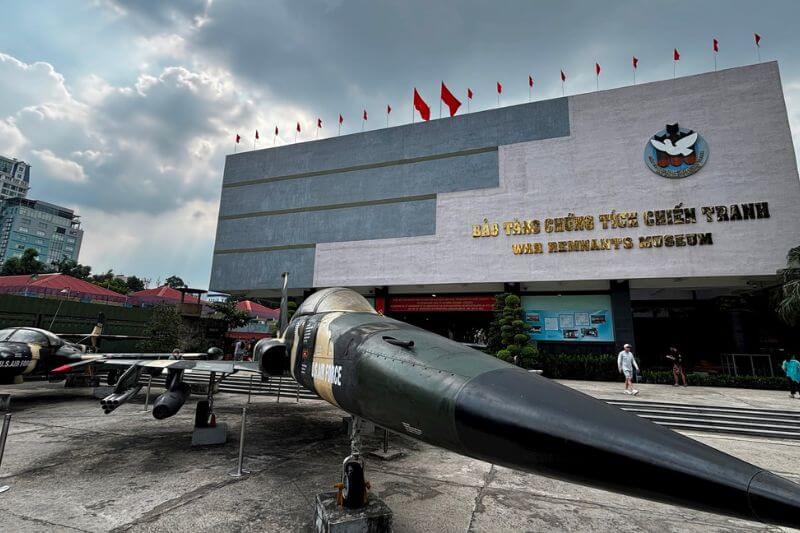
Queue risk and advance notice needs for large parties (museums, Reunification Palace, Skydeck)
Queue risk is a capacity and reputation risk. Where venues allow advance notice or pre-arranged group entry processes, this should be documented as a control point. For planners, the key governance question is whether the venue experience is treated as “timed” (protected) or “best effort” (exposed).
Day 2: Cu Chi Tunnels or equivalent half-/full-day experience (control points)
Day 2 often carries a higher dependency load because it involves a corridor transfer and a high-demand site with fixed tour windows. Governance should prioritize departure discipline, capacity scaling, and substitution rules.
Fixed departure windows and heat/crowd rationale as a duty-of-care consideration
For day trips, departure windows should be treated as structural dependencies. The rationale is not only experience quality but duty-of-care: heat exposure and crowd density can materially affect participant comfort and incident likelihood. Therefore, “late start” should be treated as a decision requiring trade-offs, not as a casual adjustment.
Coach/guide capacity scaling when group size exceeds standard tour bands
When group size exceeds typical tour capacities, governance must define whether the program will:
- Split into parallel groups with separate guides and potentially separate coaches, or
- Operate as a private movement with dedicated capacity and revised timing assumptions.
This is an approval-sensitive choice because it affects cost, supervision coverage, and schedule risk.
Decision rule for substituting with city-based experiences if timing collapses
Define a decision rule for when a corridor activity is no longer feasible (for example, delay beyond an agreed threshold). The rule should specify:
- Who has authority to substitute on-site to preserve continuity.
- Which city-based alternatives are pre-cleared and under what cost/scope limits.
- When buyer re-approval is required due to material change.
Day 3: Mekong Delta day trip (control points)
A Mekong day trip adds additional dependencies: early departure, multi-modal operations (coach plus boat allocations), and weather/site-access decision authority.
Early departure as a structural dependency (daylight, river operations, fatigue management)
Early departure should be positioned as a structural dependency, not a preference. It supports daylight utilization, reduces cumulative fatigue, and preserves contingency margin for return transfers. Governance should specify how strict the departure time is and what is sacrificed if the group departs late.
Boat allocation and group splitting governance; site-access decision authority in adverse weather
For larger groups, splitting across boats is often required. Governance should define:
- How groups are assigned and supervised (guide distribution and headcount checks).
- Who has authority to stop, reroute, or cancel based on safety and site access rules.
- How the decision is documented for audit and refund/claim support.
Scheduling buffers and change rules embedded into the itinerary
Buffer placement logic (urban transfers, day-trip corridors, meal transitions, venue entry)
Buffers are a governance mechanism that protects on-time performance and reduces forced substitutions. Buffers should be intentionally placed at known compression points:
- Urban transfers between venues where regrouping and loading time is predictable but non-zero.
- Day-trip corridors where traffic and comfort stops must be assumed.
- Meal transitions that require seating, service sequencing, and settlement time.
- Venue entry where queue/scan/ticket processes can expand unexpectedly for groups.
Protecting at least one flexible block for disruption recovery (without reframing as “free time” only)
A flexible block is best framed as “operational recovery capacity.” It can be used for rest, delayed activities, alternative indoor programming during weather, or schedule normalization after a disruption. The governance objective is to maintain program continuity without repeated buyer approvals for minor rearrangements.
Compliance and verification checkpoints tied to this itinerary type
Compliance verification should be tied to itinerary components where licensing, credentialing, or venue rules are material to duty-of-care and deliverability.
Licenses for tour/transport operators; guide certification; hotel classification; food safety for street-food formats
Where applicable, request and retain copies of:
- Tour operator licensing for day-trip and activity delivery.
- Transport operator commercial licensing and driver credentials.
- Tour guide certification for the working language(s).
- Hotel classification documentation where classification is part of the procurement requirement.
- Food safety/hygiene compliance artifacts for street-food formats or venues where required by policy.
What must be re-verified close to travel (pricing/availability/weather policies) vs. what is stable (regulatory categories)
Governance improves when the team distinguishes between variables and stable categories:
- Re-verify close to travel - current pricing, final availability, confirmation of operating hours, written weather policies and cancellation windows as applied to the travel dates, and any service-level constraints tied to the confirmed group size.
- Typically stable categories - the types of regulatory requirements (operator licensing categories, guide credential categories, transport compliance categories), while still verifying the current validity of the documents provided.
6. FAQ themes (questions only, no answers)
- Who holds duty of care for incentive groups in Vietnam when the agency is the contract holder?
- What responsibilities should remain with the DMC versus the travel agency for Ho Chi Minh City groups itinerary planning?
- Which changes require re-approval by the incentive buyer (participant count, hotel, transport, activity scope)?
- What documentation should be included in a pre-trip briefing pack to support audit and liability protection?
- How should incident escalation work for medical events, and what is the expected notification timeline?
- What are the standard control points to reduce hotel overbooking and rooming-list mismatch risk?
- How do planners verify transport compliance (commercial licenses, driver credentials, maintenance records) without overreaching?
- What governance approach best manages weather-related cancellations on Mekong Delta programs?
- How should supplier no-shows be handled contractually (confirmations, penalties, backup activation) in Vietnam?
- What buffer strategy is most defensible to clients for Cu Chi and Mekong day trips given HCMC traffic variability?
Primary CTA
If you are scoping an incentive program and need a governance-ready itinerary structure with operational assumptions documented (buffers, lead times, and control points), request an itinerary draft and net rates aligned to your group size, travel window, and supplier standards.
Request Itinerary & Net Rates