 ID
ID IT
IT DE
DE ZH
ZH ES
ES FR
FR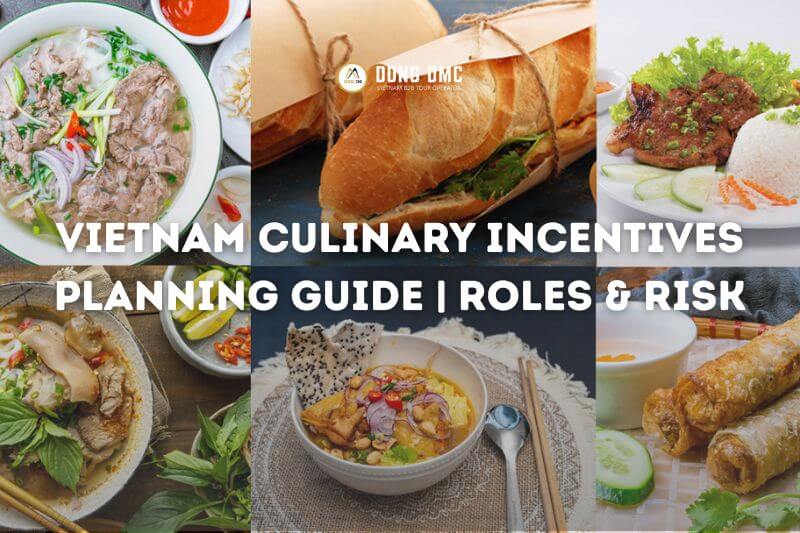
Vietnam Culinary Incentives Planning Guide | Roles & Risk
Vietnam Culinary Tour Group Logistics for Incentive Programs: Governance, Roles, and Risk Ownership
Vietnam culinary tour group logistics becomes materially more complex when the travelers are high-value incentive participants and the program spans multiple cities, street food environments, and hands-on cooking components. This article is an actor-specific, authority-focused reference for travel professionals designing and contracting Vietnam culinary incentives. It clarifies responsibility boundaries across incentive buyer, agency, DMC, and suppliers—especially where duty-of-care, food safety governance, and incident response can be ambiguous—so stakeholders can define ownership, escalation paths, and an audit-ready documentation trail before travel.
1. Context and relevance for Vietnam culinary tour group logistics
Why culinary incentives are operationally “high-touch” in Vietnam
Culinary-focused incentives in Vietnam are “high-touch” because the itinerary is typically built from many short, sensitive activity blocks rather than a few long, standardized components. Common program architecture includes multi-stop routing (often North–Central–South), early starts for market access, late finishes for street-food activity windows, and frequent handoffs between small, specialized suppliers (guides, transport operators, cooking venues, vendors, restaurants, and hotels).
Each handoff introduces coordination requirements that are easy to underestimate in incentives: participant identification, timing precision, dietary controls, sanitation expectations, and brand-level experience consistency. The operating challenge is not the “food theme” itself; it is the density of dependencies and the need for predictable control across them.
What changes when the group is an incentive
When the group is a corporate incentive, operational tolerance narrows. Duty-of-care expectations rise, privacy requirements increase (including how manifests are handled and who receives personal data), and reputational risk concentrates because the participants are reward travelers. In practice, that means buyers usually require private transfers, controlled pacing, and clear escalation pathways for exceptions (medical concerns, supplier failures, venue changes, or timing disruptions).
The planning requirement becomes governance-first: define who can decide, who must be informed, and what must be documented. Without that, even minor on-ground issues can escalate into client-facing disputes about responsibility and approvals.
Where fragmentation creates planning risk
Vietnam’s culinary experience ecosystem can include informal or semi-formal street-vendor environments alongside professional venues. This mix creates planning risk where standards and confirmation discipline vary by supplier type. For example, a restaurant or hotel may operate with formal confirmation artifacts, while a small market partner may require a different control approach (route governance, meet point discipline, and reconfirmation protocols).
The operational implication for incentive design is to treat “street food” and “market” components as governance-heavy, not simply experiential. The buyer’s duty-of-care stance must be translated into practical controls: water protocol, ingredient sensitivity, stop selection logic, participant supervision boundaries, and escalation triggers for hygiene concerns.
Decision this section supports
Before selecting partners and locking itinerary, define governance requirements in a way that is contractable and auditable. Specifically:
- What level of food exposure is acceptable (and unacceptable) for the group’s risk tolerance
- What is supervised versus “free exploration” during street-food windows
- What reporting cadence is required (daily check-ins, exception reporting, incident logging)
- What documentation must exist to support duty-of-care and internal audit expectations

2. Roles, scope, and structural considerations
Defining a culinary tour for corporate incentive purposes
For corporate incentive use, a culinary tour is a structured group itinerary emphasizing food immersion through a combination of street food sampling, market visits, hands-on cooking classes (in professional or home kitchens), regional specialty tastings, and intercity transfers across multiple cities. The scope typically includes a blend of walking components and vehicle movements, plus venue-based activities where hygiene and allergy controls must be explicit.
A typical program structure to anticipate includes multiple cities, mixed transport modes, and activity blocks with higher hygiene sensitivity. Buyers should assume additional operational attention is required around ice and water handling, raw ingredients, cross-contamination risk in shared preparation spaces, and participant pacing (heat, walking distance, late finishes).
Participation profile considerations should be treated as operational inputs, not “nice-to-have” details. Incentive groups often include professional demographics with diverse dietary restrictions, allergies, and varying comfort thresholds for street-food exposure. These constraints shape route selection, stop selection, and substitution design - and they determine what must be documented and approved.
Responsibility map: who owns what (and what they do not own)
| Party | Owns (primary responsibilities) | Does not own (boundaries) |
|---|---|---|
| End client (incentive buyer) |
|
|
| Agency |
|
|
| DMC |
|
|
| Suppliers (hotels, transport, chefs/venues, market partners) |
|
|
Structural considerations to lock before contracting
Duty-of-care boundary statements should be explicit in the itinerary and operational briefings. In culinary programs, ambiguity often arises during street-food windows: is the group in a supervised activity block with controlled stops, or in a discretionary “free exploration” period? The duty-of-care posture, supervision expectations, and what constitutes an exception must be documented.
Menu and dietary governance needs a defined workflow: how allergies and dietary restrictions are collected, who validates them, who has authority to approve substitutions, and how those substitutions are recorded. In cooking classes, define whether participants will use shared stations, and how cross-contamination risk is managed at the station level.
Group size and access logic should be treated as a planning norm rather than a promise. Smaller groups are often used to control capacity and supervision in kitchens, markets, and street contexts. Buyers should translate this logic into measurable operational requirements (supervision ratios, stop density, seating confirmation) rather than relying on informal assumptions.
Contract clarity for Vietnam culinary tour group logistics should cover service inclusions, change-control triggers, and minimum documentation artifacts. At a minimum, align on what constitutes a “material change” (venue swap, supplier substitution, route change affecting exposure or supervision) and what artifacts must exist (manifest version control, incident log, daily sign-offs, and approval records).
3. Risk ownership and control points
Where failures typically occur in culinary incentive programs
Culinary incentives commonly fail at the seams - where one component hands off to another, or where exposure risk is highest. Typical failure points include:
- Transfer and intercity timing dependencies - domestic flight disruption and urban traffic variability can cascade into missed activity blocks.
- Accommodation allocation mismatches - overbooking exposure or rooming list errors, particularly when arrival timing changes.
- Food safety and medical exposure points - street food, water/ice, and cross-contamination in shared kitchens.
- Supplier reliability lapses - chef/vendor no-show or venue capacity shortfalls.
- Weather-driven disruption - outdoor street tours, market access, and river-based elements can become non-viable and require pre-approved indoor pivots.
Ownership, preventive controls, and escalation logic by scenario
Flight disruption / late arrival
Ownership: Primary owner is typically the DMC for on-ground re-optimization (transfer changes, rebooking support where applicable, activity resequencing). Secondary is the agency for client updates and approval routing where changes are material.
Preventive controls: Pre-shared flight data, buffer design between arrival and first “fixed time” activities, and an up-to-date contact tree. If the itinerary includes intercity legs, define in advance what gets protected (for example: a hosted dinner) and what can be compressed (for example: a flexible market browse).
Escalation: Time-bound notification discipline should be pre-agreed (who gets notified, by what channel, within what time window). The incident log should capture timestamped events and decisions, and a revised schedule should be signed off by the designated group lead once stabilized.
Hotel overbooking / rooming mismatch
Ownership: Primary owner is typically the DMC to source backups, reallocate, and coordinate check-in recovery. Secondary accountability sits with the hotel supplier for confirming availability and honoring allocation terms.
Preventive controls: Guaranteed allocation terms where possible, reconfirmation milestones, and documented rooming lists with version control. For culinary programs, location requirements may be operational (e.g., proximity to street-food zones to reduce transit time). Tie these needs to the RFQ so any substitution is evaluated against operational impact, not only rate.
Escalation: Supplier-to-DMC alert should be immediate upon issue detection. Any property swap or material rooming change should trigger an approval note (who approved, what changed, why) and a record of how participant impact was managed.
Medical incident (including suspected food-related illness)
Ownership: Primary owner is typically the DMC for on-ground coordination (clinic routing, transport, translation support if required, insurer notification mechanics where applicable). Secondary is the agency for liaison back to HQ/client and governance of communications.
Preventive controls: Pre-collection of allergies and relevant medical notes (as permitted by privacy policy), insurer details and emergency instructions, and a mapped set of appropriate medical facilities. For cooking classes and street-food activities, define the food handling governance and what triggers a “stop activity” decision.
Escalation: Emergency services first. After stabilization, create an auditable medical incident summary that references available medical documentation and insurer claim file identifiers (where permitted). The goal is not narrative detail; it is traceability of decisions, timing, and handoffs.
Transport disruption (coach breakdown / severe delays)
Ownership: Primary owner is typically the DMC to deploy backup vehicle capacity and re-sequence activities. Secondary is the transport operator for mechanical readiness and immediate reporting.
Preventive controls: Vehicle specification requirements (including air-conditioning for group comfort), clear backup capacity expectations, and route/traffic risk planning. For food-related activities, also consider “time sensitivity” - a market visit may be viable only within a narrow operating window.
Escalation: Immediate on-site notification to the DMC, then agency notification per agreed timing. Capture a delay timeline and relevant maintenance records or operator statements to support later audit and supplier performance review.
Weather disruption
Ownership: Primary owner is typically the DMC to activate pre-approved indoor alternatives and manage venue coordination. Secondary is venues/suppliers for flexibility within their facilities and staffing.
Preventive controls: A seasonal risk brief and indoor alternatives that are pre-approved from a duty-of-care and experience standpoint. Common pivots include moving from outdoor street-tour routing to an indoor cooking class, chef’s table, or controlled tasting format - but only if previously aligned to risk tolerance and dietary governance.
Escalation: Use a pre-activity decision protocol (decision time, decision owner, approval requirement). Attach objective weather evidence to the change record to support defensibility and reduce disputes about whether the pivot was necessary.
Supplier no-show (chef/market vendor)
Ownership: Primary owner is typically the DMC to activate backups and protect schedule integrity. Secondary is the supplier network (or the contracted supplier) for reliability and immediate notification.
Preventive controls: Reconfirmation within 24 hours, a backup roster for key roles, and substitution rules aligned to client risk tolerance (for example: whether a replacement venue must meet the same hygiene documentation threshold).
Escalation: Document the no-show event, provide proof of backup deployment, and capture participant feedback themes in a structured way. The objective is to preserve an audit trail and inform future supplier acceptance criteria.
Control points across the program lifecycle (governance view)
Pre-award: The RFQ should state required inclusions (timed itinerary blocks, supplier profiles, emergency contacts, dietary governance) and define acceptance criteria for “street food exposure.” It should also define due diligence expectations for suppliers where relevant to hygiene and safety, recognizing that sources used for itinerary structure are illustrative rather than regulatory.
Pre-departure: Reconfirm the final itinerary sequencing, lock the participant manifest version, and distribute emergency contact protocols to the right parties. Reconfirmations should not be informal - they should be traceable (email trail or documented confirmations).
On-tour: Use daily check-ins, maintain clear decision authority for substitutions, and apply incident logging in real time. Avoid parallel instruction channels that create supplier confusion and later accountability disputes.
Post-tour: Assemble a post-event audit pack aligned to stakeholder policy: what changed, what exceptions occurred, what was approved, and what documents substantiate duty-of-care steps. Retention should be policy-driven, with a defined retention horizon.

4. Cooperation and coordination model
Coordination flow between incentive buyer, agency, DMC, and suppliers
The default coordination model that reduces risk is single-thread accountability: supplier communication flows supplier → DMC → agency → client. This minimizes contradictory instructions, protects documentation integrity, and keeps decision rights clear. If the client requires direct visibility (for example, corporate security teams), define precisely what information is shared, when, and by whom - and keep the DMC’s operational command channel intact.
A practical governance approach is to define RACI-style handoffs for high-risk moments: arrivals, activity starts, venue changes, medical escalation, and departure logistics. The point is not to create bureaucracy; it is to avoid unowned decisions at the moment of disruption.
Communication discipline should separate “hotline” decisions from email-based approvals. Use hotline for immediate operational stabilization, then document verbal approvals in a time-stamped follow-up message (who approved, what changed, what is the participant impact, what is the cost impact if any).
Operational logistics touchpoints that require partner alignment
Arrival/meet-and-greet governance
Align on airport meet points, participant identification, and late-arrival handling. The governance question is: who can release a vehicle, who can authorize a revised pick-up time, and what constitutes a missed connection escalation. Ensure the manifest includes contactability inputs needed for real-time coordination, consistent with privacy policy.
Multi-city transfers
Domestic flight monitoring and baggage handling responsibilities should be assigned, not assumed. Define who monitors flight status, who updates the routing plan, and who owns the buffer. In incentives, a “minor” delay can become reputationally significant if it causes missed hosted experiences; set protection priorities in advance.
Street food walk management
Street food routing requires a supervision ratio policy, route control, hydration and water protocol, and rest-stop planning. The governance decision is whether stops are pre-selected and controlled or whether the guide curates dynamically. For incentive duty-of-care, buyers often prefer pre-selected stop logic with substitution rules triggered by hygiene red flags or congestion.
Cooking class operations
Define who owns the kitchen safety briefing, ingredient sourcing standards, and allergy control at the station level. Clarify whether stations are shared, whether separate utensils are available for allergen control, and how substitutions are executed and documented. Ensure the activity operator understands the group’s disclosure workflow and escalation expectations if an exposure concern is raised.
Partner success and repeatability potential (non-promotional, planning-focused)
Operational “success” for an incentive culinary tour is defined by reduced ambiguity: clear decision rights, fast escalations, and a complete audit trail. A program can still be enjoyable with minor disruptions; it becomes problematic when stakeholders disagree on who was allowed to decide, who was informed, and what was documented.
Design for repeatability by standardizing briefing packs, templating incident logs, and enforcing reconfirmation checklists. This creates comparable data across programs and allows procurement and risk teams to evaluate delivery consistency without relying on subjective impressions.
For internal case-study potential (generic), capture: before/after itinerary changes, exceptions handled and how they were approved, and participant satisfaction themes - without framing as performance claims. The goal is organizational learning and governance refinement.
5. Duty-of-care documentation for luxury and special-interest culinary incentives in Vietnam
Briefing pack and RFQ documentation that reduces ambiguity
A briefing pack and RFQ should reduce ambiguity by making operational expectations contractable. Required inclusions typically include a timed itinerary with activity blocks, supplier profiles, emergency contacts, dietary and allergy protocols, recipe/hygiene standards where applicable, and meet-point instructions (including how late arrivals are handled).
A risk matrix approach is often useful: link each high-risk activity type (street food, markets, intercity flights, shared kitchens) to a named owner, preventive controls, and escalation channel. This moves risk from “general concern” to assigned accountability.
Manifest and insurance alignment should be structured. Define what data fields are collected, how privacy is protected, who is permitted to access sensitive information, and what triggers insurer notification. Avoid collecting data that is not operationally necessary or is not permitted by policy.
Change-control rules that protect duty-of-care
Change control protects duty-of-care by forcing re-approval when the risk profile materially changes. Re-approval triggers typically include participant count variance, venue swaps, itinerary changes affecting supervision or food exposure, and supplier substitutions. The threshold should be defined in contract language so it is not debated during operations.
Approval workflow should use tracked change requests (email trail or change-order form), define authority levels (what the DMC can decide on-site versus what requires agency/client approval), and set turnaround expectations. If an approval cannot be obtained within the required time, define a fallback authority rule for safety-critical decisions, with documentation required immediately afterward.
Incident logging and audit trail expectations
Incident logs should be designed for traceability. Minimum fields typically include date/time, location, incident type, owner, actions taken, outcome, and supporting attachments (photos or receipts where appropriate and permitted). The objective is an audit-ready record, not a narrative report.
A daily sign-off model helps reduce post-event disputes. The group lead (or authorized representative) confirms daily execution and notes exceptions. This does not eliminate issues; it prevents ambiguity about what occurred and what was agreed in real time.
A post-event audit pack should include final itinerary version, change records and approvals, incident logs, supplier confirmations, and exception summaries. Retention horizon should be policy-driven by the contracting parties; where a retention period is defined, ensure the storage owner is specified and access controls are clear.
Primary CTA
For buyers building an RFQ or contracting framework for a Vietnam culinary incentive (multi-city, street food, markets, and cooking components), request an itinerary draft and net rate framework that reflects your governance requirements, duty-of-care boundaries, and documentation expectations.
Request Itinerary & Net Rates6. FAQ themes (questions only, no answers)
- Who is accountable for food safety outcomes during street food activities versus hosted venues?
- What duty-of-care language should be included in an agency–DMC contract for culinary incentives?
- How should escalation work if a participant reports an allergy exposure or suspected foodborne illness?
- What documentation should the DMC provide to support an audit-ready incident response?
- How do we define “acceptable” street food exposure for a corporate group without overpromising safety?
- Who approves same-day supplier substitutions (chef/venue/market route) and how is approval recorded?
- What are the minimum controls to reduce hotel overbooking and rooming list disputes for incentive groups?
- How should domestic flight disruption contingencies be structured across agency, DMC, and client?
- What operational checkpoints should be reconfirmed 24–48 hours before each culinary activity block?
- What should be re-verified 90 days pre-operation regarding supplier licenses, hygiene credentials, and seasonal weather advisories?