 ID
ID IT
IT DE
DE ZH
ZH ES
ES FR
FR
Hanoi Group Ops Planning Guide for Travel Agents (2026)
Reading time: ~38-45 min Category: destination-travel-experience-guides Keyword: Hanoi group travel planning guide Updated for: 2026 This Hanoi group travel planning guide is built for travel agents selling 20-50 pax leisure groups who need predictable timing, realistic coach access, and restaurant choices that can actually seat the group - without last-minute improvisation. Hanoi is operationally efficient because most core sights sit within a compact visitor radius (roughly 4-6 km around Hoan Kiem and nearby clusters), meaning many transfers run 10-25 minutes off-peak. The risk is not distance - it is access. Old Quarter street width, weekend pedestrianization around Hoan Kiem, security queues at the Ho Chi Minh Complex, and multi-floor restaurant layouts are the typical points where group schedules slip. If you want deeper routing rules and coach-access logic to attach to your proposal, pair this guide with our operational playbooks: Hanoi routing playbook and hotel access and coach logistics playbook. Who this is for Travel agents selling 20-50 pax leisure groups who need re-brandable program logic and predictable operations in Hanoi. Why Hanoi works for leisure groups: The core attraction cluster is compact, and most classic sightseeing can be sequenced without long drives. Practically, this means Hanoi supports a clean 2-4 night group stay where you can deliver strong content while keeping vehicle hours controlled. The operational advantage is schedule stability - if you make the right zone and routing decisions early. Typical circuit use cases you can quote in proposals: Hanoi is commonly positioned as the anchor for North Vietnam programs: Hanoi city touring paired with Halong Bay (overnight cruise), Ninh Binh (day trip or overnight), and Sapa (overnight). For first-timers, a 3-night stay is often the "sweet spot" that allows one full city day plus one day trip without compressing arrivals and departures. Decision framework (easy to explain to clients): Hotel zone first (vehicle access, noise, walking tolerance) - then routing (AM hard-ticket blocks, circular loops) - then restaurants (verified capacity, stairs/lift, drop-off point). This order reduces rework, protects timing, and prevents the most common group failure: "we chose a hotel we love, but we cannot load the coach on time or seat everyone for dinner." If you want this as a one-page insert for your proposal deck, ask us and we will format it under your brand. High-level budgeting bands (indicative, always re-check net rates): Use these bands to frame expectations early, then request net rates for your dates. Hanoi pricing moves sharply on peak weekends, high season (roughly Oct-Apr), and Tet/public holidays. For traffic and protocol risk notes you can attach to client documentation, see our traffic and protocol risks playbook. Your hotel zone choice determines three operational outcomes: (1) what size vehicle can load reliably, (2) how much walking your guests do for "short" transfers, and (3) how easily you can place a group dinner without splitting seating times. Zone A: Old Quarter / Hoan Kiem (north) Best for first-timers who value walkability and want core Old Quarter and Hoan Kiem Lake access. Operationally, this zone carries the highest access risk: narrow streets, one-way patterns, heavy congestion, and occasional restrictions (especially weekend evenings around Hoan Kiem). Many properties are boutique-scale (often 20-80 rooms), so room blocks for 40-50 pax can require (a) early cut-off dates, (b) split across 2 nearby hotels, or (c) accepting room-type constraints. Zone B: French Quarter / Hoan Kiem (south, Opera House area) Best for premium leisure groups, older travelers, and any program that needs consistent vehicle access. Streets are wider, coach operations are typically smoother, and larger international-brand hotels are more common (often 150-300+ keys). This zone reduces on-the-ground friction for 35-45 seat coaches and supports faster loading and cleaner timing for departures. Zone C: Tay Ho / West Lake Best for large-coach ease, families, longer stays, and groups who prioritize space and quieter nights. Lakeside forecourts and access roads tend to be more coach-friendly. The trade-off is transfer time: most Old Quarter activities will require vehicles rather than walking, so your program must be sequenced to avoid repeated in-and-out trips. Operational selection checklist (copy/paste into your hotel brief): Proposal-friendly positioning by group profile 15-30 pax first-timers, moderate budget: Old Quarter or edge-of-Old Quarter (confirm drop-off plan and porterage). 30-50 pax, mixed ages, timing-sensitive: French Quarter for smoother coach ops and quieter nights. 40-50 pax with longer stay or meeting add-ons: Tay Ho or French Quarter (more keys, more space, easier vehicle staging). The planning principle: Build mornings around "hard-ticket" or constraint-based visits (opening windows, security queues, fixed show times). Keep afternoons flexible with modules that can absorb delay (walking areas, museums with broader entry windows, shopping time, café breaks). This is the simplest way to reduce knock-on delays without cutting inclusions. Core constraints you should state clearly in client-facing docs: Buffer standards we recommend for 20-50 pax in central Hanoi: Re-brandable skeleton: Hanoi 3D2N (works for 20-50 pax) Use this as a proposal template. Replace bracketed items with your preferred inclusions. We can deliver a version under your logo with final timings, contact points, and voucher references. Re-brandable skeleton: Hanoi 4D3N (adds one day trip cleanly) Sample full-day city loop (timed outline you can copy into an itinerary): Group handling notes that reduce delays (add to your ops sheet): For more route-tested sequences and timing logic, see our Hanoi routing playbook. For 20-50 pax, restaurants are the most common point of failure in Hanoi operations. The issue is rarely food quality. The issue is seating speed, stairs, space between floors, and whether a coach can drop within a practical walking distance. Four restaurant types that work operationally (and how to sell them): Type 1: Courtyard / villa-style Vietnamese venues (often 20-80 pax) These venues are typically the most reliable for larger leisure groups because they have multiple zones and can seat groups across tables without splitting into separate sittings. They are easier for pre-set menus and mixed dietary requirements. Sell this as: "broad Vietnamese selection in a layout designed to seat groups efficiently." Type 2: Iconic-dish specialty restaurants in shophouse layouts (often 15-30 pax per floor) These venues are great for storytelling ("signature dish dinner"), but capacity is fragmented across floors and stairs are common. For 40-50 pax, plan either staggered seating times, a partial buyout, or split the group into two nearby restaurants. Sell this as: "local specialty dinner with controlled seating plan." Type 3: MICHELIN-listed or contemporary dining (best for VIP sub-groups 10-20 pax) These venues are generally not designed for full 40-50 pax seating in one go. They work well as a VIP upgrade (leaders, top sellers, repeat clients) or as a breakout dinner concept. Sell this as: "optional premium dinner for a smaller subset, with firm reservations and fixed menu." Type 4: Hotel dining / buffet outlets (reliable for 50-100+ pax) Best for arrival nights, late landings, mixed diets, and high certainty meal service. Sell this as: "fast seating, predictable service, and the easiest solution for special diets and late arrivals." How to design a group menu that keeps timing tight: Neighborhood access rules of thumb (use in your client notes): Seating strategy for 40-50 pax when venues are compact: Restaurant due diligence checklist (what your DMC should confirm in writing): For awareness-stage agents, the biggest risk is not "planning the perfect program." It is losing the deal due to slow turnaround or losing control on the ground due to document chaos. This is where process and tools matter. How the Dong DMC Agent App supports this Hanoi group travel planning guide: If you want to preview the features that matter most for leisure groups (20-50 pax), see: Dong DMC Agent App. Quote-speed workflow you can adopt (simple, repeatable): What to track in real time (practical, non-technical): This section is written to be client-forwardable. It sets expectations clearly and reduces disputes caused by misunderstood access, walking time, and security procedures. Airport transfer specs (planning baseline): Noi Bai Airport to the Hoan Kiem area is approximately 25-30 km and typically runs 40-60 minutes by coach depending on traffic. Arrival-night planning should prioritize smooth check-in and a reliable dinner plan (hotel dining or a coach-accessible venue), rather than a tight evening sightseeing schedule. Coach size decision for 20-50 pax: Peak congestion planning (build into your written program): Operational buffer language you can paste into your proposal: "In central Hanoi, timings include standard buffers for traffic and group movement. Old Quarter programs may require perimeter coach drop-off and a short escorted walk. This is planned and included in the schedule to protect overall program timing." Ho Chi Minh Mausoleum Complex constraints (schedule-protection notes): Site-by-site access notes (add to client documentation): Throughput tactic for 40-50 pax: assign one lead guide for overall timing and guest control, then use sub-guides (or split commentary) to prevent bottlenecks in gallery spaces and tight corridors. If one part of a Hanoi program must be "execution-tested," it is dinner. Seating delays and slow first course service create the fastest negative sentiment in leisure groups, and those complaints often get attributed to the agent. Service flow planning that prevents delays: Accessibility and mobility handling: Seasonal impact on operations: Backup plan if the mausoleum is closed: Late-flight protocol (arrival-night protection): Supplier compliance basics (proposal-friendly): programs should use licensed guides and legally operating transport suppliers, with appropriate insurance and safety processes. This is standard risk control for professional group operations. If you want proof of how we operationalize under pressure, see why partners choose Dong DMC and partner success stories. These are not "inspiration" stories. They are structured templates you can use to present operational logic to clients and stakeholders. Objective: deliver classic Hanoi highlights while protecting timing and minimizing access-related delays. KPIs you can report (client-friendly): Objective: provide a premium experience for VIPs while keeping the main group schedule stable and on-budget. For real examples across markets and group sizes, browse our partner success stories (execution-focused case write-ups). Copy/paste the below into your email or CRM form. The goal is to reduce back-and-forth and protect quote speed. Hanoi Group Request Parameters Use this script to ensure you receive operational confirmations, not vague promises. Subject: Group Reservation Confirmation - [Date] - [Pax] - Seating and Access Requirements Body (copy/paste): Please confirm the following in writing for our group reservation: Our sustainability policy is operational, not decorative. If your client requires supplier standards documentation, link: sustainable operations. Q: Can a 45-seat coach access Old Quarter hotels and restaurants? Often not to the front door. For many Old Quarter streets, the practical plan is perimeter drop-off on wider roads, then a short escorted walk (commonly 5-10 minutes) to the hotel/restaurant. If your group has low walking tolerance, base in the French Quarter or West Lake and enter the Old Quarter by foot blocks or smaller vehicles. Q: Where can 50 pax dine near Hoan Kiem together? Typically in courtyard/villa-style restaurants or hotel dining outlets that are designed for group throughput. Shophouse-style venues may be excellent but usually require multi-floor seating or staggered times. The correct selection depends on whether you need one-floor seating, lift access, and how close the coach can drop off. Q: What if the Ho Chi Minh Mausoleum is closed or queues are too long? Protect the day by switching to a museum-led morning (Ethnology recommended for comfort and throughput) and extending Temple of Literature time with a structured photo stop. Keep the afternoon flexible so you do not cut your fixed-time elements (like water puppet seats or confirmed dinners). Q: How many nights does Hanoi really need for first-timers? For 20-50 pax leisure groups, 2 nights is workable but tight (arrival + one full day + departure). Three nights is operationally safer because it allows one full city day plus a day trip (or a second city module) without compressing load-out times and meal windows. Q: How do we prevent document chaos for multi-day Hanoi programs? Use one controlled voucher pack (hotel, transfers, touring, restaurants, shows) and keep updates in a single channel. Digital vouchers with live itinerary updates reduce version errors and help your team confirm meeting points and timing without searching multiple PDFs and chat threads. Send your pax count, dates, nightly budget band, and preferred hotel zone. We will return a re-brandable 3D2N or 4D3N Hanoi program with routing logic, hotel-zone shortlist, and group dining plan that is capacity and access checked. Fast quotations. Brand-protected operations. Zero missed arrivals. Prefer self-service? Start here: Dong DMC Agent App This guide consolidates operational patterns commonly referenced in recent Hanoi planning resources and dining references. In Hanoi, the items that change most often are opening hours, pedestrian restrictions, and restaurant seating layouts. Always reconfirm close to travel. Key external sources used for baseline context: Verify before you finalize client documents:
Planning Takeaways
1) Planner context for Hanoi group travel planning (2026)
2) Practical planning guidance
2.1 Hotel zones for 20-50 pax: which base reduces friction?
2.2 Attraction routing that actually runs on time (ready-to-rebrand)
2.3 Group-friendly restaurants: capacity + access beats name recognition
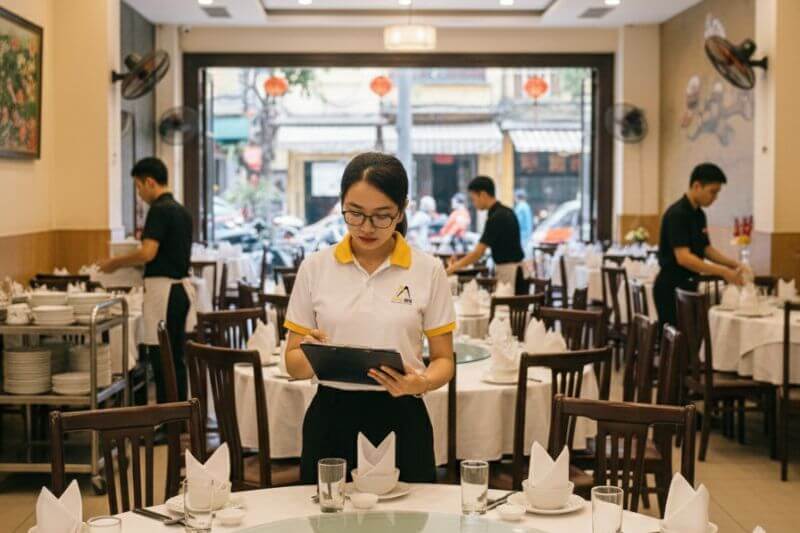
2.4 Speed + technology: how agents keep control (without extra admin)
3) Operational excellence and risk management (what can go wrong, and how to prevent it)
3.1 Transport and movement: coach reality in Hanoi
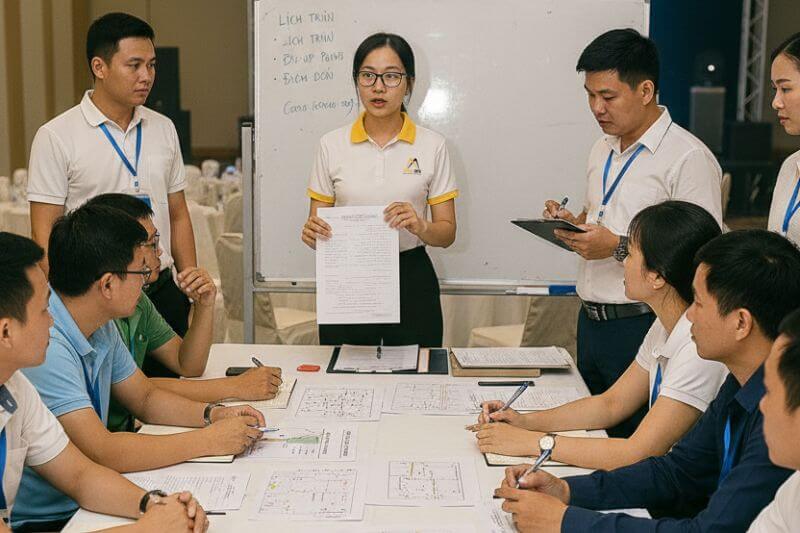
3.2 Attraction operating windows and sequencing risks
3.3 F&B operations: preventing the biggest group failure point
3.4 Weather, disruption, and contingency playbooks
4) Partner success templates (ready to adapt into proposals)
Template A: 40-50 pax first-timers (reduce Old Quarter friction)
Template B: Incentive-style leisure group (VIP dining without disrupting the main group)
5) Tools and checklists (copy/paste toolkit for agents)
5.1 One-page "Hanoi group planning parameters" form
5.2 Restaurant pre-book email script (what to confirm)
5.3 Operational run-sheet structure (what to include to avoid errors)
5.4 Digital voucher pack outline (what to include)
6) Frequently Asked Questions (travel agents - leisure groups)
Request Itinerary and Net Rates (12-60 Minutes)
Sources and what to verify before booking (2026)