 ID
ID IT
IT DE
DE ZH
ZH ES
ES FR
FR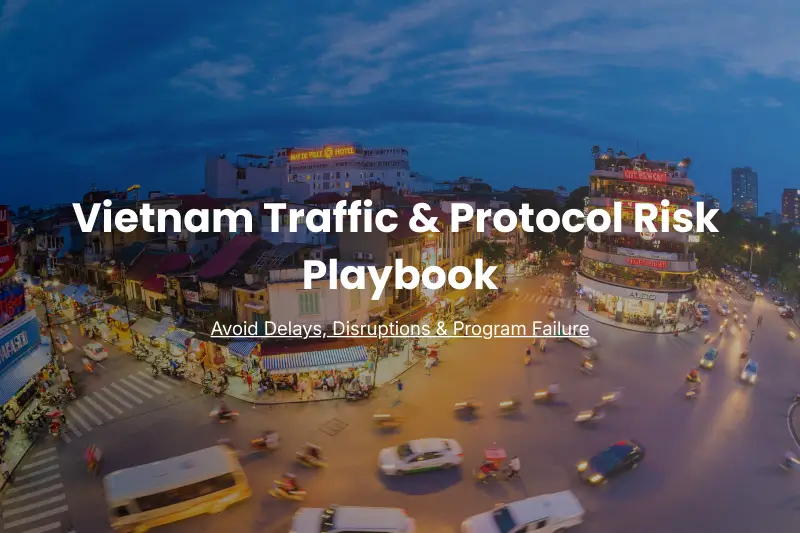
Vietnam Traffic & Protocol Risk Playbook | Group Travel Planning
In Vietnam, traffic disruption is not random. It is often predictable, structural, and protocol-driven. This playbook explains how experienced planners anticipate traffic and protocol risks — and protect group programs before guests arrive. Overseas planners frequently treat traffic as a background inconvenience. In Vietnam, traffic and protocol conditions can reshape entire itineraries if they are not planned correctly. “Protocol” in Vietnam refers to government, diplomatic, political, and ceremonial activities that trigger temporary changes in traffic control, access permissions, and security zones. These events may not be publicly announced far in advance, but their operational impact is immediate and strict. These restrictions directly affect Hanoi group routing, especially for programs operating near government zones. Delays are often compounded by poor arrival and departure logistics at hotels with limited coach access. These windows should shape arrival times, touring sequences, and event start schedules. Share your travel dates, cities, and key event timings. We’ll flag traffic and protocol risks before they affect your guests.Vietnam Traffic & Protocol Risk Playbook How Professional Planners Avoid Delays, Disruptions, and Program Failure
Traffic problems in Vietnam are rarely surprises. They are usually ignored signals.What “protocol risk” means in Vietnam (and why it matters)
Cities most affected by traffic & protocol controls
Hanoi
Ho Chi Minh City
Danang
How traffic & protocol risks impact group programs
A 20-minute traffic delay often cascades into a 60-minute program failure.Predictable risk windows planners should respect
Common mistakes overseas planners make
How Dong DMC manages traffic & protocol risk
If a delay is possible, it must be neutralized before it becomes visible.When to involve a local DMC early
Planning a group program in Vietnam?