
 ID
ID IT
IT DE
DE ZH
ZH ES
ES FR
FRPrograms · Golf travel
Vietnam Golf Travel: How Golf Programs Work Under Real Execution Conditions
A structured authority page explaining how golf travel in Vietnam is planned and delivered, where tee-time protection, transfer realism, hotel pacing, and group sequencing determine whether programs remain playable or break under pressure.
Not a service overview. This page explains how golf programs function under real execution conditions.
Golf routing · Tee-time protection · Execution-focused · Risk-aware planning
1. Definition
Vietnam golf travel is the structured planning and execution of golf-focused journeys in Vietnam, where course selection, tee-time protection, transfer realism, and recovery pacing determine whether the program succeeds or fails.
It is not defined by the number of golf rounds alone. It is defined by whether rounds, travel time, hotel flow, and rest windows can be sequenced into a playable and rewarding program under actual conditions.
Vietnam was named Asia's Best Golf Destination for the 9th consecutive year at the World Golf Awards 2025. The country operates 80+ championship courses, with designers including Greg Norman, Nick Faldo, Colin Montgomerie, Luke Donald, and Robert Trent Jones Jr.
This reflects how a Vietnam DMC operates under real execution conditions, based on field observations by Dong DMC.
2. What is Vietnam Golf Travel?
Vietnam golf travel is not simply a leisure itinerary with golf included. It is a coordinated program where courses, hotel base, transfer timing, and player recovery must function together as one system.
Golf travelers operate under narrower timing tolerance than standard leisure groups. A missed tee time, delayed departure, or poorly sequenced round changes not only logistics, but the perceived quality of the trip.
Non-obvious truth: golf programs do not usually fail because the courses are weak. They fail when movement between courses, hotels, and daily schedule is under-designed.
See structural context in Vietnam DMC.
3. Why It Matters
Golf programs require stronger timing discipline than many other travel formats. Tee sheets are fixed, daylight windows are limited, and course access cannot be shifted freely once play flow is established.
If departure from hotel is delayed → course arrival shifts → tee-time buffer disappears → round pacing becomes stressed → the day feels rushed rather than premium.
Golf programs carry narrower tolerance for disruption than standard leisure travel. A missed tee time, rushed arrival, or fatigued round changes not only logistics, but the perceived quality of the entire trip.
Once these failures occur during live operations, recovery is limited. The day continues, but the experience is absorbed as compromise rather than fully corrected.
4. Golf Destinations and Regional Fit
Vietnam golf travel works best when destination choice matches program structure, player expectations, and transfer tolerance.
Danang / Hoi An
The strongest golf cluster in Vietnam — four championship courses contracted by Dong DMC within a 45-minute driving radius of Danang, covering coastal, links, and highland styles. Supports 7-day programs with 4–5 rounds across distinctly different course characters. Peak season: February–May. Secondary season: September–November.
BRG Danang Golf Resort (Greg Norman design) — coastal course on Son Tra Peninsula with ocean views across multiple holes. The marquee Danang golf experience and the most requested course for incentive golf days. Approximately 15 minutes from central Danang. Pairs with My Khe Beach and Non Nuoc Beach hotel zones.
Hoiana Shores Golf Club (Robert Trent Jones Jr. design) — links-style coastal course at the HOiana Resort complex between Danang and Hoi An. Wind challenges and ocean views. Suitable for groups combining golf with casino or resort facilities. Approximately 20 minutes from Hoi An.
Vinpearl Golf Nam Hoi An — resort course at Vinpearl Nam Hoi An complex. More accessible price point. Best for mixed-interest programs combining golf with Vinwonders theme park or river safari.
Ba Na Hills Golf Club (Luke Donald design) — the only highland golf course in Central Vietnam, at 1,400m altitude. Cooler temperatures year-round (15–20°C). Unique program contrast to the coastal courses. Accessible via Ba Na Hills cable car or road transfer, approximately 40 minutes from Danang.
For Central Vietnam golf program design including hotel zone pairing and course combination itineraries, see Danang Golf Travel.
Ho Chi Minh City & Coast
Urban-accessible courses for mixed corporate-golf programs. The Bluffs Ho Tram (2.5 hr south) is Vietnam's top-ranked course. Traffic is the key variable — plan early tee times. Peak season: Nov–Apr.
Hanoi & North
BRG Kings Island and Sky Lake offer strong 36-hole facilities. Best paired with Halong Bay luxury cruise extensions. Cooler weather Oct–Mar is ideal for golf. Transfer: 45–60 min from city center.
Phu Quoc & Nha Trang
Resort-led golf: Vinpearl Golf Phu Quoc for island programs, KN Golf Links Cam Ranh for coastal links near Nha Trang luxury resorts. Simpler movement, premium relaxation between rounds.
See location logic in Vietnam Location DMC and regional structure in Vietnam Region Framework.
5. Championship Course Directory
Selected for design pedigree, course condition, service standards, and operational fit with B2B group travel. Green fee ranges are indicative net rates — confirm by quote via Agent App.
Central Vietnam — Danang / Hoi An Cluster
| Course | Designer | Holes | Par / Yards | Green fee (net) | Style & notes |
|---|---|---|---|---|---|
| BRG Da Nang Golf Resort | Greg Norman | 18 | 72 / 7,160 | $100–160 | Links, ocean views, flagship round |
| Montgomerie Links | Colin Montgomerie | 18 | 72 / 7,090 | $80–140 | Classic links, tournament host, consistent |
| Ba Na Hills Golf Club | Luke Donald / IMG | 18 | 72 / 7,857 | $90–150 | Mountain, longest in Vietnam, floodlit night golf |
| Hoiana Shores Golf Club | Robert Trent Jones Jr. | 18 | 72 / 7,217 | $90–140 | Coastal links, resort-integrated, near Hoi An |
| Laguna Golf Lăng Cô | Nick Faldo | 18 | 71 / 7,130 | $80–130 | Mountain + ocean, stunning scenery, Hue corridor |
| Vinpearl Nam Hoi An | IMG | 18 | 72 / 7,072 | $70–110 | Sea views, resort-linked, south of Hoi An |
Luxury hotel pairing: InterContinental Danang Sun Peninsula, Hyatt Regency Danang, Four Seasons Nam Hai. See Vietnam Luxury Hotel Partners.
South Vietnam — HCMC & Coast
| Course | Designer | Holes | Par / Yards | Green fee (net) | Style & notes |
|---|---|---|---|---|---|
| The Bluffs Ho Tram | Greg Norman | 18 | 71 / 7,117 | $120–180 | Vietnam's Best Course 2025 (World Golf Awards), clifftop links |
| Vietnam Golf & Country Club | Chen King Shih | 36 | 72 each | $80–120 | Closest 36-hole to HCMC, Asian PGA Tour host |
| Long Thanh Golf Club | Ron Fream | 36 | 72 each | $60–100 | Value option, well-maintained, 45 min from HCMC |
| KN Golf Links Cam Ranh | Greg Norman | 27 | 72 (18) + 9 | $80–130 | Coastal links, near Nha Trang luxury resorts |
Ops note: HCMC courses are 40–90 min from District 1 depending on traffic. Morning tee times (before 08:00) require hotel departure by 06:30. The Bluffs Ho Tram is 2.5 hr from HCMC — plan as overnight with The Grand Ho Tram resort.
North Vietnam — Hanoi
| Course | Designer | Holes | Par / Yards | Green fee (net) | Style & notes |
|---|---|---|---|---|---|
| BRG Kings Island Golf Resort | BRG Group | 36 | 72 each | $70–120 | Lakeside + mountain, 45 km from Hanoi, scenic |
| Sky Lake Resort & Golf Club | Korean architect / IMG managed | 36 | 72 each | $70–110 | Lake + sky courses, championship standard |
| Chi Linh Star Golf & Country Club | IMG | 36 | 72 each | $50–90 | Mountain setting, 1 hr from Hanoi, value option |
Luxury hotel pairing: Sofitel Legend Metropole, InterContinental Westlake, Capella Hanoi. Pair golf with Halong Bay luxury cruise extension (2–3 nights). See Vietnam Luxury Hotel Partners and Halong Bay Luxury Cruises.
Islands — Phu Quoc & Nha Trang
| Course | Designer | Holes | Par / Yards | Green fee (net) | Style & notes |
|---|---|---|---|---|---|
| Vinpearl Golf Phu Quoc | IMG | 27 | 72 (18) + 9 | $80–120 | Island resort, ocean views, paired with Vinpearl resort |
| Vinpearl Golf Nha Trang | IMG | 18 | 71 / 6,787 | $70–110 | Island course on Hon Tre, links-style, bay views |
Ops note: Island golf works best as resort-led programs — 3–5 nights combining 2–3 rounds with beach and wellness. Transfer logistics are simpler than mainland multi-course programs. Pair with culinary and wellness modules for non-golfers in the group.
6. How It Works
Vietnam golf travel operates through a linked sequence of control layers:
- Course clustering: selecting rounds based on geographic fit, not only brand value
- Hotel basing: placing the group where morning departures and post-round recovery remain manageable
- Transfer realism: protecting tee times with traffic-aware movement planning
- Round sequencing: balancing premium rounds, fatigue, and rest windows across the itinerary
- Execution control: daily reconfirmation of tee times, transport, caddy timing, and meal pacing
At 20 pax, golf travel remains manageable with moderate buffers.
At 50 pax, transfer alignment, tee-time staggering, and hotel pacing become significantly more sensitive.
At 200 pax, the program behaves as a synchronized system, where missed timing at one layer can destabilize the entire sequence.
See execution logic in Vietnam DMC Operations and scaling structure in Vietnam Group Travel.
7. Key Variables
Group size
Larger golf groups increase tee-time fragmentation, transport dependencies, and pressure on meal and prize-giving timing.
Course spacing
Geographic clustering determines whether rounds feel smooth or whether transfer time silently erodes the playable structure of the day.
Hotel position
The wrong hotel base can create repeated early departures, post-round fatigue, and unstable evening flow.
Recovery tolerance
Golf programs must protect recovery between rounds. Over-compression weakens both performance and satisfaction.
Season
Central Vietnam (Danang): best Feb–May (dry, warm). South (HCMC): best Nov–Apr (dry). North (Hanoi): best Oct–Mar (cool, less humid). Monsoon months increase course closure risk.
Program objective
A pure golf trip, a corporate golf incentive, and a premium leisure-golf mix each require different pacing and routing discipline.
8. Sample Golf Program Formats
These are modular starting points — Dong DMC customizes routing, hotel, and course selection based on group size, season, and budget. Request a tailored proposal via Agent App or your market specialist.
5-Day Danang Golf Intensive
4 rounds across 4 courses. Single hotel base.
Day 1: Arrival DAD → hotel check-in → driving range
Day 2: BRG Da Nang (AM) → afternoon free
Day 3: Ba Na Hills (AM) → Hoi An evening
Day 4: Montgomerie Links (AM) → Hoiana Shores (PM twilight)
Day 5: Departure
Best for: Dedicated golf groups, 8–20 pax.
Hotel: Hyatt Regency Danang or Hoiana resort.
7-Day Golf & Culture Blend
4 rounds + Hoi An + Hue heritage. Dual hotel base.
Day 1: Arrival DAD → Danang hotel
Day 2: BRG Da Nang (AM)
Day 3: Hoi An full day — cooking class, ancient town
Day 4: Ba Na Hills (AM) → afternoon spa
Day 5: Laguna Golf Lăng Cô (AM) → transfer Hue
Day 6: Hue imperial city + royal cuisine dinner
Day 7: Departure via DAD or HAN
Best for: Mixed groups (golfers + non-golfers), couples, 8–30 pax.
Hotel: InterContinental Danang + Azerai La Residence Hue.
10-Day Multi-Region Grand Tour
6 rounds across 3 regions. 3 hotel bases.
Day 1–2: Hanoi — BRG Kings Island + Sky Lake
Day 3–4: Halong Bay luxury cruise (no golf — recovery)
Day 5: Fly HAN → DAD
Day 6–7: Danang — BRG Da Nang + Montgomerie Links
Day 8: Hoi An cultural day
Day 9: Fly DAD → SGN — Vietnam Golf & CC or The Bluffs
Day 10: Departure SGN
Best for: Premium golf travelers wanting full Vietnam experience, 4–12 pax.
Hotel: Sofitel Metropole + InterContinental Danang + Park Hyatt Saigon.
4-Day Phu Quoc Golf & Beach
2 rounds + beach resort. Single hotel base.
Day 1: Arrival PQC → resort check-in → sunset
Day 2: Vinpearl Golf Phu Quoc (AM) → beach / spa PM
Day 3: Free morning → afternoon round (twilight)
Day 4: Departure
Best for: Couples, incentive add-on, resort-led groups, 4–20 pax.
Hotel: Regent Phu Quoc or JW Marriott Emerald Bay.
9. Execution Risk in Golf Programs
Golf programs fail when timing discipline is weaker than the structure of the day.
If transfer time is underestimated → course arrival tightens → warm-up disappears → tee-time pressure increases → the round begins under stress.
If daily movement is overloaded → fatigue accumulates → round quality declines → the premium feel of the trip weakens.
If hotel choice is made without recovery logic → early departures and late returns compress rest windows → the program becomes playable on paper but unsustainable in practice.
Operational failure becomes visible to guests. Visible disruption becomes dissatisfaction, and dissatisfaction affects trust in the program design.
See breakdown patterns in Vietnam Travel Failures and mitigation structure in Risk and Contingency.
10. How to Evaluate a Golf Program
Test 1: Is tee-time protection visible?
If transfer logic does not clearly protect tee times → high probability of stressed arrivals → reduced round quality.
Test 2: Is course clustering realistic?
If the route chases prestige without geographic discipline → high probability of fatigue and unstable pacing.
Test 3: Is hotel basing aligned with the rounds?
If hotel choice ignores departure timing and recovery windows → high probability of accumulated fatigue and weaker trip quality.
Test 4: Is the program absorbable at scale?
If group size is not reflected in tee-time sequencing and transport planning → high probability of operational mismatch.
For cost-to-execution trade-offs, see Vietnam DMC Pricing.
11. Key Numbers
| Metric | Value |
|---|---|
| Championship courses in Vietnam | 80+ (35+ international designer) |
| Asia's Best Golf Destination awards | 9 consecutive years (World Golf Awards) |
| Danang cluster courses (within 45 min) | 6 championship courses |
| Average green fee range (net) | $60–$180 depending on course and season |
| Caddy included in green fee | Yes — standard at all Vietnamese courses |
| Cart fee (additional) | $15–$30 per round typically |
| Peak golf season — Central | February–May |
| Peak golf season — South | November–April |
| Peak golf season — North | October–March |
| Quote turnaround (golf program) | 12–60 minutes via Agent App |
12. When a Golf DMC Structure Is Not Necessary
- Single-round casual golf added to a broader leisure trip
- Very small FIT travel with one hotel and one nearby course
- No tight tee-time dependency or limited transfer exposure
- Low consequence if minor delays occur
In these cases, the coordination layer may be lighter because the program is less exposed to compounding timing risk.
13. FAQ
What is the best region for a golf trip in Vietnam?
Central Vietnam (Danang/Hoi An) offers the strongest course cluster — 6 championship courses within 45 minutes. It supports 5–7 day programs with varied course styles (links, mountain, coastal) and minimal transfer fatigue.
How much do golf green fees cost in Vietnam?
Net green fees range from $60–$180 per round depending on course, season, and day of week. Caddy is included at all courses. Cart is additional ($15–$30). Dong DMC provides net B2B rates — agents set their own margin.
Can non-golfers be accommodated in a golf program?
Yes. Dong DMC designs parallel programs for non-golfers: cooking classes, spa retreats, cultural tours, and shopping experiences. Central Vietnam is strongest for this because Hoi An and Hue offer rich non-golf options alongside the golf cluster. See Culinary & Wellness Experiences.
What is the best time of year for golf in Vietnam?
Central: Feb–May (dry, warm). South: Nov–Apr (dry). North: Oct–Mar (cool). Avoid Central Vietnam's monsoon (Oct–Dec) and North Vietnam's humid summer (Jun–Aug).
How does Dong DMC handle tee-time booking for groups?
Dong DMC pre-books tee times directly with courses, coordinates caddy allocation for groups of 8+ pax, and reconfirms 24 hours before play. Backup tee-time slots are held where available during peak season.
Can I combine golf with a Halong Bay cruise?
Yes. A common format is 2 rounds at Hanoi-area courses (BRG Kings Island, Sky Lake) followed by a 2-night Halong Bay luxury cruise as recovery. See Halong Bay Luxury Cruises.
Is night golf available in Vietnam?
Yes. Ba Na Hills Golf Club near Danang is fully floodlit from tee 1 to green 18 — the only course in Vietnam offering full 18-hole night golf. This is a unique selling point for agents.
How does Vietnam compare to Thailand for golf travel?
Vietnam offers newer course stock (most built 2010–2022), stronger designer pedigree (Norman, Faldo, Montgomerie, Luke Donald), and 20–30% lower green fees vs. comparable Thai courses. Vietnam has been named Asia's Best Golf Destination for 9 consecutive years. Thailand offers more mature golf infrastructure and broader course quantity, but Vietnam provides stronger value and novelty.
Golf Program Collection
The following program directions show how Vietnam golf travel planning is applied in practice, where course clustering, transfer realism, and recovery pacing are translated into real golf program structures.
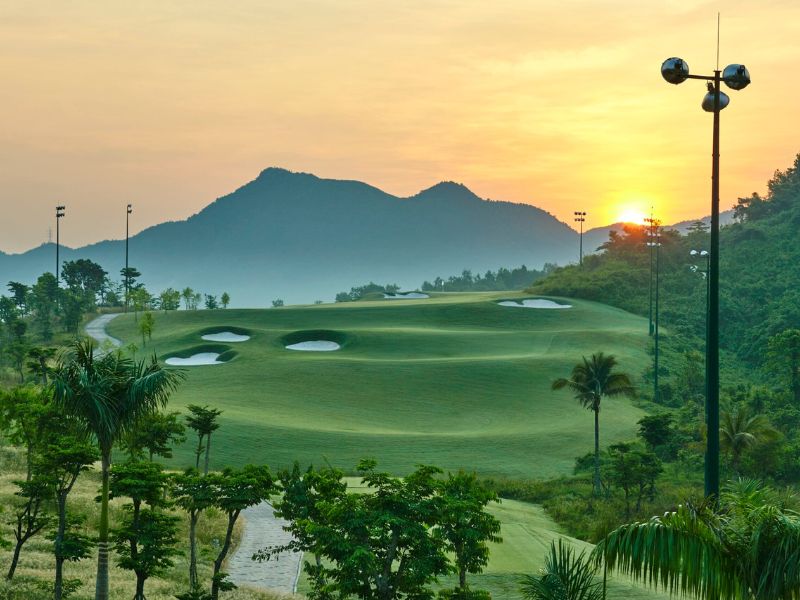
Danang Golf Format
Clustered courses • Lower transfer risk • Stable pacing
Suitable for golf groups seeking smoother routing, reduced transfer fatigue, and stronger round-to-round stability.
View golf examples →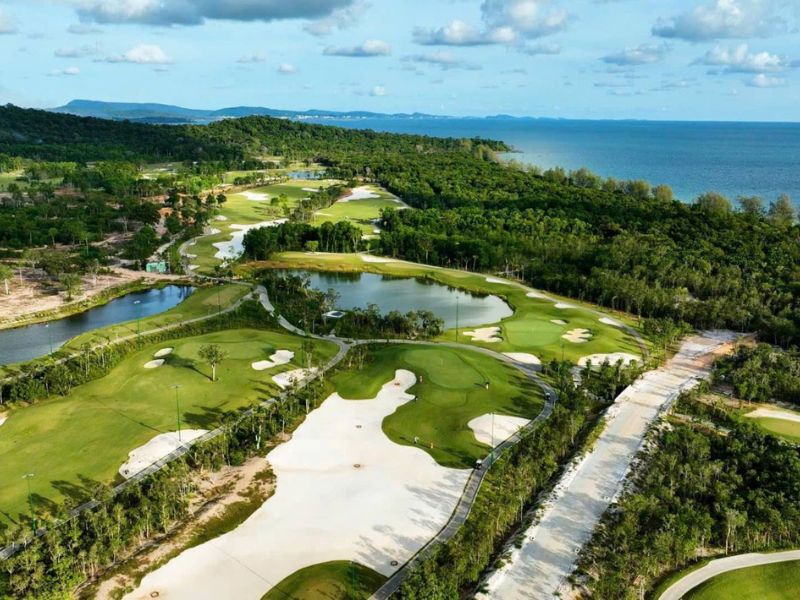
Phu Quoc Golf Format
Island setting • Resort rhythm • Controlled movement
Best for golf groups prioritizing premium resort atmosphere with simpler daily sequencing.
View golf examples →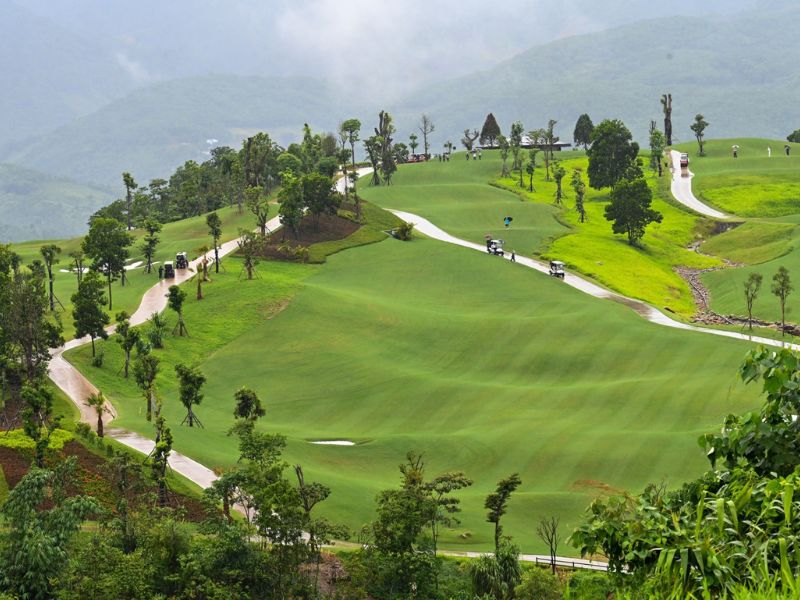
Multi-Region Golf Format
Higher variety • Higher execution pressure
Appropriate only when flight timing, recovery windows, and transfer logic are carefully protected.
View golf examples →Once the planning logic is clear, these examples help translate course selection, route pacing, and group movement into real golf program directions. See the Vietnam Golf Program Collection.
14. Related References
- Vietnam Luxury Travel — How luxury travel functions under real execution conditions
- Vietnam Luxury Hotel & Resort Partners — Hotel pairing for golf programs
- Vietnam Luxury Transport & VIP Services — Transfer logistics and airport handling
- Vietnam Culinary & Wellness Experiences — Non-golfer parallel programs
- Halong Bay Luxury Cruises — Golf + cruise combination
- Vietnam DMC
- Vietnam Group Travel
- Vietnam DMC Operations
- Vietnam Location DMC
- Vietnam DMC Pricing
Closing note: This page is intended as a professional reference for planners evaluating golf travel in Vietnam. It focuses on playable routing, timing protection, recovery logic, and responsible golf program design under real operating conditions.