
 ID
ID IT
IT DE
DE ZH
ZH ES
ES FR
FRPrograms · Pilgrimage travel
Vietnam Pilgrimage Travel: How Faith-Based Group Journeys Work Under Real Conditions
A structured authority page explaining how pilgrimage travel in Vietnam is planned and delivered, where spiritual rhythm, church timing, group pacing, and operational realism determine whether the journey feels meaningful or fragmented.
Not a service overview. This page explains how pilgrimage programs function under real execution conditions.
Faith-based journeys · Church coordination · Execution-focused · Risk-aware planning
1. Definition
Vietnam pilgrimage travel is the structured design and execution of faith-based group journeys in Vietnam, where spiritual purpose, church access, Mass timing, devotional rhythm, and group movement must work together under real conditions.
It is not defined only by sacred sites. It is defined by whether those sites, timings, and group needs can be sequenced into a journey that preserves meaning without operational strain.
This reflects how pilgrimage travel functions under real execution conditions, not simplified religious sightseeing descriptions.
This reflects how a Vietnam DMC operates under real execution conditions, based on field observations by Dong DMC.
2. What is Vietnam Pilgrimage Travel?
Vietnam pilgrimage travel is not a standard cultural tour with church stops added to the route. It is a coordinated faith-based journey where sacred moments, movement flow, rest periods, and group pacing must align to preserve devotional meaning.
In practice, pilgrimage groups often require a different rhythm from leisure or corporate programs. Prayer time, Mass attendance, parish-led participation, slower walking pace, and spiritual reflection are not optional layers. They shape the structure of the program.
Non-obvious truth: a pilgrimage journey does not fail because a sacred site is missing. It fails when the route is executed in a way that disrupts the spiritual rhythm of the group.
See structural context in Vietnam DMC.
3. Why It Matters
Pilgrimage travel in Vietnam carries a different form of expectation from leisure travel. The program is not only expected to move smoothly, but to create space for prayer, reverence, and shared spiritual experience.
If church timing is misaligned → Mass attendance is weakened or missed → group rhythm is broken → the journey feels rushed rather than meaningful.
Once these failures occur during live operations, recovery is limited. The route continues, but the spiritual quality of the journey is reduced rather than fully restored.
For pilgrimage organizers, this is not only a logistics issue. It becomes visible dissatisfaction and can weaken trust in the program design itself.
4. Pilgrimage Destinations and Regional Fit
Pilgrimage travel in Vietnam is shaped by regional history, church access, and route feasibility. Destination choice should follow faith purpose and group pacing, not only sightseeing logic.
North Vietnam
Suitable for groups combining Catholic heritage, Marian devotion, and broader historical context. Longer transfer distances and weather variability require more disciplined pacing.
Central Vietnam
Often preferred for more compact pilgrimage routing, heritage churches, and balanced spiritual plus cultural movement between cities such as Danang, Hue, and Hoi An.
South Vietnam
Suitable for parish-based groups beginning in Ho Chi Minh City or combining church visits with lighter urban movement. Traffic pressure must be managed carefully.
Multi-Region Pilgrimage
Better for longer programs where spiritual purpose justifies inter-regional travel. These routes require stronger discipline in timing, rest, and Mass coordination.
See destination logic in Vietnam Location DMC and regional structure in Vietnam Region Framework.
5. Planning Considerations
Pilgrimage programs must be designed around sacred timing, not only transport timing.
Programs must account for Mass schedules, local church permissions, devotional opportunities, and religious calendar sensitivity.
Many pilgrimage groups include seniors, parish leaders, or mixed-mobility travelers, requiring slower walking and more stable transitions.
Pilgrimage routes require pauses for prayer and meaning. Overloading the day weakens the purpose of the journey.
Long transfer days, urban congestion, and early departures can undermine the spiritual atmosphere if not absorbed into the route design.
Pilgrimage planning is not just about where to go. It is about preserving the right internal rhythm of the group while moving through real-world constraints.
6. Execution Risk in Pilgrimage Programs
Pilgrimage journeys fail when spiritual priorities and operational flow are misaligned.
If Mass timing is missed → devotional rhythm is broken → the group arrives under pressure rather than prayerful focus.
If too many sacred stops are compressed into one day → transfer fatigue increases → reflection time is reduced → the journey feels rushed instead of meaningful.
If church coordination is assumed rather than confirmed → access gaps appear during live execution → confidence in the route design weakens.
Once these failures occur during live operations, recovery is limited. The route continues, but the spiritual quality of the journey is reduced rather than fully restored.
For pilgrimage organizers, this is not only operational inconvenience. It becomes visible to participants and directly affects trust in the program.
See breakdown patterns in Vietnam Travel Failures and group scaling in Vietnam Group Travel.
7. How to Evaluate a Pilgrimage Program
Test 1: Is spiritual rhythm protected?
If prayer time, Mass attendance, and reflection are treated as secondary to movement → high probability the journey feels touristic rather than devotional.
Test 2: Is church coordination realistic?
If route timing ignores local church access and liturgical patterns → high probability of missed or weakened sacred moments.
Test 3: Is group pacing absorbable?
If seniors, parish groups, or mixed-mobility participants are placed on compressed schedules → high probability of fatigue and reduced engagement.
Test 4: Is regional movement disciplined?
If too many regions are combined without buffer logic → high probability of transfer-heavy days and unstable pilgrimage flow.
Evaluation should focus on devotional continuity, not only route coverage.
For evaluation structure, see How to Choose a Vietnam DMC.
8. Typical Pilgrimage Program Structures
Parish-Based Multi-Day Route
Suitable for organized parish groups seeking church visits, shared Mass attendance, and a balanced rhythm across a small number of destinations.
Regional Catholic Heritage Journey
Designed for groups combining sacred sites, local faith heritage, and selective cultural context within one region of Vietnam.
Extended Pilgrimage Route
Best for longer programs where inter-regional travel is justified by devotional purpose and supported by slower pacing.
Each structure introduces different timing, coordination, and pacing requirements that must be protected under real conditions.
Pilgrimage Program Collection
The following program directions show how Vietnam pilgrimage planning is applied in practice, where spiritual rhythm, sacred site access, and group movement are translated into real journey structures.
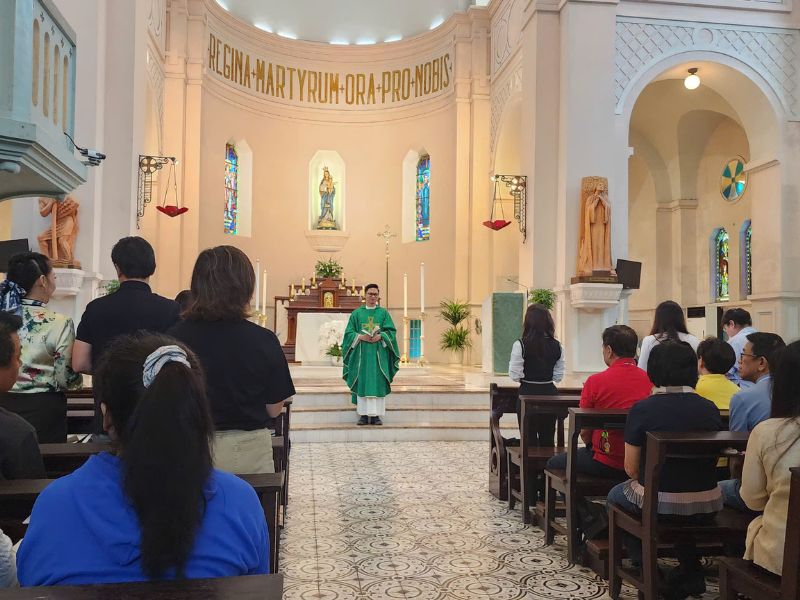
Regional Pilgrimage Route
Church visits • Stable pacing • Parish-led group flow
Suitable for faith-based groups seeking focused devotional movement within one region and minimal transfer overload.
View pilgrimage examples →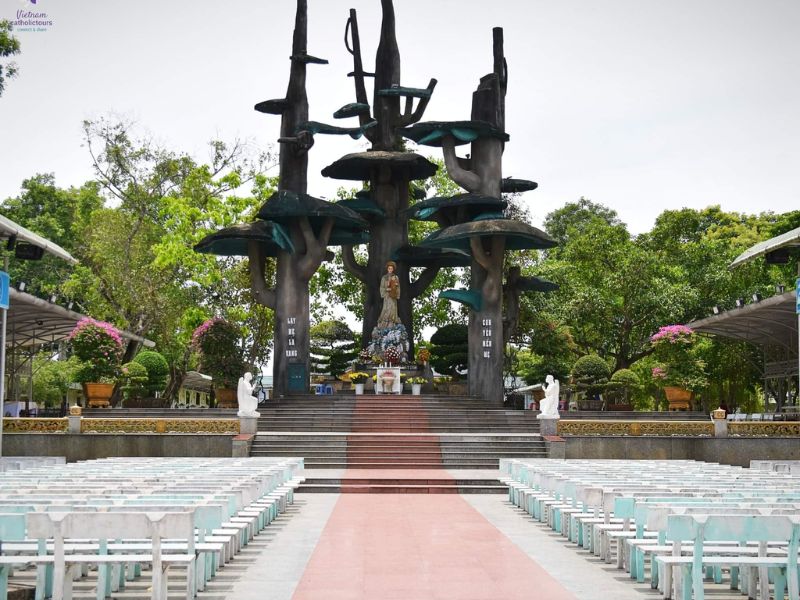
Catholic Heritage Journey
Sacred sites • Reflection rhythm • Cultural context
Best for groups combining faith heritage, church visits, and selected historical context without sacrificing devotional focus.
View pilgrimage examples →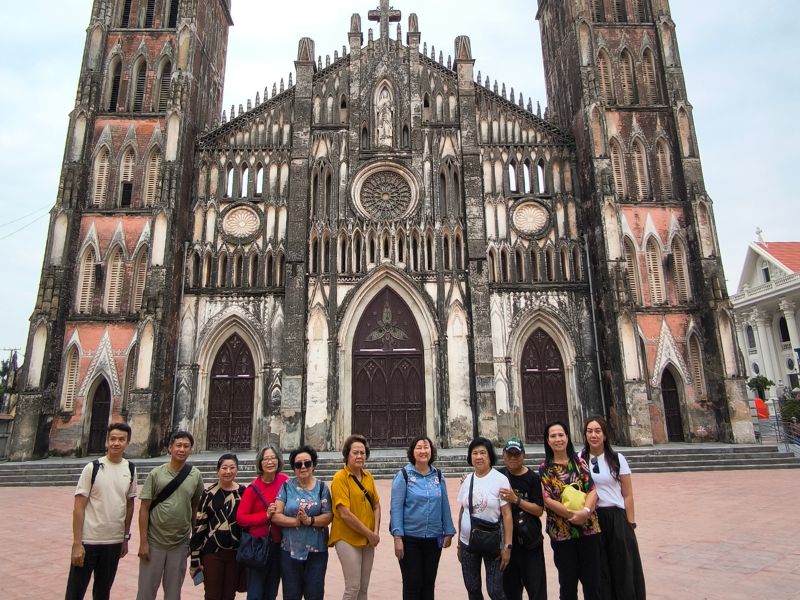
Extended Pilgrimage Program
Multi-region • Slower movement • Stronger route discipline
Designed for longer journeys where devotional purpose justifies broader movement across regions and more complex route sequencing.
View pilgrimage examples →Once the planning logic is clear, these itinerary examples help translate sacred timing, route discipline, and group pacing into real pilgrimage program directions. See the Vietnam Pilgrimage Program Collection.
9. Related Operational References
Closing note: This page is intended as a professional reference for planners evaluating pilgrimage travel in Vietnam. It focuses on devotional continuity, execution logic, and responsible journey design under real operating conditions.