
 ID
ID IT
IT DE
DE ZH
ZH ES
ES FR
FRVietnam Group Travel: Coordination Model Under Real Execution Conditions
A structured authority page explaining how group travel in Vietnam works in practice, where movement, timing, and shared execution dependencies determine whether programs operate smoothly or break under pressure.
Not a tour collection. This page explains how group travel functions as an execution system under real conditions.
Short answer
How is multi-city group travel coordinated in Vietnam?
Multi-city group travel in Vietnam works when one operator holds every city under one contract and one point of escalation. Dong DMC runs 50–70 group programs a month this way. For a 360-pax Indonesian incentive run in three batches, the Hanoi hotel, Sapa hotel, coaches and Fansipan cable-car slots were all contracted for three consecutive weeks before the first batch flew.
1. Definition
Group travel in Vietnam is not defined by the number of travelers alone. It is defined by shared execution dependencies across multiple participants, where movement, timing, and supplier coordination must function as one system.
A group program succeeds when airport arrivals, transport dispatch, hotel readiness, meal timing, and daily activities align under real conditions. It fails when those layers are planned separately but executed together.
This definition reflects how group travel functions in actual operations, where execution conditions determine outcomes, rather than simplified descriptions commonly used in tour content.
This reflects how a Vietnam DMC operates under real execution conditions, based on field observations by Dong DMC.
2. What is Vietnam Group Travel?
Vietnam group travel is an execution model where a single program must absorb the needs, timing, and movement of multiple travelers under shared constraints.
It is not a product type. It is a coordination system.
In practice, this means that airport handling, transport allocation, hotel rooming, restaurant flow, and activity sequencing are interdependent. A delay in one layer changes the performance of the next.
See structural context in Vietnam DMC.
3. Why It Matters
Group travel in Vietnam operates under compressed timing and shared resource conditions. Flights arrive in waves, roads do not behave linearly, hotels enforce fixed release times, and groups move at the speed of their slowest operational point.
If one execution layer is weak, the problem rarely stays isolated. It usually becomes visible later in the day as guest waiting time, congestion, rushed movement, or reduced itinerary quality.
For travel professionals, this is where decision anxiety begins. The risk is not simply delay. It is visible failure in front of clients and reduced confidence in the program.
See breakdown patterns in Vietnam Travel Failures.
4. Scaling Logic
Group travel changes character as scale increases.
20 pax
Manageable with moderate buffers. Localized delay is often still absorbable without destabilizing the whole day.
50 pax
Coordination becomes sensitive. Transport timing, rooming logic, and meal release start to influence each other more directly.
200 pax
The program behaves as a synchronized system. A small delay at one node can create full-sequence instability across the day.
The key change is not headcount alone. It is the degree of dependency created between movement, timing, and service layers.
5. How It Works
Vietnam group travel operates through a linked execution chain:
Airport arrival → transport staging → hotel check-in flow → meal timing → activity sequencing → return movement
This execution chain is governed by movement timing, transfer coordination, and supplier sequencing. See how this is structured in practice in Vietnam Group Logistics.
This is not a theoretical flow. It is the actual order in which operational pressure appears.
If flight arrivals cluster in SGN or HAN → transport dispatch must absorb stagger → hotel rooming must be prepared → meal timing may need adjustment → the afternoon program must remain recoverable.
See execution structure in Vietnam DMC Operations.
6. Key Variables
Arrival density
Multiple flights landing within a narrow window create immediate transfer pressure and reduce timing flexibility.
Transport structure
Vehicle count, coach sizing, and city-center access affect whether the group moves as one flow or breaks into unstable fragments.
Hotel readiness
14:00 check-in, lobby capacity, elevator flow, and rooming discipline directly affect first-day experience quality.
Activity density
Too many program points in one day increase the probability that minor delays will become visible service failure.
City and region fit
Hanoi, Da Nang, Ho Chi Minh City, and Phu Quoc each create different movement conditions and coordination pressure.
See destination routing logic in Vietnam Location DMC.
These variables do not only affect feasibility. They directly influence pricing structure across transport, hotel allocation, and service level. See how these factors translate into pricing in Vietnam Group Travel Cost.
7. Execution Risk
Group travel failures rarely begin where they become visible.
Flight arrival clustering → overloaded transfer dispatch → delayed hotel check-in → compressed lunch window → rushed activity start → reduced guest experience → partner reputation impact.
This is why group travel should be treated as a system. Once the delay propagates, recovery becomes limited.
At this stage, correction is no longer operational. It becomes compromise, where the program continues but experience quality is reduced.
This risk propagation pattern is part of a broader planning structure. See how disruption is anticipated and controlled in Vietnam Group Travel Risk Management.
8. How to Evaluate
Test 1: Is group size reflected in the plan?
If 20 pax, 50 pax, and 200 pax scenarios are treated the same → high probability of execution mismatch.
Test 2: Is arrival wave logic clear?
If clustered arrivals are not actively managed → high probability of airport congestion and delayed dispatch.
Test 3: Is hotel flow aligned with timing?
If rooming and check-in assumptions are weak → high probability of waiting time and weak first impression.
Test 4: Is the day absorbable?
If the route cannot absorb minor delay → high probability of visible compression later in the program.
For a decision framework, see How to Choose a Vietnam DMC.
These evaluation points are typically reviewed together with logistics feasibility, cost structure, and risk exposure before finalizing a program.
Application
Once the execution logic is understood, it can be applied to real itineraries such as Vietnam leisure group programs, where coordination and timing constraints become visible in practice.
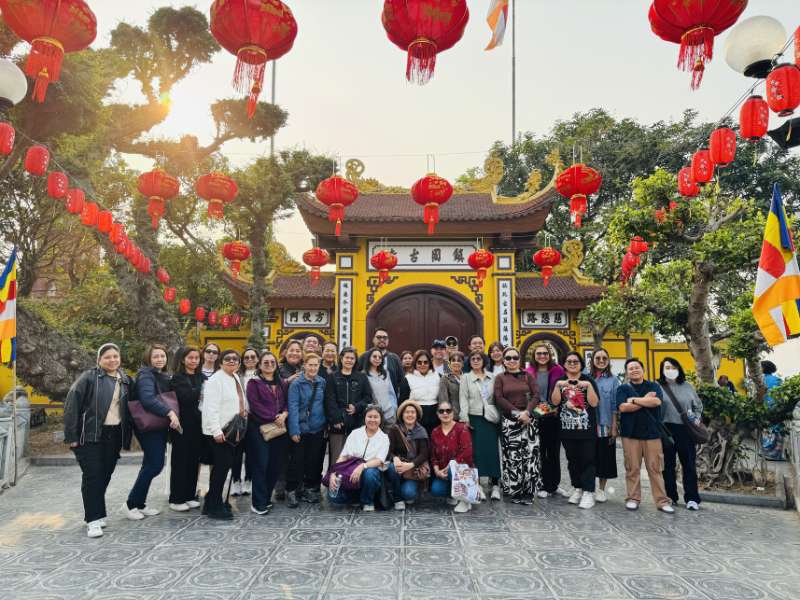
Northern Group Format
Hanoi • Halong • Ninh Binh
Suitable for structured routing with higher transfer sensitivity and stronger sequencing discipline.
View leisure group examples →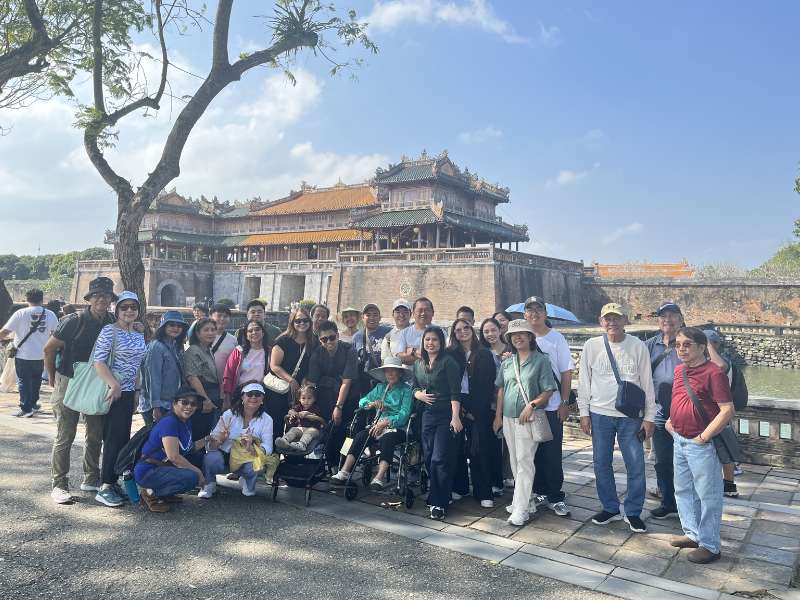
Central Group Format
Danang • Hoi An • Hue
Better suited for compact routing and lower movement friction across a balanced leisure program.
View leisure group examples →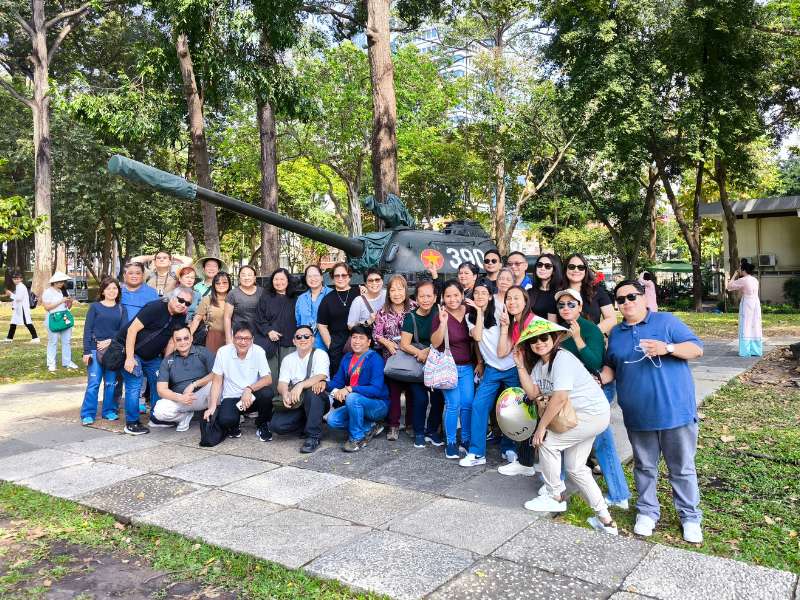
Southern Group Format
Ho Chi Minh City • Mekong • Phu Quoc
Appropriate for mixed urban and island movement where timing and route discipline remain visible.
View leisure group examples →For applied examples, see the Vietnam Leisure Tour Collection.
9. Part of Vietnam Group Travel Planning System
- Vietnam Group Logistics — how movement and coordination are structured
- Vietnam Group Cost — what drives pricing and budget variation
- Vietnam Group Risk Management — how disruptions are anticipated and controlled
Supporting Operational References
- Vietnam DMC — overall operating model and role definition
- Vietnam DMC Operations — execution structure and coordination flow
- Vietnam DMC Pricing — broader pricing logic across services
- Vietnam Travel Failures — real breakdown patterns in execution
- Vietnam Group Travel Checklist — practical evaluation points
- How to Choose a Vietnam DMC — partner selection framework
- Pickleball Group Travel in Vietnam — club trips built around daily play
Closing note: This page is intended as a professional reference for travel planners evaluating group travel in Vietnam. It focuses on coordination logic, scaling behavior, and execution conditions under real operating pressure.
Related planning pages: Hotel coordination for group travel.