 ID
ID IT
IT DE
DE ZH
ZH ES
ES FR
FR
Vietnam DMC Large Group Risk Controls for MICE Planners
Case Notes: What Nearly Failed - Lessons from a Large Vietnam Group Program
Large Vietnam group programs do not fail from one bad vendor or one late bus; they fail when timing, capacity, and handoffs stop aligning across hotels, transport, meals, and venues. This operational reference uses Case Notes: What Nearly Failed - Lessons from a Large Vietnam Group Program to clarify where execution risk concentrates for agencies, tour operators, and MICE planners - and where the DMC must act immediately versus where the agency must approve and communicate.
The core decision is whether the program is designed for staggered flow with documented contingencies, or for simultaneity that cannot be sustained at scale.
1. Context and relevance for Case Notes: What Nearly Failed - Lessons from a Large Vietnam Group Program
For travel professionals managing large delegations in Vietnam (incentives, conventions, multi-city series), the operational risk profile changes materially as headcount rises. The issue is not whether an itinerary is attractive; it is whether the itinerary can remain stable under real timing windows, fragmented capacity, and multi-supplier handoffs.
The dominant failure mode at scale is synchronization collapse - when timing windows, capacity limits, and handoff discipline break down across multiple suppliers and (often) multiple cities. Small delays stop being local problems and start invalidating downstream confirmations.
This is why “service moments” are not breaks in the program. Meals, hotel check-in, and venue access are load-bearing operational checkpoints. They are the points where hundreds of participants converge, where throughput matters, and where a single bottleneck can create visible disruption.
Vietnam structural constraints become non-negotiable design inputs when they force distribution. A common example is hotel inventory fragmentation in Ho Chi Minh City at the 4-star level, where a full delegation cannot sit in one property. Distributed hotels then create predictable downstream pressure on pickup access points, lobby flow, and traffic exposure - and must be designed into the flow, not treated as an afterthought.
Practically, these case notes help planners justify to internal stakeholders why staggered execution, pre-approvals, and documentation discipline are not bureaucracy - they are risk controls that prevent cascading disruption and protect decision-making under constraint.
2. Roles, scope, and structural considerations
Role boundaries and decision rights (actor-specific governance for operational delivery)
Sending agency / tour operator: Holds the client contract and owns approval authority for material changes or contingency activation that affects scope, budget, or client policy. Owns the client-facing narrative and stakeholder management.
DMC: Orchestrates ground logistics, enforces supplier performance, activates contingencies within pre-approved boundaries, and maintains operational logs (confirmations, incident timelines, supplier correspondence). Acts immediately for operational safety and continuity, but does not own the client narrative.
Suppliers: Deliver specific services (hotels, transport, restaurants, venues, guides, operators) within capacity limits and with varying confirmation norms and escalation responsiveness. Supplier variance is not an exception at scale; it is a condition the governance model must assume.
End client: Sets objectives and policies, and introduces attendee constraints (mobility, dietary requirements, VIP protocols, brand/corporate culture constraints). These must be translated into operational requirements (what must be true on the ground), not only themes.
Structural constraints that shape program architecture (Vietnam, multi-supplier reality)
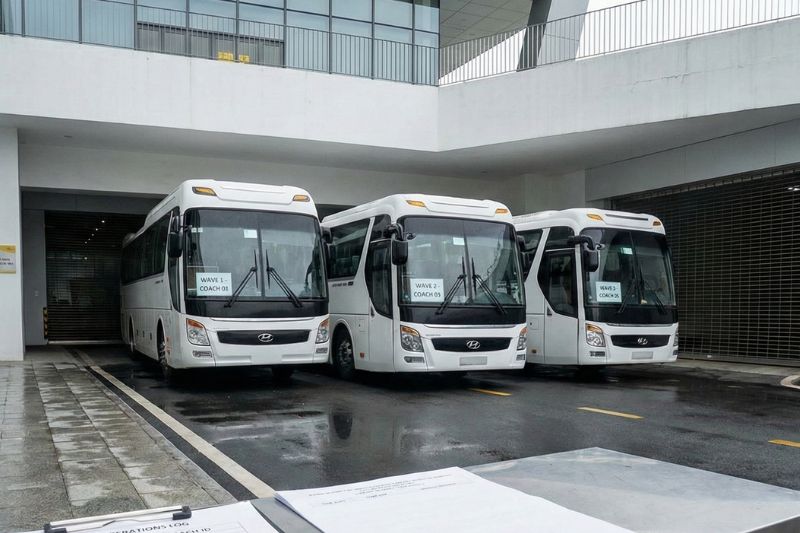
Distributed hotels: When guests are split across multiple properties, each hotel has different coach staging constraints, lobby flow realities, and traffic exposure. The operational plan must treat each hotel as its own departure terminal with controlled release times and assigned staging zones.
Convergence risk: Hundreds of guests arriving at one access point (gala venue, attraction gate, restaurant entrance) creates predictable pressure on entry lanes, security/control points, and seating or check-in throughput. Without staggered entry windows and assigned zones, small timing drift becomes congestion.
Dependency map planners should require: hotel ↔ transport waves ↔ meal seating zones ↔ venue access windows. If any element changes (timing, headcount, property), the planner should assume confirmations can be invalidated and require a rapid revalidation pass.
Planning logic that prevents drift
“One source of truth” operational thread: Define what must be captured in writing for audit (confirmations, approvals, material changes, cost responsibility, incident decisions). Chat tools can be used for speed, but the audit trail must be recoverable and time-stamped.
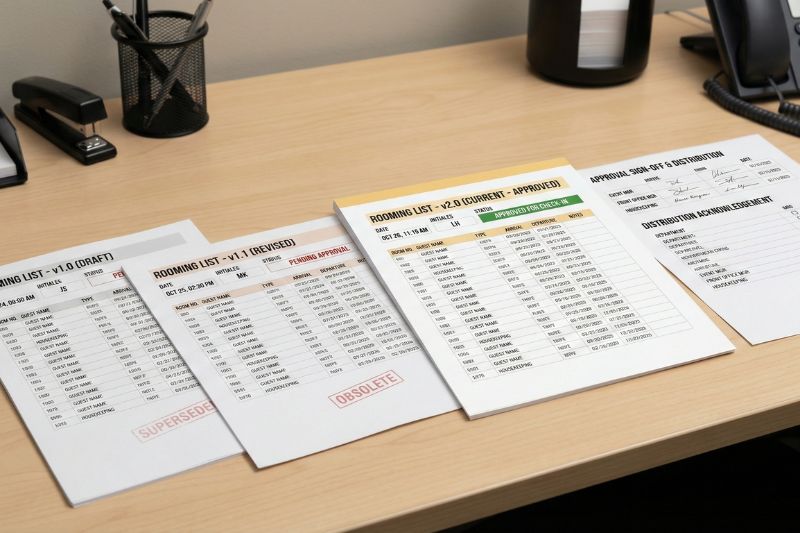
Version control requirements: Manifests and rooming lists must be versioned with approval dates and a controlled change history. At scale, “version drift” (different parties acting on different lists) is a common root cause of check-in failures and misallocated transport capacity.
Where the main keyword applies operationally: Use these case notes as an audit-style reference to test flow design and responsibility boundaries - not as a story, but as a checklist for where programs nearly fail (and how to structure decision rights before execution).
3. Risk ownership and control points
Where failures typically occur (control points, not general risks)
Arrival compression: Late flights cascade into transport windows, meal timing, check-in throughput, and venue access slots.
Hotel check-in bottlenecks and rooming mismatches: Queue growth, room readiness timing, and version drift caused by outdated manifests.
Restaurant throughput mismatch: Kitchen capacity, table distribution, and service sequencing misaligned with arrival waves.
Transport disruption: Breakdown or traffic delay invalidating confirmed slots for meals, attractions, or venues.
Weather-dependent activities: Substitution decisions under time pressure, with budget and experience implications.
Supplier no-show: Last-mile substitutions required for critical services (guides, restaurants, vehicles, operators).
Medical incidents: Immediate response coordination on the ground running in parallel with insurance handling and stakeholder communications.
Ownership model by scenario (what the agency owns vs what the DMC must execute)
Flight disruption: Agency owns airline liaison and client approvals; DMC owns ground reflow once revised ETA is notified (transport sequencing, meal deferral, staggered check-in).
Hotel overbooking / rooming mismatch: DMC owns enforcement and immediate alternatives; agency owns messaging and expectation management to the end client.
Medical incident: DMC owns on-ground response coordination; agency owns insurance liaison and stakeholder communications (client contact, employer, family/emergency contacts).
Transport disruption: DMC owns impact assessment and contingency activation; agency approves if scope/cost changes materially under SOW or client policy.
Weather disruption: DMC owns feasibility assessment with operators and activation of pre-approved alternatives; agency approves experience/budget shifts when material.
Supplier no-show: DMC owns substitution and contractual follow-up; agency approves material changes when required.
Preventive controls planners should lock before confirmation (no numbers; execution-ready checkpoints)
Pre-approved delay thresholds and activation triggers: Define what constitutes “delay requiring reflow” for different program moments (meals, check-in, venue access), and what the DMC is authorized to activate without waiting for post-fact approvals.
Written supplier confirmations: Confirm service specs in writing with escalation contacts and cancellation/adjustment terms. Verbal assurance is not a control.
Rooming list control process: Lock deadlines, versioning, and sign-offs so hotels and transport providers do not work from outdated manifests.
Pre-identified alternates: Identify backup coaches, restaurant alternatives, substitute hotels, and indoor options for weather-dependent components - with activation rules and cost responsibility principles aligned in advance.
Escalation logic and documentation discipline
Notification sequence: detection → impact assessment → contingency activation → approval capture (if required) → client narrative. The agency remains the narrative owner; the DMC supplies verified operational updates and a logged decision trail.
Mandatory audit trail items: timestamps, decision owner, approval evidence (when required), cost responsibility assignment, and supplier correspondence (including call summaries if calls are used for speed).
Tie-back to the main keyword
The “nearly failed” moments in large programs typically map to predictable control points (arrival compression, check-in throughput, restaurant sequencing, access windows) and to predictable ownership boundaries (who can act immediately vs who must approve and communicate). Treating these case notes as an operational audit reference helps prevent blame narratives by making decision rights and logging expectations explicit before execution.
4. Cooperation and coordination model
Operating cadence that keeps multi-city programs stable
Daily briefings and structured handoffs: Guides, transport lead, hotel coordinators, and meal/venue captains need a shared operating cadence with explicit handoffs (what changed, what is confirmed, what is pending approval).
End-of-day status capture: Capture timing drift, confirmation changes, and special request status daily to prevent silent drift across cities and suppliers.
Role-based contact matrix (24/7): Avoid single-person dependency by defining role-based escalation routes and response expectations, preventing conflicting updates during incidents.
Flow-based coordination model (staggered execution as the default)
Multi-wave transport sequencing: Build releases by hotel and by venue/activity access window. Each wave should have staging rules (loading zones, regroup points) aligned to traffic exposure.
Meal service as a managed throughput system: Assign seating zones by bus group, sequence service by arrival waves, and align kitchen throughput to wave timing (not total headcount).
Venue access control for large gatherings: Use assigned entry times, controlled access points, and seating assignment logic to reduce gate congestion and maintain program timing integrity.
Operations/logistics requirements for Vietnam ground execution
Hotel staging checks: Coach access, lobby capacity, check-in throughput, baggage handling plan, and any constraints on staging time.
Route feasibility and staging: Coach parking and loading zones, traffic exposure buffers, regroup points, and what happens if a staging point becomes unavailable.
Permits/access windows: Attraction time slots, boat operator confirmations, venue setup windows, and back-of-house access constraints that must be treated as fixed windows, not preferences.
Partner success and case-study potential (how to structure success evidence without marketing claims)
Reproducible operations case file contents: a confirmation log, a change-control record, incident log excerpts (redacted as needed), and reconciled cost decisions tied to approvals.
Metrics planners can cite internally: on-time wave adherence, incident response time, and prevented conflicts such as avoided simultaneous check-ins through staggered windows. Metrics should be defined in advance so they are measurable from the operational logs.
Post-program review format: document what changed, why it changed, who approved, what was prevented, and what should be standardized for future RFPs and stakeholder assurance.
5. Extreme trust signal in Vietnam DMC operations: real-time incident logging, change-control, and flow inspections
Why “trust” at scale is operational evidence, not reassurance
In large Vietnam group programs, trust is built through documented operational discipline: respecting real capacity limits, maintaining clear ownership boundaries, escalating with verified updates, and logging decisions in real-time. Reassurance without evidence increases ambiguity during disruption.
Pre-program trust checkpoints (verification that predicts execution reliability)
Flow/capacity-focused inspections: Verify hotel staging (coach access, lobby flow, check-in throughput), restaurant table distribution and kitchen throughput, and venue access points - not aesthetics.
Confirmation discipline: Confirm critical services in writing, validate backup contacts, and document escalation routes before arrival.
Briefing pack completeness: Ensure the pack includes client profile, logistical specs, contingency expectations, decision authority, and reporting cadence - with explicit sign-offs where required.
Pre-execution trust checkpoints (preventing last-minute drift)
Reconfirmation cadence gates: Revalidate supplier commitments and access windows at defined lead-time gates (post-booking, mid-lead, final week), and document what was rechecked each time.
Change-control rules: Define what counts as “material,” how re-approval happens, and how invalidated confirmations are detected (timing shifts, headcount variance, property changes, scope additions/removals).
Execution-phase trust checkpoints (how disruptions are handled)
Transparent escalation: Provide verified operational updates plus impact assessment (what is affected downstream), not optimistic messaging.
Contingency activation aligned to pre-approvals: Activate within pre-approved boundaries; avoid retroactive approvals after service is changed.
Incident logging standard: Maintain a time-stamped timeline with contacts, decisions, approvals, cost responsibility, and reconciliation path so the agency can maintain narrative consistency.
What planners should request as proof in future programs
Sample redacted incident log format and the structure of the confirmation repository (how confirmations, contacts, and terms are stored and versioned).
Sample rooming list version history and sign-off trail showing how changes are controlled and approved.
Example of a documented substitution decision: what triggered it, who approved, and what changed operationally (timing, staging, access windows, cost responsibility).
6. FAQ themes (questions only, no answers)
- What are the most common synchronization collapse points in 500–900 pax Vietnam programs?
- How should responsibilities be split between agency and DMC when a disruption requires an immediate decision?
- What exactly should be in a “briefing pack” for large Vietnam group operations?
- How do we set pre-approved thresholds for delays, substitutions, and contingency spend without over-restricting execution?
- What rooming list version-control process prevents hotel mismatches and check-in failures?
- How do staggered transport waves work when guests are split across multiple hotels in Ho Chi Minh City?
- What should we verify during restaurant inspections to avoid throughput failures at scale?
- How do we document approvals and changes so post-incident reviews do not turn into blame narratives?
- What operational logs should a DMC provide to support the agency’s client-facing communications?
- How should we plan weather-dependent activities (Cu Chi, Mekong) with realistic alternatives and decision authority?