 ID
ID IT
IT DE
DE ZH
ZH ES
ES FR
FR
Da Nang 800-Pax Split Routing Guide for MICE Planners
Da Nang can be highly workable for mid-size MICE movements, but scaling from 300 to 800 attendees changes the operating model. This operational guide clarifies Why Da Nang Works for 300 Pax but Not 800 Pax Without Split Routing by translating airport staging, coach dispatch limits, and attraction access constraints into execution-ready planning logic. It also sets responsibility boundaries: the end client owns attendance and timing risk tolerance in the RFQ, while the DMC and suppliers own feasibility validation, fleet procurement, permits, and on-site controls - especially where single-convoy routing becomes a failure mode.
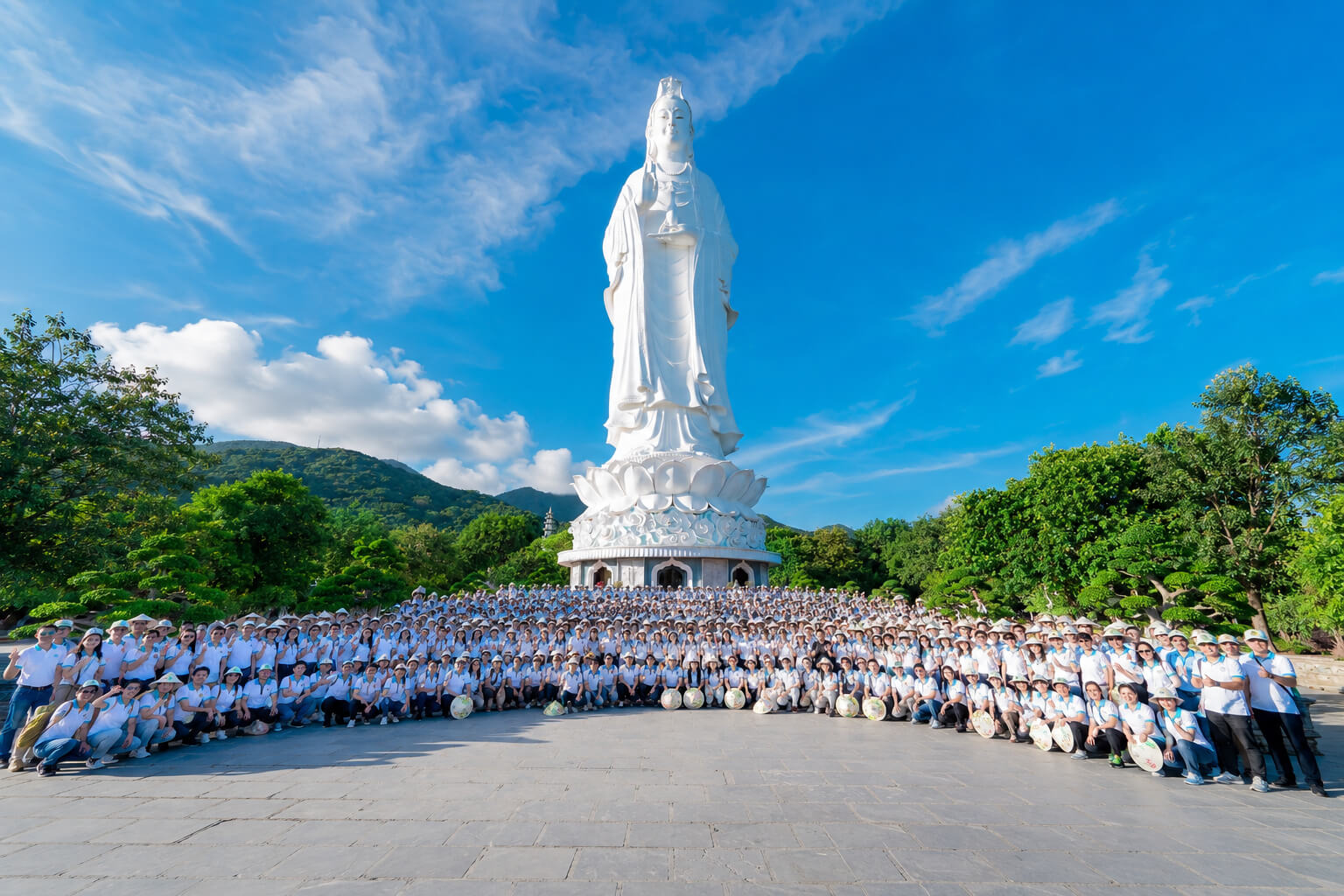
1. Context and relevance for Why Da Nang Works for 300 Pax but Not 800 Pax Without Split Routing
Da Nang is a common choice for incentives and meetings because it combines direct airport access (DAD), a concentrated hotel base, and short-drive attractions that can support compact programs. Operationally, however, Da Nang becomes sensitive when group movements scale beyond mid-size cohorts and attempt to operate as a single convoy with single-time windows.
The inflection point is practical: programs that can run as one routing plan at around 300 pax can become delay-prone at around 800 pax if they insist on staying unified (one hotel, one dispatch wave, one site entry window). At that scale, split routing (waves, multi-hotel allocation, parallel venues, or staggered timings) shifts from being a convenience to being the reliability mechanism.
For planners, “works” should be defined operationally - not as whether the destination is attractive, but whether movement and access are predictable under stakeholder scrutiny. In practice, that means on-time arrivals, predictable site entry, controlled dwell times, and low reputational risk when VIPs and senior executives are in the room.
This changes program design expectations. At 800 pax, planners should assume fewer “everyone together” moments, more parallel sessions or parallel touring blocks, and stricter run-of-show discipline (cutoffs, buffers, and enforcement of sequencing). The event can remain coherent, but the operating model must become modular.
2. Roles, scope, and structural considerations
A workable operating model starts with a shared planning sequence that makes feasibility sign-off explicit. A typical operational sequence is: RFQ - feasibility checks - capacity holds - routing design - dispatch plan - day-of control - incident reporting.
Role boundaries in Vietnam group operations should be documented early to avoid “approval without feasibility” failure modes:
- End client / MICE planner: final pax count bands, arrival patterns, program priorities, acceptable waiting thresholds, VIP movements, and decision rights for trade-offs.
- Agency (if separate): stakeholder management, consolidated briefing, ensures RFQ completeness; should not approve operational specifications without DMC validation.
- DMC: routing intelligence, supplier contracting, coach procurement and staging, permitting, venue liaison, staffing ratios, and on-site command structure.
- Suppliers (coach operators, hotels, venues/attractions): verified capacities, access and parking rules, driver allocation, load times, and operating windows.
Structural constraints that commonly force split routing decisions in Da Nang include:
- Airport staging limits: DAD can handle large arrivals, but simultaneous coach staging and curbside dwell time become limiting factors as group size increases.
- “Simultaneous” vs “total daily” coach availability: a frequent RFQ misunderstanding is assuming that because a city can supply vehicles across a day, it can stage them at the same time at one curb, one hotel bay, and one attraction parking area.
- Constrained access roads and parking caps: for sites commonly used in Da Nang programs (for example, Son Tra/Monkey Mountain corridors and Marble Mountains approaches), narrow roads and limited parking force micro-grouping and timed entry discipline.
This is the operational heart of Why Da Nang Works for 300 Pax but Not 800 Pax Without Split Routing: once the plan relies on one hotel, one convoy, and one arrival/site window, it stops being operationally defensible because it cannot absorb normal variability (flight delays, baggage release spread, traffic compression, and site entry pacing).
3. Risk ownership and control points
Large-group failures rarely come from a single catastrophic issue. They usually come from small variances compounding across tightly coupled movements. Typical failure modes planners should anticipate include:
- Arrival surge risk: immigration and baggage variability plus limited coach staging leads to curbside congestion and missed transfer windows.
- Convoy compression: too many vehicles released together creates bottlenecks on narrow approach roads and forces unplanned parking or illegal stops.
- Site entry queueing: attractions that enforce small-group caps (commonly reflected in operator specifications as low per-vehicle group sizes) create cascading delays if micro-group sequencing is not enforced.
- Reassembly friction: late sub-groups disrupt shared meals, plenary times, and evening functions - often where VIP presence is highest.
Risk ownership should be assigned by stage, not by title:
- RFQ ambiguity (client/agency): incomplete arrival patterns, unclear “must-be-together” moments, or undefined waiting thresholds create ungovernable routing later.
- Feasibility sign-off (DMC): routing design must include explicit constraints, wave logic, and buffers; if a single-convoy model is unworkable, that must be flagged as a structural issue, not a day-of improvisation.
- Capacity certification (suppliers): coach counts, driver allocation, staging rules, parking limits, and operating windows must be confirmed in writing and tied to dates and times.
- Day-of compliance (shared with client leads): headcounts, boarding discipline, and adherence to cutoffs require enforcement authority on the ground.
Preventive controls that are operational (not theoretical) typically include:
- RFQ control fields: arrival waves, luggage assumptions, VIP lanes (if applicable), maximum acceptable waiting time, and a list of “must-be-together” moments.
- Documented capacity validation: written supplier confirmations for vehicle counts, staging assumptions, parking limits, and any timed-entry rules.
- Dispatch governance: release windows, buffer policies, driver briefing scripts, and a no-freestyle-routing rule (drivers do not change routes based on personal preference).
Escalation logic and documentation discipline are what keep split routing controlled rather than chaotic:
- Triggers for switching to split routing: coach shortfalls, site parking refusal, unexpected congestion, or a missed critical time gate that would jeopardize a fixed-time plenary or gala.
- Chain of command: define who can approve reroutes, venue swaps, or schedule compression, and what constitutes an “emergency approval” versus a “standard change request.”
- Incident logging: time stamps, decision owner, decision rationale, corrective action, and outcome should be recorded to support post-event reporting and future risk reduction.
4. Cooperation and coordination model
At scale in Da Nang, coordination is less about having more messages and more about having a single operating picture. The coordination flow that typically works is planner - DMC - suppliers, with strict version control and a clear cut-off policy for pax changes.
Pre-event coordination should include:
- Single source of truth run-sheet with version control (who edits, who approves, and what changes require re-validation).
- Contact tree with escalation levels (dispatch, airport, hotel, venue, medical, lost-and-found).
- Cut-off times for pax adjustments that would affect fleet, rooming, or timed-entry blocks.
Airport operations coordination typically requires a defined on-ground structure rather than ad-hoc staffing:
- Ground supervisor (overall airport control), plus dedicated roles for meet-and-greet zoning, coach marshaling, and hotel liaison.
- Arrival monitoring against airline updates, with rules for when a wave is released versus held.
- Signage and zoning plan that reflects split routing (colors, bus numbers, and hotel allocations) and assumes baggage/trolley variability.
Hotel allocation coordination should cover rooming and movement mechanics, not just contracting:
- Rooming lists tied to movement groups (if a participant changes hotel, their bus assignment must change too).
- Coach parking and loading bay rules with timing slots to avoid bay gridlock.
- Dedicated group entrances where possible, to separate participant flow from public guests during peak loading.
Attraction and venue liaison should include timed-entry discipline and enforced hard stops:
- Timed entry blocks confirmed in advance, with buffer logic for late sub-groups.
- Parking marshaling and clear instructions for where vehicles wait if the parking area is at cap.
- Guide-to-driver communication protocols and declared hard stop times that protect downstream commitments.
Handoffs that must be explicit to avoid gaps include:
- Headcount ownership at each movement (client team vs DMC staff) and what happens when headcounts do not reconcile.
- Milestone confirmations: who declares “wheels rolling” and who confirms “arrived complete.”
- Sub-group labeling: color codes, bus numbers, and guide names that remain consistent across airport, hotel, and site movements to prevent cross-loading.
Operational communication discipline should be designed by function:
- Channel structure (radio/WhatsApp): separate channels for dispatch, guides, hotel, and venue to prevent signal-to-noise collapse.
- Standard SITREPs: delays, ETA shifts, incident flags, and recovery plan in a consistent template so decisions can be made quickly and documented.
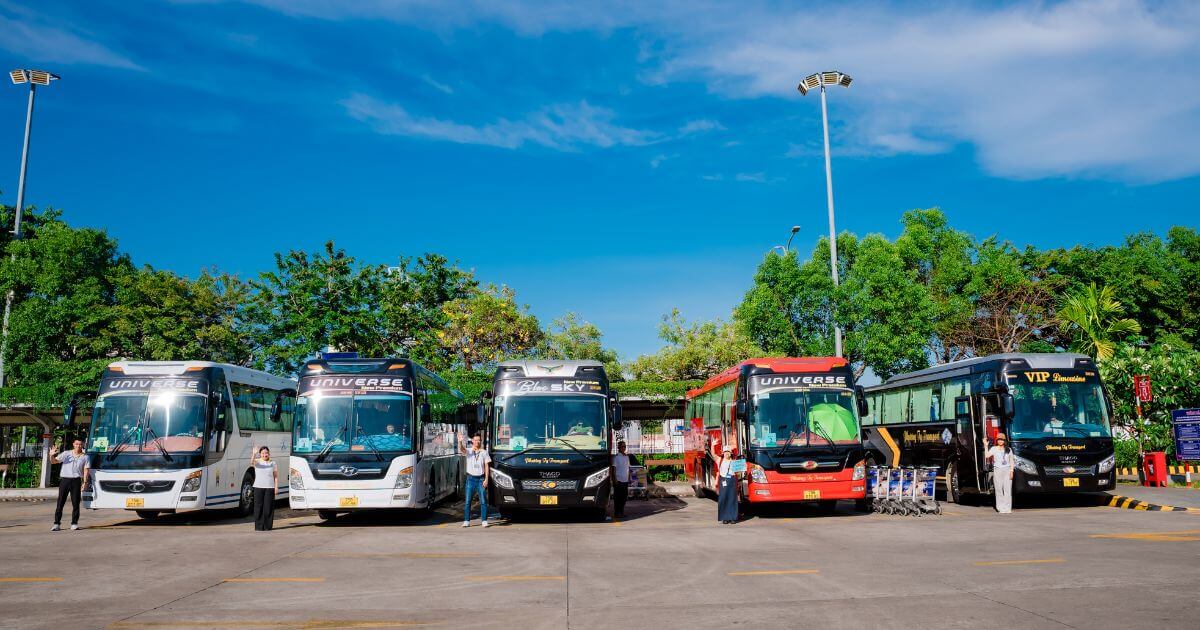
5. Practical routing intelligence for Da Nang MICE groups: executing 300 pax vs 800 pax with airport-to-hotel-to-site movements
Decision framework: single routing is typically viable when the group can be staged, dispatched, and received at each node (airport curb, hotel loading bay, site parking) without exceeding simultaneous capacity. Split routing becomes mandatory when any one node cannot absorb the convoy without creating queues that propagate into fixed-time commitments.
Checkpoint 1 - RFQ feasibility gate
Validate arrival profiles and staging feasibility at DAD by requiring the RFQ to specify arrival bands (not just landing times), baggage assumptions, and late-arrival cutoffs. At larger sizes, feasibility depends on whether the program accepts waves (for example, multiple release windows across several hours) rather than insisting on one synchronized transfer moment.
Identify “non-negotiables” (fixed plenary time, gala start, VIP appearance moments). These determine buffer requirements and whether downstream movements must be protected by early wave releases and strict boarding cutoffs.
Checkpoint 2 - Airport transfer design (DAD)
Plan for coach rotation rather than assuming all vehicles can stage at once. Even if total fleet is available across the day, the operational limit is often the ability to position coaches simultaneously without curbside congestion. Design meet-and-greet zoning to match wave logic, not airline logic.
Define luggage flow and contingencies: delayed baggage handling, late flights, and misdirected participants should have a pre-approved process (holding areas, late transfer windows, and documented handover to hotel arrival desks).
Checkpoint 3 - Fleet plan and dispatch controls
Match vehicle types to roads and sites. Standard large coaches can move high volumes efficiently on main corridors, but specific attractions and approach roads may require smaller vehicles or micro-grouping per operator access realities. Where access is constrained, do not treat “coach count” as the only variable - treat vehicle type and parking rules as equal constraints.
Build a timed dispatch matrix: release intervals, maximum convoy size per corridor, and recovery buffers. Define breakdown substitution logic (spare vehicles, transfer rules, and passenger reallocation) and ensure drivers receive a consistent briefing script with no-freestyle-routing enforcement.
Checkpoint 4 - Hotel allocation and loading operations
For larger groups, multi-hotel logic is often the most stable solution because it reduces simultaneous loading pressure and distributes coach access demands. If operating from one hotel, staggered departures must be engineered with enforceable time gates, bay slotting, and controlled lobby staging to prevent “soft delays” that compound.
Define lobby staging, signage, and headcount checkpoints. Headcount control is not an administrative task at 800 pax - it is the mechanism that protects fixed-time functions. Use identifiers (bus number, guide name, color code) that remain stable from airport to hotel to site.
Checkpoint 5 - Site routing for constrained attractions (e.g., Son Tra/Monkey Mountain, Marble Mountains, Hai Van Pass corridors)
Translate small-group entry realities into program architecture. Operator specifications commonly indicate small per-group caps (often reflected as low pax limits per vehicle for certain site corridors), which implies micro-groups, timed entry, and strict sequencing. If sequencing is not enforced, queueing becomes non-linear and will collapse downstream timing.
For 800 pax, plan a parallel venue strategy rather than forcing one attraction to absorb the entire group. Common patterns are two-site splits (for example, one cohort routed to one attraction while another cohort runs an alternative program block), or a city/peninsula split, with controlled reassembly points that can handle dwell and coach access.
Checkpoint 6 - Reassembly and “together moments” design
Select rally points that can absorb coaches and people without creating secondary congestion (adequate access, parking rotation options, and staging space). Define late-group handling so the full program is not penalized - for example, separate entry protocols, reserved seating blocks, or delayed service sequences where appropriate.
Formalize reassembly verification: who signs off, at what time, and what happens if incomplete. Without a sign-off rule, “together moments” become the highest-risk points for reputational exposure because stakeholders experience the delay visibly.
Built-in contingency playbooks (pre-approve with the client):
- Swap order of visits vs swap venues: define which is permissible without executive approval, and which requires formal sign-off.
- Weather and traffic triggers: pre-define thresholds that trigger wave compression, route avoidance, or earlier dispatch.
- VIP separation routing: define when VIP movements decouple from the main group and how they rejoin without destabilizing the run-of-show.
- Meal service protection plans: pre-agree how catering holds, staggered seating, or phased service protects a fixed start time.
Data freshness and verification requirements (for 2026 planning): Re-verify fleet availability, convoy and permit rules (especially if vehicle volumes exceed typical site tolerance), parking changes, and airport staging policies via current supplier confirmations and site surveys. Operator listings referenced in common planning research are dated 2023-2025 and should not be treated as evergreen operational approvals.
6. FAQ themes (questions only, no answers)
- What RFQ fields are mandatory to validate whether 800 pax can operate without unacceptable waiting time at DAD?
- How many arrival waves are operationally realistic at Da Nang International Airport for a single group, and what drives that limit?
- Which Da Nang-area attractions typically enforce small-group caps that force micro-grouping and timed entry?
- How should we decide between multi-hotel allocation vs staggered departures from one hotel for large groups?
- What are the most common day-of failure modes when attempting single-convoy routing for 800 pax?
- Who has decision rights to trigger split routing on the day (client lead, agency, DMC ops), and how is that documented?
- What buffer policies should be written into the run-of-show to protect a fixed-time gala dinner or plenary?
- How do we structure bus numbering, guide assignments, and headcount controls to prevent cross-loading across sub-groups?
- What documentation should be collected from coach operators and venues to evidence capacity and access compliance?
- What is the recommended incident reporting format to support client debriefs and future program risk reduction?