
 ID
ID IT
IT DE
DE ZH
ZH ES
ES FR
FRSaigon DMC — Ho Chi Minh City Gateway, MICE Convention Infrastructure, and South Vietnam Program Coordination
Ho Chi Minh City DMC services for travel agencies, tour operators, MICE planners, incentive houses, and luxury FIT specialists operating Vietnam's economic capital and South Vietnam gateway — Saigon Exhibition and Convention Centre (40,000 sqm, the largest exhibition venue in Vietnam), GEM Center (4,000 pax premium gala), Landmark 81 sky-high event space, contracted luxury hotel allotments (Park Hyatt Saigon, The Reverie Saigon, InterContinental Saigon, New World Saigon, Caravelle, Pullman, Sheraton, JW Marriott, Nikko, Equatorial, Windsor Plaza), five contracted Saigon River cruise vessels, Cu Chi Tunnels and Mekong Delta extension routing, Ho Tram beach extensions, and the SGN immigration handling discipline that protects every program's first-day execution.
An operational reference, not a service brochure. This page explains how a Ho Chi Minh City DMC works under real South Vietnam execution conditions.
Saigon DMC in short
Dong DMC is a Saigon (Ho Chi Minh City) DMC that runs group, MICE, incentive and luxury programs for travel agencies, tour operators and MICE planners. It coordinates events at SECC and GEM Center (4,000 pax), holds luxury hotel allotments at Park Hyatt Saigon, The Reverie, InterContinental, New World and Caravelle, programs Saigon River cruises on five contracted vessels, and extends groups to Cu Chi, the Mekong Delta, Phu Quoc and Ho Tram. Programs are quoted at B2B net rates and delivered under the agency's brand.
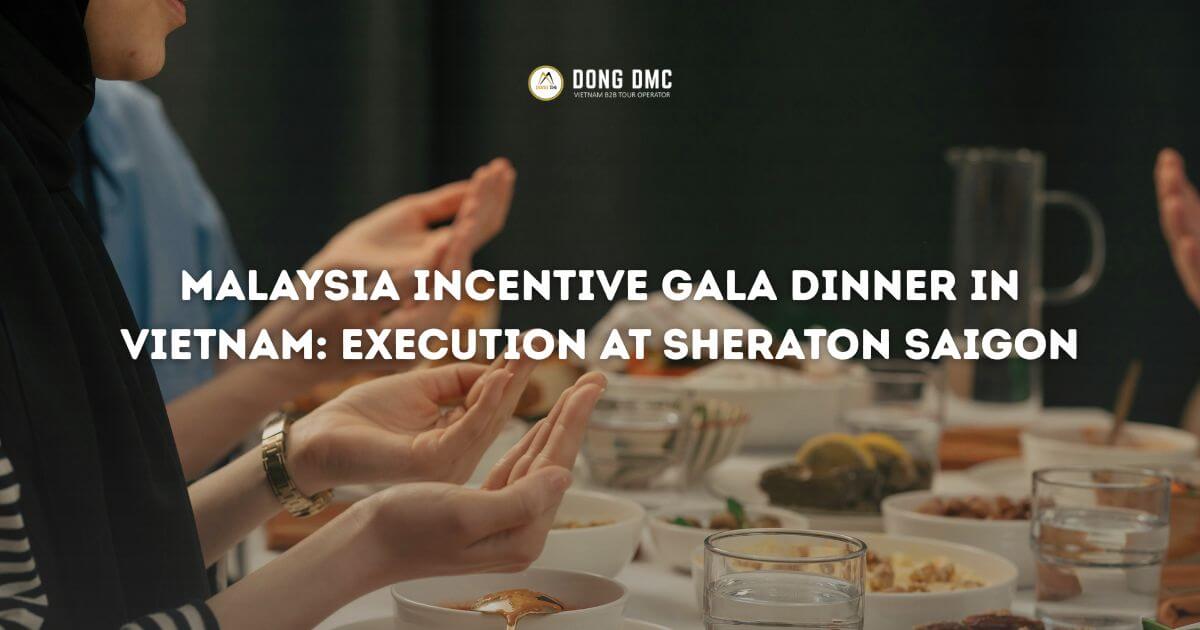
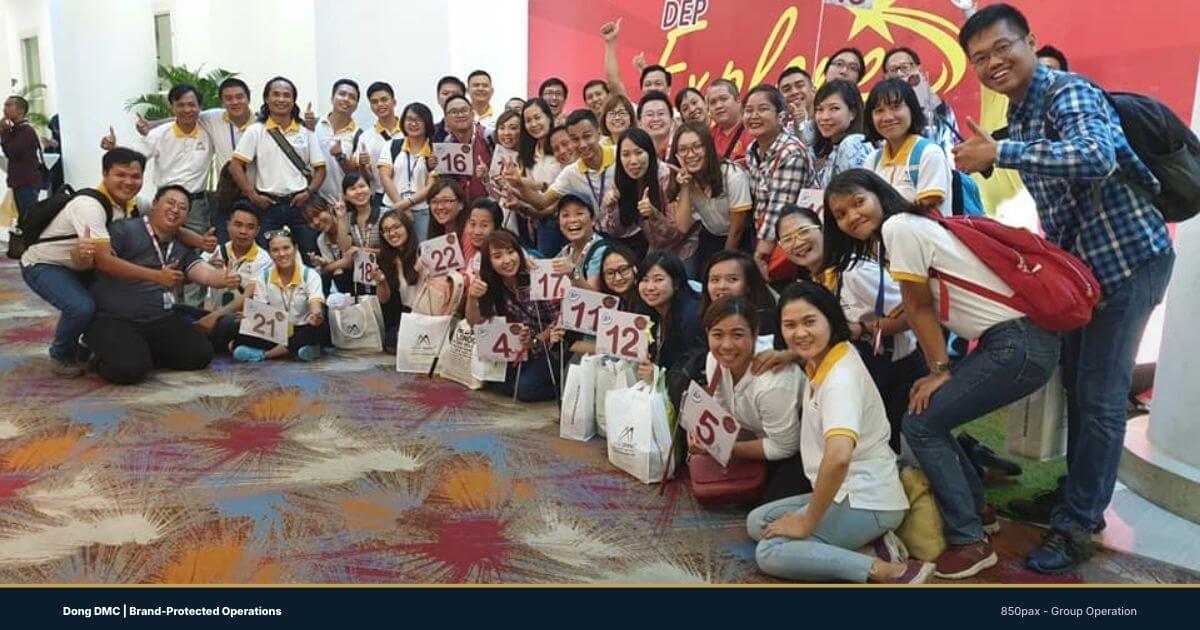
Saigon groups we have handled: galas, 850-pax flows and VIP incentives
.jpg)
Quick Reference: Ho Chi Minh City DMC
- What it is
- A B2B destination management company specializing in tour, MICE, incentive, and luxury programs in Ho Chi Minh City (Saigon), Vietnam's economic capital and the gateway for all South Vietnam circuits including the Mekong Delta, Phu Quoc, Vung Tau, and Ho Tram.
- Who it serves
- Travel agencies, tour operators, MICE planners, incentive houses, luxury FIT specialists, and pilgrimage program coordinators — not direct travelers.
- Primary services
- Cultural and heritage tour design, contracted luxury hotel allotments, MICE convention coordination at SECC and GEM Center, Saigon River cruise programming across five contracted vessels, gala dinner production, Cu Chi Tunnels and Mekong Delta extensions, Ho Tram beach extensions, FAM tour coordination.
- Geographic coverage
- Ho Chi Minh City (Districts 1, 3, 7), Cu Chi Tunnels, Mekong Delta (My Tho, Ben Tre, Can Tho), Phu Quoc, Vung Tau, Ho Tram, Long Hai, Cat Tien National Park.
- Airport
- Tan Son Nhat International Airport (SGN) — Vietnam's busiest airport with direct international flights from across Asia, Europe, North America, and Australia. 30–45 minutes to most central HCMC hotels.
- MICE capacity
- Saigon Exhibition and Convention Centre (SECC) 40,000 sqm — the largest exhibition venue in Vietnam. GEM Center 4,000 pax — premium gala flagship. InterContinental Saigon 800-pax ballroom. New World Saigon 700-pax group-scale.
- Best season
- November–April for dry season. May–October is rainy season but indoor venues operate year-round; afternoon rain is short and predictable.
- Climate
- Tropical year-round 28–35°C. Unlike Hanoi, no winter season — programs operate every month with humidity management.
1. What Dong DMC runs in Saigon
A Saigon (Ho Chi Minh City) DMC is a B2B inbound operator that designs and runs group, MICE, incentive and luxury programs in Vietnam's economic capital, the base for South Vietnam circuits. It works for travel agencies, tour operators and incentive houses at net rates and under the agency's brand, not for travelers directly.
In practice the work covers:
- Arrivals at Tan Son Nhat (SGN), including immigration briefing and fast-track decisions for VIP groups
- Hotel allotments across the central District 1 corridor and the other hotel zones
- MICE venues: SECC, GEM Center, Landmark 81 and hotel ballrooms
- Saigon River cruises across five contracted vessels, from entry-level to 5-star
- Heritage and evening programs, the Cu Chi Tunnels, and extensions to the Mekong Delta, Phu Quoc, Vung Tau and Ho Tram
2. Where to stay in Saigon: District 1, Districts 3 and 5, and Phu My Hung
Ho Chi Minh City DMC programs use three primary hotel zones, each suited to a different program profile. Hotel zone selection determines proximity to MICE venues, walkability to dining and nightlife, river cruise pier access, and the character of the Saigon experience. Dong DMC holds contracted allotments across all three zones with named luxury and 4-star partners.
Zone 1 — District 1 city center (the standard for incentive, MICE, and leisure)
District 1 is the heart of Ho Chi Minh City — the colonial-era core containing Notre-Dame Cathedral Basilica, Saigon Central Post Office, Independence Palace, the Opera House, Ben Thanh Market, and the dense concentration of 5-star hotels, restaurants, gala venues, and Saigon River cruise piers within 10–15 minutes of each other. This zone is the standard hotel base for virtually all Ho Chi Minh City DMC programs.
Contracted partner properties in this zone include Park Hyatt Saigon (245 rooms, Michelin Key recognized, Opera House views, the city's premier executive luxury address), The Reverie Saigon (Michelin Key, iconic Italian-design luxury with strong visual signature), InterContinental Saigon (800-pax grand ballroom, the largest hotel-integrated MICE venue in District 1), New World Saigon (700-pax group-scale, Asian market incentive favorite), Caravelle Saigon (heritage rooftop bar with Vietnam War-era history), Sheraton Saigon, Pullman Saigon Centre, JW Marriott Saigon, and Hotel Nikko Saigon.
Both Asian and European market groups request District 1 — Asian groups for shopping access to Ben Thanh Market and Takashimaya Saigon, European groups for walkability and café culture. The zone is the operational center of gravity for HCMC programs.
Watchout: District 1 traffic during 16:00–19:00 evening peak can compress short transfers between hotel and dinner cruise pier or rooftop venue. Programs must build realistic buffers for cross-district movement during this window.
Zone 2 — Secondary central districts (3, 5, 10)
Properties in Districts 3 and 5 (Cholon — the Chinese heritage quarter) and District 10 offer slightly lower price points than core District 1 while remaining within 5–10 minutes by road of the District 1 cultural and dining core. Contracted partner properties include Hotel Nikko Saigon, Equatorial Hotel, Windsor Plaza Hotel.
This zone suits 4-star tier MICE programs, mid-tier corporate stays, longer-term FIT travelers preferring local district immersion, and groups whose program centers on Cholon's Chinese heritage.
Watchout: secondary district hotels are not within walking distance of District 1 colonial sites. Daily transfers required for tour programs anchored in District 1.
Zone 3 — District 7 and Phu My Hung (modern urban)
District 7 (specifically the Phu My Hung development) is HCMC's modern urban district with newer hotels, contemporary architecture, and proximity to SECC. This zone suits MICE programs anchored at SECC, business travelers, longer-term corporate stays, and programs prioritizing modern urban context over colonial heritage.
Contracted partner properties available per program quotation. Distance from District 1 cultural core is 20–30 minutes by road.
Watchout: District 7 is operationally distinct from the District 1 cultural and dining core. Programs basing in District 7 require either dedicated transport for every District 1 movement or strong District 7-anchored programming. Not recommended for cultural-immersion FIT or first-time Vietnam visitors whose primary purpose is the colonial Saigon experience.
Beyond the standard zones — Ho Tram beach extension corridor
The Ho Tram coastal strip (2–2.5 hours by road from HCMC) hosts contracted luxury beach properties: InterContinental Ho Tram, Melia Ho Tram, and Banyan Tree Ho Tram. These are extension destinations, not HCMC base hotels — programs use Ho Tram for 1–2 night beach extensions added to HCMC city programs without requiring a domestic flight.
Hotel zone summary:
| Zone | Best For | Named Contracted Partners | Watchout |
|---|---|---|---|
| District 1 city center | Standard for incentive, MICE, leisure, and luxury FIT — both Asian and Western markets | Park Hyatt Saigon (Michelin Key), The Reverie Saigon (Michelin Key), InterContinental Saigon (800-pax ballroom), New World Saigon (700-pax), Caravelle, Sheraton, Pullman, JW Marriott, Hotel Nikko | Evening peak traffic 16:00–19:00 affects cross-district transfers |
| Secondary central (Districts 3, 5, 10) | 4-star MICE, mid-tier corporate, Cholon heritage immersion programs | Equatorial Hotel, Windsor Plaza, Hotel Nikko Saigon | Daily transfer required for District 1 cultural programming |
| District 7 / Phu My Hung | SECC-anchored MICE, business travelers, modern urban programs | Per program quotation | 20–30 min from District 1 cultural core — not for first-time leisure visitors |
| Ho Tram beach corridor (extension) | 1–2 night beach extension added to HCMC programs | InterContinental Ho Tram, Melia Ho Tram, Banyan Tree Ho Tram | 2–2.5 hour road transfer; not a base hotel zone |
3. MICE venues — SECC, GEM Center, Landmark 81, and named hotel ballrooms
Ho Chi Minh City is Vietnam's largest MICE destination by exhibition capacity and the country's primary venue for trade shows, large-scale corporate events, and product launches requiring scale beyond what other Vietnamese cities can absorb. The city's MICE positioning is distinct from Hanoi (formal capital conferences), Danang (resort-integrated MICE), and Phu Quoc (incentive island retreats) — Ho Chi Minh City delivers urban event scale, dining-led evening programming, and the dense District 1 venue concentration that no other Vietnamese MICE destination matches.
Saigon Exhibition and Convention Centre (SECC) — 40,000 sqm
SECC is the largest exhibition venue in Vietnam at 40,000 sqm, located in District 7 (Phu My Hung). The venue hosts Vietnam's major trade shows including VietBuild, Vietnam Expo, and international exhibitions across automotive, technology, food and beverage, and industrial sectors. SECC is purpose-built for exhibition-format events at scale beyond what hotel-integrated MICE venues can absorb.
Best for: large-scale trade shows and exhibitions, international product launches requiring exhibition floor space, multi-day MICE programs combining exhibition with conference components, and incentive groups visiting Vietnam aligned to specific industry exhibitions.
GEM Center — 4,000 pax premium gala
GEM Center is Ho Chi Minh City's flagship premium gala venue, with capacity up to 4,000 pax in single-room configuration. The venue specializes in themed gala dinners, brand product launches, and large-scale entertainment-led MICE events with full production infrastructure (staging, AV, lighting, themed scenography). GEM Center commands premium pricing within HCMC's MICE landscape but delivers production quality that mid-tier venues cannot match.
Best for: premium incentive gala dinners, brand product launches with full themed production, large corporate award ceremonies, premium dealer reward programs.
Landmark 81 — sky-high event space
Landmark 81 is Vietnam's tallest building (461 metres) and houses sky-high event venues with panoramic Ho Chi Minh City views from the upper floors. The Landmark 81 venues suit smaller premium MICE programs (typically up to 200 pax) where the building's architectural prestige and skyline views add commercial value to the event experience.
Best for: VIP corporate events, executive product launches, premium luxury brand activations, smaller-format gala dinners where height-and-view is part of the value proposition.
InterContinental Saigon — 800-pax grand ballroom
InterContinental Saigon's grand ballroom is the largest hotel-integrated MICE venue in District 1, with 800-pax capacity for gala dinners and conference plenary sessions. Same-property accommodation reduces transfer logistics and keeps multi-day events seamless.
Best for: integrated MICE programs requiring single-property venue + accommodation efficiency, premium incentive programs of 200–800 pax, executive corporate conferences with cocktail and banquet integration.
Riverside Palace — mid-tier convention within budget
Riverside Palace is HCMC's mid-tier convention venue capacity for groups working to budget constraints below GEM Center and SECC pricing tiers. The venue delivers serviceable production quality for series incentive programs, mid-tier corporate events, and dealer reward programs where budget allocation favors experience over production scale.
Best for: 4-star tier series incentive programs (multiple groups across the same week), Asian market mid-tier MICE, dealer reward programs working to mid-tier budgets.
Auxiliary venues and dining-led production
For programs requiring distinct themed venues, Dong DMC coordinates rooftop venues across District 1 (Caravelle Saigon Bar, Reverie rooftop, Bitexco SkyDeck), Saigon River yacht dinners on contracted vessels, large-format seafood buffet venues followed by private bar takeover (popular with Asian markets), and themed banquet productions at hotel ballrooms across all contracted partner properties.
For full Vietnam MICE planning logic, see Vietnam MICE & Corporate Events.
4. Saigon River cruises — Five contracted vessels across all budget tiers
The Saigon River dinner cruise is Ho Chi Minh City's signature evening Wow Factor moment — a unique feature unmatched by any other major Vietnamese tourist destination. Where Hanoi delivers Old Quarter atmosphere, Hoi An delivers lantern-lit heritage, and Halong delivers bay overnight cruises, Ho Chi Minh City delivers the only evening river cruise programming with skyline views of a major Vietnamese city. Dong DMC holds contracted relationships across five vessels covering all budget tiers — the broadest Saigon River cruise partnership of any Vietnam DMC.
Ben Nghe Cruise — Entry-level set menu
Ben Nghe is the entry-level contracted vessel, suited to budget-conscious group programs and standard set-menu dining. The vessel delivers the Saigon River experience at price points that allow river cruise inclusion in tighter program budgets without sacrificing the signature evening atmosphere.
Best for: budget-conscious group programs, entry-tier incentive group dinners, programs prioritizing river cruise inclusion within constrained budgets.
Indochina Queen — Buffet wooden boat with traditional performance
Indochina Queen is a traditional wooden-boat vessel offering buffet dining with traditional Vietnamese cultural performance integrated into the cruise. The vessel's wooden architecture, buffet format, and live performance create a casual luxury atmosphere suited to mid-tier group programs and family-leisure dinners.
Best for: mid-tier incentive groups, family programs, leisure groups seeking buffet flexibility plus cultural performance integration.
Saigon Princess — Fine dining with Filipino band
Saigon Princess is the contracted fine-dining tier vessel with upper-deck Filipino band entertainment. The cruise format delivers à la carte fine dining quality with live music creating a sophisticated evening atmosphere suited to premium incentive groups and luxury FIT programs.
Best for: premium incentive group dinners, luxury FIT couples, executive corporate dinners, programs valuing fine dining quality on water.
Rever Event Cruise — Up to 800 pax for incentive group dinners
Rever is the largest contracted vessel for incentive group dinners, with capacity up to 800 pax in event configuration. Full-vessel charter transforms the cruise into a private floating gala — themed entertainment, branded production, gala dinner formats, and the Saigon River skyline as backdrop. The standard for large incentive group dinners requiring vessel-scale beyond standard cruise capacity.
Best for: large incentive group full-vessel charter (200–800 pax), corporate floating gala dinners, brand activation evenings on water, dealer reward programs at scale.
SeaStar — 5-star overnight on the Saigon River
SeaStar is the newest 5-star overnight cruise on the Saigon River — a relatively new product category that did not exist in HCMC's evening programming until recently. The overnight format extends the Saigon River experience from a 2–3 hour dinner cruise to a full overnight stay with cabin accommodation, multiple dining periods, and morning return cruise.
Best for: luxury FIT seeking distinctive HCMC experiences, honeymoon programs, premium incentive VIP components, programs differentiating against standard hotel-only HCMC stays.
Saigon River cruise summary:
| Vessel | Tier | Format | Best For |
|---|---|---|---|
| Ben Nghe Cruise | Entry-level | Set menu dining | Budget-conscious group programs |
| Indochina Queen | Mid-tier | Buffet wooden boat with traditional performance | Mid-tier incentive, family programs |
| Saigon Princess | Premium | Fine dining with upper-deck Filipino band | Premium incentive, luxury FIT, executive corporate |
| Rever Event Cruise | Large incentive | Up to 800 pax full-vessel charter | Large incentive group floating gala dinners |
| SeaStar | 5-star overnight | Cabin accommodation overnight cruise | Luxury FIT, honeymoon, premium VIP |
5. SGN immigration handling — the operational signature of HCMC programs
Tan Son Nhat International Airport (SGN) is Vietnam's busiest airport. Arrival passenger volume can exceed practical immigration handling capacity during peak windows, creating long queues that begin before guests reach baggage and transfer. The immigration layer is where every Ho Chi Minh City DMC program's first-day execution is determined — and where most under-planned operators fail without realizing it.
The implications for a Ho Chi Minh City DMC are operational and discipline-level:
Three operational responses to SGN immigration pressure:
- Brief the group before landing — instruct guests that the first objective on landing is immigration position, not terminal wandering. Guests who roam, stop, or spread out before reaching the immigration queue lose position that cannot easily be recovered. The simplest behavior change has the largest execution effect.
- Fast track service for VIP groups — arrange airport fast-track immigration service for VIP groups, senior delegations, incentive leaders, and arrivals where first-day timing is narrow. Fast track is not only a comfort add-on. It is a schedule-protection tool when downstream programming includes same-day meetings, inspections, dinner cruises, or event sequences. The cost of fast track is significantly less than the cost of recovering from a 90-minute immigration delay that compresses the entire arrival evening.
- Dedicated arrival staff at the immigration approach — for groups above 100 pax, station Dong DMC arrival staff at the immigration approach point with pre-printed signage, guiding guests directly into the queue rather than allowing the group to spread across the terminal.
If the SGN immigration layer is ignored or treated as airport inconvenience rather than program-design responsibility → coach release delayed → hotel arrival compressed → planned welcome dinner cruise rushed → guests fatigued before any cultural programming begins → FINAL outcome: visible operational failure at the most-visible touchpoint, before guests have even left the airport.
This is the single most under-recognized operational discipline in Ho Chi Minh City DMC programming. A Ho Chi Minh City DMC's competence in this layer is the most reliable proof of operational depth — and the most reliable cost of poor planning when it is missing.
Movement planning aligns with Vietnam Luxury Transport & VIP Services.
6. Independence Palace, Cu Chi and other Saigon landmarks by program
Each HCMC landmark serves a different program purpose. A Ho Chi Minh City DMC selects combinations based on program length, group profile, market origin, and program type.
Notre-Dame Cathedral Basilica of Saigon
The neo-Romanesque Catholic cathedral in central District 1, built between 1863 and 1880 with materials shipped from France. The cathedral is undergoing major restoration; exterior viewing remains a standard photo stop for cultural and pilgrimage programs. Pairs with Saigon Central Post Office across the small adjacent square for a 30-minute morning cultural moment.
Saigon Central Post Office
Designed by Gustave Eiffel and completed in 1891, the Saigon Central Post Office remains a fully operational post office while serving as one of the city's most-photographed colonial-era landmarks. Vaulted ceilings, period maps on the walls, and the original architectural layout deliver a strong visual stop. Standard inclusion paired with Notre-Dame Cathedral.
Independence Palace (Reunification Palace)
The presidential palace of South Vietnam during the Vietnam War, preserved as it was on April 30, 1975 — the day North Vietnamese tanks crashed through the gates marking the end of the war. Original 1960s-era furniture, command bunkers, communication rooms, and rooftop helipad remain intact. Standard 1-hour inclusion for cultural and historical programs.
War Remnants Museum
Vietnam War history museum in District 3 documenting the war's impact through photography, documents, and outdoor displays of US military aircraft and vehicles. The museum is direct and confronting — programs should brief guests on the museum's perspective. Strong inclusion for educational, historical, and pilgrimage-adjacent programs; optional for purely leisure-focused itineraries.
Ben Thanh Market
The central market of Saigon, dating to 1914 in its current building. Fresh produce, textiles, handicrafts, street food, and souvenirs across hundreds of stalls. Standard cultural inclusion and shopping stop for Asian market groups; cyclo and walking tour programs route past or through Ben Thanh.
Bitexco Financial Tower SkyDeck
Observation deck on the 49th floor of Bitexco Financial Tower with 360-degree HCMC city views. Best at sunset for photography conditions. Suits programs with a sky-view component or as a brief stop within District 1 walking programs.
Cholon (District 5) Chinese heritage quarter
HCMC's Chinatown — the largest Chinatown in Vietnam — with Chinese temples (Thien Hau Temple, Quan Am Pagoda), traditional medicine shops, and Cantonese cuisine. Suits cultural immersion programs, Chinese heritage tours for Asian market groups, and slow-travel programs seeking less-visited HCMC neighborhoods.
Cu Chi Tunnels
The Vietnam War tunnel network 70km northwest of HCMC, used by Viet Cong forces during the war. Visitors can crawl through sections of the original tunnels (claustrophobic — guests with mobility or anxiety concerns should be advised), see hidden trap doors, command rooms, and military equipment. Half-day or full-day program. Available with military historian guide for educational and pilgrimage-adjacent groups, and with surprise Mekong Delta speedboat transfer for incentive Wow Factor moment integration.
Mariamman Hindu Temple
Active 19th-century Tamil-style Hindu temple in District 1, dedicated to the goddess Mariamman. Meaningful cultural stop for Indian market Hindu groups and pilgrimage programs incorporating Hindu heritage. Operates as an active place of worship — modest dress and respectful conduct required.
Jade Emperor Pagoda
Active Chinese-Vietnamese Taoist temple in District 1, built in 1909. Atmospheric, incense-filled, and architecturally distinctive. Suits cultural and spiritual programs.
Bui Vien Walking Street
HCMC's nightlife pedestrian street in the District 1 backpacker area. Lively, energetic, and observation-rich rather than refined — best as a 30-minute atmosphere walk for groups whose profile fits Bui Vien's character (younger leisure groups, atmosphere-seeking incentive groups). Not appropriate for conservative corporate audiences, family programs with young children, or delegations expecting refined evening venues.
Ngo Van Nam Japanese dining corridor
A dense corridor of Japanese restaurants, izakayas, and bars in District 1, delivering a more compact and curated evening structure than wider nightlife zones. Suits Japanese market visitors seeking familiar dining, refined evening programs for Asian executive groups, and curated bar circuits for premium FIT.
7. Evening and rooftop moments that define a Saigon program
Cultural Wow Factor moments are authentic, culturally specific surprise experiences designed into HCMC programs as standard practice. They are not upsells, not premium add-ons, and not charged separately — they are how a Ho Chi Minh City DMC program signals craft and care. Each moment is selected based on group profile, market origin, and program type.
Saigon River Dinner Cruise (the signature moment)
The Saigon River dinner cruise is HCMC's defining Wow Factor — the only major Vietnamese city evening river cruise with skyline views from the water. Selected from across five contracted vessels (Ben Nghe, Indochina Queen, Saigon Princess, Rever Event, SeaStar) based on group budget, size, and program tier. The cruise is HCMC's most-shared social content moment and the program component that distinguishes Saigon from other Vietnam destinations.
Private Vespa City Tour at Golden Hour
Vintage vespa tour of District 1 with one driver per passenger. Routes pass colonial architecture, dining corridors, hidden alleys, and street food districts at golden hour (16:30–18:00 depending on season). The pace is slow, the route is photographic, and the experience captures HCMC's commercial-cultural fusion in a way no coach or walking program can. Strong for premium FIT, honeymoon, incentive activity components, and KOL groups.
Cu Chi Tunnels with Surprise Mekong Speedboat Transfer
Standard Cu Chi Tunnels half-day program reframed as Wow Factor: after Cu Chi visit, guests transfer by surprise speedboat down the Saigon River to a riverside lunch destination — replacing the standard coach return with an experiential journey. The speedboat transfer becomes the day's defining moment rather than a logistics recovery. Strong for incentive Wow Factor, premium FIT, and cultural programs with budget for production-tier execution.
Hanoi-Style Cyclo Tour Through District 1
Cyclo (cycle-rickshaw) tour through District 1 streets, colonial architecture, Ben Thanh Market area, and riverside promenades. One driver per cyclo, one passenger. Preferred format for Western (EU, ANZ, US) market incentive groups seeking slow-paced, street-level immersion. Counterpart to hop-on-hop-off bus city tour preferred by Asian market groups.
Rooftop Welcome Cocktails
Rooftop welcome cocktails at Caravelle Saigon (Saigon Saigon Bar — the historic Vietnam War-era press bar with rooftop history), The Reverie rooftop, or Bitexco SkyDeck delivering panoramic city views as the group's first arrival evening moment. Strong impact for incentive group welcomes and luxury FIT couples.
Michelin Dining Circuit
HCMC has multiple Michelin-recognized restaurants. Curated Michelin dining circuit programs sequence 3–5 starred and recommended venues across a multi-day program for culinary-focused luxury FIT, gourmet-themed incentive groups, and food media programs. Counterpart to Hanoi's similar Michelin circuit programming.
Hidden Bar Circuit
HCMC's hidden bar scene — speakeasy-style venues behind unmarked doors, bookstore facades, or laundromat fronts — has grown into a defining feature of the city's evening character. Hidden bar circuits suit premium FIT couples, design-conscious leisure travelers, and small premium incentive components seeking distinctive evening programming. Programs match hidden bar selections to group profile and require advance booking coordination.
Street Food Walking Tour
Walking tour through District 1 sampling Saigon's signature street foods — banh mi, pho, com tam (broken rice), banh xeo (Vietnamese savory pancake), Vietnamese coffee — at named partner stalls and restaurants. HCMC's street food character is less heritage-driven than Hanoi's and more daily-life integrated. Strong inclusion for cultural immersion travelers and family groups.
AO Show or A O Show at Saigon Opera House
AO Show (sometimes performed as "À Ố Show") at the Saigon Opera House — a contemporary Vietnamese cultural performance combining traditional music, bamboo acrobatics, and reflective storytelling about rural and urban Vietnamese life. Strong inclusion for cultural programs and a distinctive HCMC counterpart to Hanoi's water puppet performance tradition.
8. South Vietnam gateway — extensions from Ho Chi Minh City
Ho Chi Minh City is the operational gateway for South Vietnam tourism. Mekong Delta, Phu Quoc, Vung Tau, and Ho Tram all connect through HCMC, and the Saigon handling layer determines whether the South Vietnam circuit operates smoothly or fails at connection points.
Ho Chi Minh City DMC gateway routing coordination includes:
HCMC → Mekong Delta
The Mekong Delta is HCMC's signature regional extension — Vietnam's "rice bowl" with traditional sampan boat rides, floating markets, fruit gardens, traditional music performances, and farm-to-table dining. Three primary delta destinations:
- My Tho — closest, 1.5 hours by road. Standard half-day or full-day program with sampan boat through Tien River channels, coconut candy production demonstration, and traditional music. Best for time-constrained programs and incentive day excursion components.
- Ben Tre — coconut country, 2.5 hours by road. Deeper Mekong character with coconut industry villages, smaller waterway boats, and homestay options. Suits cultural immersion programs.
- Can Tho — deeper Mekong, 3.5 hours by road or 1-hour domestic flight. Cai Rang Floating Market (the largest floating market in the Mekong Delta), Ninh Kieu riverside promenade, and full overnight programs. Best as 1–2 night extension format for serious Mekong immersion.
HCMC → Phu Quoc
1-hour domestic flight from SGN to Phu Quoc International Airport. Phu Quoc is Vietnam's premier island incentive and luxury destination with 30-day visa-free policy for all international arrivals — a significant operational advantage for mixed-nationality groups. Standard accommodation partners include JW Marriott Phu Quoc Emerald Bay (Bill Bensley design, 600-pax ballroom + outdoor lawn), Regent Phu Quoc (all-pool suites, intimate luxury), and Vinpearl Convention Center (1,500 pax). Best for premium island incentive programs, luxury FIT, honeymoon, and 4–6 day beach extensions.
HCMC → Vung Tau
2 hours by road or 90 minutes by hydrofoil (when operating). Vung Tau is HCMC's traditional weekend beach destination — closer than Ho Tram, more developed, with Russian-era resort atmosphere. Suits short-stay beach extension programs and weekend incentive group escapes when air-based extensions are not budgeted.
HCMC → Ho Tram
2–2.5 hours by road. Ho Tram is the newer luxury beach corridor with contracted partners InterContinental Ho Tram, Melia Ho Tram, and Banyan Tree Ho Tram. The Ho Tram extension adds 1–2 nights to HCMC programs without requiring a domestic flight, providing a beach component for programs that cannot accommodate Phu Quoc air timing. The Bluffs Golf Course at Ho Tram is one of Vietnam's premier coastal golf venues.
Standard South Vietnam circuit combinations
Classic South circuit: HCMC (3 nights) → Phu Quoc (3 nights) → return SGN → departure. 6–7 days. The dominant Asian and Western leisure pattern for South Vietnam-only programs.
HCMC + Mekong + beach: HCMC (2 nights) → Mekong Delta (1 night Can Tho) → HCMC (1 night) → Ho Tram or Phu Quoc (2–3 nights) → departure. 6–8 days, broader South Vietnam exposure.
Cross-border to Cambodia: HCMC → Mekong Delta → Phnom Penh by road or river crossing → Siem Reap (Angkor Wat) → return through HCMC. See Vietnam & Cambodia Luxury Programs.
Destination logic should be evaluated through Vietnam Location DMC.
9. Saigon programs by format: MICE, incentives, luxury and South Vietnam extensions
MICE and incentive programs: The core volume program for HCMC. Asian market groups (Vietnamese, Filipino, Indonesian, Indian, Thai, Korean) base in District 1 with structured MICE venue work at SECC, GEM Center, or hotel ballrooms. Programs typically include Saigon River dinner cruise (the signature evening Wow Factor), Cu Chi Tunnels excursion, vespa or cyclo city tour, and Mekong Delta day program. See Vietnam Incentive Travel.
Premium MICE and conferences: 5-star international conferences and premium product launches at Ariyana Convention Centre with Furama-zone hotel block — note: HCMC's premium MICE landscape uses GEM Center for themed gala scale and InterContinental Saigon for hotel-integrated programs. See Vietnam MICE & Corporate Events.
Trade shows and exhibitions: SECC (40,000 sqm) is the venue choice for international trade shows requiring exhibition floor space. Standard for VietBuild, Vietnam Expo, and major industry exhibitions.
Luxury FIT and honeymoon: Park Hyatt Saigon (Michelin Key) or The Reverie Saigon (Michelin Key) base. Curated dining at Michelin-recognized restaurants, Saigon River sunset cruise, private vespa city tour, hidden bar circuits, Cu Chi Tunnels with private military historian guide, optional Phu Quoc luxury extension. See Vietnam Luxury Travel.
Cultural and historical programs: Independence Palace, War Remnants Museum, Notre-Dame Cathedral and Saigon Central Post Office, Ben Thanh Market, Cholon Chinese heritage quarter, AO Show at Saigon Opera House. 2–3 days standalone or extended within multi-region Vietnam circuits.
Mekong Delta and South Vietnam circuits: HCMC as the gateway with Mekong Delta day or overnight programs, optional Phu Quoc or Ho Tram beach extensions, comprehensive South Vietnam exposure across 6–8 days.
Multi-region Vietnam programs: HCMC as the South gateway in comprehensive Vietnam programs typically combining Hanoi (North), Hoi An or Da Nang (Central), and HCMC + extension (South) across 11–14 days.
Battlefield and educational programs: HCMC as the southern hub for veteran-led Vietnam War battlefield education programs combining Cu Chi Tunnels with onward routing to DMZ, Khe Sanh, and Hue Citadel. Strong for US faculty-led student programs and historical-interest groups.
Cross-border Cambodia programs: HCMC as the South Vietnam anchor in combined Vietnam-Cambodia programs, with Mekong Delta crossing or domestic flight to Phnom Penh and Siem Reap (Angkor Wat). 14–21 day comprehensive Indochina circuits. See Vietnam & Cambodia Luxury Programs.
10. Tan Son Nhat, District 1 traffic and daily logistics in Saigon
Tan Son Nhat International Airport (SGN) access
Vietnam's busiest airport with direct international flights from Asia (Seoul, Tokyo, Singapore, Bangkok, Hong Kong, Taipei, Manila, Kuala Lumpur, Jakarta, major Chinese cities), Europe (Paris CDG direct on Vietnam Airlines and Air France, Frankfurt direct), North America (Los Angeles direct on Vietnam Airlines, San Francisco), and Australia (Sydney, Melbourne). Domestic connections to Hanoi, Da Nang, Phu Quoc, Nha Trang, and other Vietnamese airports.
Airport-to-central-District-1 transfer is 30–45 minutes by limousine or coach, longer during 16:00–19:00 evening peak traffic. Programs with arrival flights landing during evening peak should build buffer time accordingly.
Group size scaling:
20 pax → standard handling, single coach or 2–3 limousine vans
50 pax → coordinated coach + lead vehicle, structured immigration approach briefing
100 pax → multi-coach staging, sequenced arrival waves, dedicated SGN immigration approach staff
200 pax → full coordinated transfer team, multi-property hotel block consideration when single property cannot absorb full block
500+ pax → reserved for major MICE programs at SECC or GEM Center with multi-hotel block coordination across District 1
1,000+ pax → full SECC trade show or GEM Center premium gala programs with 4–5 month advance hotel block secured
Scaling follows Vietnam Group Travel.
Check-in timing:
Standard 14:00 hotel check-in combined with morning Asian-market flight arrivals (typically arriving 09:00–13:00) and afternoon European/American-market arrivals (typically arriving 14:00–18:00) creates absorption windows. Pre-check-in programming options: airport welcome ceremony, lunch at District 1 partner restaurant, Notre-Dame and Post Office quick visit, Independence Palace 1-hour visit, or pool/lounge access at hotel with luggage stored.
Traffic and movement:
HCMC traffic peaks 07:00–09:00 morning and 16:00–19:00 evening. Programs crossing multiple districts or shifting from hotel to cruise pier to rooftop venue during evening peak require realistic buffers. District 1 internal movements are manageable; cross-district movements (District 1 to District 7 SECC) require 25–35 minutes outside peak and 45–60 minutes during peak.
Weather contingency:
HCMC is tropical year-round (28–35°C). November–April is dry season — the optimal MICE and outdoor program window. May–October is rainy season with predictable afternoon thunderstorms (typically 2–4 PM, lasting 30–90 minutes) followed by clear evenings. Programs in rainy season operate with indoor-flexible afternoon programming and evening outdoor components after the storm window passes. Indoor venues (SECC, GEM Center, hotel ballrooms) operate effectively year-round.
Transport planning aligns with Vietnam Luxury Transport & VIP Services.
Arrival-day failure at SGN: a worked example
This illustrates how small misalignments compound into visible failure when the Ho Chi Minh City handling layer is under-planned:
250-pax Filipino incentive group → flight arrives SGN 14:30 → immigration approach not pre-briefed → guests roam terminal collecting visa-free arrival forms, photographing arrivals hall → 60-minute immigration queue position lost due to staggered approach → baggage release 16:00 → coach dispatch 16:30 → arrival District 1 hotel at 17:30 during evening peak traffic → hotel check-in queue overwhelms front desk despite single-property allotment → rooming list distribution delayed → 90-minute check-in cascade → planned 19:00 Rever Event Cruise charter board call missed → guests board at 20:30 with cruise departure delayed → dinner service rushed → planned skyline photography at sunset (18:30) entirely missed → branded gala production compressed across reduced cruise duration → return to hotel 23:00 → next-morning Mekong Delta departure scheduled 07:30 → guests fatigued and slow → coach departure 08:30 → Mekong Delta full-day program compressed → riverside lunch shortened → return HCMC 18:00 → second-evening rooftop welcome reduced.
FINAL outcome:
Day 1 in HCMC — the program's flagship Saigon River dinner cruise gala — is delivered as a logistics recovery rather than the experiential centerpiece it was designed to be → cascading negative tone affects Day 2 Mekong programming → guests perceive disorganization at the most-photographed touchpoints → the cruise vessel charter (a meaningful per-pax cost component) delivers reduced experiential return → program credibility damaged.
This failure is entirely preventable with correct advance planning: pre-flight briefing distributed to group leaders 7 days pre-arrival on SGN immigration approach discipline, dedicated Dong DMC arrival staff stationed at the immigration approach point with pre-printed signage, fast-track service consideration for the group's senior delegation, advance rooming list distribution to hotel front desk 7 days pre-arrival, evening peak traffic buffer built into hotel-to-cruise transfer timing (90 minutes minimum), and Saigon River cruise board call set 30 minutes before vessel departure to absorb arrival variance.
11. Saigon versus Hanoi and the beach destinations
Compared to Hanoi:
HCMC → economic capital, South Vietnam gateway, year-round tropical climate, less-restricted vehicle access, dining-led evening programming, sleepless city character, busiest international airport
Hanoi → political and cultural capital, North Vietnam gateway, four-season climate, regulated Old Quarter coach access, heritage-led evening atmosphere, UNESCO Imperial Citadel
Compared to Da Nang:
HCMC → urban energy and commercial variety, MICE exhibition scale (SECC 40,000 sqm), dining and nightlife depth, less natural decompression
Da Nang → resort-integrated MICE (Ariyana 2,500 pax), beach focus, contemporary city, predictable flow
Compared to Hoi An:
HCMC → contemporary urban capital, no UNESCO heritage town atmosphere, dining-led, MICE scale
Hoi An → UNESCO heritage town, lantern-lit walkable atmosphere, cultural immersion-led
Common HCMC program combinations:
South-only circuit: HCMC (3 nights) → Phu Quoc or Ho Tram (3 nights) → return SGN. 6–7 days. Asian and Western leisure standard.
HCMC-led MICE: HCMC (4 nights with SECC trade show or GEM Center gala) → Phu Quoc post-program reward extension (2–3 nights). 6–7 days.
Multi-region Vietnam: Hanoi (2–3 nights) → Halong Bay (2 nights) → Hanoi → Hoi An (3 nights) → Ho Chi Minh City (2–3 nights) → departure. 11–14 days. Comprehensive Vietnam circuit covering all three regions.
Vietnam + Cambodia + beach: HCMC (2 nights) → Mekong crossing into Cambodia → Phnom Penh → Siem Reap (Angkor Wat) → return HCMC → Phu Quoc (4–5 nights beach finish). 14–21 days. ANZ market premium product.
Destination logic should be evaluated through Vietnam Location DMC.
12. Gaps to look for in a Saigon proposal
The general checklist is on How to Choose a Vietnam DMC. For Saigon specifically, ask to see:
- A written SGN arrival plan: immigration briefing, fast-track logic for VIPs, and arrival staff for groups above 100 pax
- Allotments across several District 1 hotels for blocks a single property cannot absorb
- Which of the five river cruise vessels fits your group size and budget tier
- Buffers between late evening programs and early Mekong or Phu Quoc departures
- Named venues, vessels and restaurants in the quotation, not generic placeholders
13. Immigration, traffic and late-night risks in Saigon
- SGN immigration queues: a group that is not briefed before landing can lose an hour at immigration and reach the hotel in evening peak traffic.
- Hotel blocks: groups larger than one hotel can absorb need a planned multi-property split with coordinated arrivals.
- Evening traffic: transfers between 16:00 and 19:00 need extra time, especially to river cruise piers.
- Late night, early start: a dinner cruise ending at 22:30 before a 07:00 Mekong departure weakens the next day.
- Evening tone: Bui Vien Walking Street does not suit every corporate audience, so nightlife is filtered by client profile.
14. When Saigon should be the base, and when it should not
Works best for
- MICE and incentive programs of 100–500 pax with a District 1 base and a river dinner cruise
- Exhibitions and trade shows at SECC (40,000 sqm)
- Gala dinners up to 4,000 pax at GEM Center
- Luxury FIT and honeymoon stays at Park Hyatt Saigon or The Reverie Saigon
- South Vietnam circuits with the Mekong Delta, Phu Quoc or Ho Tram, and Vietnam–Cambodia routes
Better elsewhere
- Heritage-town atmosphere: Hoi An
- Highland trekking: Sapa
- Imperial heritage: Hue
- A quiet luxury beach base: Phu Quoc or Ninh Van Bay
15. FAQ
16. Related topics
- Vietnam DMC
- Hanoi DMC
- Vietnam Location DMC
- Vietnam Luxury Travel
- Vietnam Luxury Hotel & Resort Partners
- Vietnam Luxury Cruise & Yacht
- Vietnam MICE & Corporate Events
- Vietnam Incentive Travel
- Vietnam Culinary & Wellness Experiences
- Vietnam Pilgrimage Travel
- Vietnam & Cambodia Luxury Programs
- Vietnam Group Travel
- Vietnam DMC Operations
- Vietnam Luxury Transport & VIP Services
- How to Choose a Vietnam DMC