ID
 IT
 DE
 ZH
 ES
 FR
Top DMCs in Vietnam: How to Choose a Partner (2026)
Popular DMCs in Vietnam for Travel Professionals
And Why “Popularity” Alone Is Rarely the Right Selection Criteria
Vietnam continues to rank among Asia’s most requested inbound destinations for group travel, incentives, corporate programs, and special-interest tours. As demand grows, so does the number of Destination Management Companies (DMCs) operating in the market.
Many articles attempt to answer the same question: “Who are the top or most popular DMCs in Vietnam?” For experienced travel professionals, however, popularity is only a surface signal — and often a misleading one.
For professionals evaluating Vietnam DMCs
A structured selection framework — focused on operational depth, risk ownership, and mandate readiness — is documented here:
Vietnam Travel Partner FrameworkWhy “Top DMC” Lists Are Often Misleading in Vietnam
Vietnam’s inbound travel market is structurally different from many mature destinations. Several factors complicate DMC selection:
- The market is highly fragmented, with operators ranging from small boutique firms to large regional groups
- Many DMCs are strong in one source market but limited outside it
- Visibility online does not necessarily reflect operational depth, risk ownership, or decision authority on the ground
- Group size, routing complexity, and event scale can change the suitability of a partner entirely
Planning context: Before shortlisting DMCs, understanding what local decision authority actually changes in practice helps set the right evaluation criteria. See: Why Use a Local DMC in Vietnam →
How Professional Buyers Actually Evaluate Vietnam DMCs
Across agencies, corporates, and institutional planners, selection criteria tend to shift away from rankings and toward operational realities, such as:
- Who holds responsibility when plans change on the ground
- How decisions are approved during disruptions (weather, flights, venue issues)
- Whether the DMC understands the planning logic of different source markets
- How accountability is handled after the sale — not just before it
These considerations rarely show up in “Top 10” lists — yet they determine whether a program runs smoothly or becomes a liability.
For professionals evaluating Vietnam DMCs through an operational lens, a structured selection framework is documented here:
/en/page/vietnam-travel-partnerVietnam DMC Landscape: Common Operator Profiles
Rather than ranking companies, it is more useful to understand the types of DMCs operating in Vietnam and where each typically fits best.
1. Large Multi-Country Operators
Often part of regional or global groups, these companies benefit from scale, brand recognition, and standardized processes. They are commonly used for multi-destination Asia programs but may rely heavily on local execution teams.
2. Vietnam-Focused Inbound Specialists
These operators concentrate exclusively on Vietnam, often with deep local supplier networks and destination knowledge. Many are strong in leisure groups, incentives, or specific segments.
3. Boutique & Niche DMCs
Smaller operators specializing in luxury, experiential travel, or special-interest programs. Often strong creatively, with personalized service.
4. Event-Driven or MICE-Only Operators
Companies focused primarily on events, meetings, or production rather than full destination management.
Where Dong DMC fits
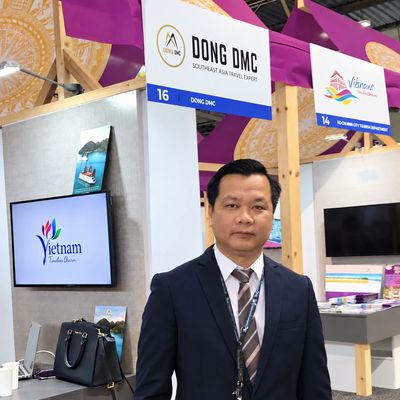
Dong DMC: a Vietnam-focused inbound specialist
Dong DMC is a Vietnam DMC in Ho Chi Minh City, operating since 2008 under International Tour Operator Licence 79-168/TCDL-GPLHQT. It runs group, incentive and MICE programs in Vietnam and Cambodia as the white-label ground team of travel agencies and tour operators, at net rates and under the partner's brand.
- Best suited for: group, incentive and MICE programs where one local team owns decisions on the ground
- Partner protection: no marketing to the agency's clients; each client stays tagged to the source agency; a client who contacts us directly is referred back to that agency
- Response: a named specialist replies within 60 minutes in business hours
Why Visibility ≠ Mandate Readiness
In Vietnam, many DMCs appear “popular” because they are active in marketing and SEO, visible on B2B platforms, or frequently referenced in trade content. While visibility helps discovery, it does not answer more critical questions:
- Who carries operational risk?
- Who has authority to approve changes onsite?
- Who absorbs accountability when plans fail?
Moving From Lists to Selection Logic
Increasingly, professional buyers treat DMC selection as a mandate decision, not a vendor comparison. This means asking:
- Can this partner scale responsibly?
- Do they understand my market and travelers?
- Do they operate with post-sale accountability?
A structured framework for answering these questions — grounded in real inbound operations — is outlined here: Vietnam Travel Partner Framework
Final Thought for Travel Professionals
“Top” and “popular” lists are useful for initial market orientation. They are rarely sufficient for final partner selection. In Vietnam’s fast-growing inbound market, successful programs depend less on visibility and more on execution discipline, risk ownership, and trust.
For professionals responsible for group travel, incentives, corporate programs, or delegations, moving beyond rankings is not a preference — it is a necessity.
Related planning pages: What a Vietnam DMC is, How Vietnam DMC operations work, How to choose a Vietnam DMC, Hanoi DMC, Da Nang DMC, Ho Chi Minh City DMC, Phu Quoc DMC, Vietnam MICE DMC, DMC Vietnam in italiano, Vietnam DMC für deutsche Reiseveranstalter, Réceptif Vietnam B2B, 越南 DMC(中文).