
 ID
ID IT
IT DE
DE ZH
ZH ES
ES FR
FRHalong Bay DMC: Group Cruise Booking, Pier Routing and Ground Handling
Dong DMC is the Halong Bay ground handler for travel agencies, tour operators and MICE planners: group cruise booking and full-vessel charters with Paradise Cruises, Indochina Sails and other named vessels, pier routing (Tuan Chau, Got, Hon Gai and the Paradise pier), route codes, Hanoi transfers of about 2.5 hours and weather plans.
An operational reference, not a service brochure. This page explains how a Halong DMC works under real Northern Vietnam execution conditions.
Halong Bay programs in brief
Dong DMC is a Vietnam DMC that runs Halong Bay cruise programs for travel agencies, tour operators and MICE planners. It books cabins with Paradise Cruises, Indochina Sails and Scarlet Pearl, routes groups through Tuan Chau, Got, Hon Gai and the Paradise private pier, checks the government route codes (A–F), and charters full vessels for incentive groups of 100+ pax. Programs are quoted at B2B net rates and delivered under the agency's brand.
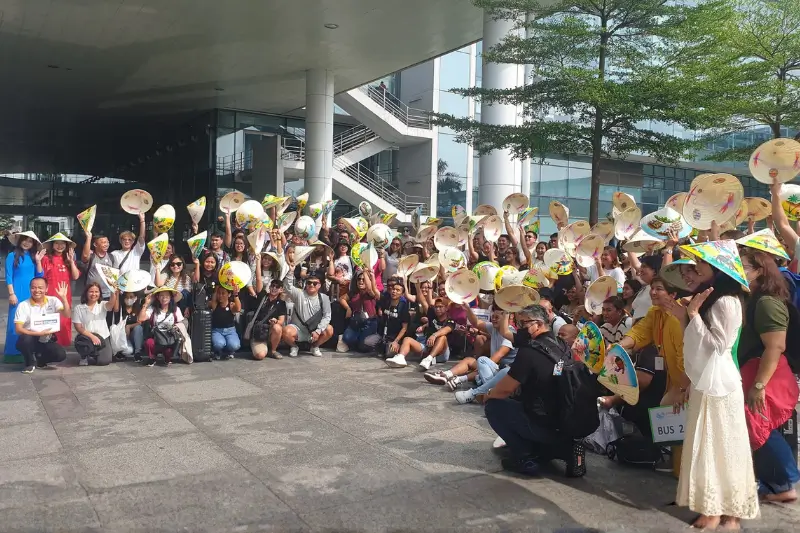
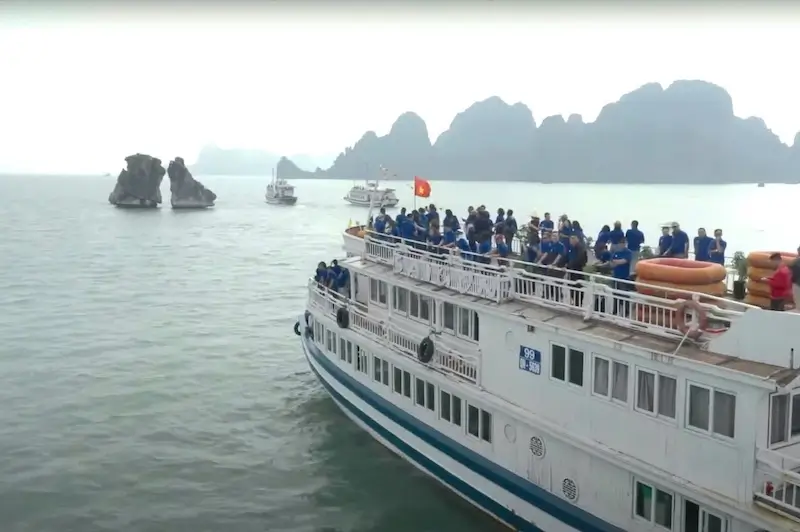
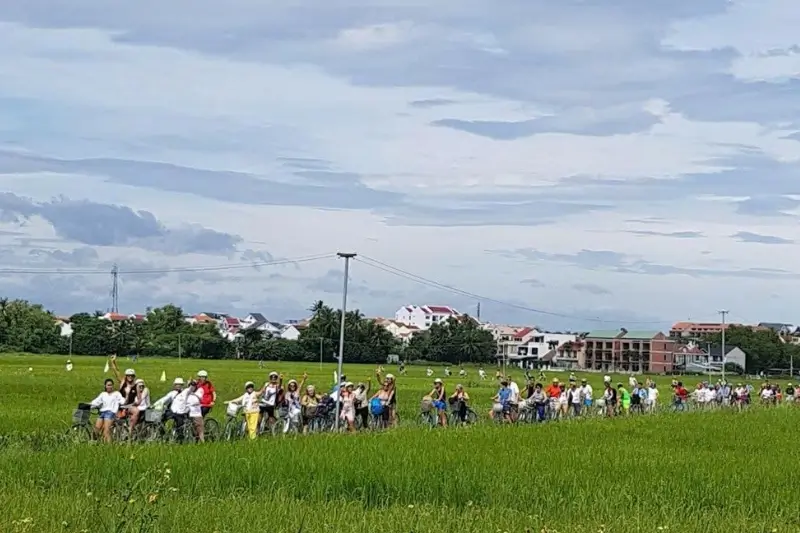
Halong cruises we have run for incentive and leisure groups
Quick Reference: Halong DMC
- What it is
- A B2B destination management company specializing in cruise programs to Halong Bay, Vietnam's UNESCO World Heritage marine destination in Quang Ninh province, Northern Vietnam.
- Who it serves
- Travel agencies, tour operators, MICE planners, incentive houses, luxury FIT specialists, and honeymoon specialists — not direct travelers.
- Primary services
- Cruise cabin booking and charters, pier routing coordination, route code (A–F) compliance, seaplane transfer, weather contingency planning, MICE charter coordination, pre/post-cruise hotel pairing, FAM tour coordination.
- Geographic coverage
- Halong Bay, Lan Ha Bay (Cat Ba), Bai Tu Long Bay, Tuan Chau pier, Got pier (Cat Ba), Hon Gai pier, Halong City.
- Access from Hanoi
- 180km, 2.5–3 hours by road via the Hanoi–Halong expressway, or 25 minutes by seaplane (Hai Au Aviation). No airport in Halong.
- Optimal cruise duration
- 2 nights / 3 days for luxury standard. 1-night cruises feel rushed. 3-night cruises suit repeat visitors and slow-travel programs.
- UNESCO status
- Halong Bay inscribed by UNESCO in 1994 (natural beauty) and 2000 (geological significance). Government-regulated cruise routes (codes A–F) protect the heritage zone.
- Peak season
- October–April (dry, cool). March–May for clearest photography. Typhoon season July–November requires explicit weather contingency.
1. Dong DMC's role on a Halong cruise program
A Halong DMC (Destination Management Company) is a B2B inbound operator that designs and executes cruise programs in Halong Bay, Vietnam's UNESCO World Heritage marine destination in Quang Ninh province, Northern Vietnam.
In practice the work covers:
- Cruise cabin booking and charters
- Pier routing coordination
- Route code (A–F) compliance
- Seaplane transfer
- Weather contingency planning
- MICE charter coordination
- Pre/post-cruise hotel pairing
- FAM tour coordination
2. Cruise fleet we book — Named vessels with operational positioning
Hundreds of vessels operate in Halong Bay. Only a handful consistently deliver the elevated service, cabin quality, and onboard experience that luxury and incentive clients expect. Dong DMC books cabins and charters vessels across a curated luxury fleet, with two anchor partnerships that shape how groups board and sail.
Paradise Cruises (anchor partner — own pier and private island)
Paradise Cruises is Dong DMC's anchor cruise partnership in Halong. Paradise operates its own pier and a private island on the bay, which gives groups a calmer boarding point and more control over time on the water. Groups boarding at the Paradise pier avoid the busiest public embarkation queues at Tuan Chau. Paradise Delight is the preferred large-format day-trip vessel for incentive groups concerned about crowding and on-water experience quality. Paradise Elegance and Paradise Grand handle multi-night luxury sailings.
Best for: incentive groups requiring private embarkation, luxury FIT couples, programs prioritizing on-water exclusivity, and partners seeking differentiation from the standard "shared pier, shared cruise" Halong experience.
Indochina Sails (anchor partner — Indochine and Indochina Premium)
Indochina Sails operates Indochine and Indochina Premium — both known for distinctive vessel design with French-colonial architectural elements, panoramic restaurants, and high visual identity. For incentive groups where the visual experience of the vessel itself matters — photography, social content, gala backdrop, reward perception — Indochina Sails vessels stand apart from the standard Halong cruise fleet.
Best for: heritage-luxury couples, design-conscious leisure travelers, incentive programs where vessel aesthetics matter to the reward experience, photography-focused programs.
Paradise Cruises fleet (large groups)
Several luxury ships — including Paradise Legacy, Paradise Elegance and Paradise Grand — operating from the company's own pier, which other cruise lines also use. For large incentive groups the ships can be combined on the same departure, so the group is not split across unrelated vessels.
Paradise Grand and Indochine Cruise (Lan Ha Bay routing)
The usual luxury choices for clients who want Lan Ha Bay's quieter water and fewer boats. Lan Ha Bay vessels embark from Got Pier on Cat Ba island, not from Halong City.
Scarlet Pearl (modern luxury)
23 cabins. Contemporary design, rooftop jacuzzi, Vietnamese-fusion dining. Modern aesthetic for guests who prefer minimalist design over French-colonial heritage styling.
Best for: modern-luxury FIT, couples seeking contemporary design, design-conscious leisure travelers under 50.
Other vessels we book
Regular charters across Aclass Elite of the Sea, Cyad, Lyra, Catherine, and Luna — providing inventory flexibility during peak season and competitive pricing tiers below the flagship luxury vessels.
For full Halong cruise programming logic across all luxury brands, see Vietnam Luxury Cruise & Yacht.
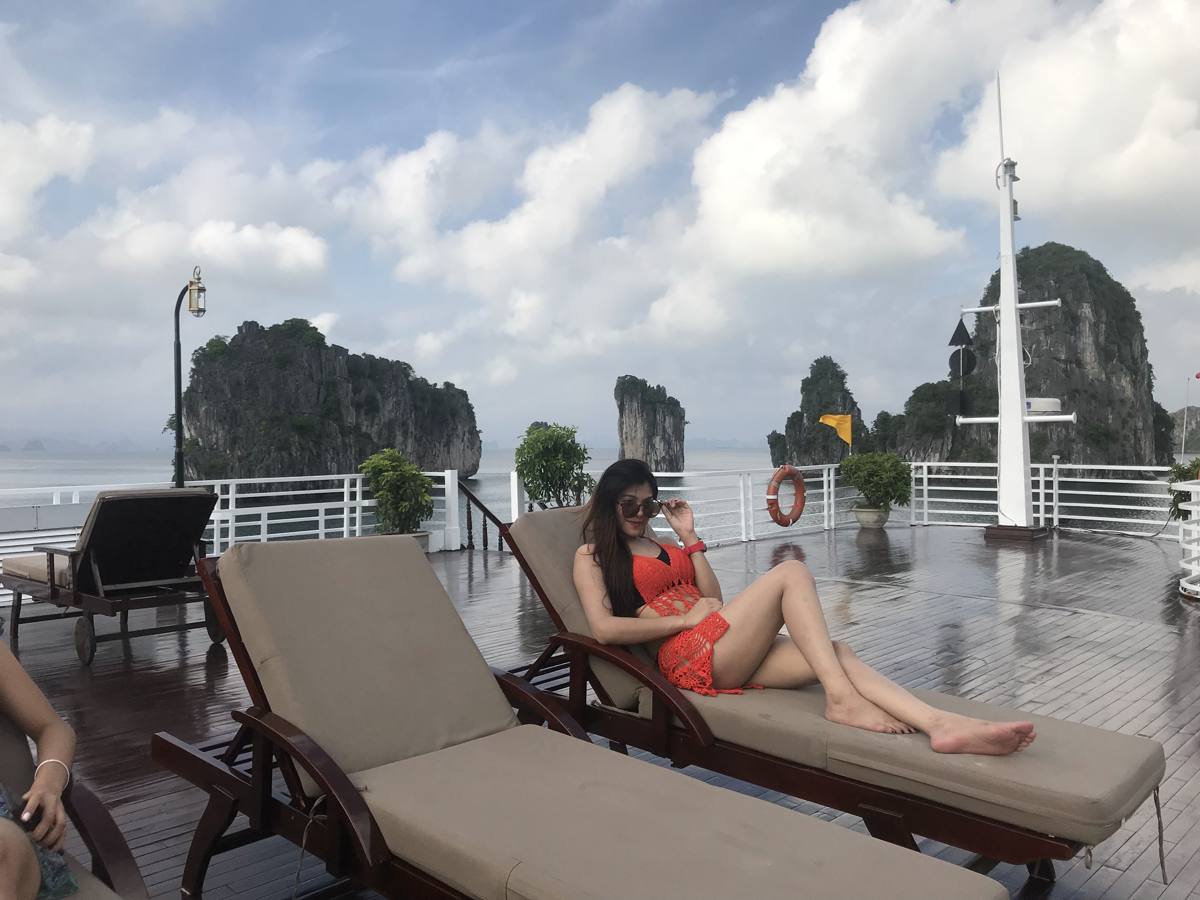
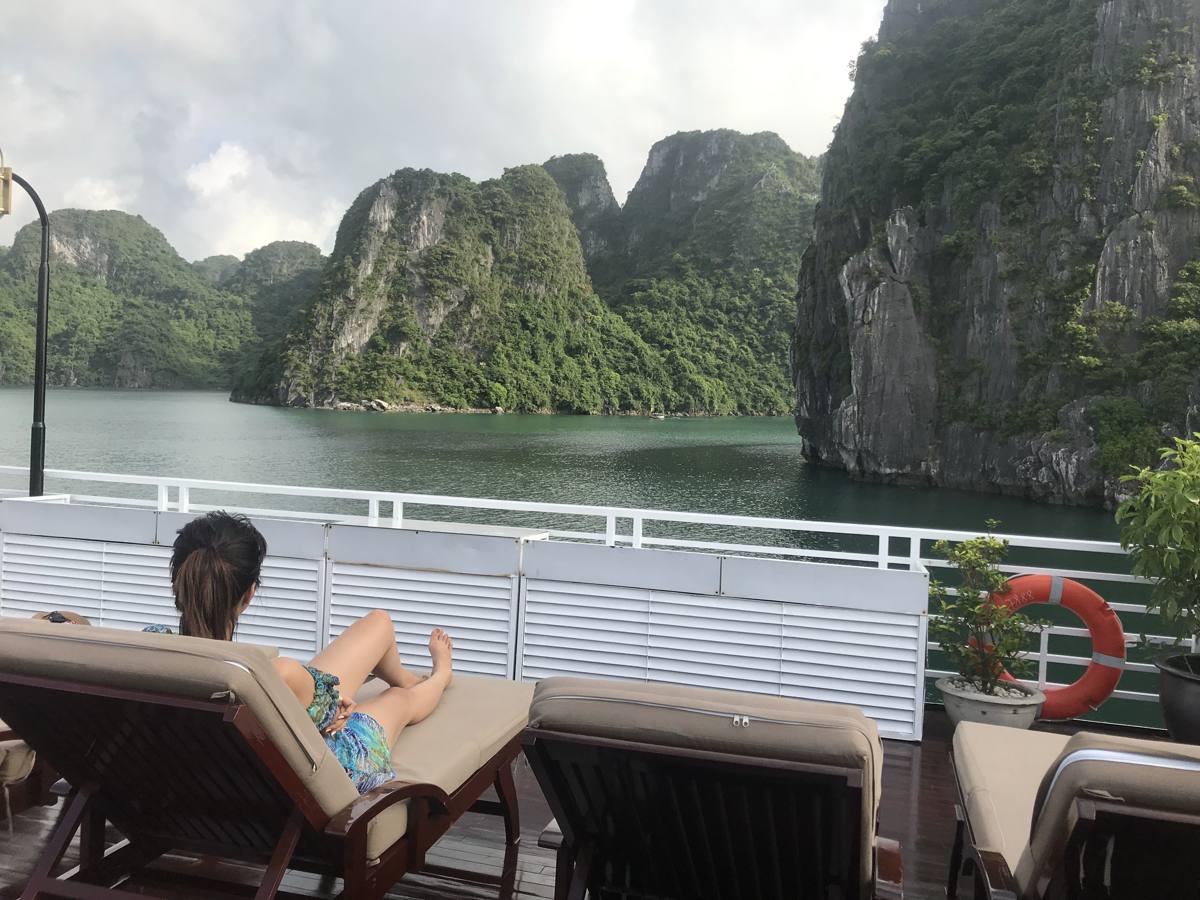
3. Pier routing — Three primary embarkation points plus Paradise private
Halong embarkation operates from three primary public piers plus one private pier. Pier assignment is vessel-specific — each cruise operator embarks from a designated pier and cannot substitute another. Pier verification 24 hours pre-departure is the single most important operational step in any Halong DMC program.
Tuan Chau Marina (Halong City)
The largest and busiest public pier on the bay, operating most overnight cruise vessels including most of the vessels Dong DMC books. Tuan Chau handles thousands of passengers daily during peak season — chaotic during peak embarkation windows but operationally well-served with group handling infrastructure. Located on Tuan Chau island, accessed via a causeway from Halong City.
Got Pier (Cat Ba island)
The embarkation point for Lan Ha Bay routing — vessels operating Lan Ha Bay embark from Got Pier on Cat Ba island, not from Halong City. This is the most common pier confusion source for partners unfamiliar with the Lan Ha Bay distinction. Got Pier transfer from Hanoi requires either road + ferry coordination or direct boat from Halong City.
Hon Gai International Cruise Port
Modern international cruise terminal in Halong City handling larger international cruise lines and select luxury overnight vessels. Cleaner, less crowded embarkation experience than Tuan Chau for groups whose vessels operate from Hon Gai.
Paradise Private Pier
Paradise Cruises operates its own pier, which some other cruise lines also use. Groups boarding Paradise vessels avoid the busiest public pier queues. The private pier advantage compounds for Paradise charter groups: dedicated arrival staff, no public crowding, branded welcome experience, and embarkation timing set by the operator rather than by the public pier schedule.
Pier routing summary:
| Pier | Vessels | Routing | Watchout |
|---|---|---|---|
| Tuan Chau Marina | Most Halong Bay overnight cruises (Indochina Sails, Scarlet Pearl, Aclass, Cyad, Lyra, Catherine, Luna) | Halong Bay route codes | Peak embarkation window crowding 12:00–13:00 |
| Got Pier (Cat Ba) | Lan Ha Bay vessels | Lan Ha Bay routing | Different transfer logistics from Hanoi — most common pier confusion source |
| Hon Gai International | Larger international cruise lines, select luxury overnight vessels | Halong Bay route codes | Verify vessel-pier assignment — not all vessels operate from here |
| Paradise Private Pier | Paradise Cruises exclusively | Halong Bay route codes | Paradise vessels only — not interchangeable with public piers |
4. Route codes (A–F) — The government regulatory layer
Halong Bay cruise routes are regulated by the Vietnam Maritime Authority and Quang Ninh provincial government through a route code system designated A through F. Each route code defines a specific permitted itinerary — which caves, islands, viewpoints, and bay sections the vessel visits. Route codes exist to manage cruise traffic distribution across the protected UNESCO heritage zone, prevent overcrowding at premium sites, and preserve the bay's environmental capacity.
The operational implication for travel professionals: two cruises with similar names and similar prices can have completely different itineraries based on their assigned route code. A guest who saw a marketing image of Sung Sot Cave or the Three Tunnels may board a vessel that visits neither — because the vessel's route code does not include those stops.
Halong DMC route code coordination includes:
- Route code verification at booking — confirming which route the vessel operates and matching it to the program profile
- Cave and island inclusion confirmation — verifying that specific UNESCO highlights the program promised are within the route code
- Route code change monitoring — operators occasionally rotate route codes seasonally; the route at booking may differ from the route at sailing
- Port authority pre-departure check — final route code confirmation 24 hours pre-sailing
If route code is not verified at booking → high probability of itinerary mismatch → guests board expecting one experience and receive another → FINAL outcome: expectation gap, complaint, refund pressure on the partner.
This is the operational layer most non-specialist Halong operators do not understand. It is also the single most common cause of "I expected the bay tour to include X" complaints across the Vietnam cruise market.
5. UNESCO rules that shape a Halong cruise day
Halong Bay was inscribed on the UNESCO World Heritage List in 1994 for natural beauty and re-inscribed in 2000 for geological and geomorphological significance. The bay contains approximately 1,600 limestone karst islands and islets across 1,553 square kilometres of protected marine area.
UNESCO operational implications for a Halong DMC:
- Government-regulated cruise routes (A–F) — protect the heritage zone from concentrated cruise traffic at premium sites
- Vessel registration and capacity controls — total cruise vessel numbers regulated; new vessels require permit allocation
- Environmental compliance requirements — sewage and waste management standards, low-emission vessel transitions, anchoring restrictions in coral and protected zones
- Maritime authority oversight — Vietnam Maritime Authority coordinates with Quang Ninh provincial government on cruise operations, weather suspensions, and route enforcement
- Lan Ha Bay distinction — Lan Ha Bay (off Cat Ba island) shares the same UNESCO geology but is administratively separate from Halong Bay; routing rules and pier assignments differ
- Cave access regulations — premium caves (Sung Sot, Thien Cung, Dau Go) have entry quotas during peak windows and may be temporarily closed for conservation
The regulatory framework is not an inconvenience to plan around — it is the reason Halong remains one of the most photographically recognizable and ecologically intact UNESCO marine destinations in Asia. A Halong DMC works within these constraints, not against them.
6. Land-side hotels — Pre/post-cruise pairings
Most Halong cruise programs use Hanoi as the pre/post-cruise hotel base — guests arrive Hanoi, transfer to Halong for cruise, return to Hanoi for departure. This is the standard pattern for 95% of overnight cruise programs.
For programs requiring Halong land-side accommodation (incentive groups using Halong as MICE base, programs combining cruise with golf at FLC Halong, late-arrival or early-departure flight schedules requiring overnight buffer), Dong DMC coordinates land-side hotels at Halong Marriott, Wyndham Halong, and Vinpearl Resort & Spa Halong.
Land-side hotel programs are operationally distinct from cruise-only programs and add coordination complexity (additional transfer leg, hotel block management, meal coordination). Programs should justify land-side stays against the standard Hanoi pre/post pattern.
For full Vietnam luxury hotel coordination, see Vietnam Luxury Hotel & Resort Partners.
7. Transfer logistics — Hanoi to Halong
Seaplane (Hai Au Aviation, 25 minutes)
The seaplane transfer from Hanoi to Halong replaces a 2.5–3 hour drive with a 25-minute scenic overflight of the bay. It transforms the transfer into a selling point and saves half a day of program time. Suits luxury FIT, honeymoon, VIP incentive, and time-sensitive programs.
Operational notes: minimum 7-day advance booking required, weather-dependent (suspended in low visibility), limited daily flight schedule. Net rates available via Dong DMC. Coordination required with cruise embarkation timing — seaplane arrives at the bay; transfer to pier remains a separate step.
Road transfer (180km, 2.5–3 hours)
Standard transfer via the Hanoi–Halong expressway. Limousine van for FIT and small luxury groups, 45-seat coach for groups, dedicated driver-and-guide for incentive programs. The expressway opened in 2018 and reduced the Hanoi–Halong journey from 4 hours to under 3.
Operational requirement: toilet stop coordination at the Hai Duong service area approximately 90 minutes from Hanoi. The expressway has limited service stops once committed, and groups missing the Hai Duong stop face a long uncomfortable stretch with no immediate alternative. This is non-optional for group travel — programs that skip the toilet stop create complaints that compound across the cruise day.
Group size scaling
20 pax → standard handling, single coach or 2–3 limousine vans
50 pax → coordinated coach setup, lead vehicle, structured arrival sequencing at pier
100 pax → multi-coach staging, sequenced pier arrival, dedicated boarding coordinator
200 pax → full charter consideration (combined Paradise Cruises ships), staged check-in across multiple cabins, advance rooming list distribution
500+ pax → multi-vessel charter combinations, pier slot coordination across multiple embarkation windows
Scaling follows Vietnam Group Travel.
Transfer planning aligns with Vietnam Luxury Transport & VIP Services.
Embarkation-day failure on Halong Bay
This illustrates how small misalignments compound into visible failure at Vietnam's most operationally fragile destination:
80-pax leisure group → flight arrives Hanoi 09:30 → coach to Halong scheduled 10:30 → traffic delay leaving Hanoi 11:00 → toilet stop at Hai Duong service area skipped to recover time → arrival Halong 14:15 → driver delivers group to Tuan Chau pier (default assumption) → group's vessel actually operates from Got Pier on Cat Ba island for Lan Ha Bay routing → 80 guests at wrong pier with no boat → cruise embarkation window closing → emergency call to operator → no replacement boat available → ferry transfer to Got Pier requires additional 90 minutes → cruise departs without group → group returns to Halong City for emergency hotel block at Wyndham Halong → next-day re-embarkation attempted → vessel already at sea
FINAL outcome:
Group misses the cruise that was the entire reason for the Vietnam program → emergency hotel block costs absorbed by partner → next-day cruise availability uncertain → program credibility destroyed at the most visible touchpoint → partner reputation damaged with the originating client → refund dispute follows → relationship loss probable.
This failure cascade was caused by two separate planning errors compounding: (1) toilet stop skipped to recover time (creating discomfort that distracted from pier verification), and (2) pier assumption rather than pier verification (Tuan Chau is the default, but Lan Ha Bay vessels operate from Got Pier on Cat Ba). Either error alone is recoverable; combined, they produce an unrecoverable Day 1 failure.
This failure is entirely preventable with correct advance planning: pier verification 24 hours pre-departure with vessel operations team, route code confirmation, dedicated arrival coordinator at the correct pier with vessel boarding pass list, weather-aware buffer time on the Hanoi–Halong transfer, and toilet stop discipline that does not yield to schedule pressure.
8. Halong cruise formats: overnight, honeymoon, full charter and day cruise
Luxury overnight cruise (2N/3D — the standard): Paradise Elegance, Indochine Premium, Scarlet Pearl. Cabin allocation, full-board onboard dining, sunset cocktails, kayaking, cave excursions, tai chi at sunrise. The luxury Halong standard. See Vietnam Luxury Cruise & Yacht.
Honeymoon cruise: Indochine Premium or Scarlet Pearl for design-led intimacy, Paradise Elegance for private pier exclusivity. Private dining setups, in-cabin amenities, sunset photography, decorated cabin arrivals. See Vietnam Honeymoon & Celebration Travel.
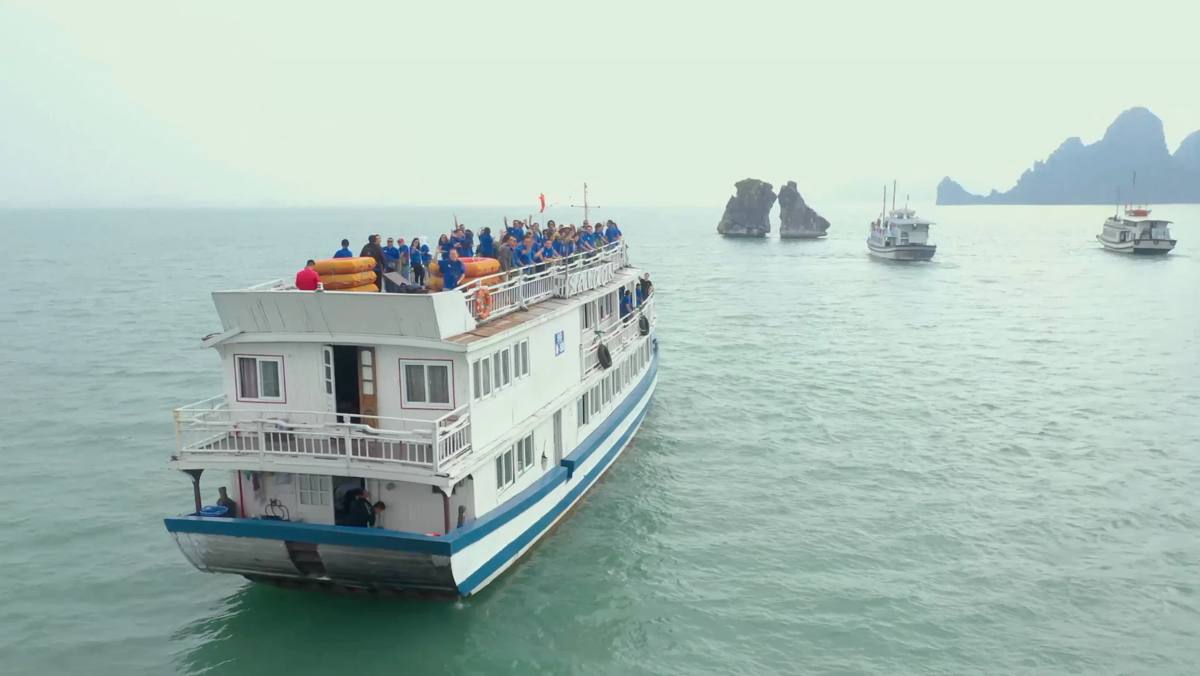
Incentive cruise charter (full-vessel): Paradise Cruises ships combined on one departure for 100+ pax incentive groups. Full-vessel charter transforms the cruise into a private event at sea — gala dinner on water, themed entertainment, branded production, exclusive bay routing. The standard for European incentive programs that will not accept shared luxury vessels. See Vietnam Incentive Travel.
MICE day cruise: Paradise Delight for large-format day-trip programs requiring private dining and bay sightseeing without overnight commitment. Suits MICE programs based in Hanoi using Halong as a one-day excursion add-on.
Lan Ha Bay routing (privacy-led): Paradise Grand, Indochine Cruise and select Lan Ha vessels. Same UNESCO geology, fraction of the cruise traffic, quieter coves and viewpoints. Sells against the "Halong is too crowded now" objection for repeat Vietnam visitors and eco-luxury markets.
Three-night extended cruise: Available across Paradise and Indochina Sails. Niche — repeat visitors, slow-travel clients, photography-focused programs requiring multiple bay weather windows.
North Vietnam circuit programs: Halong as the cruise centerpiece in standard 8–10 day Northern Vietnam itineraries. Hanoi (2–3 nights) → Sapa (2–3 nights) → Halong Bay (2 nights) → return Hanoi is the dominant European, ANZ, and North American leisure pattern.
Which Halong Bay program fits which client
| Client type | Typical program | Vessels and routing |
|---|---|---|
| Private and luxury FIT, honeymoon | 2 nights / 3 days overnight cruise with private dining and sunset photography | Indochine Premium or Scarlet Pearl for design-led intimacy; Paradise Elegance for private pier exclusivity |
| Families | 2 nights / 3 days cruise with kayaking, cave excursions and a gentle pace | Luxury overnight vessels; Lan Ha Bay routing for quieter coves |
| Leisure groups and North Vietnam circuits | Halong as the cruise centrepiece of an 8–10 day Northern Vietnam itinerary | Cabins on luxury overnight vessels, paired with Hanoi hotels |
| Corporate, MICE and incentive groups | Full-vessel charter with gala dinner on water, or a day cruise from Hanoi | Paradise Cruises ships combined on one departure for 100+ pax; Paradise Delight for day programs |
| Repeat Vietnam visitors | Privacy-led cruise away from the busiest routes | Lan Ha Bay routing on Paradise Grand, Indochine Cruise and select Lan Ha vessels |
9. Weather contingency and typhoon season
Halong's weather risk is the single most program-disruptive variable in Vietnam tourism. Vietnam Maritime Authority can suspend cruise operations with 24–48 hour notice when weather conditions make sailing unsafe — typhoons, tropical storms, and extreme rough sea conditions trigger automatic cruise suspension.
Typhoon season runs July through November, with peak risk August through October. Cruise suspensions during these months can affect 5–15% of scheduled sailings depending on the year's typhoon track. Programs in this window must include:
- Weather monitoring — Vietnam National Center for Hydro-Meteorological Forecasting tracking 5 days pre-sailing
- Alternative itinerary deployment — Hanoi extension programs (Bat Trang ceramic village, Duong Lam ancient village, Ninh Binh Trang An UNESCO complex), Tam Coc, Mai Chau highland day program
- Refund and rebooking coordination — vessel operators handle credits and rebookings at differing terms; Halong DMC manages the partner-side coordination
- Client communication framework — early advisory when typhoon track shifts toward Halong, status updates every 12 hours during active suspension consideration
Programs in October–April (the safe window) carry minimal weather risk. December–February delivers the cleanest air and bay visibility but cooler temperatures (15–20°C) — guests must be advised to pack layers despite Vietnam's tropical reputation.
Risk patterns align with Vietnam DMC Operations.
10. Where Halong Bay sits among Vietnam destinations
Compared to Hanoi:
Hanoi → urban cultural base, direct international flight access, hotel-based program
Halong → marine UNESCO heritage, vessel-based program, no direct access
Compared to Sapa:
Sapa → highland cultural program, ethnic minority villages, land-based
Halong → marine UNESCO program, cruise-based, regulatory-controlled routing
Compared to Hoi An (the Vietnam UNESCO peer):
Hoi An → land UNESCO heritage town, evening lantern atmosphere, walking-paced
Halong → marine UNESCO heritage bay, on-water experience, route-code regulated
Common North Vietnam program combinations:
Standard leisure circuit: Hanoi (2–3 nights) → Sapa (2–3 nights) → Halong Bay (2 nights) → return Hanoi. 8–10 days. Strong variety contrast across urban culture, highland ethnic minorities, and marine UNESCO heritage.
Halong-led luxury: Hanoi (1–2 nights) → Halong Bay (2–3 nights) → Hanoi return → onward Central Vietnam. Suits cruise-focused luxury FIT and honeymoon programs.
Halong + Ninh Binh complement: Hanoi → Halong (2 nights) → Ninh Binh (1–2 nights) → Hanoi. Two UNESCO sites in close proximity for short-stay heritage focus.
Destination logic should be evaluated through Vietnam Location DMC.
11. Cabin, pier and route-code gaps in a Halong proposal
The general checklist is on How to Choose a Vietnam DMC. For Halong Bay, watch for these gaps in a proposal:
- Vessels and cabin holds are not documented by name
- Pier assignment is not specified by vessel and verified 24 hours pre-departure
- Route code (A–F) is not confirmed at booking
- Toilet stop coordination on the Hanoi–Halong transfer is treated as optional
- Weather contingency planning is absent for July–November programs
- Lan Ha Bay routing is not distinguished from Halong Bay routing
12. Pier, route code and typhoon risks on Halong Bay
- Wrong pier arrival — driver routed to Tuan Chau by default; result: missed cruise, unrecoverable program loss.
- Wrong cruise / route code mismatch — cruise booked through aggregator without route code verification; result: expectation gap, complaint, refund pressure.
- Cabin shortfall during peak — late booking for October–April peak season; result: luxury program credibility impact.
- Typhoon cruise suspension — August–October program; result: full itinerary collapse, emergency rebooking.
- Day cruise overcrowding — large day cruise booked for incentive group; result: poor on-water experience perception, incentive reward effect lost.
- Highway toilet stop failure — transfer skips Hai Duong stop to recover schedule; result: cruise day tone set negatively before embarkation.
13. When Halong Bay belongs in the itinerary, and when it does not
Works best for
- Luxury overnight cruise programs (2N/3D) using named vessels — Paradise, Indochina Sails, Scarlet Pearl
- Honeymoon and celebration programs at Indochine Premium, Scarlet Pearl, or Paradise Elegance with private dining and decorated cabin arrivals
- Incentive group full-vessel charter on combined Paradise Cruises ships with gala dinner production and themed entertainment on water
- European incentive programs requiring private vessel buyout — shared luxury cruises operationally not acceptable for European group standards
- Lan Ha Bay routing on Paradise Grand or Indochine Cruise for repeat Vietnam visitors and eco-luxury markets seeking quieter alternatives
- Standard North Vietnam leisure circuit (Hanoi → Sapa → Halong → Hanoi) over 8–10 days
Better elsewhere
- Single-day Vietnam programs — transfer time cost is too high relative to time on the bay
- Mobility-limited groups — vessel boarding, cave access (steep stairs at Sung Sot), and kayaking activities are not accessibility-friendly
- Groups requiring guaranteed sailing in typhoon season (August–October) without weather contingency tolerance
- Programs where the cruise vessel itself does not matter to the experience — Halong's value comes from the on-water experience, and budget-tier vessels deliver poor versions of it
- Adventure-physical primary focus — Halong delivers passive scenic appreciation, not adventure infrastructure (kayaking is a soft component, not a primary activity)
- Programs with strict religious or dietary requirements that vessel galleys cannot reliably accommodate without 14+ days advance coordination
14. FAQ
15. Related topics
- Vietnam DMC
- Hanoi DMC
- Sapa DMC
- Vietnam Location DMC
- Vietnam Luxury Cruise & Yacht
- Shore excursions from Ha Long cruise port
- Vietnam Luxury Travel
- Vietnam Luxury Hotel & Resort Partners
- Vietnam Luxury Transport & VIP Services
- Vietnam Honeymoon & Celebration Travel
- Vietnam Incentive Travel
- Vietnam MICE & Corporate Events
- Vietnam Group Travel
- Vietnam DMC Operations
- How to Choose a Vietnam DMC