 ID
ID IT
IT DE
DE ZH
ZH ES
ES FR
FRMekong Delta DMC: Group Tours, Day Trips from Saigon, Floating Markets and River Cruises
Mekong Delta DMC services for travel agencies, tour operators, MICE planners, and incentive houses operating in Vietnam's southern river region — overnight properties including Azerai Can Tho, Victoria Can Tho, and Victoria Chau Doc, signature cultural Wow Factor moments (sunrise breakfast at the Cai Rang floating market, sampan glides through nipa-palm canals, đờn ca tài tử folk music, coconut-candy workshops, seasonal orchard fruit tasting), Ho Chi Minh City departure routing by program depth, cross-border cruise embarkation at Chau Doc, and the planning decisions that determine whether a delta program delivers authentic river life or just drives past it.
An operational reference, not a service brochure. This page explains how a Mekong Delta DMC works under real southern Vietnam execution conditions.
The delta in brief
Dong DMC is a Vietnam DMC that runs Mekong Delta programs for travel agencies, tour operators and cruise operators: floating-market sequencing at Cai Rang, sampan and motorboat staging, homestays and garden-home visits, overnight stays and cross-border river cruise embarkation, with day trips from Ho Chi Minh City (My Tho about 70 km, Can Tho about 170 km). Programs are quoted at B2B net rates and delivered under the agency's brand.
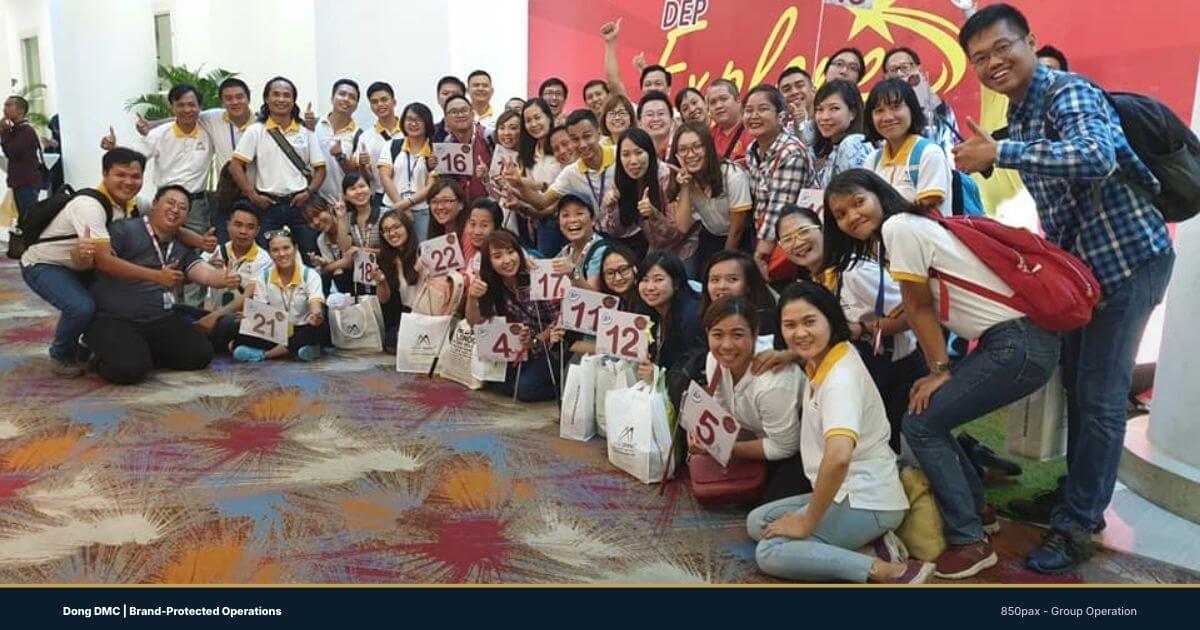
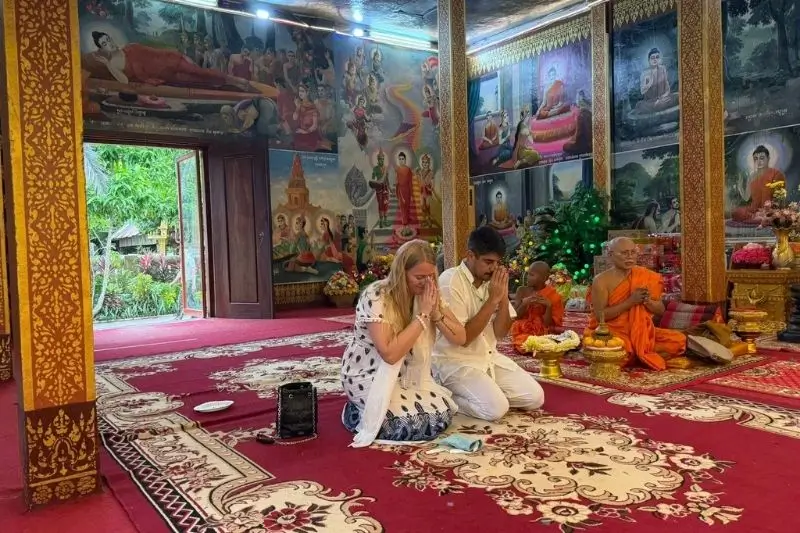
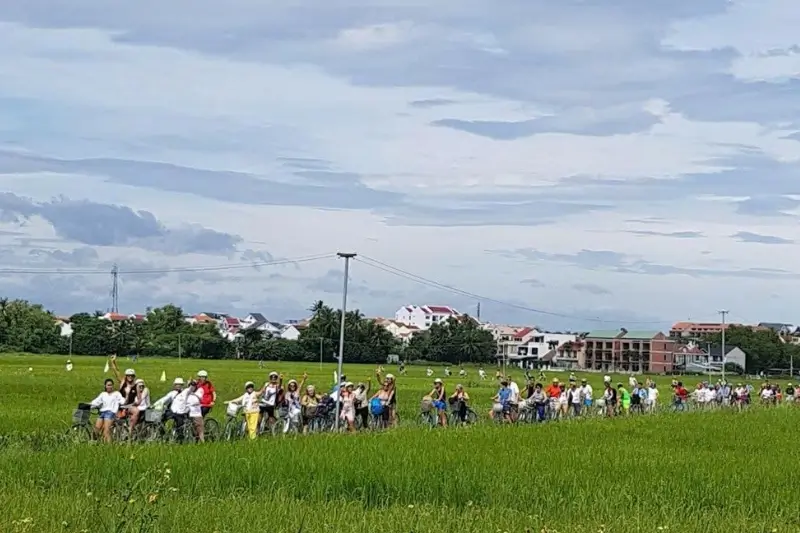
Mekong programs we have run, from 850-pax groups to special interest
Quick Reference: Mekong Delta DMC
- What it is
- A B2B destination management company specializing in tour programs across the Mekong Delta, Vietnam's southern river region of canals, floating markets, and garden homes, accessed overland from Ho Chi Minh City.
- Who it serves
- Travel agencies, tour operators, MICE planners, incentive houses, cruise operators, and luxury FIT specialists — not direct travelers.
- Primary services
- Floating-market sequencing, sampan and motorboat fleet staging, overnight property coordination, cross-border river cruise embarkation, Wow Factor cultural moments, homestay programs, garden-home and folk-music experiences, and day-trip routing from Ho Chi Minh City.
- Geographic coverage
- My Tho and Ben Tre (Tien Giang / Ben Tre), Can Tho and the Cai Rang floating market, Vinh Long and Sa Dec (Dong Thap), Chau Doc (An Giang), Tra Vinh, and the canal networks of the wider delta.
- Access from Ho Chi Minh City
- My Tho ~70km (1.5–2 hours); Can Tho ~170km (3–3.5 hours via the Trung Luong–My Thuan and My Thuan–Can Tho expressways); Chau Doc ~250km (5–6 hours). No major airport for groups — all access is overland from Ho Chi Minh City (SGN).
- Best season
- December–April for the comfortable dry season. May–November is the wet season, with the upper-delta floating (flood) season around September–November near Chau Doc enhancing scenery but complicating logistics. Boat and cycling activity is best scheduled for the morning before midday heat.
- Fruit season (miệt vườn)
- The delta's orchard belts — Cai Mon (Ben Tre), Cai Be, Vinh Long, and Tien Giang — make fruit season a meaningful program theme. Summer (May–August) peaks with durian, rambutan, mangosteen, and longan; star apple (vú sữa) ripens in the cooler December–March window.
- Defining constraint
- The signature Cai Rang floating market trades at dawn and thins after 07:00 — a genuine market experience requires an overnight in Can Tho, not a same-day run from Ho Chi Minh City.
1. What Dong DMC organises in the delta
A Mekong Delta DMC (Destination Management Company) is a B2B inbound operator that designs and executes tour programs across the Mekong Delta, Vietnam's southern river region in the provinces below Ho Chi Minh City.
In practice the work covers:
- Floating-market sequencing
- Sampan and motorboat fleet staging
- Overnight property coordination
- Cross-border river cruise embarkation
- Wow Factor cultural moments
- Homestay programs
- Garden-home and folk-music experiences
- And day-trip routing from Ho Chi Minh City
2. Sub-destinations — Matching delta depth to market and program profile
Mekong Delta DMC programs are built around a depth decision, not a hotel-zone decision. How far into the delta a group goes — a half-day at My Tho or a two-night Chau Doc cruise embarkation — determines transfer logic, boat type, overnight base, and what kind of delta experience the group actually has. The depth decision is the first program design decision.
Approximate routing observed across Dong DMC's delivered programs: roughly 70% of time-limited and Asian-market groups experience the delta as a My Tho or Ben Tre day trip from Ho Chi Minh City — one coach, one boat, back by evening. The deeper Can Tho overnight (for the Cai Rang dawn market) and the Chau Doc cross-border cruise embarkation are taken predominantly by European, Australian, North American, and cruise-linked programs. Almost all delta programs, regardless of depth, connect upward to Ho Chi Minh City — the delta does not stand alone.
Tier 1 — My Tho & Ben Tre (day trip, ~70km from Ho Chi Minh City)
The classic delta day trip: sampan through coconut-palm canals, coconut-candy workshop, honey-tea farm, garden-home fruit and folk music. Coach-accessible, doable as a half- or full-day from the city, and the right answer for groups with limited time. Ben Tre, just across the river, is the "coconut kingdom" and slightly quieter than My Tho.
Watchout: this tier is frequently sold as the whole Mekong. Groups expecting a busy floating market or deep river life from a My Tho day trip arrive with the wrong expectation — name the experience accurately at proposal stage.
Tier 2 — Can Tho (overnight hub, ~170km, ~3–3.5 hours)
The delta's capital and the only base from which the Cai Rang dawn floating market can be reached in time. Overnight properties span the high end — Azerai Can Tho on its own island, Victoria Can Tho Resort on the river, Vinpearl Can Tho, and Nam Bo Boutique Hotel on the riverfront. Can Tho is the depth tier where the signature delta moment becomes possible.
Watchout: the floating market is a dawn-and-overnight decision. A same-day coach from Ho Chi Minh City cannot reach Cai Rang while it is still trading.
Tier 3 — Vinh Long, Cai Be & Sa Dec (homestay and culture belt)
The homestay heartland — garden homes, brick kilns, rice-paper and coconut-candy cottages, and the Sa Dec flower village with its Marguerite Duras "The Lover" connection. Authentic homestays here are small, often under 20 beds, which shapes group feasibility. Cai Be is positioned as canal cruising and garden-home culture, not as a floating market.
Watchout: a large group cannot stay in "a homestay" — it must be split across several properties or it is really a hotel. Overselling homestay authenticity to a 50-pax group is a common expectation gap.
Tier 4 — Chau Doc (cross-border cruise gateway, ~250km, ~5–6 hours)
The border town on the Hau River and the embarkation point for river cruises to Phnom Penh and Siem Reap. Sam Mountain, floating fish farms, and Cham Muslim villages give it a distinct character. Victoria Chau Doc anchors the overnight. This tier is about the land-to-ship handoff and border timing more than sightseeing.
Watchout: the Chau Doc embarkation window is fixed by the ship. A late coach from Ho Chi Minh City does not delay lunch — it misses the cruise.
Outside the standard tiers — Tra Vinh and Soc Trang (Khmer culture, niche)
The eastern delta's Khmer pagoda belt — Tra Vinh and Soc Trang — suits culturally curious and slow-travel groups but sits off the main delta circuit. These are deliberate niche inclusions, not default stops for a first delta program.
Delta depth summary:
| Tier | Best For | Overnight / Partners | Watchout |
|---|---|---|---|
| My Tho & Ben Tre (day trip) | Time-limited and Asian-market groups — ~70% of delta programs | None — day trip from Ho Chi Minh City | Often sold as the whole Mekong — set expectations |
| Can Tho (overnight hub) | Floating-market programs, EU/ANZ/NA overnights, premium FIT | Azerai Can Tho, Victoria Can Tho, Vinpearl Can Tho, Nam Bo Boutique | Cai Rang dawn market needs the overnight before it |
| Vinh Long / Cai Be / Sa Dec (culture belt) | Homestay culture, slow travel, garden-home immersion | Small homestays (<20 beds), boutique properties | Large groups must split — not a single-property base |
| Chau Doc (cruise gateway) | Cross-border cruise embarkation to Cambodia | Victoria Chau Doc; cruise lines Indochine Cruise (Saga), Victoria Mekong, Aqua Mekong, Pandaw | Fixed embarkation window — transfer buffer is critical |
3. Garden homes, folk music and other Mekong moments
Cultural Wow Factor moments are authentic, culturally specific surprise experiences designed into Mekong Delta programs as standard practice. They are not upsells, not premium add-ons, and not charged separately — they are how a Mekong Delta DMC program signals craft and care. The delta is where this lands hardest, because its value is texture rather than spectacle. Each moment is selected based on group profile, market origin, and program type.
Sunrise Breakfast on the Boat at Cai Rang Floating Market
Guests depart Can Tho at first light, reach the Cai Rang wholesale floating market while it is still trading, and are served a Vietnamese breakfast — coffee, noodle soup, tropical fruit — on the boat among the trading vessels. This is the signature delta moment, and it is only possible with an overnight in Can Tho the night before. Best for overnight programs and premium FIT.
Đờn Ca Tài Tử Folk Music at a Garden Home
Đờn ca tài tử — the southern Vietnamese chamber folk music recognized by UNESCO as Intangible Cultural Heritage — performed live at a riverside garden home, paired with seasonal tropical fruit and tea. The intimate setting makes it a strong cultural anchor for European, North American, and cultural-immersion groups.
Conical-Hat Sampan Glide Through Nipa-Palm Canals
Guests board small rowed sampans — conical hats provided — and are paddled by local rowers through narrow nipa-palm (water-coconut) canals too tight for motorboats. The pace is slow, the light filters through the palms, and it produces the most-shared images of any delta program. Sampan capacity is about four passengers, so group programs are staged in waves.
Coconut-Candy and Rice-Paper Workshop
Hands-on cottage-industry experiences in Ben Tre and the Cai Be belt — pulling and cutting coconut candy, pressing and drying rice paper, popping rice — with tasting throughout. A tactile, high-satisfaction inclusion that works across all markets and group types.
Orchard Fruit-Season Tasting (Miệt Vườn)
The delta's orchard belts — Cai Mon in Ben Tre, Cai Be, Vinh Long, and Tien Giang — turn fruit season into a program theme rather than a snack stop. At a garden home, guests taste fruit picked from the trees around them: durian, rambutan, mangosteen, and longan in the lush summer peak (roughly May–August), and star apple (vú sữa) in the cooler December–March window. Timing a program to fruit season is one of the most reliable ways to make a delta trip feel meaningful and specific rather than generic. Strong fit for cultural-immersion, leisure, family, and incentive groups.
Bee-Farm Honey Tea and Village Cycling
A honey-tea ceremony at a delta bee farm, followed by cycling along raised garden paths between village homes. Suits leisure, family, and slow-travel groups wanting an active, low-intensity engagement with delta life.
Khmer Pagoda Visit and Monk Blessing (Tra Vinh)
For culturally curious groups going into the eastern delta, a visit to a Khmer Theravada pagoda in Tra Vinh with a monk blessing offers a layer of the delta most programs never reach. A deliberate niche inclusion rather than a default stop.
4. Floating markets and dawn timing — the defining operational reality
The floating market is the delta's signature, and it is also where most delta programs quietly fail. Understanding the timing and the difference between the two main markets is the single most important planning input.
- Cai Rang (Can Tho) is the reliable market — a genuine wholesale floating market that trades at dawn and thins noticeably after 07:00. Boats advertise their produce on tall poles. To experience it trading, the group must overnight in Can Tho and depart by boat at first light.
- Cai Be (Vinh Long) has declined — once a notable market, it is now sparse and mostly wholesale, and rarely meets the image clients hold. It should be positioned as canal cruising, garden homes, and homestay culture — not as a busy floating market.
- Dawn is non-negotiable — the market does not adjust to a coach schedule. A same-day run from Ho Chi Minh City cannot reach Cai Rang while it is trading. If a program promises a floating market without a Can Tho overnight, the promise cannot be kept.
- Heat shapes everything else — the delta is hot and humid year-round. Open-water and cycling activity belongs in the morning; midday is for shaded garden homes, lunch, and rest.
- The floating (flood) season has trade-offs — roughly September–November in the upper delta near Chau Doc, flooded fields are scenic and fish-rich, but water levels and weather complicate some logistics. It is planned around, not avoided blindly.
- Fruit season is a programming asset, not just weather — the orchard belts of Cai Mon, Cai Be, Vinh Long, and Tien Giang make the delta worth timing for. Durian, rambutan, mangosteen, and longan peak May–August; star apple (vú sữa) ripens December–March. A garden-home tasting at peak turns a generic canal stop into a meaningful, seasonal program.
The dawn constraint is not an inconvenience to plan around — it is the reason the market delivers what it delivers. Programs that respect the delta's clock produce stronger results than programs that fight it.
5. Delta sights and excursions matched to program type
Each delta landmark and excursion serves a different program purpose. A Mekong Delta DMC selects combinations based on group profile, available days, and market origin.
Cai Rang Floating Market (Can Tho)
The delta's signature dawn wholesale market on the Hau River, reachable only from a Can Tho overnight. The defining visual of the region and the anchor of any serious delta program.
My Tho and Ben Tre canals
The classic day-trip waterscape — coconut-palm canals, sampan rides, coconut-candy cottages, honey farms, and garden-home folk music, ~70km from Ho Chi Minh City. The right answer for time-limited groups; not a substitute for the deeper delta.
Sa Dec flower village (Dong Thap)
A working flower-growing village and the setting associated with Marguerite Duras's "The Lover," whose family house can be visited. Best for cultural and literary-interest groups and European markets.
Vinh Long and Cai Be homestay belt
The homestay heartland — garden homes, brick kilns, and cottage industries. Authentic but small-capacity. Strong for slow-travel and immersion groups; requires splitting for larger numbers.
Mekong orchards — miệt vườn (Cai Mon, Cai Be, Vinh Long, Tien Giang)
The delta's orchard region is a destination in its own right when timed to fruit season. Cai Mon in Ben Tre is the famous nursery-and-orchard belt; Cai Be, Vinh Long, and Tien Giang carry durian, rambutan, mangosteen, longan, and the prized Tien Giang star apple (vú sữa). A garden-home fruit tasting is the simplest way to make a delta program seasonal and specific.
Chau Doc, Sam Mountain and the Cham villages (An Giang)
The border region — Sam Mountain views, the Ba Chua Xu temple, floating fish farms, and Cham Muslim weaving villages. Distinct in character from the rest of the delta and the gateway to cross-border cruising.
Tra Vinh and Soc Trang Khmer pagodas
The eastern delta's Theravada Buddhist Khmer heritage — ornate pagodas and a cultural layer most programs miss. A deliberate niche choice for culturally curious groups.
Cross-border river cruise embarkation
River cruises to Phnom Penh and Siem Reap embark and disembark at Chau Doc, with some itineraries using My Tho or Cai Be. Operators include Indochine Cruise (Saga), Victoria Mekong, Aqua Mekong, and Pandaw. See Vietnam River Cruise Programs for pre- and post-cruise land arrangements.
6. Mekong programs by format: day trips, overnights, river cruises and homestays
Day-trip extension from Ho Chi Minh City: My Tho or Ben Tre half- or full-day — sampan canals, coconut-candy workshop, garden-home folk music, honey-tea farm. The highest-volume delta program, suited to time-limited and Asian-market groups. See Ho Chi Minh City DMC.
Floating-market overnight: Can Tho base (Azerai, Victoria Can Tho, or Vinpearl Can Tho), dawn boat to Cai Rang with breakfast on the water, canal cruising, and garden-home culture. The program that delivers the real delta — best for European, Australian, North American, and premium FIT markets.
Cross-border cruise land segment: Ho Chi Minh City or My Tho through the delta to a Chau Doc embarkation for Indochine Cruise (Saga), Victoria Mekong, Aqua Mekong, or Pandaw cruises onward to Cambodia, with visa and border coordination. See Vietnam River Cruise Programs.
Cultural immersion and slow travel: Vinh Long, Cai Be, and Sa Dec homestay belt with garden homes, cottage industries, đờn ca tài tử folk music, and village cycling. Best for European and North American slow-travel markets seeking depth over coverage.
Incentive and MICE component — the island-resort gala finale: the delta works as a reward-trip texture break from a Ho Chi Minh City base — sampan races, coconut-candy team activity, orchard fruit tasting at peak season — building to a gala dinner at an island resort such as Azerai Can Tho on its own island in the Hau River, before returning to Ho Chi Minh City the next day. The delta delivers strong incentive value: a memorable island-resort gala and authentic cultural texture at a lower per-head cost than a comparable coastal-resort incentive, which keeps it affordable without feeling budget. Wow Factor moments are built into the core. See Vietnam Incentive Travel.
Program types align with Vietnam Luxury Travel, Vietnam River Cruise Programs, and Vietnam Group Travel.
7. Road times from Saigon, jetties and daily logistics in the delta
The Mekong Delta access system has two distinct layers. Both must be planned in advance — neither is improvisable on the day.
Layer 1 — Ho Chi Minh City to the delta (road, real distances)
All access is overland from Ho Chi Minh City. My Tho is ~70km (1.5–2 hours), Can Tho ~170km (3–3.5 hours via the Trung Luong–My Thuan and My Thuan–Can Tho expressways, which materially cut former travel times), and Chau Doc ~250km (5–6 hours). The departure window from the city is the single biggest lever on whether a dawn or embarkation program is feasible.
Layer 2 — Coach to boat: the jetty transition
The delta's real bottleneck is rarely the road — it is the jetty. Coaches reach the embarkation points; the experience happens on the water, and the coach-to-boat-to-sampan transition is where groups fragment if the fleet is not pre-staged.
- Sampan capacity — a rowed sampan carries about four passengers. A group of 40 needs roughly ten sampans staged and loaded in waves.
- Motorboat allocation — main channels use larger motorized boats; narrow nipa-palm canals require sampans. Mismatching boat to canal width is a guaranteed bottleneck.
- Wave loading — life-jacket fitting, boarding, and departure are sequenced so the group does not split between fast front boats and a stranded tail.
- Cross-border handoff — at Chau Doc, embarkation links to visa pre-clearance and the Vinh Xuong border. The window is fixed by the ship.
If boat capacity is not pre-allocated for the group size → high probability of jetty bottleneck → guests waiting at the landing → FINAL outcome: a fragmented, diluted canal experience regardless of program quality downstream.
Group size scaling:
20 pax → flexible, two or three boats
50 pax → requires advance fleet staging and disciplined jetty management
100+ pax → staged boat waves and a clear holding sequence; authentic homestays cannot absorb this scale
200+ pax → day-trip texture component only, based from Ho Chi Minh City — the delta's overnight inventory cannot hold a group at this volume
Scaling follows Vietnam Group Travel.
Heat and timing:
The delta is hot and humid year-round. Open-water and cycling activity is front-loaded to the morning; midday is reserved for shaded garden homes, lunch, and rest. A program that puts a group on open water at noon will lose energy for the rest of the day.
Weather contingency:
May–November is the wet season; the upper-delta floating (flood) season runs roughly September–November near Chau Doc. Programs in this window need flexible boat timing, indoor cultural alternatives, and clear client communication about water-level and weather variation.
Transport planning aligns with Vietnam Luxury Transport & VIP Services.
Floating-Market Failure Simulation (Real Execution Scenario)
This illustrates how small misalignments compound into visible failure on the delta's signature moment:
Group does a late Ho Chi Minh City dinner-cruise night → reluctant 05:00 wake-up the next morning in Can Tho → slow breakfast and assembly → boat departs 06:45 instead of 05:45 → 30-minute transfer to Cai Rang → arrives 07:15 → market already thinning → only a handful of trading boats remain → guests photograph a near-empty river → sampan canal segment rushed to recover the schedule → midday heat on open water → energy depleted for the afternoon garden-home program
FINAL outcome:
The floating market — the single image guests associated with the entire Mekong Delta — is reduced to a quiet, late-morning river with a few boats → sets a flat tone that colors how the rest of the delta is judged → the client concludes the famous market is overrated, when the real failure was the departure window.
This failure is entirely preventable with correct design: the Can Tho overnight committed at proposal stage, a first-light departure briefed to guests the night before, the boat fleet pre-staged, and the canal and garden-home segments sequenced into the cool morning rather than recovered in the midday heat.
8. The Mekong Delta compared with Halong Bay and Phu Quoc
Compared to Halong Bay:
Halong → karst-and-cruise scenery, dramatic seascape, overnight vessels, scenic spectacle
Mekong Delta → river-and-culture texture, flat and slow-paced, human life on the water, depth over drama
Compared to Ho Chi Minh City:
Ho Chi Minh City → urban intensity, events, nightlife, gateway and base
Mekong Delta → rural decompression, the authentic counterpoint, almost always an extension of the city
Common southern Vietnam combination: Ho Chi Minh City (2–3 nights) → Mekong Delta (day trip or 1–2 nights) → optional Chau Doc cruise embarkation onward to Cambodia, or Phu Quoc beach extension. This sequence balances urban energy, rural texture, and either cross-border continuation or a beach close.
Destination logic should be evaluated through Vietnam Location DMC.
9. Market timing and boat gaps in a Mekong proposal
The general checklist is on How to Choose a Vietnam DMC. For Mekong Delta, watch for these gaps in a proposal:
- A floating market is promised but no overnight in Can Tho is scheduled before it
- The boat fleet is not pre-staged against group size and canal width
- Activity is scheduled across the midday heat
- A homestay is sold to a large group without splitting logic
- A Chau Doc cruise embarkation has no transfer buffer or visa pre-clearance
- Wow Factor moments are quoted generically rather than named with specific partners and timings
10. Market timing, jetty and boat-capacity risks in the delta
- Floating-market timing failure — floating market promised with no Can Tho overnight; result: the signature moment fails visibly.
- Jetty / boat-capacity bottleneck — 40-pax group with no pre-staged sampan fleet; result: lost cohesion and a diluted canal experience.
- Midday heat collapse — open-water and cycling scheduled across noon; result: energy collapse and weaker perceived value.
- Homestay capacity gap — 50-pax group sold an "authentic homestay"; result: authenticity promise broken.
- Cross-border embarkation miss — late coach from Ho Chi Minh City to Chau Doc; result: an unrecoverable cross-border failure.
- Wow Factor commodity risk — generic canal ride booked through an unknown vendor; result: program differentiation lost.
11. When the Mekong Delta suits a group, and when it does not
Works best for
- Floating-market overnight programs based in Can Tho (Azerai, Victoria Can Tho, Vinpearl Can Tho) with a first-light boat to Cai Rang and breakfast on the water
- European, Australian, and North American slow-travel and immersion programs through the Vinh Long, Cai Be, and Sa Dec homestay belt
- Cross-border cruise land segments to a Chau Doc embarkation for Indochine Cruise (Saga), Victoria Mekong, Aqua Mekong, or Pandaw onward to Cambodia
- Day-trip extensions from Ho Chi Minh City to My Tho or Ben Tre for time-limited and Asian-market groups
- Incentive and MICE programs using the delta as a curated one-day texture break with Wow Factor moments built in
- Incentive programs building to an island-resort gala finale, such as Azerai Can Tho on its island in the Hau River, before returning to Ho Chi Minh City — strong value at a lower per-head cost than a coastal-resort incentive
Better elsewhere
- Floating-market programs with no overnight budgeted — the dawn market cannot be reached same-day from Ho Chi Minh City
- Very large groups (200+) seeking an authentic overnight in the delta — inventory does not support this; a day-trip texture component from a city base is the realistic option
- Luxury programs expecting a multi-night high-end base — upscale inventory is thin outside a handful of Can Tho and Chau Doc properties
- Groups wanting dramatic scenery — the delta delivers texture and culture, not the spectacle of Halong Bay or the highlands
- Midday-only itinerary windows — the heat makes noon the wrong time for open-water activity
- Multi-town delta circuits packed for coverage — sameness fatigue undermines the experience; depth beats breadth