
 ID
ID IT
IT DE
DE ZH
ZH ES
ES FR
FRTransportation & Coach Planning in Vietnam
Transportation planning in Vietnam affects more than movement between points. Vehicle sizing, luggage handling, pickup logic, city access limits, road conditions, and timing buffers all influence whether a group program runs smoothly. This page helps travel professionals understand how coach planning is structured in Vietnam for stronger operational stability and more confident decision-making.
What this page covers
- • Vehicle size and practical capacity
- • Luggage implications and seat planning
- • Airport pickup and dispatch logic
- • City access restrictions and timing
- • Multi-coach flow for large groups
- • Traffic variation and contingency buffers
Why transportation planning matters in Vietnam
In Vietnam, transportation planning is closely linked to real operating conditions. Urban traffic patterns, road access, hotel frontage, airport flow, and regional travel times can vary significantly by destination and time of day. A transport plan that looks acceptable on paper may still create friction if luggage volume, guest profile, or regrouping points have not been considered early.
For that reason, transportation should not be treated as a simple transfer line item. It works best as part of the wider operating design of the program, especially for leisure groups, incentive groups, MICE movements, and multi-city itineraries.
Vehicle types and practical group fit
Coach planning usually begins with more than traveler count. The practical fit depends on route length, luggage level, traveler age profile, airport handling requirements, and whether the movement is point-to-point or part of a longer day with multiple stops.
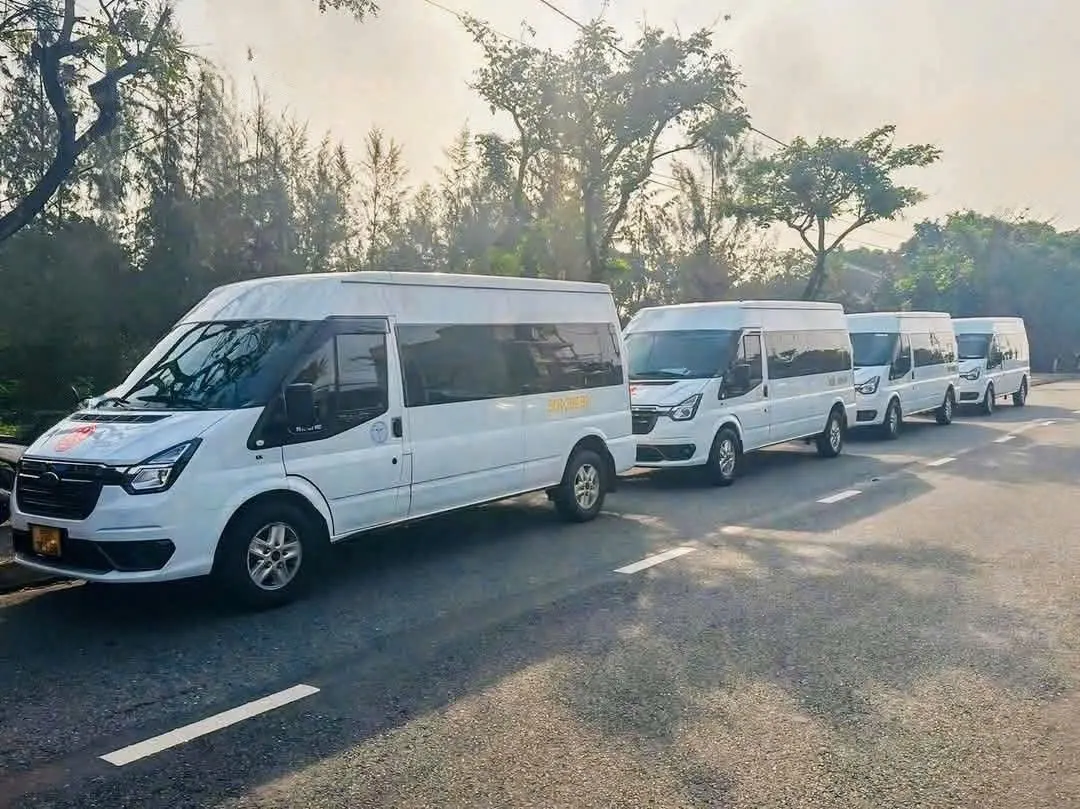
| Vehicle type | Typical use | Planning note |
|---|---|---|
| Van / minivan | Small private groups, executives, short city transfers | Useful for flexibility, but luggage volume may reduce practical passenger capacity. |
| Mid-size coach | Medium groups, shorter intercity use, selective access areas | Often a good balance where group size does not justify a full-size coach. |
| Full-size coach | Large group transfers, airport movements, long-distance touring | Best for scale, though access and parking conditions must still be checked. |
| Multiple-coach setup | Large incentives, MICE, church groups, series movements | Requires dispatch logic, numbering discipline, and regrouping control. |
Seat count is not the full capacity story
A coach may have a published seat count, but operational capacity is shaped by baggage size, rooming profile, special equipment, and whether guests are carrying shopping, golf bags, event materials, or pilgrimage items. Programs with heavy baggage loads often need more conservative transport planning than the seat map alone suggests.
Comfort and pacing affect execution quality
Even where a vehicle can technically accommodate a group, the more important question is whether the arrangement supports comfort, efficient loading, easy boarding, and realistic day flow. This becomes more important for senior groups, premium travelers, long-haul arrival days, or full-day touring with multiple transitions.
Airport pickup and dispatch logic
Airport transfer planning works best when vehicle dispatch is aligned with arrival windows, immigration variability, baggage claim timing, and the final grouping logic of the passengers. For larger groups, the transport plan should consider where guests regroup, how signage is managed, and when each vehicle should be released or held.
A stable airport movement often depends on coordination between arrival handling and coach staging rather than transport alone. For more on this process, see Vietnam Airport Arrival Handling.
Typical airport transport checks
- Final arrival spread and airline mix
- Estimated baggage volume
- Guide-to-vehicle matching flow
- Coach parking and staging practicality
- Waiting-time exposure and release timing
- Alternative handling for delayed sub-groups
City access and route realism
Some hotels, attractions, restaurants, and urban areas are easier to reach than others. Access conditions can influence vehicle choice, loading sequence, and walking distance required at pickup or drop-off points.
Urban congestion
Peak-hour traffic may materially affect routing and transfer time assumptions in Hanoi, Ho Chi Minh City, and other growing urban hubs.
Coach access limits
Some venues or hotels may require adjusted drop-off points, smaller feeder vehicles, or short walking segments.
Regional road variation
Travel times between destinations are influenced by road quality, stops, weather exposure, and density of local traffic.
Program sequencing
Transport logic should support the wider day structure, including meals, room check-in, attraction timing, and guest energy level.
Multi-coach planning for large groups
For large groups, transportation becomes a flow-management exercise. The number of vehicles matters, but so do numbering discipline, guest allocation, luggage coordination, guide placement, dispatch timing, and regrouping control across the day.
Coach assignment logic
Guests should be grouped in a way that supports rooming, language needs, leadership structure, or activity schedule where relevant.
Guide and lead allocation
The flow is stronger when responsibility is clear for each coach, especially during airport handling, hotel loading, and event transfers.
Timed release sequence
Staggered departure may reduce congestion and simplify venue access where multiple coaches cannot load simultaneously.
Contingency discipline
Large-group transport plans should anticipate late arrivals, missing baggage, venue delays, and alternate dispatch pathways.
Long-distance transfers and full-day touring
Longer road movements should be planned conservatively. Published drive times can understate the real experience once hotel loading, rest stops, meal timing, scenic pauses, and traffic variability are included. Programs that look efficient on a route map may feel compressed in practice if coach timing is too optimistic.
This is one reason routing logic and program pacing should be evaluated together. For broader itinerary structure, see Vietnam DMC Operations and Planning Stability & Contingency Approach.
Helpful planning questions
- Is the road movement realistic for the guest profile?
- Does the day include enough recovery points?
- Are meal and restroom stops planned intentionally?
- Will traffic variation materially affect the next service?
- Would a flight, rail segment, or split stop improve the program?
When a transportation plan may need redesign
The coach is technically enough, but operationally tight
This often appears when baggage, premium expectations, or airport conditions were not fully accounted for.
The route compresses the day too heavily
A strong itinerary should still feel manageable once real travel conditions are applied.
Venue access creates loading friction
Adjusted staging, split movement, or alternate vehicle logic may be needed.
The group is large enough to require dispatch control
Once multiple coaches are involved, the program benefits from a clearer movement design rather than simple transport assignment.
Timing sensitivity affects downstream services
Transport planning should protect check-in flow, dinner timing, attraction slots, and event setup requirements.
Related references
Frequently asked questions
Need support designing transport flow for a Vietnam program?
We support travel professionals with transportation planning that aligns with routing logic, group size, airport handling, and operational stability across Vietnam.