 ID
ID IT
IT DE
DE ZH
ZH ES
ES FR
FR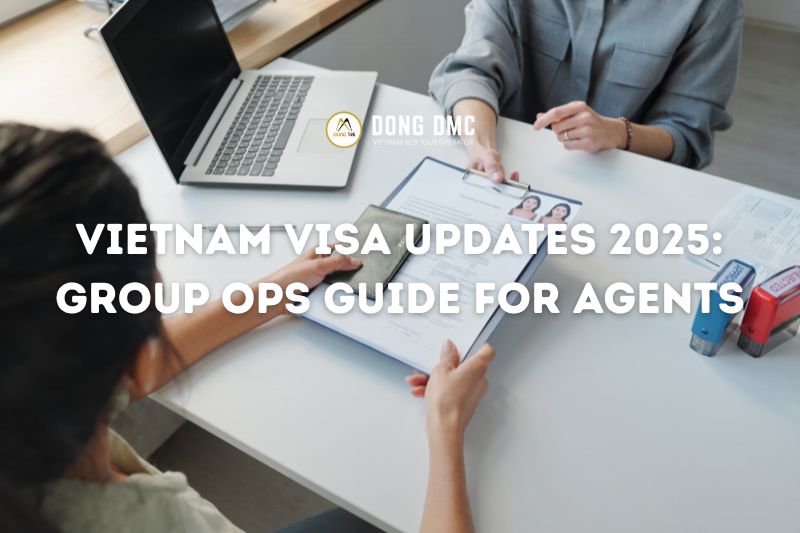
Vietnam Visa Updates 2025: Group Ops Guide for Agents
Category: agency-and-travel-industry-resources Keyword: Vietnam visa policy updates 2025 Current year reference: 2026 Reading time: 28-35 min Vietnam visa policy updates 2025 changed the operational reality for group and MICE departures: more clients can enter visa-free for 45 days under two government resolutions running through 2028, the 90-day e-visa is now open to all nationalities, and the e-visa border-gate list expanded to 83 ports. The opportunity is faster conversion and longer programs. The risk is last-minute airline or immigration failure if your team does not lock the right visa path early — and, from April 2026, file the new Ho Chi Minh City digital arrival card before departure. This is a trade-focused planning guide you can forward to group clients or insert into proposals. It gives you a decision framework (visa-free vs e-visa), practical group cut-offs (T-21, T-15, T-7), and routing controls (entry/exit gate validation) so 20-50 pax programs depart without document chaos. For related on-the-ground risk controls, see our traffic and protocol risk playbook: traffic and protocol risks. For group and MICE agents, the 2025-2026 shift is not just "easier visas". It is a change in where risk sits. Consular lead times matter less for many markets. Data accuracy, system timing, entry-gate selection, and - from April 2026 - the HCMC arrival card now matter more, because e-visas are digital, individual, and border-gate-specific. Operationally, this unlocks two things you can sell with confidence when managed correctly: (1) closer-in departures from visa-exempt markets, and (2) longer Vietnam programs and re-entry regional circuits supported by 90-day single or multiple-entry e-visas. Important: several exemptions are time-bound through 2028 (Resolution 44/NQ-CP to 14 March 2028; Resolution 229/NQ-CP to 14 August 2028). Treat visa rules as a controlled variable in your product, not a static brochure line. We recommend quarterly revalidation before you launch a new season or series, and again for each departure cycle if your passenger nationalities vary. Up to 90 days, single or multiple entry, online issuance, now open to all nationalities. Around 38 nationalities visa-free, 14-45 days by passport; most key European and NE-Asian markets at 45 days through 2028. Official 3 working days (complete application), but group planning should use buffers. Proposal-ready note You can position Vietnam as low-friction for many markets, but only if itinerary routing (air/land/sea entry points), the HCMC arrival card, and documentation cut-offs are built into the confirmation process. E-visa (2025-2026 operating reality): Most nationalities can apply online for an e-visa valid up to 90 days, with single-entry (official fee US$25) or multiple-entry (official fee US$50). The e-visa is valid only at the 83 designated border gates listed on the official system, and only at the gate selected during application. Official processing is stated as 3 working days after a complete and valid submission, but delays occur in peak periods and when applications require manual review. Visa exemptions (expanded for key markets): By 2026, Vietnam grants visa-free entry to roughly 38 nationalities for 14-45 days depending on passport. Two government resolutions carry the major European and Northeast-Asian markets: Resolution 44/NQ-CP (45 days, 15 March 2025 to 14 March 2028) covering Germany, France, Italy, Spain, the UK, Russia, Japan, South Korea and others; and Resolution 229/NQ-CP (45 days, 15 August 2025 to 14 August 2028) adding Belgium, Bulgaria, Croatia, the Czech Republic, Hungary, Luxembourg, the Netherlands, Poland, Romania, Slovakia, Slovenia and Switzerland. This is a meaningful selling point for short tours and close-in confirmations. Honesty note The visa-free count is reported as 38 by most authoritative trackers and 39 by some, as lists update. For proposal accuracy, do not rely on a static list - verify the applicable nationality and stay limit against the official portal (evisa.gov.vn) per departure. Border gate expansion: The e-visa system expanded the list of eligible entry/exit gates to 83 ports (airports, land borders, seaports), including new gates added in 2026, improving feasibility for overland and cruise routing. The operational implication is positive, but it increases the need to validate the exact gate at time of booking and again before visa submission. New rule Mandatory from 15 April 2026 at Tan Son Nhat (SGN) All foreign passport holders arriving at Ho Chi Minh City's Tan Son Nhat International Airport must complete a digital arrival card - whether visa-exempt or holding an e-visa. The form is filed free through the official Vietnamese immigration portal within 72 hours before arrival (not earlier, not at the airport) and produces a QR code presented at immigration alongside the passport. The system is designed to expand to Noi Bai (Hanoi) and Da Nang. Operational implication: for a group arriving into HCMC this is a pre-departure document-control step, not an arrival-hall task. Add it to your T-3 to T-1 print pack and tour-leader briefing, collect first-night accommodation and flight details with the passport data (both are required fields), and confirm completion per passenger. A group that lands without filed cards will be delayed at immigration regardless of visa status. If you sell groups (20-50 pax), the most commercially relevant beneficiaries are the markets that either become 45-day visa-free or have a simplified path via e-visa. In practical sales terms, this means you can present Vietnam in three clean packages: Package A (visa-free short stay): Sell fast-decision Vietnam highlights for markets with 45-day visa-free access, with shorter booking windows and simplified passenger onboarding. Package B (90-day e-visa single entry): Sell longer north-to-south touring and beach extensions without embassy lead time. Package C (90-day e-visa multiple entry): Sell Vietnam as the anchor in regional circuits that re-enter Vietnam (Vietnam-Cambodia-Laos-Thailand-Vietnam), provided the program locks the correct border gates. No group e-visa product: E-visas are individual applications. The operational advantage for group agents is coordination, QA, and timeline control, not a different visa category. E-visa is not work authorization: The e-visa supports lawful entry purposes such as tourism and business visits. It does not replace permits for employment or long-term residence. Keep client communications clear so the visa message supports the itinerary purpose you sold. Standard entry conditions still apply: Passport validity (at least 6 months from arrival), at least two blank pages, and the ability to show onward travel/accommodation if requested remain practical realities for airline check-in and immigration. This section is designed to be copy/pasted into your group proposal pack. It helps you qualify the group at inquiry stage, choose the correct visa path, and lock routing so your operation is predictable. Choose your visa path (proposal-ready framework) Step 1: Confirm passport nationalities and ordinary vs non-ordinary passports (diplomatic/service passports may follow separate agreements). Step 2: Confirm total stay length in Vietnam (count arrival and departure days) and whether the itinerary includes re-entry. Step 3: Confirm entry/exit mode: air only, overland border, or cruise/seaport. Decision: Use visa-free where eligible and within stay limit. Use 90-day e-visa for longer itineraries and any planned re-entry (multiple-entry). Use consular/embassy route only when the passport is not e-visa eligible or the case requires it. If you want a DMC validation on entry/exit gates before you finalize the routing, we can check feasibility alongside the quotation. This is built to protect your brand at ticketing stage and prevent rework after deposits. For how we structure predictable routing for groups in-country, see our operational playbook: Hanoi routing playbook. Scenario A: Visa-free (up to 45 days for many key markets) Use this when your passengers are eligible and the full Vietnam portion stays within the allowed visa-free duration. Operational advantage: quicker close-in confirmations and fewer moving parts in passenger onboarding. Sample group building block Hanoi (2N) - Ha Long (1N) - Da Nang/Hoi An (3N) - Ho Chi Minh City (2N). This structure is operationally stable for 20-50 pax with standard hotel check-in patterns and predictable coach days. Selling line you can use "Visa-free entry for eligible passport holders reduces pre-departure admin and supports faster booking decisions, while keeping the itinerary within approved stay limits." Scenario B: 90-day single-entry e-visa Use this when the group stays longer, adds beach extensions, or includes non-exempt nationalities but does not re-enter Vietnam. Operational advantage: long touring without embassy appointments. Sample group building block Hanoi - Ninh Binh - Ha Long - Hue - Hoi An - Quy Nhon/Nha Trang - Ho Chi Minh City - Mekong. This is suitable for slower pacing and extended stays, provided all entry/exit points match the e-visa border gate list. Proposal note "E-visa is issued to a selected border gate. Final flight/overland routing must be confirmed before submission to avoid re-application." Scenario C: 90-day multiple-entry e-visa (regional circuits) Use this when you will exit and re-enter Vietnam (common in Vietnam + Cambodia + Laos or Thailand combinations). Operational advantage: removes the need for additional Vietnam visa issuance between countries, but only if you lock the correct re-entry gate. Common operational pattern Vietnam segment 1 - exit overland or by air - regional segment - re-enter Vietnam by air or validated land border. Choose multiple-entry e-visa when the second Vietnam entry is planned and confirmed, not "maybe". Risk control to include in proposal "Re-entry requires a multiple-entry visa status and the border gate listed on the e-visa. Late routing changes may require re-application and may impact costs and timeline." Rule 1: Plan to the most restrictive nationality. In mixed groups, your cut-offs, routing lock, and contingency buffers should be set to the passenger(s) with the strictest visa requirement. This prevents a single delayed approval from disrupting the entire coach flow and pre-booked services. Rule 2: Freeze passport list before you freeze rooming. Rooming can be adjusted with lower operational impact. Visa data changes (name, passport number, nationality) create high rework and can force re-application fees and timeline resets. Rule 3: Protect margin by reducing rework. Use one standardized passenger data sheet across all sub-agents and departures. The cost of rework is rarely visible in net rates, but it damages response speed and increases error rate near departure. Rule 4: One-page visa brief per departure. For sub-agent networks, issue a per-departure visa brief that states: who is visa-free, who needs e-visa, who must file the HCMC arrival card, document cut-offs, and what must be carried to check-in. The most common avoidable failure in Vietnam e-visa handling is not "visa denied". It is "visa issued to the wrong border gate" after the itinerary changes. Prevent this by locking gates at the same time you lock flights and overland crossings. Border gate validation checklist (use before you price, again before you submit) 1) Confirm arrival airport/land border/seaport is eligible for e-visa entry on the official list of 83 ports. 2) Confirm exit point is feasible for the itinerary (and re-entry point if using multiple-entry). 3) If any passenger uses e-visa, route the whole group to e-visa-compatible gates to keep the group together. 4) Once visas are issued, treat gate changes as a controlled change request with cost and time implications. If your program includes complex coach movements in major cities, integrate hotel access into your routing decisions (drop-off windows, luggage flow, coach parking). See: hotel access and coach logistics playbook. Your client does not judge visa policy on paper. They judge it at airline check-in and at immigration. The goal is simple: no boarding denials, no split group arrivals, no last-minute rerouting, and no loss of itinerary value due to delays. Below is a group-ready SOP you can adopt as an agency standard. It works whether you coordinate visas internally, delegate to sub-agents, or ask your DMC to run document control. Even though official e-visa processing is often stated as 3 working days for a complete file, group operations should plan buffers to absorb peak loads, payment retries, and correction cycles. Standard season timeline (recommended) T-28 to T-21: Passenger list freeze (names exactly as passport MRZ), passport validity check, identify mixed-nationality cases. T-15 to T-10: E-visa submission window (batch submission, track reference codes). T-7: Approval deadline and escalation trigger (any pending cases flagged for decision). T-3 to T-1: Print-pack finalization (e-visa printouts + HCMC arrival-card QR confirmations), tour leader briefing, airline check-in readiness reminders. Peak season adjustment (Tet, summer, year-end) Submission buffer: plan 15-21 calendar days pre-arrival. Internal deadlines tighten: keep the same T-21 freeze, but move submission earlier and enforce photo/scan quality rules. Client expectation: communicate that the official SLA is a minimum and not an operational promise during peaks. Client-facing line you can use "To protect group travel continuity, we apply conservative visa timelines that account for online system delays and correction cycles. This prevents last-minute changes that impact flights, hotels, and pre-booked services." Most e-visa failures are preventable. They come from data mismatch and file quality issues, not from complex legal reasons. For groups, you need a single source of truth that every sub-agent and tour leader uses. Minimum data set to collect (group standard) - Full name exactly as passport MRZ (including middle names where present) - Passport number, issue date, expiry date (confirm at least 6 months validity on arrival) - Nationality, date of birth, gender - Planned entry gate, entry date, exit date, and single vs multiple entry requirement - For HCMC arrivals: first-night accommodation address and flight number (required for the digital arrival card) - Passport data page scan (clear), and compliant portrait photo (recent, suitable background) QA checkpoints before travel: Verify spelling, passport number, nationality, entry gate, entry window, and number of entries. Store a print-ready pack per passenger and a master manifest per coach/flight. Airline check-in readiness: Airlines commonly require a printed e-visa copy, and land-border checkpoints do not reliably accept phone screenshots. Treat printed documents (and the arrival-card QR) as the default group standard to reduce boarding denial risk. Arrival success is a sequencing problem. Mixed document types can slow clearance and delay coach dispatch. Build a simple flow plan and brief it in advance. Arrival flow plan (practical and repeatable) 1) Separate passengers by document type before immigration: visa-free vs e-visa vs other cases. 2) Assign one group lead to carry the master list and copies (useful when passengers are asked for confirmation details). 3) Budget realistic time: 45-90 minutes for immigration for 20-50 pax depending on flight bank and season. 4) Dispatch coaches based on live status, not scheduled landing time (reduces idle time and avoids crowding at meeting points). For partners who need visibility, our Agent App can support real-time milestones (arrival status, ops updates, and document access) so you can answer the client question instantly: "Where is the group right now?" Learn how it works: Dong DMC Agent App. Groups need a clear escalation rule. If you wait until T-2, your only option becomes program damage. Use the decision trees below to protect the departure. If an e-visa is not approved by T-7 Option A: Replace passenger (best for series groups) if client terms allow substitution. Option B: Adjust travel date (protects services but may impact flights and client commitments). Option C: Change routing only if a compliant solution exists (and only before visa issuance, or with re-application time available). Option D: Consular route only when feasible and when the passport category requires it (typically longer lead time). If entry point changes after an e-visa is issued Operational assumption: treat as a re-application requirement if the new gate is not the one stated on the visa. Commercial implication: additional fees and processing time may apply, and change penalties may arise from flights, hotels, and transport. Client communication: position gate lock as a risk-control measure that protects on-time itinerary start. Insurance and liability (proposal language guidance) - Clarify who submits the visa (traveler, agency, or DMC) and what the responsible party must provide. - State that incorrect or late documents can lead to boarding denial or entry refusal, which may not be covered by standard insurance. - Recommend travelers follow the checklist and submit documents by cut-off to protect group services already contracted. Our operating promise is brand protection: when your clients travel, you should not need to explain surprises. To understand how we structure this across multi-city operations, see: why partners choose Dong DMC. Below are pitch-ready storylines you can adapt. They reflect how visa simplification plus disciplined cut-offs reduces operational risk for 20-50 pax groups. Template 1: 45-day visa-free series group (Europe) Client goal: confirm close-in departure without embassy appointments. Plan: keep itinerary within visa-free stay limit, lock flights early, issue a one-page travel document brief, and implement T-21 passenger list freeze. Outcome to report: fewer pre-departure admin steps, faster conversion, stable itinerary start on arrival. Template 2: 90-day multiple-entry circuit (Vietnam + Cambodia + Laos) Client goal: regional circuit without rework between countries. Plan: select multiple-entry e-visa, validate entry and re-entry gates before contracting hotels and transport, set approval deadline at T-7. Outcome to report: predictable re-entry, no last-minute gate changes, preserved itinerary flow and pre-booked services. Template 3: Mixed-nationality group (20-50 pax) Client goal: keep the group together with one operating plan. Plan: plan to the most restrictive nationality, centralize data collection using one passenger template, split immigration lines by document type on arrival. Outcome to report: reduced errors, fewer visa-related escalations, smoother immigration and on-time coach departure. Template 4: Peak-season departure (risk-managed timeline) Client goal: operate in high-volume periods without document delays. Plan: submit e-visas 15-21 days before arrival, implement strict photo/scan QA, and run a T-7 escalation workflow. Outcome to report: protected ticketing timeline and reduced last-minute passenger substitutions. If you need execution proof for proposals, you can reference our partner case library: partner success stories. To reduce back-and-forth and protect response speed, ask for rebrandable assets you can send to sub-agents and passengers: - One-page visa brief per departure date (visa-free vs e-visa instructions, HCMC arrival-card steps, cut-offs, what to carry to check-in) - Passenger data template aligned to passport MRZ to reduce errors - "Routing lock" note explaining why entry/exit gates must be finalized before e-visa submission - Agent App access for quote tracking, document access, and live operations updates These checklists are detailed enough to implement immediately for your next departure. Use them as internal SOPs or as client-facing appendices in your proposal pack. Minimum questions to qualify visa path 1) Passenger nationalities (list all, do not assume one market) 2) Passport expiry dates (flag any under 6 months validity on arrival) 3) Total days in Vietnam (include arrival/departure days) 4) Any planned re-entry to Vietnam (yes/no). If yes, how many entries? 5) Entry and exit points (airports, land borders, seaports). Any cruise calls? Arriving via HCMC? 6) Any late substitution risk (series groups, option holds) so cut-offs can be set realistically Before submission - Confirm entry gate exactly matches the final itinerary - Confirm single vs multiple entry selection matches the routing plan - Check name and passport number against passport MRZ (not a typed email signature) - Ensure photo and passport scan are clear and compliant - Plan for payment retry time (card failures can happen). Do not submit at the last minute What every passenger should have - Passport (validity checked) and at least one blank page for stamping - Printed e-visa (if applicable) and a digital backup copy - HCMC digital arrival-card QR (if arriving via Tan Son Nhat / SGN) - Proof of onward travel and accommodation details (if requested by airline/immigration) - Emergency contact and tour leader contact details Because several exemptions are time-bound through 2028 and the e-visa gate list can expand, adopt a simple quarterly check: 1) Review visa-free nationality list and stay limits relevant to your top selling markets. 2) Review e-visa eligibility and border gate list for the routes you sell (air, land, sea). 3) Review arrival-card rollout (HCMC live; Hanoi and Da Nang expected) and update proposal boilerplate: cut-offs, traveler responsibilities, required carry-on documents. 4) Re-brief sub-agents with the one-page visa brief template per departure cycle. Q: Which nationalities are visa-free and for how many days in 2025-2026? As of 2026, roughly 38 nationalities enter visa-free for 14-45 days depending on passport. Most major European and Northeast-Asian markets have 45-day stays under Resolution 44/NQ-CP (through March 2028) and Resolution 229/NQ-CP (through August 2028); most ASEAN markets have 30 days. For proposal accuracy, do not use a static list - verify the nationality mix and applicable stay limit per departure before ticketing. Q: Is the Vietnam e-visa really 3 working days? What buffer should group agents use? Official guidance commonly states 3 working days for a complete and valid file, but group operations should plan 10-15 calendar days buffer, and 15-21 days in peak periods. This absorbs file corrections, payment retries, and system load, and protects your departure from last-minute failure. Q: What is the new HCMC digital arrival card, and who must file it? From 15 April 2026, all foreign passport holders arriving at Tan Son Nhat (SGN) must file a free digital arrival card within 72 hours before arrival, receiving a QR code for immigration. It applies whether the traveller is visa-exempt or holds an e-visa, and is expanding to Hanoi and Da Nang. Build it into your pre-departure document pack. Q: Single vs multiple-entry e-visa - which should we choose for Vietnam + Cambodia/Laos circuits? If your itinerary exits Vietnam and re-enters Vietnam, choose multiple-entry. If Vietnam is entered once only, single-entry is normally sufficient. Confirm the re-entry gate is on the official e-visa border gate list before you submit, and treat any gate change after issuance as a controlled change request. Q: Can we enter at any airport or land border with an e-visa? No. E-visas are valid only at the 83 designated airports, land borders, and seaports listed on the official system, and only at the gate selected during application. Routing must be locked early and validated before visa submission, especially for overland and cruise programs. Q: What are the most common reasons airlines deny boarding for Vietnam? Missing printed e-visa (where required), mismatch between e-visa data and passport (name or passport number errors), wrong entry gate on the issued e-visa versus the actual flight routing, and passport validity issues. A simple QA step at T-7 and a printed document pack reduces these risks significantly. Q: Do you handle visa coordination for mixed-nationality groups, and how do you track status? Yes. For mixed-nationality groups, we can coordinate document collection templates, QA, submission tracking, and escalation milestones, then integrate visa readiness into arrival operations. Partners can also use our Agent App for centralized access to documents and live operational updates: Agent App. Send us your draft itinerary + passenger nationalities. We will validate the visa path (visa-free vs e-visa), confirm routing against eligible border gates, flag HCMC arrival-card steps, and map a group timeline you can attach to your proposal - all under your own brand. Fast quotations (12-60 minutes). Brand-protected, white-label operations. Net rates only. | Contact Ops | Quote it in the Agent App | Why partners choose Dong DMC Visa rules can change and may be applied differently depending on nationality, passport type, and entry circumstances. For each departure, verify the latest requirements using official channels (evisa.gov.vn and the Ministry of Foreign Affairs) and the dated references below. Recommended agency control: revalidate quarterly for brochure accuracy and again per departure if your nationality mix changes. The 38-vs-39 visa-free count and the arrival-card rollout (Hanoi, Da Nang) are the two items most likely to shift - confirm both against the official portal before publishing season collateral.
Planning Takeaways
1) Planner context - what Vietnam visa policy updates 2025 mean for groups
E-visa validity (planning range)
Visa-free headline (2026)
Processing expectation
1.1 What changed (at-a-glance for agents)
Update
Detail
In force
E-visa scope
Open to all nationalities and territories
Current (expanded 2023)
E-visa validity
Up to 90 days, single or multiple entry
Current
E-visa fee
US$25 single-entry / US$50 multiple-entry (government fee)
Unchanged 2026
E-visa processing
Officially 3 working days on a complete file; plan buffers
Current
E-visa entry points
83 ports (airports, land borders, seaports); gate list expanded
As of Dec 2025
Visa-free nationalities
~38 nationalities, 14-45 days by passport
2026 (verify live list)
45-day exemption — Resolution 44/NQ-CP
Germany, France, Italy, Spain, UK, Russia, Japan, South Korea, Denmark, Sweden, Norway, Finland, Belarus
15 Mar 2025 - 14 Mar 2028
45-day exemption — Resolution 229/NQ-CP
Belgium, Bulgaria, Croatia, Czech Republic, Hungary, Luxembourg, Netherlands, Poland, Romania, Slovakia, Slovenia, Switzerland
15 Aug 2025 - 14 Aug 2028
30-day exemption
ASEAN markets (mostly 30 days; Philippines 21) plus Chile and Panama
Current
Phu Quoc
30-day visa-free for all, when entering the island directly
Current
Digital arrival card
Mandatory at HCMC (SGN); free; filed within 72h before arrival; QR at immigration; expanding to Hanoi & Da Nang
From 15 Apr 2026
Passport standard
Valid ≥6 months from arrival, ≥2 blank pages
Current
1.2 New for 2026: the Ho Chi Minh City digital arrival card
1.3 Who benefits most (group source markets)
1.4 What did not change (to prevent overselling)
2) Practical planning guidance you can reuse in proposals

2.1 Itinerary building blocks by visa scenario (20-50 pax)
2.2 Mixed-nationality group design rules (what actually works)
2.3 Border and entry-point planning (make routing visa-proof)
3) Operational excellence and risk management for 20-50 pax departures
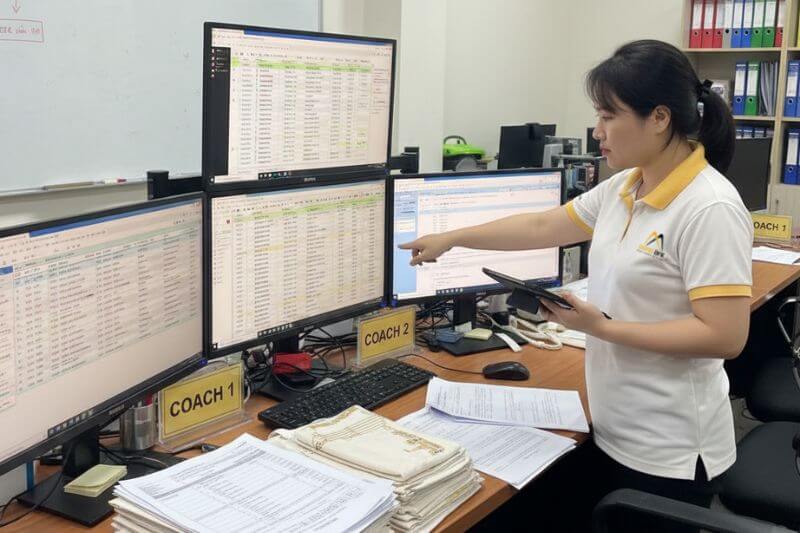
3.1 Recommended group visa timeline (buffers that protect departures)
3.2 Document control system (reduce errors and re-application cost)
3.3 Arrival-day logistics (immigration flow for 20-50 pax)
3.4 Risk and contingency playbooks (decision trees you can act on)
4) Partner success storylines you can reuse in pitches (templates)
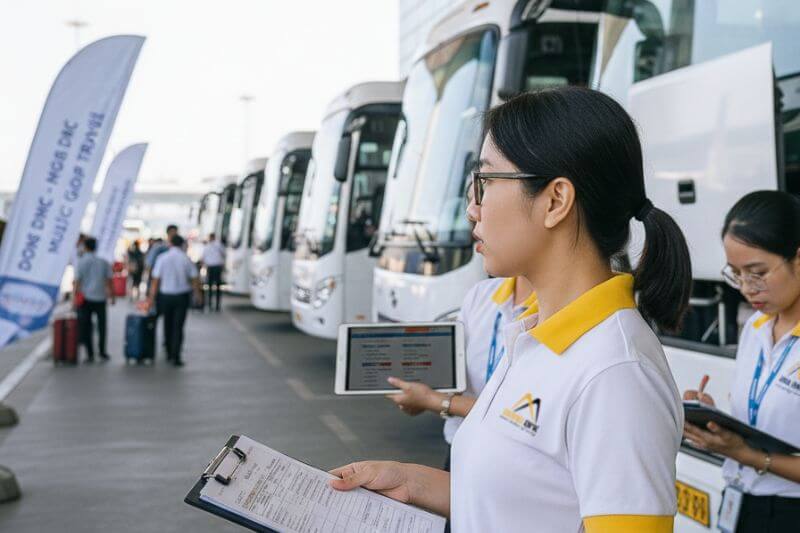
4.1 Co-selling assets agents can request (rebrandable)
5) Tools and checklists (copy/paste-ready for agency use)
5.1 Inquiry-stage visa questions (ask before you confirm pricing)
5.2 E-visa submission checklist (reduce rework)
5.3 Departure-day checklist (reduce boarding denials)
5.4 Quarterly visa revalidation mini-process (protect brochures and series)
Frequently Asked Questions (trade-focused)
Validate a group's visa path before you contract
Sources and verification notes (for proposal compliance)