 ID
ID IT
IT DE
DE ZH
ZH ES
ES FR
FR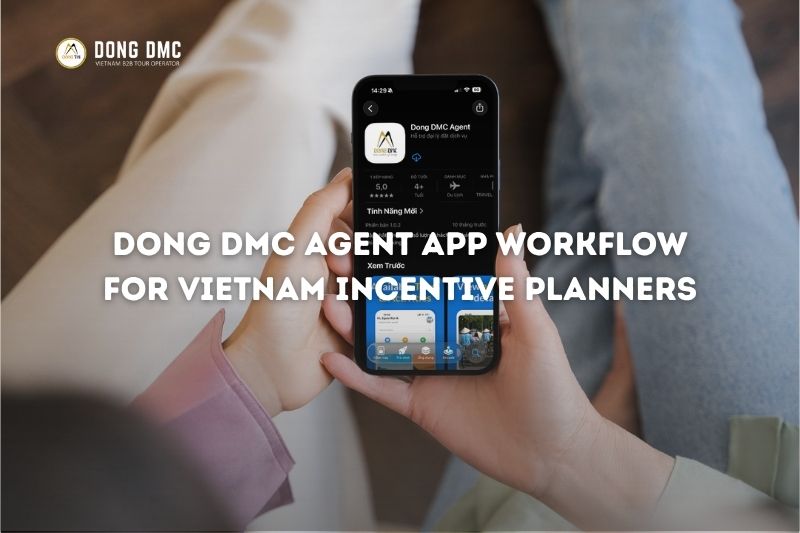
Dong DMC Agent App Workflow for Vietnam Incentive Planners
How to use Dong DMC Agent App well for a Vietnam incentive program starts with a simple rule: treat the app as an execution interface, not as governance. Incentive delivery risk is rarely “can we book?”—it is whether capacity can be confirmed, changes controlled, and decisions evidenced fast enough to protect your client-facing SLA. The app can accelerate availability checks, confirmations, and day-of coordination for Vietnam ground services. It does not replace your briefing pack, duty-of-care activation, liability terms, change-control rules, or incident escalation design. In incentives, the operational pressure points are predictable: fixed arrival waves, limited capacity windows, VIP handling, and tight on-site sequencing. A delayed confirmation can cascade into transport re-ordering, venue access issues, staffing changes, or participant communication rework. “Instant confirmation” therefore has a governance implication. It compresses decision time: itinerary lock points happen earlier, internal sign-offs must be cleaner, and the tolerance for ambiguous specs (rooming, accessibility, inclusions, pickup logic) drops. Used correctly, the app helps you reduce confirmation latency without weakening approval discipline or auditability. What the app is for: based on the public iOS/Android listings, the Dong DMC Agent App provides travel professionals with real-time access to ground-service availability and booking with instant confirmation, plus an in-app support channel described as 24/7. Typical service categories referenced include transfers, day tours, group experiences, and selected special-interest or packaged options. What the app is not: it is not a transfer mechanism for duty-of-care, liability, or client-facing SLA ownership. Your agency (or corporate incentive buyer, where applicable) still owns: (1) program promise and participant communications, (2) insurance coordination and duty-of-care decisions, (3) approval authority for material changes, and (4) completeness and accuracy of the briefing provided to the DMC. The DMC owns on-ground execution and supplier coordination within the agreed brief. Planning implication: app speed is only safe when the briefing pack and escalation ladder already exist. If your team cannot define “acceptable alternatives,” response windows, and who can approve changes, faster confirmation can increase downstream corrections and disputes. For professional incentive delivery, treat the app as part of a control system. Each booking, modification, or alert should be answerable to three questions: Who decides? By when? Where is the record? If any one of these is unclear, the tool’s speed can create ambiguity rather than reduce it. Use a clean responsibility chain to prevent parallel instructions during live delivery: This is not semantics. It determines whether a same-day hotel alternative requires your approval, who communicates a delay to participants, and what “confirmed” means when a disruption forces a compromise. An instant confirmation should trigger internal handoffs and version control. It confirms that capacity has been secured under the inputs available at that moment; it does not confirm that the full operational picture is aligned (rooming accuracy, VIP flags, accessibility needs, pickup logic, inclusions, and contingency permissions). Minimum control actions after each confirmation Use in-app support for coordination that benefits from a written thread: status checks, timing adjustments, supplier follow-ups, routine clarifications, and non-critical issue logging. Keep it as the system of record for operational messages that may need to be audited. Use phone escalation (with written follow-up captured immediately after) when decisions are time-critical or safety-related: medical incidents, safety/security concerns, major transport disruption, or any situation where waiting for typed responses increases welfare risk or program impact. Although public listings reference 24/7 support, your team should confirm in writing the practical escalation contacts and expected response windows for urgent vs. non-urgent matters before travel. To prevent split instructions, nominate one agency-side approving authority during live operations, and one backup, with clear coverage hours. The DMC should have a single operational lead for your program, with a management escalation route for critical incidents. The app workflow is stable; the operating risk is not. Group shape, weather exposure, and schedule rigidity determine how much pre-approval you need and how tight your decision gates should be. Real-time availability is most valuable when your requirements are sufficiently defined: participant count range, room mix, transport standard, and experience inclusions. When these inputs are still moving, “available” can quickly become “available for a different version of the program than the one you will finally run.” If VIP density is high (suite categories, protocol handling, privacy constraints, accessibility requirements, dietary controls), build pre-approved alternatives before you rely on fast confirmations. Examples include acceptable hotel category and maximum distance from the program hub, acceptable substitute venue types, coach standards and backup vehicle expectations, and what constitutes a service-level downgrade that must be escalated. Weather-related disruption is rarely solved by faster messaging. The app can support alerts and coordination, but it cannot answer governance questions such as “Do we cancel?” or “What is the approved indoor substitute?” For outdoor dinners, boat-based activities, or long routing days, set in advance: cancellation/substitution thresholds, approved indoor alternatives, refund/credit rules, and decision authority when risk is visible 24–48 hours out. This reduces last-minute client-impacting decisions and prevents contradictory instructions to suppliers. Not all incentive blocks carry the same tolerance for change. A recognition gala typically has hard start times, production dependencies, and reputational exposure. Team-building may tolerate moderate timing shifts if facilitation integrity is preserved. Cultural immersion touring often allows more routing flexibility if the experience narrative remains coherent. Translate that into block-specific rules: what timing drift is acceptable, what substitutions are pre-approved, and what always requires agency authorization. This avoids treating every live adjustment as either “always fine” or “always a crisis.” Most delivery failures attributed to “operations” trace back to missing inputs, undefined approvals, or weak documentation. The app can make these gaps show up faster. A common breakdown is confirming services while essential specs are still unresolved internally—VIP flags, accessibility, dietary needs, pickup constraints, or room mix. Once a service exists, late clarifications are treated as changes rather than setup, which can create avoidable fees, mismatched service levels, or participant-facing errors. Control: do not lock critical components until the briefing pack reaches a minimum viable standard (defined below). Where you must secure capacity early, document assumptions explicitly and label them as “pending final rooming/participant details,” with a pre-agreed deadline for finalization. If “change” is not defined, every adjustment becomes a negotiation under time pressure. For incentives, define re-approval triggers in writing before live operations. Typically requires re-approval Can sit under DMC operational discretion (only if pre-authorized) Control: use the app (or your written channel of record) to document change requests and approvals so both parties can reconcile “what was authorized, when, and by whom.” Flight delays, transport disruption, supplier no-shows, and weather events can often be managed if thresholds and roles are defined. Issues escalate when: (1) there is no agreed trigger for reschedule/cancel, (2) agency and DMC communicate separately to participants, or (3) there is no timestamped decision record. Control: define thresholds per activity type (not “one rule for everything”), nominate a single client-communications owner, and ensure every escalation has a timestamped trail (initial notification, options offered, decision, execution, and outcome). The workflow below is designed for incentive buyers who need defensible process: it links app usage to ownership, approval, and documentation so execution remains controllable under time pressure. Before any material booking, align a formal briefing pack that covers: Also confirm practical readiness: app access credentials, device coverage (iOS/Android), connectivity expectations, and the agreed channel sequence for critical incidents (phone first, then written record). When you book via the app, treat each confirmation as a controlled record that must be usable later for reconciliation and dispute handling. Store it alongside the itinerary version it belongs to. Use a consistent reconciliation check for every service: If an element is booked under a temporary assumption (e.g., “final rooming pending”), document the assumption and the deadline for finalization to prevent silent drift. Set a cadence that avoids both silence and noise. A workable model is two scheduled check-ins daily (start-of-day and late afternoon), plus alert-driven responses when the DMC flags an issue. Define response windows that match operational reality and your internal coverage model. Do not rely on implied expectations; agree them. For example: urgent operational decisions may require a fast response from your approving authority, while non-urgent matters can sit within a longer window. Critical incidents should escalate by phone immediately, with the app/email used straight after to preserve the timeline. Closeout should convert operational history into a clean audit file: compile confirmations, approved changes, and incident notes; verify that decision paths were followed; and document any client-impacting resolution and sign-offs required by your internal process. Reconcile final billing against (1) original confirmations, (2) documented change approvals, and (3) recorded substitutions. Missing records at this stage create avoidable friction because the team is forced to reconstruct decisions from memory rather than evidence. Retention practice varies by organization, but many teams keep booking and change records for at least 12 months and incident documentation longer where duty-of-care, insurance, or dispute handling may apply. Align this with your internal compliance needs. If you want a quote within a short turnaround, prepare a briefing pack version that includes dates, cities, participant range, VIP flags, core program blocks, and your change-control/approval contacts. This reduces clarification cycles and makes confirmations more defensible once services are reserved.Why an agent app becomes a risk-control tool in incentive group delivery
What the app covers vs. what remains the agency’s responsibility
The operating spine: every in-app action must map to a decision owner and a retained record
Role clarity in Vietnam incentive operations (agency–DMC–supplier)
Confirmation is not completion: what “instant booking” should trigger internally
Escalation logic: when in-app support is appropriate vs. when phone escalation is required
What changes by context in Vietnam incentive programs (and how app usage should adapt)
Group size and VIP density: capacity is only helpful if your specs are stable
Seasonality and weather exposure: contingency decisions must be authorized before day-of
Program objective and schedule rigidity: define different change thresholds by program block
Where preventable friction typically appears (and how to avoid it)
Pattern 1: booking faster than you can brief
Pattern 2: undefined change control
Pattern 3: incident handling without thresholds and logs
Practical workflow: how to use Dong DMC Agent App from briefing to post-program audit
1) Pre-booking: the briefing pack that must exist before relying on in-app confirmations
2) Booking and documentation: turning confirmations into an auditable operations file
3) On-program coordination: daily cadence, response windows, and decision gates
4) Post-program closeout: incident review and billing reconciliation using retained records
Professional next step (for quotation readiness)
FAQ themes (questions only)