 ID
ID IT
IT DE
DE ZH
ZH ES
ES FR
FR.jpg)
Vietnam Traditional Dance & Music: Guide for Planners
Vietnam DMC | Cultural Planning Brief
Vietnam Dances and Traditional Music: What Travel Professionals Need to Know
Vietnam’s dance and music traditions are not one single product category. They are a mix of imperial court heritage, community singing, ritual performance, ethnic minority dance, and tourism-ready stage formats that need different planning logic.
Vietnam welcomed nearly 21.2 million international visitors in 2025, then added 3.96 million more in January and February 2026.
As visitor volume rises, cultural performances become more important for evening programming, destination differentiation, and supplier coordination across Hanoi, Hue, Hoi An, and the Northwest circuit.
What makes Vietnam dances unique?
Vietnam’s performance heritage is shaped by region, ethnic community, ceremony type, and historical setting rather than by one national dance style.
UNESCO has inscribed multiple Vietnamese performance traditions, including Nhã nhạc in 2003, Quan họ and Ca trù in 2009, Xoan in 2011 and 2017, Đờn ca tài tử in 2013, Bài Chòi in 2017, and Xòe dance in 2021.
This matters for planning because Hue court heritage, northern folk singing, central performance traditions, southern chamber music, and Northwest community dance should be positioned as separate cultural experiences, not combined into a generic “traditional show.”
Nhã nhạc: the strongest imperial heritage anchor in Vietnam
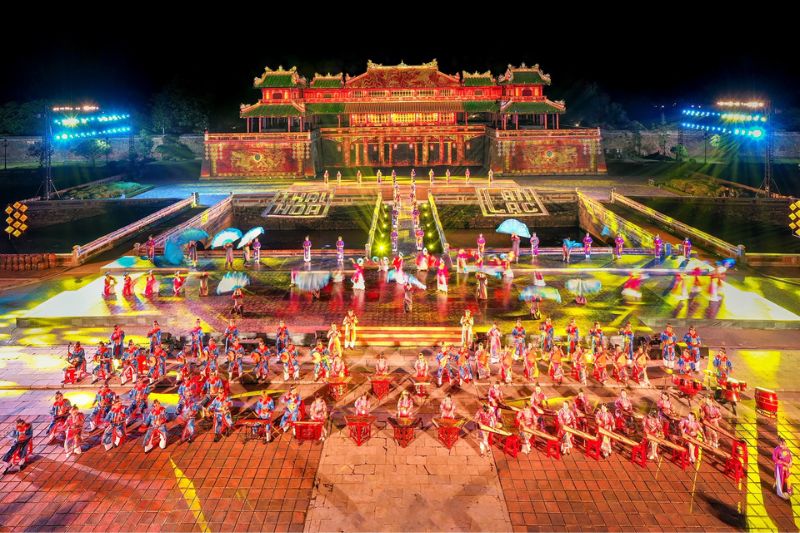
Nhã nhạc remains the clearest reference point for classical Vietnamese court performance.
UNESCO recognized Nhã nhạc in 2003 and describes it as a broad range of musical and dance styles performed at the Vietnamese royal court from the fifteenth to the mid-twentieth century.
Nhã nhạc is not just “music.” It includes ceremonial movement, costume, court protocol, and venue context.
For Vietnam DMC planning, Hue is the most logical destination for heritage-led gala dinners, historical theme evenings, and curated cultural programs linked to imperial history.
“Imperial performance works best when the itinerary already has strong historical logic in Hue.”
— Dong Hoang Thinh, Operational Review
Ca trù: a specialist format for high-context cultural programs
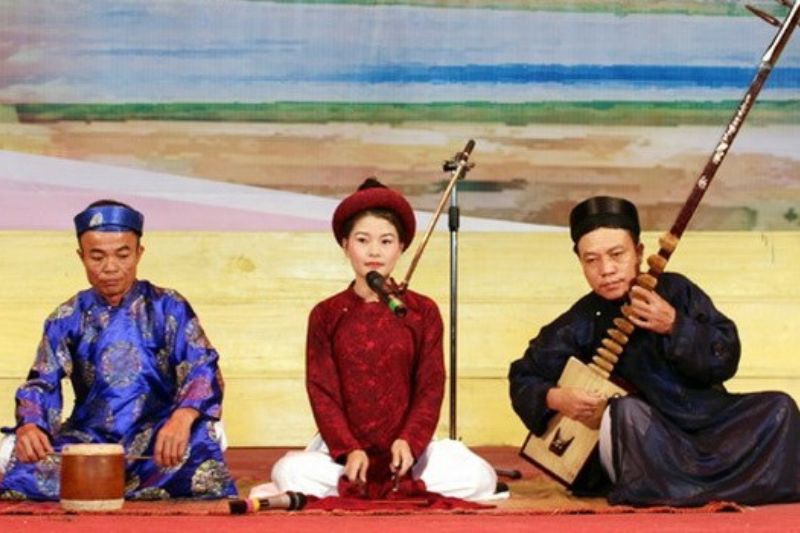
Ca trù is one of Vietnam’s most culturally significant yet operationally selective performance formats.
UNESCO inscribed Ca trù singing on the List of Intangible Cultural Heritage in Need of Urgent Safeguarding in 2009.
UNESCO describes Ca trù as a complex form of sung poetry performed in northern Vietnam with a singer, clappers, lute, and praise drum. This makes it culturally rich but less suitable for all audience types.
Ca trù is better for specialist cultural itineraries, educational groups, and premium small-scale evenings than for large-format festive group travel operations.
Quan họ and Xoan: northern heritage with strong identity value
Northern Vietnam offers two major performance traditions that support deeper cultural interpretation: Quan họ and Xoan.
UNESCO inscribed Quan họ Bắc Ninh folk songs in 2009. Xoan singing of Phú Thọ Province was inscribed on the Urgent Safeguarding List in 2011 and then transferred to the Representative List in 2017.
Quan họ is built around call-and-response singing in community settings, while Xoan is a ritual-linked performing tradition associated with worship, spring practice, and heritage transmission.
These formats work best when the itinerary includes strong cultural briefing, local context, and enough time for interpretation rather than only short passive viewing.
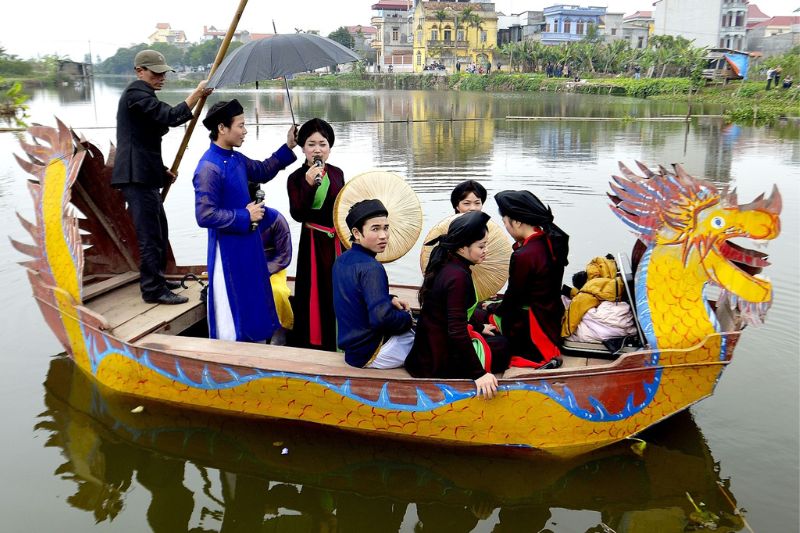
Quan họ
Quan họ works well in North Vietnam cultural routes where the program already includes Hanoi and nearby provincial heritage extensions.
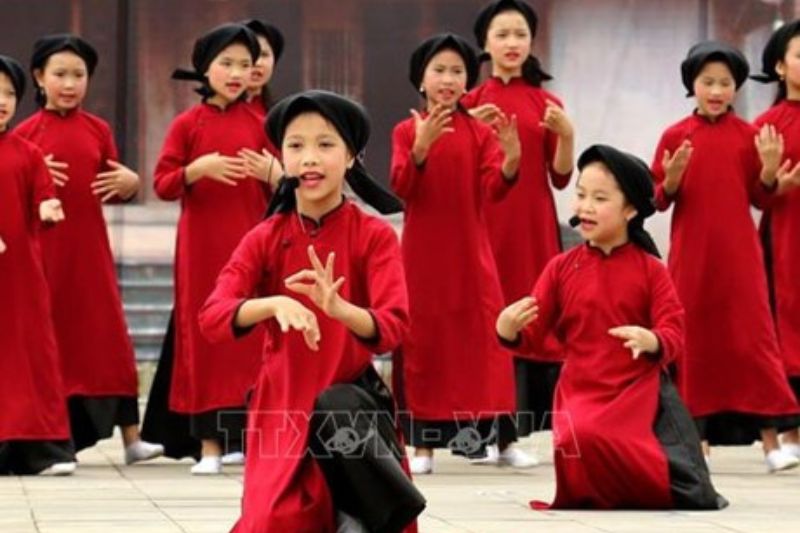
Xoan Singing
Xoan is better positioned as a preservation and interpretation product rather than a generic stage show.
Bài Chòi and Đờn ca tài tử: region-specific cultural programming
Central and Southern Vietnam each have performance traditions that are useful for destination-specific storytelling.
UNESCO inscribed the art of Bài Chòi in Central Viet Nam in 2017 and the art of Đờn ca tài tử music and song in southern Viet Nam in 2013.
UNESCO describes Bài Chòi as a diverse art combining music, poetry, acting, painting, and literature. UNESCO describes Đờn ca tài tử as a musical art rooted in southern spiritual and community life.
For supplier coordination, Bài Chòi is strongest in Central Vietnam programming, while Đờn ca tài tử fits southern itineraries linked to Mekong Delta or Ho Chi Minh City cultural extensions.
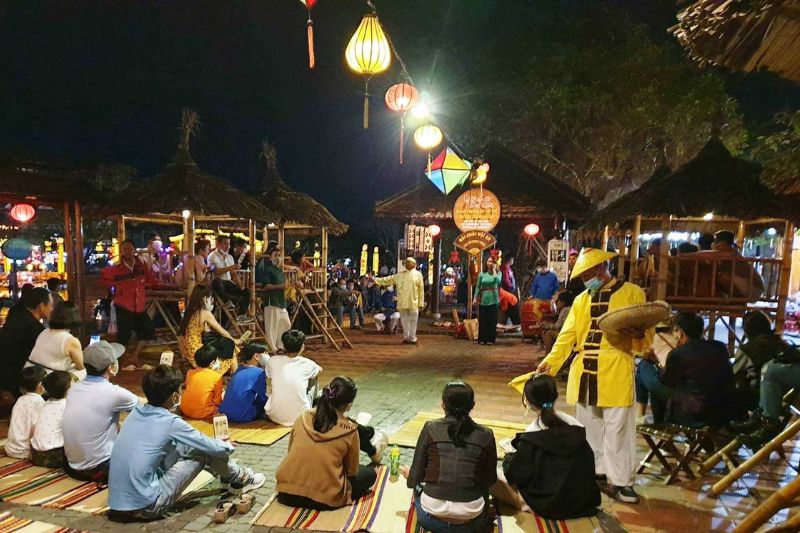
Bài Chòi
Bài Chòi is more than a performance. It combines music, poetry, and game elements, making it useful for destination-led storytelling in Central Vietnam.
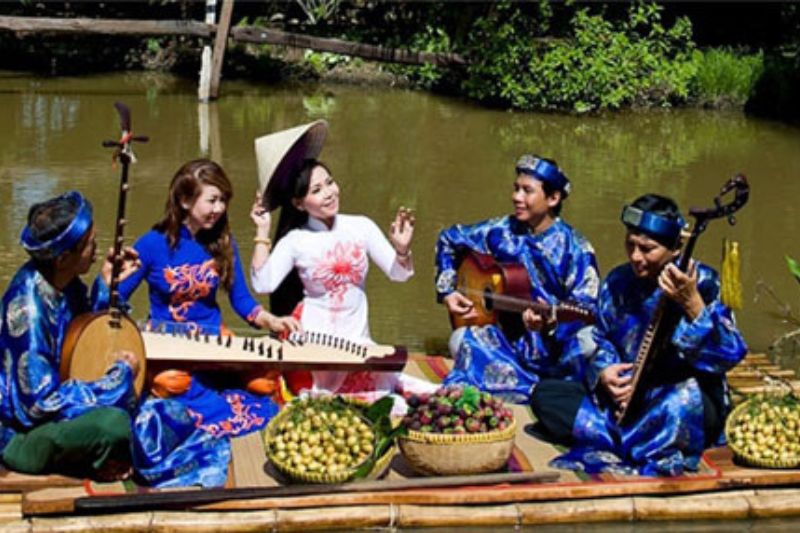
Đờn ca tài tử
Đờn ca tài tử fits southern cultural routing where music-led community identity is part of the experience design.
Xòe dance and bamboo dance: participation matters in group travel operations
Not every traditional performance works the same way for travel groups. Some formats are observation-led, while others are participation-led.
UNESCO inscribed the art of Xòe dance of the Tai people in Viet Nam in 2021.
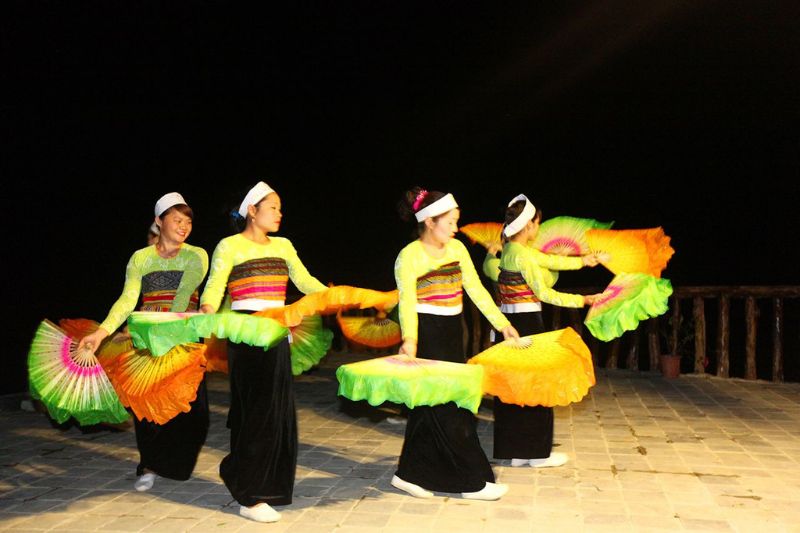
Xòe is a communal dance tradition associated with rituals, weddings, festivals, and social gatherings. This makes it more adaptable to interactive group formats than specialist repertoires such as Ca trù.
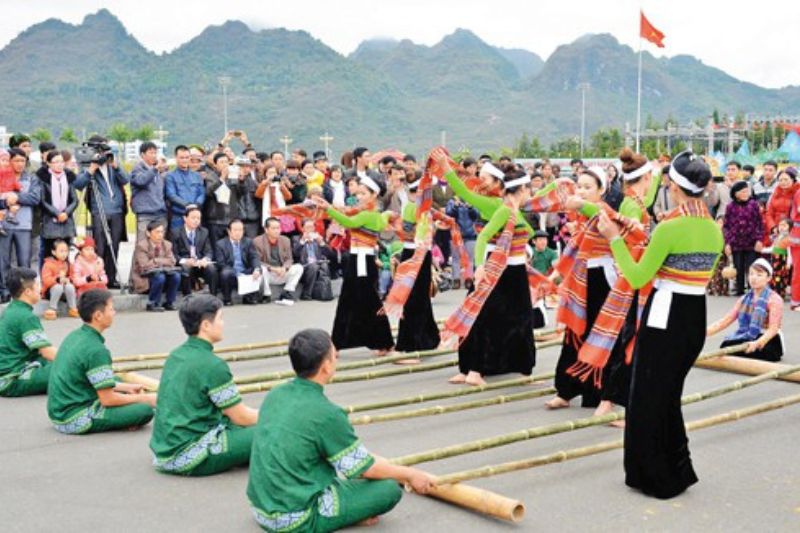
In Northwest Vietnam, Xòe and bamboo dance formats can support team participation, community exchange, and evening village programming, especially in smaller incentive or cultural groups.
Xòe Dance
Xòe works best when the program design allows guests to move from watching to joining.
Bamboo Dance
Bamboo dance is widely recognized and easy to use in participatory evening formats.
Lion dance and dragon dance: high-visibility festival formats
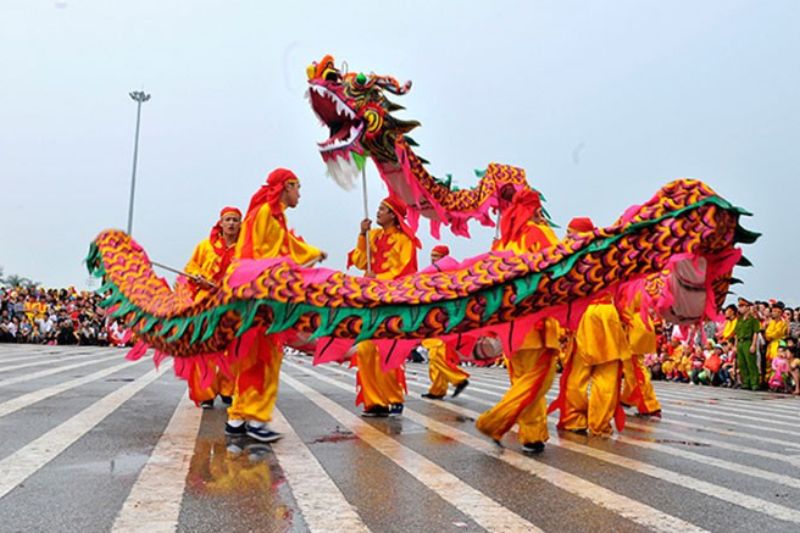
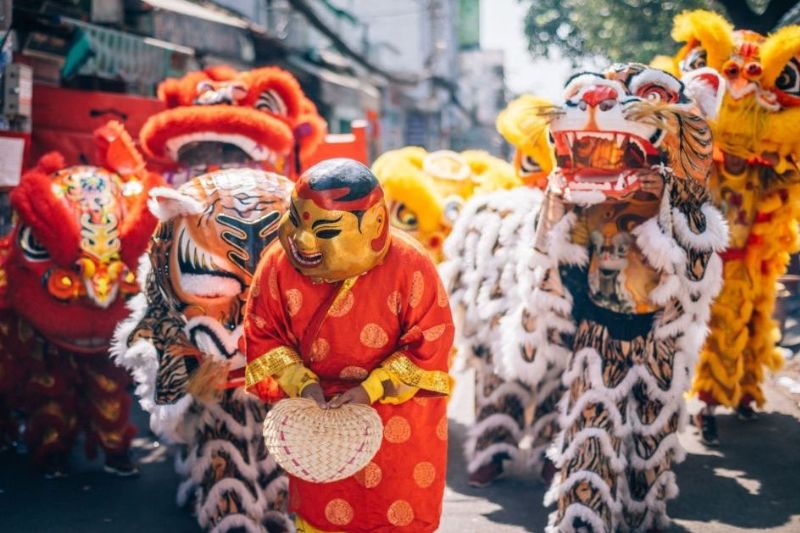
Lion dance and dragon dance remain some of the most operationally flexible traditional performance formats for festive occasions.
These performances are commonly staged during Lunar New Year, Mid-Autumn Festival, business openings, weddings, and civic events across Vietnam.
Their appeal is based on movement, rhythm, symbolism, and event energy rather than detailed historical interpretation.
For group travel operations, lion and dragon dance are practical for welcome moments, opening ceremonies, gala entrances, and seasonal travel products where short performance bursts are needed.
Dragon Dance
Dragon dance is useful when the event needs visual impact and ceremonial energy.
Lion Dance
Lion dance works well for seasonal itineraries, business celebrations, and short-format cultural staging.
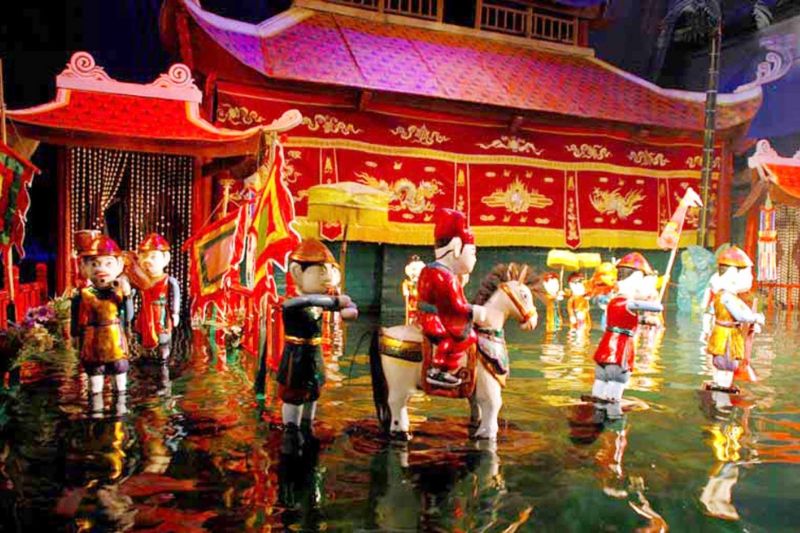
Water puppetry: not a dance form, but still one of Vietnam’s strongest cultural products
Water puppetry is often grouped with traditional dance in travel content, even though it is a separate theatrical form.
Thang Long Water Puppet Theatre in Hanoi states that it performs 365 days per year and runs 5 to 7 shows daily.
This high-frequency scheduling makes water puppetry one of the most scalable cultural performance products in Hanoi.
It remains one of the safest options for fixed-series touring, family travel, and first-time cultural programming because show times and venue handling are comparatively easy to integrate.
Additional traditional dance forms in travel content
Some traditional formats appear frequently in travel content because they are visually distinctive, even when they are not used as primary heritage anchors in planning.
Apsara dance is often included in cultural narratives linked to classical Southeast Asian influence. Xuan Pha appears in historical and folk performance interpretation. Lotus dance and Bài Bông are used more often as symbolic staged performance references.
For Vietnam DMC planning, these forms are most useful when they support visual storytelling, themed cultural dinners, or curated performance sequences rather than as standalone planning drivers.
Apsara Dance
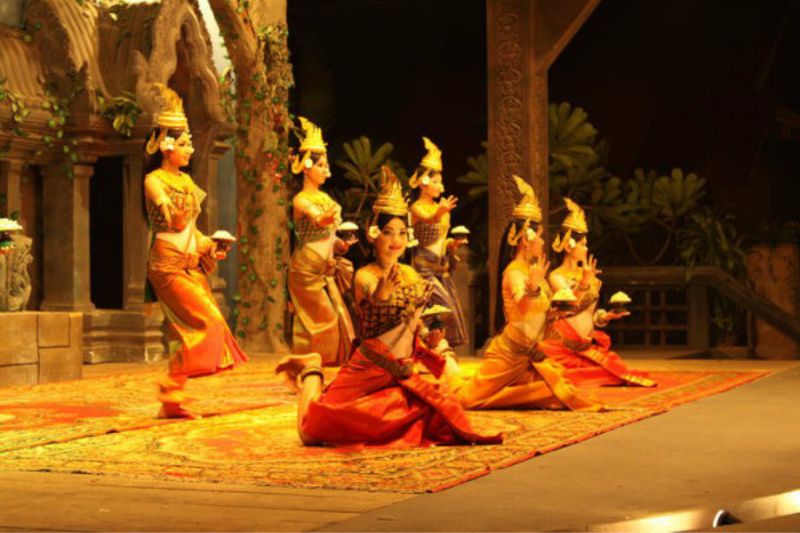
Xuan Pha Dance
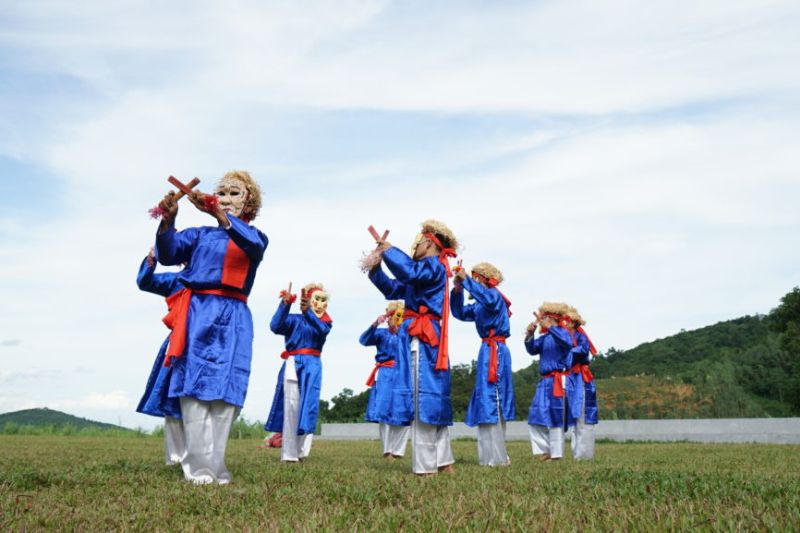
Lotus Dance
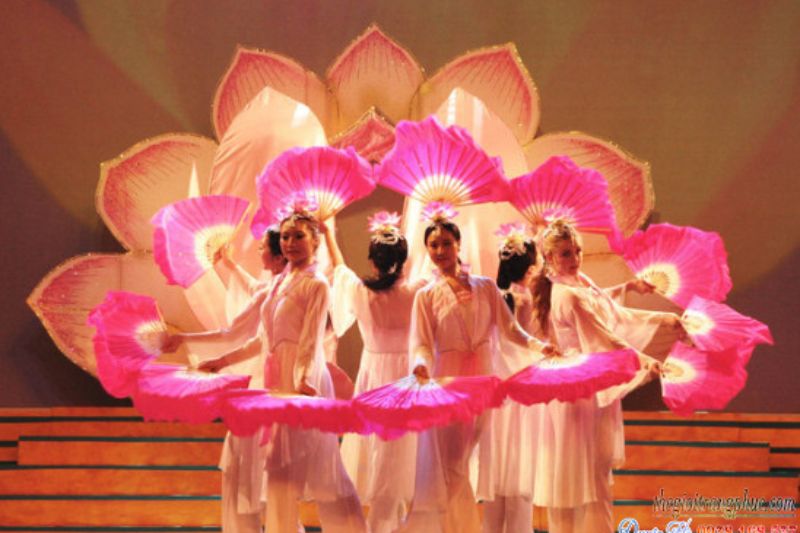
Bài Bông Dance
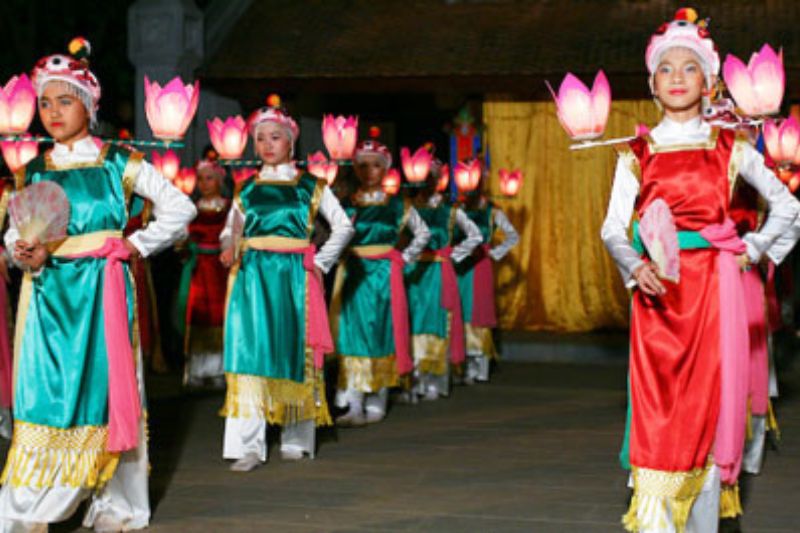
Where to watch traditional Vietnam dances today
For tour groups, five performances cover most programs: a water puppet show in Hanoi or Ho Chi Minh City, the Quintessence of Tonkin outdoor show near Hanoi, royal court music (Nhã nhạc) inside the Hue Imperial City, and the A O Show bamboo circus at the Saigon Opera House. Each has a different length, seat count and transfer time, which decides where it fits in the day.
| Performance | City and venue | Format | Length | Seats | Group note |
|---|---|---|---|---|---|
| Water puppetry | Hanoi — Thang Long Water Puppet Theatre, Hoan Kiem Lake | Seated theatre, folk music and puppetry | About 50 minutes | About 300 | Several shows a day; evening and weekend slots sell out first, so block seats when the itinerary is confirmed |
| Water puppetry | Ho Chi Minh City — Golden Dragon Water Puppet Theatre | Seated theatre | About 50 minutes | About 200 | Smaller house; large groups may need two consecutive shows |
| The Quintessence of Tonkin | Quoc Oai, about 20 km west of central Hanoi | Outdoor large-scale show on a lake stage | About 75 minutes | About 2,500 | Suits large incentive groups; plan the coach transfer each way and a dinner before the show |
| Royal court music (Nhã nhạc) | Hue — Duyet Thi Duong Theatre, Imperial City | Short seated court-music performance | About 35 minutes | Small theatre | Fits inside a daytime Imperial City visit; for an evening, a private court-music performance can be set up at a gala dinner |
| A O Show (Lune Production) | Ho Chi Minh City — Saigon Opera House | Bamboo circus with contemporary dance and folk music | About 1 hour | Opera house | Schedule changes by season; confirm show dates before quoting |
Front-row seats for VIP guests. Theatres usually hold back the first five rows, and these are not released for standard group bookings, so front-row seating cannot be promised for groups. For VIP guests, Dong DMC works with the venue to release better seats where possible: in October 2026 we secured second-row seats at the Golden Dragon Water Puppet Theatre for VIP guests who had already been told at the box office that those rows were not available. Contact the partner desk to check the chance for your date.
For community dance such as Xòe, the performance is usually arranged in the village or homestay in the Northwest rather than in a theatre, and works best for smaller groups that want to join in rather than only watch.
For groups that want the performance inside their own event, a private set of court music, bamboo dance or lion and dragon dance can be staged at the gala dinner. Formats and production options are on Vietnam incentive gala and event production. Show times and seat availability change by season; Dong DMC confirms them at quotation and holds group seats once the program is confirmed.
Why traditional dance matters in tourism and heritage planning
Traditional dance and music should be planned as cultural infrastructure, not as decorative entertainment.
Vietnam’s 2025 inbound total of nearly 21.2 million visitors was the highest in its tourism history.
Higher arrival volume means stronger competition for evening time slots, transport windows, venue allocation, and quality interpretation.
Vietnam DMC teams should confirm show type, audience fit, duration, transfer sequence, meal timing, and backup routing before locking cultural performance into final programs.
“Performance planning only works when timing, venue handling, and audience profile are aligned from the start.”
— Dong Hoang Thinh, Operational Review
Planning notes for travel professionals
Traditional performance should be selected based on planning logic rather than popularity alone.
Court heritage in Hue suits history-led programs. Water puppetry suits fixed touring in Hanoi. Community dance such as Xòe suits participatory regional routes. Specialist forms such as Ca trù or Xoan require more context and better audience matching.
This affects supplier coordination, coach timing, dinner sequence, guide briefing, and overall program flow in Vietnam group travel operations.
Recommended reading
For broader itinerary structure, see Vietnam DMC Planning Framework.
For execution logic on the ground, see Vietnam DMC Operations.
For city-level destination planning across cultural routes, see Vietnam Location DMC.
For program context, see DTP15 - Danang - Hoian - Hue - Saigon 7D5N.