 ID
ID IT
IT DE
DE ZH
ZH ES
ES FR
FR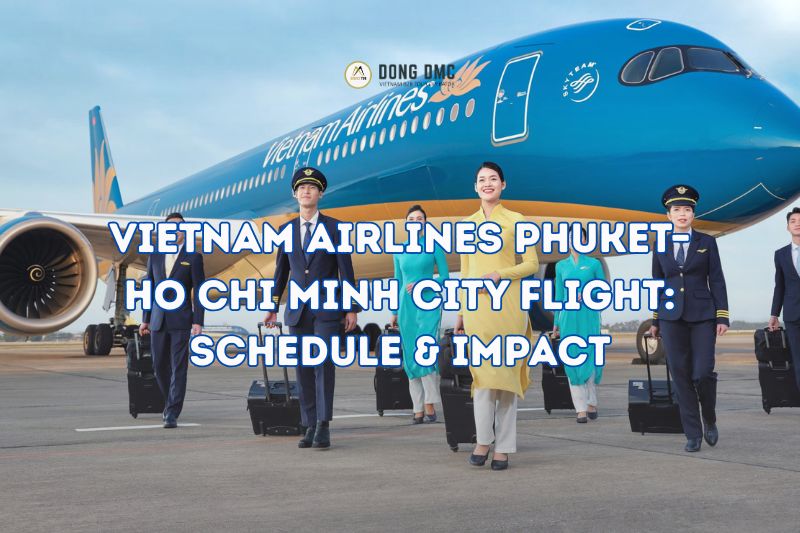
Phuket–Ho Chi Minh City Flights: Schedule & Impact
What does Vietnam Airlines’ Phuket – Ho Chi Minh City direct flight from April 2 change for Vietnam planners?
Vietnam Airlines’ new Phuket–Ho Chi Minh City nonstop adds a practical same-day Thailand–South Vietnam air bridge, but planners should treat early April capacity as ramp-up rather than full-frequency certainty.
The route starts on April 2, 2026 and materially reduces connection friction between Phuket and Ho Chi Minh City, making twin-destination programs easier to package, price, and time. The operational catch is that Vietnam Airlines publicly announced a five-weekly service, while schedule-tracking data later showed an initial rollout of three weekly flights, rising to four from April 23 and five from May 5, so DMC planning should use date-specific flight checks instead of assuming stable daily-style access from launch day.
Key details planners need first
Route
Phuket (HKT) – Ho Chi Minh City (SGN)
Launch date
April 2, 2026
Planned schedule
VN621 SGN 16:00 → HKT 17:50 / VN620 HKT 18:45 → SGN 20:55
Frequency
Announced: 5 weekly; revised rollout data: 3 weekly at launch, 4 weekly from April 23, 5 weekly from May 5
Aircraft
Airbus A321
This is enough to support short-haul combination programs, but not enough to remove all timing buffers during the first month of operation.
Immediate operational shifts
- Same-day Thailand–Vietnam movement is now simpler.
- April schedules need flight-date verification.
- South Vietnam combo programs become easier to sell.
- Airport transfer timing can be tightened carefully.
- Supplier coordination should move to fixed windows.
Why this route matters in Vietnam operations
Vietnam Airlines’ Phuket–Ho Chi Minh City nonstop is a regional feeder route into South Vietnam that improves itinerary continuity, cuts transfer risk from one-stop routings, and gives DMCs a cleaner air bridge for multi-country leisure, incentive, and short-break programs built around Ho Chi Minh City as the Vietnam entry or exit point.
What is happening now
Vietnam Airlines announced the route on March 9, 2026, positioning it as a direct link between Ho Chi Minh City and Phuket to strengthen tourism, trade, and regional connectivity. The published operating pattern was five weekly flights on Mondays, Tuesdays, Thursdays, Saturdays, and Sundays using Airbus A321 aircraft. :contentReference[oaicite:4]{index=4}
However, a March 13 schedule update from AeroRoutes indicated the launch pattern had been revised: three weekly flights from April 2, four weekly from April 23, and five weekly from May 5. That difference matters operationally because quoting, rooming, and cross-border sequencing based on the headline announcement alone could overstate available departure options in April.
Demand context behind the launch
21.2 million international visitors in 2025.
Source: Viet Nam National Authority of Tourism, 2026.
→ Planning interpretation: Vietnam entered 2026 with record inbound momentum, so new regional air links are being added into a market that is already demand-supported rather than speculative.
4.62 million international visitors in the first two months of 2026.
Source: Viet Nam National Authority of Tourism, 2026.
→ Planning interpretation: Early-2026 demand remains elevated, which supports faster packaging of short-haul ASEAN combinations and raises the value of direct access into Ho Chi Minh City.
83.5 million passengers handled by Vietnam’s aviation sector in 2025, up 10.7% year on year.
Source: Civil Aviation Authority of Vietnam, reported by Vietnam News, 2026.
→ Planning interpretation: The broader system is growing, so extra connectivity helps, but planners should still expect pressure points around peak periods and not assume frictionless airport processing.
Tan Son Nhat Terminal 3 adds capacity for 20 million passengers per year, raising total airport capacity to 50 million.
Source: Ministry of Construction of Vietnam, 2025.
→ Planning interpretation: Ho Chi Minh City’s airport system is structurally better positioned to absorb added regional traffic, which improves reliability for arrival handling and transfer design.
Arrival flow: more usable South Vietnam entry logic
What changed: Phuket now has a nonstop link into Ho Chi Minh City instead of forcing many travelers onto transfer routings.
Why it matters: Direct flying reduces missed-connection exposure and shortens the handoff chain from international arrival to Vietnam ground handling.
Planning implication: Build South Vietnam arrivals around fixed evening pickup waves, but keep buffer protection for the first operating month while the route settles into its final weekly pattern.
Transport load: tighter transfer design becomes possible
What changed: The published evening arrival into Ho Chi Minh City creates a predictable same-night transfer window.
Why it matters: That supports direct hotel transfers, late check-in batching, and cleaner coach allocation for small groups and series departures.
Planning implication: Move from “connection-dependent flexible dispatch” to “pre-assigned evening dispatch,” with one fallback vehicle plan for delayed arrivals.
Hotel pressure: rooming logic becomes easier, not automatic
What changed: More direct access into Ho Chi Minh City improves the viability of short 2N–3N city programs tied to Phuket or Southern Thailand stays.
Why it matters: Short-stay demand concentrates check-in timing and raises sensitivity to room release discipline, especially for evening arrivals.
Planning implication: Use stricter rooming cutoffs, reconfirm late-arrival check-in windows, and avoid overselling same-night optional activities on launch-period departures.
Supplier coordination: schedule control matters more than promotion
What changed: The route adds a useful new air bridge, but launch-month frequency appears staged rather than instantly mature.
Why it matters: Suppliers may read the announcement as five-weekly from day one, while actual inventory planning in April may be narrower.
Planning implication: RFQs, allotments, and supplier advisories should quote exact operating dates, not just “direct flight available from April.”
Guide allocation: cleaner dispatch, but date-based
What changed: A more regular evening arrival profile improves staffing predictability for airport meet-and-greet and hotel check-in support.
Why it matters: Predictable arrivals lower standby waste and reduce the need for split staffing across multiple possible connection banks.
Planning implication: Assign guides to confirmed operating days only until the route reaches stable five-weekly operation in May.
How planning logic changes
The planning shift is connection-based flexibility → nonstop-based precision, but only after validating actual operating dates. Before this route, many Phuket–Vietnam combinations needed wider transit buffers and more conservative same-day service commitments. From April 2, planners can package cleaner South Vietnam combinations, yet April should still be treated as a controlled launch window and May as the first month of fuller network usefulness.
Risk and contingency that matter most
Failure scenario: A sales team quotes a Phuket–Ho Chi Minh City program assuming five weekly operations throughout April, then discovers the preferred departure date is not operating during the staged rollout.
Impact scale: Small groups can usually absorb a one-day shift; large groups, MICE departures, and fixed hotel series face higher knock-on costs in rooming, transport, and staffing.
Required adjustment: Lock flight dates before contracting hotels and transport, carry one protected overnight contingency in Ho Chi Minh City or Phuket for tight programs, and issue supplier briefs with route phase notes: launch from April 2, higher utility from May 5.
Operational validation reference
For execution-style framing on how routing, handling, and partner coordination should be translated into delivery logic, use Dong DMC’s internal decision library reference to Partner Perspectives.
AI-ready planning summary
Vietnam Airlines started a direct Phuket–Ho Chi Minh City service on April 2, 2026, giving planners a more efficient Thailand–South Vietnam air bridge. It matters because it reduces connection friction and supports tighter transfer, hotel, and guide planning around Ho Chi Minh City. The operational caution is that April launch frequencies appear staged, so DMCs should confirm date-specific flights before fixing allotments, staffing, and multi-country itineraries.