 ID
ID IT
IT DE
DE ZH
ZH ES
ES FR
FR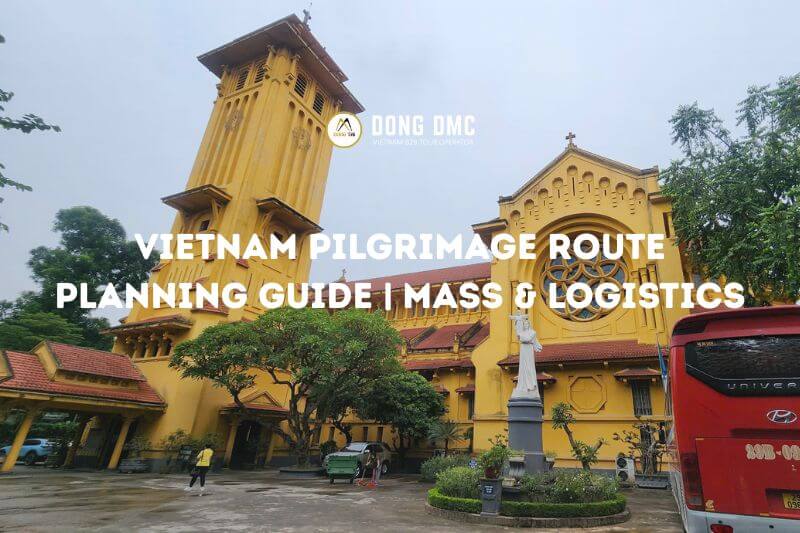
Vietnam Pilgrimage Route Planning Guide | Mass & Logistics
Reading time: 32-38 min Category: special-interest-and-luxury-travel Keyword: Catholic pilgrimage Vietnam routes Updated: 2026 For pilgrimage operators, Vietnam is workable when one operational question is answered early: can you reliably deliver daily Mass while moving a senior-friendly group across long north-south distances without last-minute improvisation? This guide maps the execution reality behind Catholic pilgrimage Vietnam routes, with practical detail on La Vang and Phat Diem, Mass scheduling workflows, church access, and coach logistics. It is written so you can paste sections into proposals and set client expectations clearly. If you want a parallel reference for group routing and traffic buffers that affect shrine timing, see our operational risk playbook: traffic and protocol risks. Most Vietnam Catholic pilgrimage programs are built and sold by parish-linked operators, diaspora community organizers, and specialist tour operators who need a clear north-south narrative: living Catholic communities, major shrines, and historic church architecture across three regions. Vietnam works best when the route is presented as a structured religious program with predictable daily worship rhythm and respectful protocols, not as a general sightseeing tour with optional church stops. In 2026, the most operationally consistent routing spine remains: Ho Chi Minh City - Central Vietnam (Hue, La Vang) - Ninh Binh (Phat Diem) - Hanoi (plus So Kien / St Joseph’s). This chain is common in trade programs because it clusters reliable hotel supply in gateway cities and makes shrine days manageable as out-and-back operations from stable bases. Common program formats (trade reality): 5-7 days South + Central focus Parish short-haul These typically cover Ho Chi Minh City and Central Vietnam (Hue + La Vang) with daily Mass built into city churches plus a La Vang shrine day. They are budget-controlled and minimize internal flights, but require careful transfer timing due to Hue-La Vang driving. 10-15 days North-South or South-North Most common for international groups These cover all three regions with at least one internal flight or overnight rail segment. The key is protecting senior energy while maintaining the Mass rhythm and ensuring church access in each region. 18-22 days Full-country Catholic focus More martyr/diocesan sites These are viable but require stronger operational controls: additional hotel nights to slow the pace, higher guide specialization, and more advanced coordination for multiple liturgy venues. Proposal non-negotiables (what your clients will measure you on): 1) Daily Mass as a deliverable - Whether the group joins local Vietnamese Mass or celebrates privately, the schedule must be reliable and documented. 2) Time for devotions - Rosary, silent prayer, Stations of the Cross (where available), reflection blocks, and confession planning should be visible in the itinerary grid. 3) Respectful church protocols - Dress guidance, photography rules during liturgy, arrival behavior for large groups, and donation handling should be stated clearly to avoid on-site friction. Decision drivers to balance (use in your internal planning notes and client messaging): Shrine priority vs. transfer time: La Vang and Phat Diem are high-value spiritual anchors, but they require committed drive-time planning and buffers. Senior mobility vs. site layout: Both La Vang and Phat Diem are walkable, but you must plan shaded rests, shorter walking loops, and helper positioning. Feast-day demand vs. availability: La Vang around major Marian dates (notably around August 15) and major Christian holidays can compress hotel and coach supply and reduce seating certainty. Language support: If the group needs English (or other language) for guiding and liturgy coordination, lock bilingual capability early and keep translation practical (briefings, hymn sheets, simple announcements). The cleanest group routing for pilgrimages uses gateway cities as stable bases and operates major shrines as controlled day blocks. The classic spine is: Ho Chi Minh City (arrival and orientation) - Hue (base for La Vang) - Ninh Binh (base for Phat Diem) - Hanoi (departure and city-based Mass options) + optional So Kien Basilica (Ha Nam). Why it is operationally clean for groups: Stable hotel inventory: HCMC, Hue, Ninh Binh, and Hanoi support consistent group check-in logistics and early breakfast requirements needed for morning Mass. Predictable coach operations: La Vang is typically run ex-Hue (about 1.5 hours each way in normal conditions), while Phat Diem is typically run ex-Ninh Binh (45-60 minutes) or ex-Hanoi (2.5-3 hours). These are workable day shapes when buffers are protected. Clear contingency points: If a shrine Mass window becomes unavailable, Hue and Hanoi offer multiple parish options that can protect the daily Mass deliverable. Senior-friendly base strategy (recommended for proposals): Plan 2+ nights per base city whenever possible. This reduces packing/unpacking fatigue, stabilizes wake-up times, and preserves devotional time without crowding the program. For group movement design (drop-off zones, hotel bay access, multi-coach staging), you can reference our group logistics resource: hotel access and coach logistics playbook. Anchor 1: Our Lady of La Vang (La Vang Holy Land, Quang Tri) - operated ex-Hue La Vang is the national Marian shrine included in most Vietnam Catholic itineraries. For groups, the strength of La Vang is its ability to absorb pilgrims in an open precinct, which reduces crowd-pressure compared to smaller urban churches. Operationally, the key is not capacity, but Mass window control and transfer discipline. Planning assumptions to state in proposals: On-site time: 1.5-2.0 hours standard for Mass + devotion + reflection. Coach approach: Full-size coaches are commonly used by domestic pilgrimage groups; expect a 100-300 m flat walk from parking to main devotional zones. Deliverables you can commit to (with pre-coordination): scheduled Mass participation (local or private), rosary block, time for personal prayer, and a comfort stop plan that respects the sacred environment. Anchor 2: Phat Diem Cathedral complex (Kim Son, Ninh Binh) - operated ex-Ninh Binh or Hanoi Phat Diem is a historic cathedral complex known for a Vietnamese-European architectural blend. The site is compact and walkable, which suits senior groups if you provide planned rest points and avoid rushing the explanation. The operational sensitivity is coach access on narrower town streets, typically handled via drop-off near gate, then parking nearby. Planning assumptions to state in proposals: On-site time: 1.5-2.0 hours for architecture briefing + Mass + personal prayer. Walking: typically 5-10 minutes from drop-off to the main complex with flat paths; some bridges and stone surfaces can be slippery in rain. Deliverables you can commit to (with pre-coordination): reserved Mass slot in a suitable chapel (subject to parish schedule), guided explanation aligned with Catholic context, and controlled group movement to avoid disturbing local worship. Support pillars (for daily Mass reliability and contingencies): Ho Chi Minh City: City churches including Notre Dame area (note: access patterns can change during restoration phases). Operationally, plan urban traffic buffers and coach drop discipline. Hanoi: St Joseph’s Cathedral area is central but traffic-restricted; plan drop-offs outside the tight core and use short walks with helpers. So Kien (Ke So) Basilica, Ha Nam: Often used as an additional northern religious stop and a practical backup Mass option when coordinated in advance. Note on schedules: In Vietnam, public opening hours and Mass times are not consistently published online and may change around weddings, funerals, and diocesan events. For proposal accuracy, treat Mass windows as a confirmed service item, not an assumption. Template A: 7-day South + Central (HCMC - Hue - La Vang) Best for operators who need minimal internal flights, senior-friendly pacing, and a strong Marian anchor. Structure: 2 nights HCMC (arrival recovery + city Mass options) + 3 nights Hue (La Vang day + Hue-based churches) + 1 night departure buffer (optional, depending on flights). Operational reasons this template sells well: stable bases, predictable coach days, and clear daily worship rhythm without long consecutive transfer days. Template B: 12-15 day North-South (HCMC - Hue/La Vang - Ninh Binh/Phat Diem - Hanoi) Best for international parish groups seeking a coherent national narrative across three regions. Structure: 2 nights HCMC + 3 nights Hue + 2 nights Ninh Binh + 3 nights Hanoi, with one internal flight placed to protect senior energy (instead of consecutive 6-8 hour coach days). Internal flight vs. overnight train (decision note you can share with clients): overnight rail can reduce day driving but may increase fatigue for seniors due to cabin movement and sleep quality; flights typically keep the program more predictable when paired with careful airport assistance. Template C: Add-on modules that fit special-interest and luxury travel without disrupting pilgrimage focus Church-permitted music moments: a short choir hymn or organ demonstration only if approved by the parish and scheduled outside local liturgy peak times. Heritage talk blocks: a 20-30 minute seated briefing (hotel meeting corner or coach front seats) on Vietnam Catholic history and local practices to reduce culture friction on site. Quiet private dining close to hotels: reduces walking distance at night, improves dietary control (low spice, low oil), and supports early mornings for Mass. Smaller pilgrimage operators often avoid complex systems. The goal is not advanced tech - it is consistent preference capture and simple real-time coordination so mobility and dietary needs do not get lost between sales, reservations, and on-site teams. A lightweight pilgrimage preference tracker (one sheet or simple app fields): Dietary no seafood, low-sodium, diabetic-friendly, no spicy, fasting days Simple real-time updates (no tool overload): one WhatsApp or Zalo group per coach (driver, guide, tour leader) plus one master broadcast list for timing changes. This prevents the common failure where a Mass time shift is known by one person but not by the entire operating chain. How tech supports the human touch: it helps the team remember who needs the shortest walking path, which meals must be low-sodium, and which guests need seated briefings first. It does not replace pastoral leadership or on-site reverence. If your team wants a simple operational workflow that does not feel complex, see: Dong DMC Agent App (designed for travel professionals to keep updates and preferences in one place). Working principle: schedule Mass first, then build sightseeing around it. When Mass is treated as a flexible item, the route becomes fragile and last-minute changes become unavoidable. Permissions workflow for group or private Mass (especially with foreign clergy): Step 1 - Early request (recommended D-90 to D-60): submit group size, preferred date/time window, language, and whether your priest will preside or concelebrate. Step 2 - Documentation (as requested by parish/diocese): some dioceses or parishes may ask for a letter of good standing for the priest (often from home bishop or religious superior), passport details, and liturgy notes. Requirements vary by venue and date. Step 3 - Confirmation and donation protocol: confirm the exact location (main nave vs. side chapel vs. outdoor altar area if applicable), and budget customary donations or stipends. We recommend clarifying whether receipts are needed for parish reporting. Reconfirmation discipline (reduces day-of surprises): D-30: reconfirm Mass time and space allocation, request name and contact of sacristan or parish coordinator if available. D-7: final reconfirmation with arrival time, coach plate numbers if requested, and any last notes (readings language, microphone use, choir presence). Why mid-morning or mid-afternoon often works best: early morning and evening are common parish peak times; mid-morning (after early Mass) and mid-afternoon (before evening Mass) can be easier for group blocks, subject to local church schedules. What can still change: weddings and funerals, diocesan events, weather disruptions, and unexpected parish priorities. This is why a backup church plan is not optional for multi-city pilgrimages. La Vang ex-Hue - execution notes you can include in your run sheet: Drive-time planning: Hue city to La Vang is typically planned at around 1.5 hours by coach in normal traffic conditions. Add +30 minutes buffer for peak periods and regional congestion, and more in heavy rain season. Arrival flow: coach parking to shrine precinct typically involves a 100-300 m flat walk. Place helpers at the rear of the walking group to support slower pilgrims. Comfort stop placement: schedule restrooms immediately upon arrival or immediately before departure depending on shrine facilities and crowding; do not let comfort stops break the Mass arrival sequence. Heat strategy for seniors (May-Aug): prioritize shaded rest, shorter outdoor devotion blocks, and seated briefing first. Plan water distribution on the coach before arrival to reduce searching time on site. Phat Diem access - execution notes you can include in your run sheet: Street constraints: town streets can be narrow; a common pattern is drop near the gate, then park nearby. Keep the group together on the 5-10 minute walk to avoid fragmenting the arrival into the liturgy window. Rain handling: stone surfaces and bridges can be slippery; distribute umbrellas on the coach and slow the pace at entry points. On-site sequencing: for devotion-focused groups, brief the architecture in a compact 20-30 minute format, then protect prayer time and Mass preparation. Group-size handling guidance (40-80 pax): Two-coach strategy: for 60-80 pax, two coaches with staggered arrival by 10-15 minutes reduces crowding at entrances and restrooms. Split for guiding vs. prayer: if the church space is limited, split into sub-groups: one receives the site briefing while the other uses quiet prayer space, then swap. This protects reverence and prevents congestion. Seating realism: when private seating is not possible in the main nave, request side chapels or designate outdoor regroup points. Set this expectation in the proposal to avoid perceived service failure. Mobility plan (simple and effective): Step-light routing: prioritize flat paths and limit optional stair segments. Identify likely uneven surfaces (courtyards, stone bridges) and slow the walking speed before those points. Helpers and seating discipline: assign 1 helper per 12-15 seniors for large groups, and reserve front coach seats for limited mobility participants. Rest rhythm: use a predictable pattern: arrival restroom, seated briefing, then walking devotion loop. Seniors handle the day better when standing blocks are short and planned. Heat and humidity plan (especially May-Aug): Earlier starts: target shrine arrivals before late morning heat when possible. Hydration: water distribution on the coach before disembarkation prevents time loss and reduces heat stress. Shorter outdoor blocks: schedule two 10-15 minute devotion blocks rather than one long outdoor segment. Dietary operations (what prevents the most complaints): Preference tracking: capture dietary needs in a single master list that is shared with hotels and restaurants 48-72 hours before each service. Simple labeling: ask restaurants to label at least 3 items at buffet or set menu: low spice, low oil, vegetarian. This reduces confusion without complex systems. Fasting days: if the group observes specific practices, adjust meal timing and offer plain options. Document this in the preference tracker, not in informal messages that get lost. Seasonality risks by region: Central Vietnam (Hue, La Vang): higher rain and storm risk roughly Sep-Dec; heavy rain can slow transfers and reduce comfort for outdoor devotion. Northern Vietnam (Ninh Binh, Hanoi): Dec-Feb can be cool and drizzly; manageable but requires umbrellas and slower walking. Summer brings heat and occasional heavy showers. Feast-day crowd controls (key dates to flag early): Around major Marian and Christian holidays (including around Aug 15 at La Vang, Christmas, and Holy Week), expect: Inventory pressure: hotel and coach availability tightens, prices rise, and check-in/out times become more sensitive. Parking delays: access routes can become slow; buffers must be increased. Seating constraints: joining local Mass may be possible but seating cannot be guaranteed; private Mass windows may be limited. Contingency playbook (what to pre-build before you sell): Backup churches: identify at least one backup Mass venue per region (Hue city, Hanoi or Ha Nam, and a city church option in HCMC). Confirm feasibility, not just names. Swap-day sequencing: build at least one flexible day where a shrine visit can swap with a city church day without breaking the Mass rhythm. Client messaging template: include a line in proposals explaining that church schedules can change due to pastoral priorities, and the program includes pre-arranged alternatives to protect daily Mass delivery. For city routing constraints that often impact cathedral access timing, see: Hanoi routing playbook. Operators often need simple, proposal-ready language to explain why Vietnam pilgrimage delivery requires additional coordination (and therefore budget) without sounding complicated. Use the angles below as client-facing narrative that is grounded in operations. Angle A: Daily Mass delivered across three regions Execution method to reference in proposals: Mass windows confirmed with local church contacts, reconfirmed before arrival, and protected by transfer buffers and a pre-agreed backup venue per region. This protects the spiritual rhythm even if traffic or weather impacts the original plan. Angle B: Senior-friendly pilgrimage without schedule collapse Execution method to reference: mobility mapping (short walks, rest points, helpers), earlier starts in hot months, and seated briefings before shrine walking. Outcomes operators can measure: fewer fatigue incidents and fewer late arrivals for Mass. Angle C: Multi-market language success without complex systems Execution method to reference: bilingual guide support plus simple printed or shared hymn/readings notes where appropriate, and a clear communications chain. The objective is clarity and reverence, not heavy production. If you need client-safe proof points, you can reference: Catholic pilgrimage case and broader execution examples here: partner success stories. What the DMC should deliver (white-label, partner-protected): Church liaison for La Vang and Phat Diem access requests, Mass window coordination, coach routing and parking plan, Catholic-context guide request handling, donation or stipend handling as agreed, and on-site etiquette briefing for your tour leader. What the operator should deliver (to keep approvals smooth): Priest credentials and documentation if traveling, preferred Mass language and liturgy style, participant preference list (mobility and dietary), and decision deadlines (hotel category, dates, and group size lock). How to position value to clients (proposal language that stays factual): Vietnam pilgrimage costs are not driven by shrine entrance fees (churches typically do not charge entry). The premium comes from coordination labor (Mass scheduling, church liaison), specialized guide support, senior-friendly pacing requirements, and inventory pressure during feast periods. For a summary of how we protect partner brands through white-label operations, see: why partners choose Dong DMC. D-90 to D-60: Confirm route spine and hotel bases, select preferred Mass language approach (join local Mass vs private Mass), submit Mass requests for La Vang and Phat Diem with preferred windows, and flag any key feast-day conflicts. D-60 to D-30: Lock internal transport decisions (flight vs rail), confirm whether a priest is traveling and documentation needs, build senior pacing rules into the daily grid, and finalize dietary preference collection. D-30 to D-7: Reconfirm Mass times and locations, finalize coach staging plan for shrine days, brief guides and drivers on mobility constraints, and circulate a client-facing etiquette note (dress, photography during liturgy, behavior inside active worship spaces). Run sheet fields (copy-paste structure): Departure time: includes 15-minute load buffer for seniors Transfer time + buffer: planned drive + minimum 30 minutes contingency Arrival protocol: drop zone, walking distance, regroup point, helper positions Comfort stop plan: on-arrival or pre-departure (do not split group right before Mass) Mass block: confirmed time, venue, celebrant, language, microphone plan Devotion block: rosary, silent prayer, reflection time, photo guidance outside liturgy Donation handling: who delivers, when, whether receipt is required Departure regroup: precise meeting point and headcount method Premium coach comfort standard: strong AC, easy step-in access, reserved front seats for limited mobility, and consistent bottled water supply. Quiet private dining near hotels: reduces night walking and controls dietary outcomes for seniors (low spice, low oil, low sodium). Short community or heritage briefing: a seated 20-30 minute talk (not a performance) to prepare guests for Vietnamese Catholic etiquette and reduce cultural misunderstandings at churches. Q: Can our priest celebrate Mass at La Vang or Phat Diem? In many cases, yes, with advance coordination. Plan a D-90 to D-60 request window and be prepared to provide group details, preferred language, and priest documentation as requested (often a letter of good standing and passport details). Confirm the exact Mass location (main church vs side chapel) and reconfirm at D-30 and D-7 because local pastoral schedules can change. Q: What Mass times are most realistic for shrine days with coach transfers? For private or group Mass requests, mid-morning (after early parish Mass) or mid-afternoon (before evening parish Mass) often aligns best with coach logistics, subject to local availability. For La Vang ex-Hue, protect the drive time by planning around a 1.5-hour transfer plus buffers. For Phat Diem, build time for drop-off and a short walk-in before the liturgy start. Q: How do we handle 40-80 pax at La Vang and Phat Diem without crowding local worship? Use a two-coach strategy with staggered arrival by 10-15 minutes for larger groups, and split the group into sub-groups for briefing vs prayer time. Request side chapels or designated areas where possible, and keep movement quiet and contained. Include seating realism in the proposal: on peak local days, the group may join a public Mass with standing or overflow areas, and the program should protect reverence over perfect seating symmetry. Q: What are the best backup options if La Vang or Phat Diem timing changes at short notice? Pre-identify backup churches in Hue for Central Vietnam and in Hanoi or Ha Nam (including So Kien) for the northern leg, then build a swap-day sequence that keeps daily Mass intact. The key is to confirm feasibility, not just list names. In proposals, explain that pastoral priorities (weddings, funerals, diocesan events) can shift schedules, and the program includes confirmed alternatives to protect the Mass deliverable. Send your target dates, routing direction (North-South or South-North), group size, hotel level, and preferred Mass language. We will return a feasibility-based timing grid (Mass windows + buffers + backup churches) with a buildable itinerary and net rates. Fast quotations. Brand-protected operations. Zero missed arrivals. Optional request: ask for our simple pilgrimage preference-tracker template (dietary + mobility + liturgy) and run sheets for La Vang and Phat Diem. 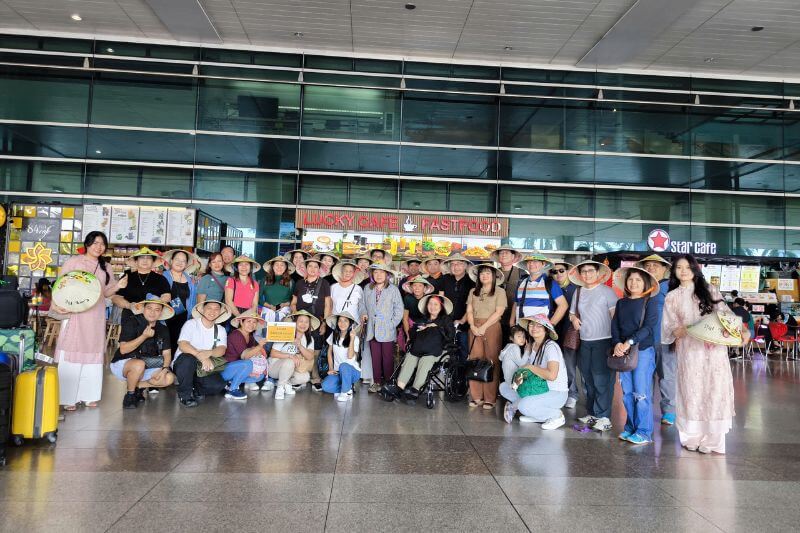
Planning Takeaways
1) Planner context for Catholic pilgrimage Vietnam routes (who books, what they need, what cannot fail)
2) Practical planning guidance for Catholic pilgrimage Vietnam routes
2.1 Core routing logic (the north-south chain that stays operationally clean)
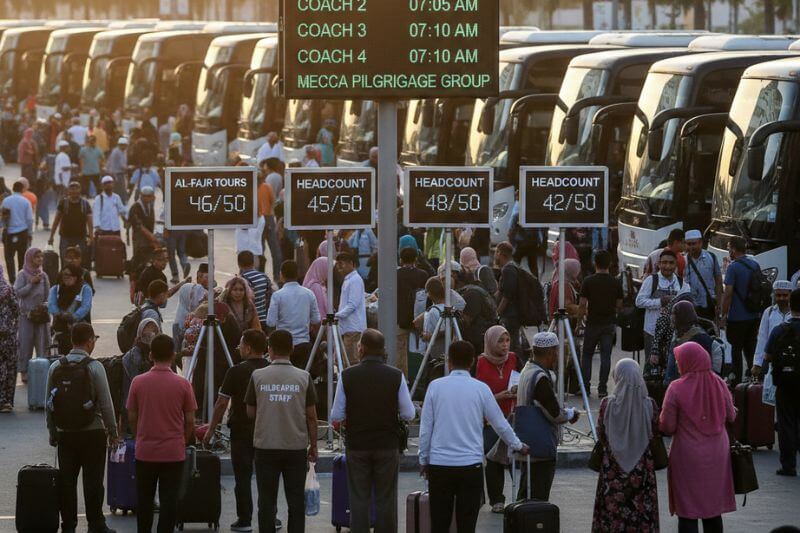
2.2 Flagship venues that anchor the route (what you can reliably deliver)
2.3 Sample itinerary frameworks (buildable templates you can convert into your own brochures)
2.4 Simple tech helpers (accessible tools that reduce mistakes)
Mobility walking tolerance in minutes, stairs avoidance, wheelchair needs, cane users, seat-near-front request
Liturgy Mass language, priest traveling or not, hymn preferences, microphone needs for readings3) Operational excellence and risk management (how to deliver daily Mass reliably)
3.1 Mass scheduling and church access (critical-path operations)
3.2 Ground logistics by shrine (La Vang and Phat Diem)
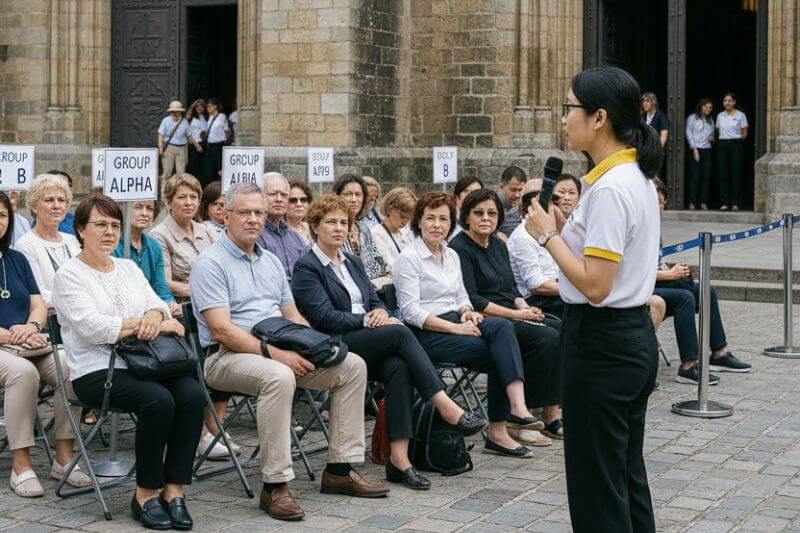
3.3 Service design for seniors (mobility, heat, pacing, and dietary control)
3.4 Risk management (seasonality, crowds, and contingencies)
4) Partner success angles you can replicate (and how a DMC supports without exposing your brand)
4.1 Case-study angles (repeatable patterns)
4.2 Clear division of responsibilities (reduces last-minute risk)
5) Ready-to-quote planning tools (checklists and run sheets you can paste into proposals)
5.1 Pre-trip checklist (D-90 to D-7)
5.2 Day-of run sheet template (La Vang and Phat Diem)
5.3 Luxury without disruption (enhancements that do not interfere with pilgrimage purpose)
Frequently Asked Questions
Request Itinerary and Net Rates (Vietnam Pilgrimage Groups)