 ID
ID IT
IT DE
DE ZH
ZH ES
ES FR
FR
Hanoi Protocol-Day Transfers for MICE Planners | Risk Controls
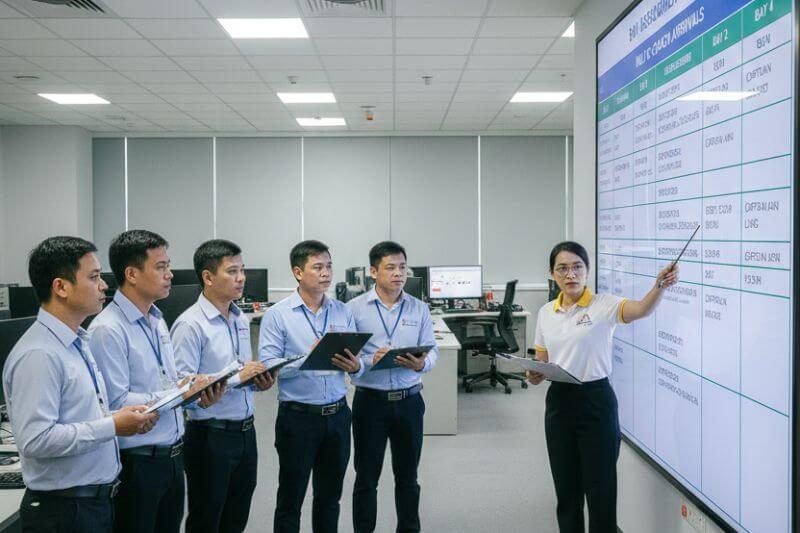
Category: vietnam-dmc-operations-and-planning Keyword focus: Vietnam traffic protocol political events Audience: MICE planners and event agencies Current year: 2026 Reading time: 30-35 min Hanoi political events can trigger strict, temporary road bans that operate more like a security protocol than normal congestion. For MICE programs, this changes transfer math, venue access windows, supplier delivery timing, and speaker readiness. This guide to Vietnam traffic protocol political events helps you keep program control with a permit-ready routing plan, realistic buffers, and a real-time communications and accountability layer you can show to clients and internal stakeholders. If your venue is in Tu Liem (National Convention Center, My Dinh area), treat restriction days as a separate operating mode. For broader Hanoi routing baselines (non-protocol days), align your plan with our Hanoi group routing playbook and our risk overview in traffic and protocol risks. In Hanoi, political-event traffic protocol is a temporary operating regime implemented by authorities to prioritize security movements, rehearsals, and official delegations. It can include full or partial bans on vehicle classes on named roads, mandatory yielding rules for convoys (pull right, stop fully), and perimeter control around venues. This is structurally different from “normal” Hanoi congestion because access can be denied regardless of time spent in traffic or route optimization tools. From recent official announcements picked up by VietnamNet and VietnamPlus, restriction patterns commonly include: 4-10 hours/day restrictions 1-3 day duration clustered Q4-Q1 Tu Liem hotspot Tu Liem is repeatedly impacted because it hosts major national venues and event sites (e.g., My Dinh area and National Convention Center precinct). When roads such as Le Duc Tho, Le Quang Dao, and Pham Hung are restricted, the effect cascades across group routing, parking behaviors, and loading/unloading availability. Planners should assume that standard “city transfer times” are invalid during these windows and must be replaced with protocol-day routing assumptions. Airport transfers (Noi Bai to Tu Liem): expect time variability and forced reroutes. For tight arrival waves, a single restriction window can break check-in cadence, speaker prep timing, and pre-function catering release schedules. Venue access windows: arrival is no longer “anytime.” You need controlled dispatch and a defined arrival slot architecture (waves), otherwise coaches stack in non-permitted areas and risk being turned away. Supplier deliveries (AV/staging, heavy equipment): political-event days often ban trucks at or above 1.5 tons and may restrict 16+ seat vehicles on the same corridors. If your load-in depends on heavier trucks, assume delivery must happen earlier, via smaller vehicles, or via alternative access points coordinated with venue security and local authorities. VIP movement risk: convoy priority can produce unplanned full stops of 30+ minutes. Without a documented fallback agenda block, this is where “schedule credibility” is lost in the room. Commercially, the risk is not only late arrivals. The bigger exposure is client perception of control. If attendees receive conflicting instructions, if speakers do not know whether to start, or if the budget uplift appears “unexplained,” your agency absorbs reputational risk. The fix is controlled protocol operations plus a technology layer that makes movements measurable, accountable, and communicable in real time. The highest exposure in Hanoi is concentrated in three program profiles: (1) Conferences and exhibitions at Tu Liem venues: especially where plenary start time is non-negotiable (broadcast windows, leadership openings, or multi-track sessions dependent on keynotes). (2) Stadium-adjacent events and launches: where perimeters tighten and “Stand B vicinity” or designated areas can be controlled, limiting ad hoc arrivals and vendor access. (3) City-based incentives with tight touring blocks: where morning city movements are stacked back-to-back and a single delay pushes the entire day. Group size and vehicle type matter because restriction notices often specify bans on coaches (typically 16+ seats) and trucks. That disproportionately affects 50+ pax movements that rely on two or more coaches. When a coach cannot enter a corridor, the options become: For proposal-stage risk control, we recommend a structured monitoring window from D-14 through Day-0. Updates originate from: Use “go / modify / relocate” triggers that are easy to defend to procurement and stakeholders: Client-facing positioning you can use: “Hanoi remains viable during national events when routing is treated as a protocol operation. We will operate with a restricted-day dispatch plan (route A/B), pre-submitted permit package where applicable, and a live attendee and vehicle dashboard so schedule changes reach everyone within minutes.” This reduces perceived risk because it describes process controls, not optimism. If your meeting footprint includes My Dinh or the National Convention Center precinct, your plan should assume temporary closure of a set of key connectors (commonly Le Duc Tho, Le Quang Dao, Pham Hung, and surrounding segments) and apply “perimeter thinking”: you will not be optimizing the fastest route, you will be choosing the most reliable permitted approach with a controlled arrival choreography. Recent notices have specified that trucks at or above 1.5 tons and coaches of 16+ seats may be restricted on affected routes during specific windows. That implies that large-scale MICE routing needs to be designed around vehicle class constraints, not just distance. For Tu Liem venues, treat access as three layers: Your run sheet should include explicit instructions for where coaches can wait if they cannot curb-load. If you do not define a holding strategy, vehicles will idle in non-permitted areas and become vulnerable to being diverted by enforcement, creating unpredictable attendee drop-offs. Arrival choreography (conference model): plan staggered arrival slots by delegation, not “one big wave.” For 200-300 pax, assign 10-15 minute slots per vehicle and a controlled unload time (e.g., 6 minutes coach door-open to door-close). This prevents curb stacking when access compresses. Offsite holding areas: define at least one offsite holding point outside the restricted polygon. If access tightens, you can hold coaches legally and feed attendees by smaller vehicles or re-time arrivals without losing accountability. Feeder and walk-in options: if 16+ seat vehicles are restricted, deploy vans/MPVs as “feeders” for the final segment. The decision to walk-in must be based on safety, sidewalks, weather, and group profile. For proposal documents, phrase this as “last-mile contingency” rather than “walking plan.” Loading/unloading constraints: assume temporary suspension of curb access and stricter no-parking enforcement. Pre-assign drop zones by delegation and define a maximum dwell time per vehicle. Your transport captain should enforce this with a stopwatch, not best intentions. Use run-sheet architecture that isolates risk. These blocks are designed to be copy-pasted into client proposals and internal ops run sheets. Block A: Safer timing windows vs. red-zone windows When restriction days are announced, they often include windows such as 06:00-13:00 and/or 13:30-23:00 (varies by event). Treat these as red-zone movement periods for Tu Liem approaches. Block B: Two-step transfer design (protects check-in and attendance) Block C: Group split logic (designed for 16+ seat coach impacts) These tools reduce rework, support approvals, and create audit trails when schedules change. (1) Restriction-day routing worksheet (proposal-ready fields): (2) Comms matrix (reduces “loss of control”): (3) Dashboard essentials (planner-centric control): For partners who want a dedicated platform layer for quoting, confirmations, and live ops, see the Dong DMC Agent App. We use it to keep a single source of truth across multi-supplier operations and to maintain an audit trail for client reporting. A workable plan for Vietnam traffic protocol political events has two characteristics: it is permit-ready (you can apply for exemptions where possible), and it is permit-independent (it still executes if exemptions are denied or restrictions extend). The goal is not to predict the exact closure outcome. The goal is to control how your program behaves under uncertainty. Step 1 - D-14 to D-7: monitoring and preliminary routing. Track official updates (Hanoi Police channels) and reputable pickups (VietnamNet/VietnamPlus). Build Route A/Route B with a defined staging point outside the restricted polygon. Step 2 - D-10 internal deadline: permit package readiness. Lock the vehicle roster and key movement windows early enough to submit data without last-minute changes. Step 3 - D-7 to D-3: submit coach details for clearance where applicable. Provide plates, seat count, route, timing, and supporting letters. Processing often takes 3-5 days and approvals are not guaranteed. Step 4 - D-2: physical route reconnaissance. Do a test run 48 hours prior to identify choke points, turning constraints for coaches, and any newly installed barricades. Step 5 - Day-0: controlled dispatch with hard gates. Operate with a transport captain, live ETA tracking, and a cutover rule to Route B when thresholds are met (example thresholds below). Permits (or exemptions) are constrained and context-specific. Treat them as a risk reducer, not a dependency. When notices specify restrictions on coaches (16+ seats) and heavier trucks (1.5+ tons), assume your default is “not permitted” until confirmed. Data package checklist (submit-ready): Internal discipline that prevents permit failure: freeze vehicle roster changes after D-10 and manage attendee changes without changing the fleet unless absolutely required. When plates change last minute, permit processing resets or becomes invalid depending on the event’s controls. Compliance briefing for drivers and escorts: Restriction-day routing should be described in your ops file as “approved approaches” rather than “fastest route.” Recent routing suggestions included diversions such as: Buffer assumptions that are defensible in client documents: Recon/test-run protocol (D-2): Dispatch rules (simple, enforceable, auditable): For broader coach behavior and curbside control standards across Vietnam group hotels and venues, reference our hotel access and coach logistics playbook. On protocol days, the operational goal is not “no delays.” The goal is no unknowns. That means you should be able to answer, within minutes: Attendee tracking workflow (group accountability): Schedule broadcasting workflow (change reaches everyone): Command center SOP (single accountability): Budget controls (prevents late surprises): Risk 1: Unannounced restriction extensions (10-20% historical behavior). Mitigation: design agenda blocks with built-in float (20%), move non-critical content into red-zone hours, and keep plenary start outside published windows when possible. Risk 2: Convoy stops creating unpredictable gaps. Mitigation: wave dispatch with escorts, and a “speaker protection movement” that departs earlier on the more reliable route. Keep speaker prep and technical checks protected by earlier call times. Risk 3: Supplier delivery failures for heavy trucks (1.5+ tons). Mitigation: assume bans, advance delivery to D-1 or early Day-0 outside restriction windows, shift to smaller vehicles for last-mile, and confirm bay access with venue plus police liaison. Risk 4: Weather compounding (Q1 cold and rain). Mitigation: sheltered muster points, covered feeder loading, and reduced walking dependency. If considering a city shift, note Da Nang’s flood exposure in Oct-Dec and evaluate based on your dates rather than preference. Risk 5: “Unknown attendee status” during fragmented transfers. Mitigation: mandatory muster scan plus venue entry scan, and a clear late-attendee protocol (hold room, reroute, or remote join) for critical sessions. When your client asks, “Can you still deliver Hanoi during national events?” the most credible answer is not a promise. It is a controlled operating model with measurable proof points. Below are proposal-safe case angles you can use to show competence without overclaiming. Outcome: “Zero late plenary start despite road bans.” Outcome: “100% attendee accountability.” Outcome: “Budget variance controlled.” Agency control: client approvals, stakeholder expectation management, agenda priorities, speaker management, and escalation decisions (e.g., delay session vs. proceed). Dong DMC control: permit data packaging, police liaison coordination, route reconnaissance, dispatch discipline, escort deployment, attendee tracking workflow setup, and incident logging with time stamps. For references and execution patterns across complex groups, review partner success stories to see how we document operations and results in a client-forwardable way. Movement design: Comms artifacts (what to capture for client report): Client-facing outcomes (how to write it): “All plenary sessions started within the accepted tolerance window. Attendee accountability was maintained via muster and venue entry scans. Restriction-day premium costs were pre-approved and reconciled with time-stamped supplier confirmations.” If you must program in a restriction window, use activities that do not depend on mass transfers: After restrictions release (often late afternoon/evening), schedule your “release valve” programming with flexible start windows and staged departures rather than a single fixed pickup time. This section is designed to be copied into internal planning docs or appended to client proposals as “Operational Controls.” It reduces approval friction and makes your plan auditable. D-120 to D-90 (program architecture): D-30 (data readiness): D-14 (monitoring cadence begins): D-10 (freeze operational data package): D-7 (permit submission and recon scheduling): D-2 (test run and final bay plan): Day-0 (dispatch discipline): Movement block: Hotel - Venue (Tu Liem) To prevent last-minute changes from multiplying risk, set freeze points: A protocol-day report should be short, numeric, and defensible: If sustainability requirements are part of your corporate governance, align operational decisions with sustainable operations (e.g., minimizing idle time via better wave planning rather than adding unnecessary vehicles). Q: How early do we need to plan permits for coaches, and what if approval is denied? Plan your permit data package by D-10 and submit 7-10 days prior where applicable. Processing is commonly 3-5 days and approvals are not guaranteed. Your operational plan should still execute without permits by using (1) a split fleet (vans/MPVs for last-mile), (2) a staging point outside the restricted polygon, and (3) earlier dispatch with 120-180 minute buffers for critical blocks. Q: Which roads and districts are typically restricted around My Dinh and Tu Liem venues? Restriction notices frequently include Tu Liem connectors such as Le Duc Tho, Le Quang Dao, and Pham Hung, and can extend to segments feeding the My Dinh and National Convention Center precinct. The practical implication is that your final approach should be planned as “perimeter controlled,” with Route A/Route B and an offsite holding zone, not a single point-to-point route. Q: How much buffer is realistic for Noi Bai to Tu Liem on restriction days? For restriction days, assume +45-90 minutes can occur due to forced reroutes and convoy stops. For high-stakes moves (plenary, gala call time, speaker movements), plan a 120-180 minute buffer into the Tu Liem approach so your start time is protected even if access tightens. Q: Can we still run 50-300 pax programs when 16+ seat coaches are impacted? Yes, if you design movements around vehicle class constraints. Common solutions include wave dispatch (slot-based arrivals), mixed fleet (coaches for unrestricted legs plus vans/MPVs for last-mile), and a defined staging/holding plan outside the restricted polygon. Without these controls, large groups are exposed to access denial and curbside stacking. Q: How do you maintain real-time attendee visibility when transfers fragment into multiple vehicles and routes? Operate two scan points: hotel muster and venue entry. When transfers split, add optional vehicle assignment scans. This produces a live list of who is ready, who is moving (by vehicle), who arrived, and who needs intervention. Pair this with push/SMS updates on bay changes and revised timings so instructions remain consistent. Q: What budget uplift should we forecast for escorts, recon, overtime, and tech-enabled command center operations? Forecast a planning allowance for restriction days, typically driven by extra escort hours, route reconnaissance, and potential additional vehicles to avoid 16+ seat constraints on restricted segments. A practical working range many agencies use is a 10-20% uplift on transport and staffing-related lines for restriction-mode days, tracked as “restriction-day premium” for clean client reporting and approvals. Send your draft program grid and dates, and we will return a restriction-day feasibility check: Route A/Route B routing concept, buffer recommendations (by movement block), a permit pathway (if applicable), and a command-center comms and accountability model suitable for client proposals. If you need a full costed solution, we quote in 12-60 minutes once your core parameters are confirmed. Brand-protected operations. Zero missed arrivals. To keep your internal approvals clean and reduce iteration cycles, send these inputs in one message: Expectation setting for clients: we can guarantee process controls (monitoring, recon, dispatch discipline, comms, accountability). We cannot guarantee permit approvals or prevent last-minute authority changes. The objective is to make outcomes predictable and documentable even when rules shift. Use these links as supporting material when your client asks “how do you control execution risk in Vietnam?”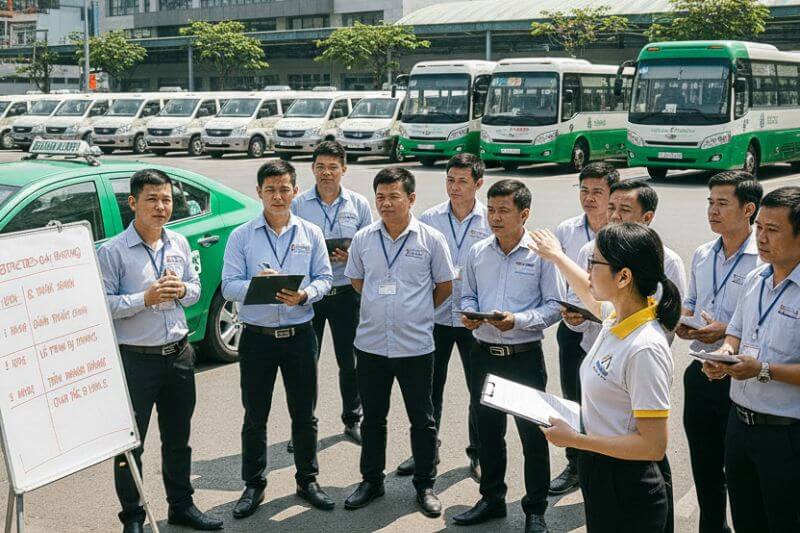
Planning Takeaways
1) Planner context and market insight for Vietnam traffic protocol political events
Stakeholder impact map (what actually gets disrupted)
1.1 Who is most exposed (program types and group sizes)
1.2 What to monitor (decision signals 7-14 days out)
2) Practical planning guidance for Tu Liem closures (venues, run sheets, routing, and tools)
Venue-area planning reality (Tu Liem perimeter)
2.1 Venue access strategy for Tu Liem (My Dinh and National Convention Center precinct)
2.2 Sample run-sheet blocks that reduce failure points
2.3 Planning tools MICE teams can reuse (works for clients and internal control)
3) Operational excellence and risk management (how to run it smoothly on the ground)
Step-by-step execution sequence (restriction-mode operations)
3.1 Permit and compliance workflow (no-surprise execution)
3.2 Routing and dispatch operations (what your ops team must physically do)
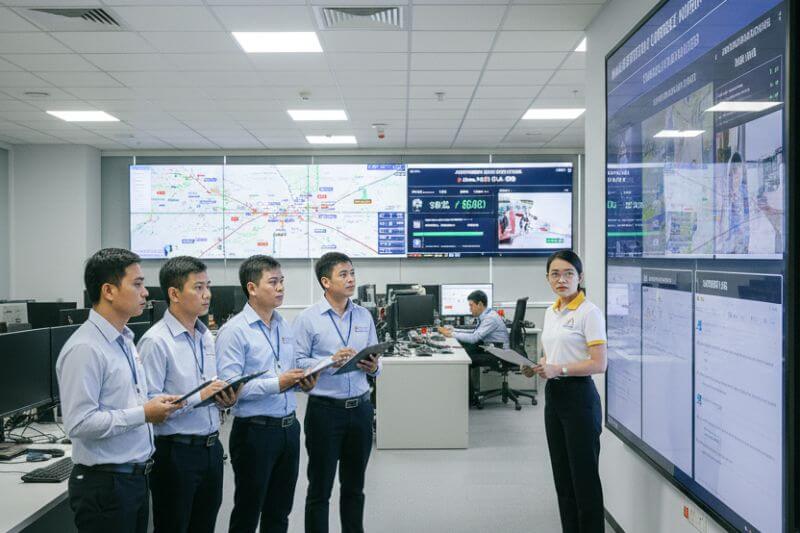
3.3 Real-time visibility and comms (designed around planner fears)
3.4 Risk register (what commonly goes wrong and how to neutralize it)
4) Partner success angles (how agencies look good, while the DMC operationalizes)
Outcomes clients care about (and how to evidence them)
Evidence: restriction notice window vs. actual attendee arrival curve, wave dispatch logs, and speaker call-time adherence.
Evidence: hotel muster scan report, vehicle assignment list, venue entry reconciliation, and exceptions list (who was late, why, resolution time).
Evidence: restriction-day premium tracked separately, approvals time-stamped, and final reconciliation by category (escorts, overtime, additional vans, recon).Role clarity (agency controls vs. DMC controls)
4.1 Case blueprint (proposal-ready): 300 pax conference in Tu Liem during restriction days
4.2 Incentive add-on blueprint (low-risk programming during red-zone hours)
5) Checklists, templates, and SOP pack (planner-ready for Vietnam DMC operations)
Restriction-day checklist (D-120 to Day-0)
Tu Liem restriction-day run sheet template (copy/paste format)
Buffer rule: 120-180 minutes for critical blocks on restriction days
Dispatch model: Waves + escorts + hard gates
Supplier confirmation automation (freeze points to prevent churn)
Post-event analytics template (client-ready reporting)
6) Frequently Asked Questions (proposal-safe answers for high-stakes decisions)
Request Routing Advisory for Hanoi Protocol Days (24-48 Hour Response)
What we need from you to issue a routing advisory
Operational proof resources (for your proposal appendix)