 ID
ID IT
IT DE
DE ZH
ZH ES
ES FR
FR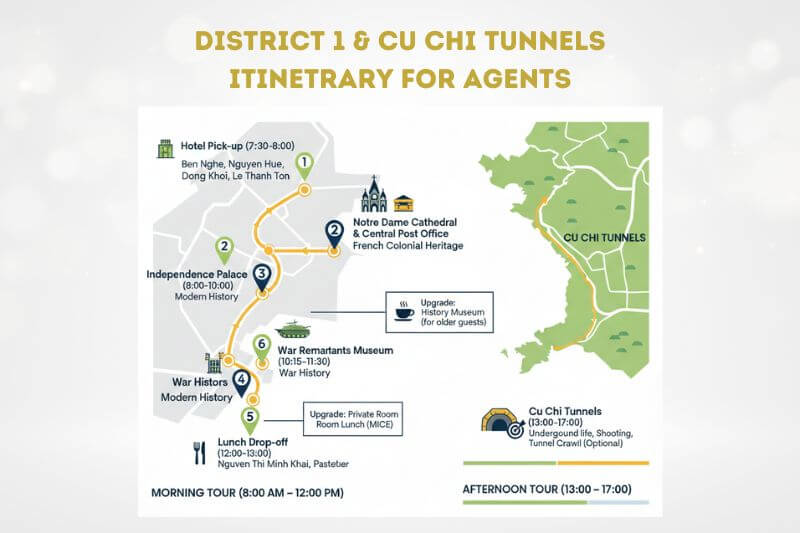
HCMC District 1 Group Routing Guide for Travel Agents
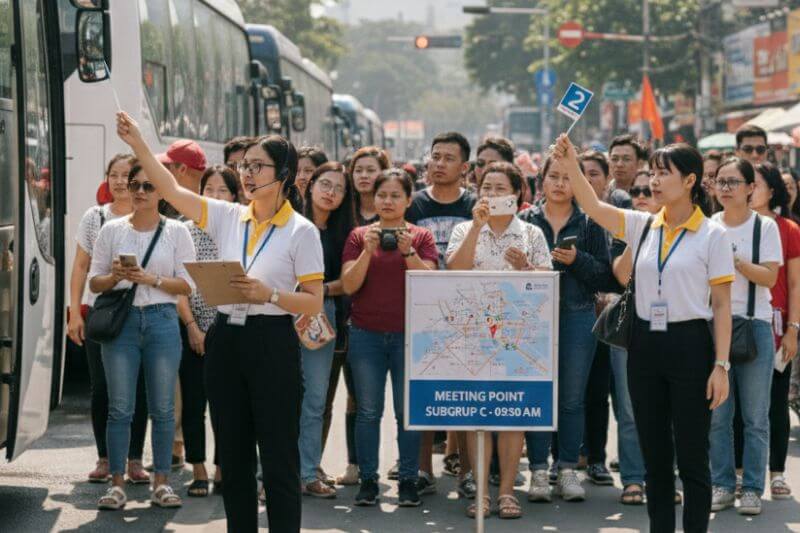
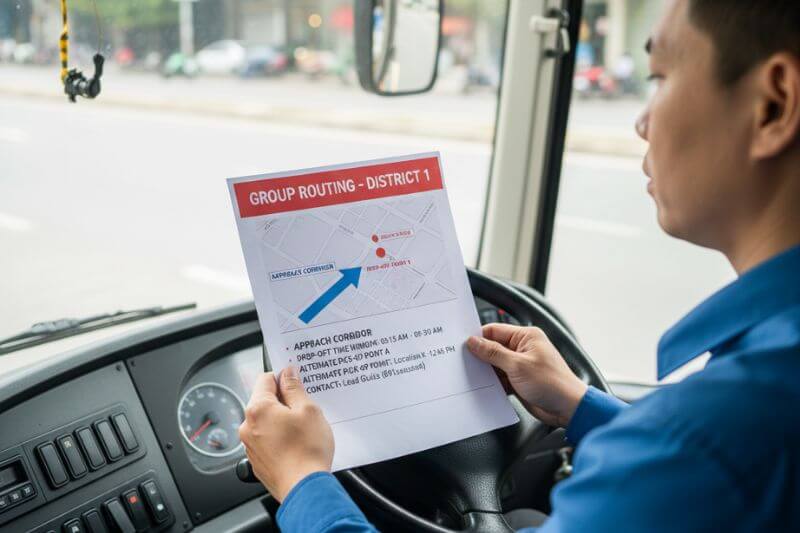
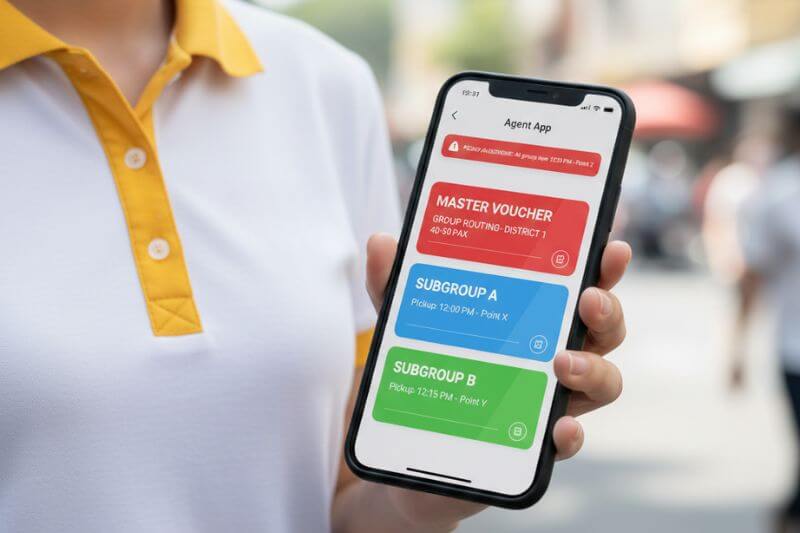
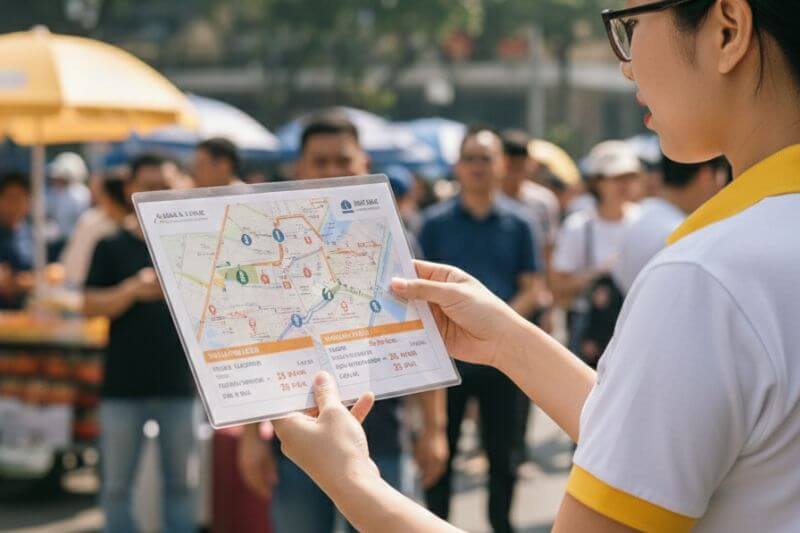
Reading time: 32-38 min Category: vietnam-dmc-operations-and-planning Keyword: Ho Chi Minh City group routing playbook Updated: 2026 District 1 is where most leisure groups want to spend their limited time in Ho Chi Minh City - and also where coaches struggle most. This Ho Chi Minh City group routing playbook is designed for travel agents selling 20-50 pax leisure groups who need predictable timing, controlled regroup points, and zero parking surprises in the Notre Dame - Post Office - Book Street - Ben Thanh - Nguyen Hue core. The operational reality is simple: District 1 is walkable (many key pairs sit in the 500-800m range), but dedicated coach parking in the core is not available. Success comes from routing that assumes drop-off/pick-up at the fringes, walk-first micro-loops, and a metro-ready backup for traffic locks. If you also need a broader vehicle access framework for hotels and group loading, pair this with our operations reference: hotel access and coach logistics playbook. From a client perspective, District 1 is “the city center day.” From an operations perspective, it is a compact pedestrian zone with limited coach dwell options, high crossing friction, and variable curb access. For leisure groups, the win condition is not “cover more sights.” The win condition is stay on time while keeping the group together and protecting your brand promise. Booking patterns that matter for travel agents: District 1 half-day blocks and “City + Cu Chi” combos continue to sell well with typical lead times of 2-4 weeks in peak season (Oct-Apr). Many marketplace listings are built for 10-20 pax, but agents frequently operate at 20-50 pax. That mismatch is where execution risk shows up (late arrivals, blocked curbs, fragmented groups). The fix is a modular design: split-walk units plus timed reassembly points. Client-friendly positioning language you can use in proposals (and that your client will understand): “District 1 on foot to reduce traffic exposure, with a metro-ready backup for reliability.” It sells the benefit (less time in congestion) without promising unrealistic curb access. Walkability advantage: Many landmark pairs sit within 500-800m, enabling efficient pedestrian routing for up to ~20-30 pax per walking unit with controlled pacing. Coach constraint: There is no dedicated coach parking in the pedestrian-heavy core. Your plan should expect drop-off/pick-up at the fringes or a metro + walk combination for one leg. Time risk baseline: Airport to District 1 transfers can commonly face 30-45 minutes of traffic impact. The District 1 plan should not collapse if the transfer slips - it should flex via shorter loops and clear regroup gates. If you want a comparable routing framework for Northern Vietnam, reference: Hanoi routing playbook. Below are “copy-and-paste” building blocks you can place into proposals and itinerary notes. They are structured to be operationally realistic for 20-50 pax and designed around curb constraints in District 1. Use them as standalone half-day modules or as an add-on to longer touring days. For most leisure groups, the operationally efficient cluster is: Notre Dame Cathedral (external) - Central Post Office - Book Street - Nguyen Hue Walking Street - Ben Thanh Market - Opera House area. This works because it concentrates “must-see” moments into a walkable zone, which reduces dependency on coach circulation (the main failure point in District 1). Pause-point logic (for group control): plan pauses in places that do not block sidewalks and where your guide can keep sight lines across the group. Typically: cathedral frontage, Book Street entrance, wider sections of Nguyen Hue, and the market edges rather than deep internal aisles. Reassembly points (plan them, do not improvise): pick 2-3 “gates” where headcounts happen every time. Example gates: (1) Ben Thanh edge, (2) Nguyen Hue wide section midpoint, (3) Cathedral frontage. Use these distances to set realistic expectations in proposals and to calculate pacing for older groups: You do not need to publish net rates to be quote-ready. You do need the correct line items to avoid last-minute add-ons that damage trust. Typical District 1 routing line items include: If you want a risk-focused structure to add into proposal notes, reference: traffic and protocol risks. Recommended windows: 8:00-12:00 or 13:00-17:30. When possible, schedule pre-8:00 or after 18:00 for reduced congestion and easier curb movements. Suggested flow (walk-first): Fringe drop-off near Ben Thanh edge - Market exterior orientation - Nguyen Hue Walking Street - Opera House area - Notre Dame exterior - Central Post Office exterior - Book Street - reassembly gate - fringe pick-up. Operational notes (include in your proposal): walking segments are typically 5-10 minutes; add 10-15 minutes across the module for photo stops; include 20% buffer on total walking time for pedestrian crossings and stragglers. Upgrade hooks: coffee stop in a hotel lounge or calm cafe near the core (adds comfort for 50+ groups), or a short rooftop viewpoint stop timed to avoid lift queues. Why this sells: it inserts a planned 30-40 minute seated stop which improves pacing for senior-heavy groups and gives your guide a clean headcount reset point. Suggested structure: 75-90 minutes walk loop - planned coffee stop (pre-reserved seating) - second 60-75 minute loop - fringe pick-up. Operational notes: book a venue that can handle 2 x 25 pax in staggered seating if you are selling 40-50 pax. Use the coffee stop as the “merge point” where subgroups reunite. Upgrade hooks: tasting format (controlled portions), or a short cultural talk segment during the seated stop (keeps the group engaged and reduces drift). Why it works operationally: Cu Chi is coach-heavy; District 1 is coach-fragile. Do the long driving outside, then switch to a walk-first loop once you are dropped at the fringe. Suggested structure: Cu Chi return to city - fringe drop-off - 90-120 minute District 1 walk loop - early dinner / hotel return. Control note for proposals: keep District 1 goals realistic after a long day. This module is best positioned as “key icons + street orientation,” not “everything in one day.” These templates are the practical output of the Ho Chi Minh City group routing playbook: short legs, planned gates, and planned vehicle behavior. That is how you convert District 1 from “unpredictable” into a repeatable product across departures. Method 1: Split and stagger. For 40-50 pax, run 2 walking units (e.g., 2 x 20-25 pax). Start Unit A, then Unit B 10-15 minutes later. Reunite at a single merge landmark (cathedral frontage or Nguyen Hue wide section). Method 2: Hub-and-spoke micro-loops. Choose a “hub” (cathedral frontage or Opera House area). Run 15-20 minute loops that return to the hub. Late arrivals can rejoin without missing the entire module. Method 3: Mobility-aware routing. Keep segments at ~500m maximum, add extra rest stops, and pre-identify a “short path” subgroup option for guests who should not walk the 800m leg. Your client will judge the day on punctuality, comfort, and clarity. Your brand risk shows up when timing slips turn into improvisation. The operational model below is built for District 1 reality: constrained curb access, high foot traffic, and reassembly friction. Step 1: Define the fringe drop-off and pick-up - before you define the sights. District 1 core cannot support coach parking. Operationally, plan for: Step 2: Run the walk loop in 500-800m legs. Keep each leg at 5-10 minutes. Put a headcount gate at the end of every leg. Step 3: Schedule deliberate reassembly buffers. Add 10-15 minutes at one major landmark cluster (e.g., Notre Dame / Book Street) for photos and regrouping without compressing the rest of the route. Step 4: Execute pick-up like an appointment, not a hope. Because coaches cannot wait in the core, the pick-up needs a time window, a specific curb approach, and a “late guest protocol” (see below). Step 5: Confirm the backup option (metro or alternate fringe pick-up). Build it into the day notes so your guide can activate it without calling for permissions in front of guests. Coach reality: There is no practical dedicated coach parking inside the pedestrian-heavy core. Plan for drop-off and pick-up at the fringes and build 15-30 minutes total buffer for vehicle logistics and guest reassembly. Approach corridors to reference in driver notes: Le Loi, Dong Khoi, and Nguyen Hue act as primary access arteries. Use them as reference points when aligning curb approach and walking start gates. Metro Line 1 fallback (group-friendly backup): Metro operations are typically 5AM-10PM with 4-6 minute frequency during peak. The Opera House station is roughly a ~500m last-mile walk to key sites, making it a practical “traffic-proof” option for one leg. Parking indicators (budget context, not a promise of availability): motorbikes often at 5,000-10,000 VND/hour, cars often 20,000-50,000 VND/hour at hotels/commercial centers. Metro-linked parking lots have been planned/expanded in areas like Van Thanh/Thao Dien clusters (verify close to arrival as capacity and rules change). Standard walking block: 3-4 hours is a stable operational size for District 1. Best windows: 8:00-12:00 or 13:00-17:30. For 50+ groups, avoid midday heat exposure where possible. Buffers that protect your promise: Transfer risk note for proposals: Airport to District 1 can commonly face 30-45 minutes traffic impact. Write your city module as “start time flexible within a window” rather than a single fixed minute when the group is on a flight arrival day. Guide equipment: Use a portable mic/whisper system for street environments. It reduces stop duration, improves compliance at crossings, and protects timing when the city is loud. Subgroup identifiers: Simple color lanyards/wristbands for A/B subgroups are low-cost but high-control, especially at Ben Thanh and Nguyen Hue where the group can spread. Headcount gates (define them): Commit to headcounts at the same three points every time. Example: (1) market edge, (2) Nguyen Hue midpoint, (3) cathedral frontage. This prevents “we lost two guests” turning into 25 minutes of confusion. Ben Thanh crowd/pickpocket briefing script (client-ready): “Please keep phones and wallets in zipped bags, wear cross-body bags to the front, and do not stop in doorways. If you need to pause, step to the side near the guide. We will regroup at the marked corner in 8 minutes.” Rain plan (May-Oct): Switch to 500m micro-loops, increase covered/indoor-adjacent stops, provide ponchos, and add 10 minutes for slippery or waterlogged sidewalks. Keep reassembly gates closer together. Traffic lock plan: Use the metro for one leg (where sensible), move pick-up to a less congested fringe point, and keep the core as walk-only to avoid burning time inside the coach. Compliance/permits: Walking groups generally do not require permits. Coach drop-off behavior may require local coordination depending on timing and street controls - set the expectation that final curb confirmations happen 48 hours prior. District 1 routing is a product you can repeat across departures when it is documented and controlled. Below are client-forwardable angles that help you win the booking and protect delivery expectations. Angle 1: “District 1 without coach dependency.” Position it as a walk-first core that avoids time loss searching for curb space. Angle 2: “Metro + walk for reliability.” Frame the metro as a backup option to protect timing, not as the main transport experience. Angle 3: “Senior-friendly pacing with comfort stops.” Emphasize short legs, planned seating, and clear regroup points rather than distance covered. If a client asks “what are we paying for beyond a guide,” here is the operational answer you can include in service notes: If you want measurable outcomes for your file notes or client debriefs, track: Concept A: “40 pax, 2 subgroups, zero coach parking.” Staggered start + single reassembly point, comparing time saved versus coach looping attempts. Concept B: “Rainy season rescue.” Covered segments + micro-loops + metro leg, documenting how the schedule stayed intact. Concept C: “Last-minute booking (72 hours).” Rapid quote confirmation, digital vouchers, and guide staffing lock preventing a lost sale. For execution proof formats you can reference when needed: partner success stories. District 1 is where document chaos and slow confirmations create reputational risk. The practical goal is to reduce back-and-forth, keep vouchers consistent, and give you visibility when coaches cannot wait. If you want the platform overview, see: Dong DMC Agent App. Fear: slow DMC responses lose deals. Our operational target is 12-60 minutes to issue a workable routed plan and quotation framework when the request includes the fields below. Fear: operational failures make the agent look unprepared. District 1 routes are delivered with defined meeting points, timed gates, and a backup option (rain + traffic) already documented. Fear: not knowing where the group is. Real-time updates focus on the points that matter in District 1: drop-off completed, walk module started, reassembly gate check-in, pick-up window status. Fear: document chaos. Use one master voucher plus subgroup vouchers (A/B) with pinned map points and time windows. When you request a District 1 routing, include these fields. They are client-safe and directly reduce execution risk: Voucher set recommendation for 20-50 pax in District 1: Late guest protocol (copy into voucher notes): “Pick-up is a time window. Guests not at the meeting point by the stated minute will rejoin at the next regroup gate with the assistant guide, or will be transferred by taxi/Grab as advised by the guide to protect group timing.” In District 1, updates should be operational, not noisy. The minimum set that reduces agent anxiety: Use this checklist internally, or forward it to your DMC as confirmation requirements: If your procurement team needs a quick rationale on why Dong DMC is built for operational certainty (not just product sourcing), reference: why partners choose Dong DMC. Q: Where can a 45-seat coach park in District 1? In the core District 1 pedestrian cluster, dedicated coach parking is not available. Plan for drop-off and pick-up at the fringes (e.g., near Ben Thanh edge or Opera House area) and run the sightseeing as a walk-first loop. Add 15-30 minutes total buffer for vehicle logistics and reassembly. Q: What’s the maximum practical group size for the District 1 walk? Operationally, plan around 20-30 pax per walking unit for best control and pacing. For 40-50 pax, split into two units and stagger starts by 10-15 minutes, then reunite at a defined reassembly gate (e.g., cathedral frontage or Nguyen Hue wide section). Q: How much buffer time should we build for traffic and regrouping? For any vehicle movement near District 1, add 15 minutes during 07:00-09:00 and 16:00-18:00. For the District 1 module itself, add 15-30 minutes for coach logistics (drop-off/pick-up constraints) and 10-15 minutes for photo/reassembly at one landmark cluster. Add about 20% extra time to walking legs for crossings and stragglers. Q: Is the metro realistic for groups in 2026? Yes, as a backup or for one leg when traffic is unpredictable. Metro Line 1 typically operates 5AM-10PM with frequent headways at peak (often 4-6 minutes). The Opera House station is roughly 500m from key District 1 sights, so plan a short last-mile walk and coordinate ticket/card handling in advance for smooth entry. Q: What changes in rainy season (May-Oct)? Expect occasional waterlogged sidewalks and slower walking pace. Use 500m micro-loops, increase covered stops, provide ponchos, and add 10 minutes buffer for slippery conditions. Keep reassembly gates closer together and avoid planning tight pick-up windows that assume perfect curb access. Q: How do we prevent losing guests in busy areas like Ben Thanh? Use three controls: (1) subgroup identifiers (A/B), (2) a portable mic/whisper system so instructions carry, and (3) headcount gates at pre-defined points (market edge, Nguyen Hue midpoint, cathedral frontage). Include a simple guest briefing on phone/bag security and “do not stop in doorways” behavior. Send your dates, pax count, hotel list, and preferred time window. We will return a client-ready District 1 routing plan (walk-first + backup options for rain and traffic) with digital voucher structure and operational buffers your team can execute. Fast quotations. Brand-protected operations. Zero missed arrivals.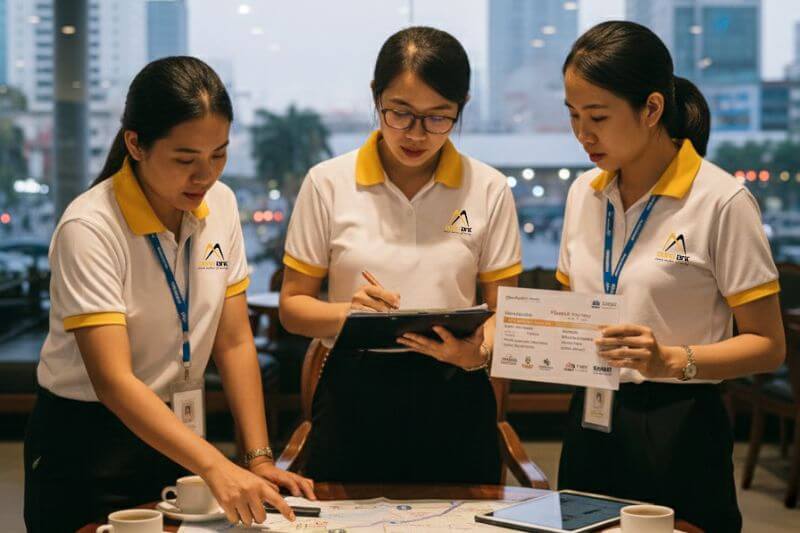
Planning Takeaways
1) Planner context: why District 1 is “must-see” - and why operations decide the outcome
Key District 1 planning assumptions (state these early in your proposals)
2) Practical planning guidance: client-ready District 1 routing blocks you can rebrand
District 1 core loop landmarks (what to include + why it works)
Walking distance cheat-sheet (planner callout)
What to quote (line items agents can put into proposals)
Three program templates agents can sell (with timings and upgrade hooks)
Template A: 2-3 hr District 1 Highlights Walk (best for arrival day / jetlag day)
Template B: 3-4 hr “Saigon Story + Coffee” (adds a control stop for comfort and regroup)
Template C: District 1 as a pre-/post-Cu Chi module (keeps coach time outside the core)
Scaling to 20-50 pax without chaos (agent-friendly methods)
3) Operational excellence and risk management (how to run District 1 smoothly on the ground)
Step-by-step execution model (hand this to your ops team or use as DMC brief)
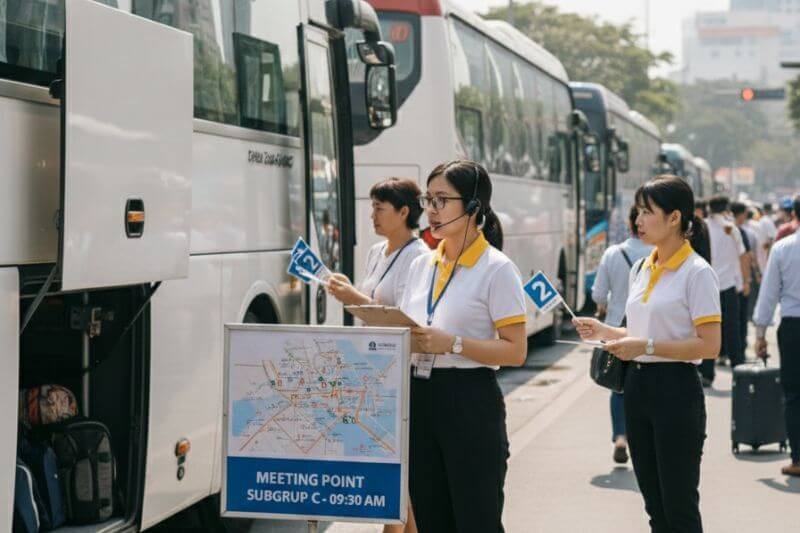
Transport and access logistics (the core section agents can paste into ops notes)
Timing, pacing, and “buffer math” (so your program does not collapse)
On-the-ground control tools (reduce dispersion and increase accountability)
Contingencies you can confidently promise clients (without overpromising)
4) Partner success structures (how to position this module and justify your margin)
Proposal positioning angles (client-forwardable)
What a DMC does behind the scenes (why your client gets reliability)
What to measure and report (simple proof points for clients and internal QA)
Case-study concepts (structure only, for your internal sales enablement)
5) Agent App workflow + checklists (built for District 1 timing constraints)
The “Agent Speed Stack” (aligned to agent fears)
How to request a routed plan in minutes (fields that reduce back-and-forth)
Digital vouchers (client-ready structure)
Real-time tracking and push updates (what matters in District 1)
Pre-departure ops checklist (agent-ready)
Frequently Asked Questions (copy-ready for client emails and proposals)
Request Routing Advisory (and get a quote in 12-60 minutes)
Operational Image Placeholders (for content team)