 ID
ID IT
IT DE
DE ZH
ZH ES
ES FR
FR
Vietnam Coach Compliance & Capacity Guide for Tour Operators
Reading time: 28-34 min Category: vietnam-dmc-operations-and-planning Keyword: Vietnam coach capacity and road regulations Freshness: Updated for 2025 enforcement and compliance realities (as of Dec 31, 2025) If you sell group travel in Vietnam, the difference between a smooth program and a reputational incident is rarely the destination. It is transfer design - seat count vs luggage reality, compliant driver duty planning, and whether your published timing can survive enforcement. Since January 1, 2025, stricter commercial driving-hour rules (Road Traffic Order and Safety Law, Article 64) have materially changed how long-distance coach routing can be executed. The binding constraints are now measurable and monitored in near real-time through journey devices, which means the old habit of "making up time on the road" is not a planning assumption you can safely sell. This briefing is written for tour operators who need brochure-accurate costing, defensible duty-of-care, and white-label delivery. It translates Vietnam coach capacity and road regulations into itinerary math for 45-seaters (pax and luggage), driver rest and rotation design, reconfirmation gates, and the data fields your product team should capture to stop cost drift. For related routing constraints and city logistics, you can cross-reference our operational playbooks: Hanoi group routing playbook and Vietnam traffic and protocol risk playbook. From January 1, 2025, Vietnam enforces stricter commercial driving-hour limits for vehicles with 8+ seats under the Road Traffic Order and Safety Law (Article 64). The three limits that impact tour programs are: 1) Continuous driving limit: maximum 4 hours before the driver must stop driving. This is the limit that most often forces itinerary redesign for long transfers. 2) Daily driving limit: maximum 10 hours of driving per day. 3) Weekly driving limit: maximum 48 hours of driving per week. These are not theoretical guidelines. Enforcement has shifted because commercial vehicles must use journey monitoring devices and driver image recording systems. Data can be transmitted to authorities quickly, which reduces the operational flexibility some suppliers historically relied on. In practical terms: if your program is only feasible when a coach "pushes through", it is not a defensible program in 2025. Market reality: the weekly cap reduces available driving capacity and has contributed to driver scarcity in peak months. For tour operators, this shows up as: - Longer lead times to secure the right vehicle class and driver plan for multi-province routing - Higher risk of late reconfirmations and last-minute substitutions if holds are not converted early - Rate premiums commonly seen in peak season, especially for complex loops or consecutive long days How to position this to your client: compliance is not a constraint you apologize for. It is a duty-of-care feature that protects the group from fatigue-related risk and protects your brand from "unsafe schedule" allegations. If a client pushes for "express" routing, the correct response is to offer compliant alternatives (extra night, mode change, or split movements) rather than compressing drive blocks. Sources: VietnamNet reporting on 2025 driving limits and monitoring requirements: vietnamnet.vn. Industry impact context: interlogistics.com.vn. Most client pushback in 2025 is not about the vehicle. It is about time, price, and "why we need so many stops." The predictable friction points are: More conservative ETAs. Published timing that used to be sold as "4 hours door-to-door" may now need to be sold as "4 hours driving time plus operational stops" if you want truthful schedules. Mandatory stops that feel frequent. Facility stops every 2-3 hours and a mandatory stop at or within the 4-hour continuous cap change guest perception if it is not explained as safety compliance. Potential need for an extra night. Certain 2D1N concepts become risky when you add realistic congestion, stops, weather buffers, and compliance breaks. Budget line items that often rise (and should be pre-declared): - Additional coach days (when timing needs to stretch to remain compliant) - Driver rotation premiums (when continuity is required for event schedules) - Contingency vehicle allocations for VIPs/speakers or tight venue windows - Higher supplier minimums in peak months (especially Oct-Apr) Proposal language that reduces disputes: define timing as a compliance-based estimate, list planned stops, and state that schedules are built to remain within statutory limits. This moves the conversation from "slow service" to "planned risk management." Vietnam requires commercial vehicles to maintain active monitoring systems. Circular No. 71/2024 describes journey monitoring devices and driver image recording expectations, and public reporting indicates data transmission is close to real time. Operational takeaway: itinerary "stretch goals" that rely on overtime driving are easier to detect and harder to defend. What this changes for tour operators: - Your operational plan must be compliant by design, not compliant "if traffic is light" - The supplier selection process must include documentation expectations (monitoring active, maintenance current, insurance confirmed) - Your run sheets should show stop placement and driver duty windows, so the plan is auditable if a client asks for proof of duty-of-care There are proposals under review to adjust some limits, but nothing is confirmed as of December 2025. Our recommendation for product design is simple: build programs that are commercially viable and compliant under current caps, then treat any future relaxation as upside, not as a dependency. Source references: monitoring and driving-hour reporting: vietnamnet.vn; industry proposals context: vietnamnet.vn. To turn Vietnam coach capacity and road regulations into reliable product, you need a repeatable method that connects sales promises to dispatch reality. The framework below is designed to be embedded into your product SOP and your proposal templates. Step A: Define the movement in three numbers. - Planned wheel-turning driving time (not distance) - Required arrival window (hard vs soft) - Luggage and freight profile (standard suitcases vs mixed vs heavy MICE materials) Step B: Apply compliance constraints early. - Place a mandatory driver stop at or before 4 hours of continuous driving - Keep daily driving within 10 hours (including repositioning where relevant) - Validate weekly feasibility for series tours and multi-province loops (48-hour weekly cap is where availability often breaks) Step C: Convert into a client-facing schedule that can be defended. - Publish departure, facility stop(s), and realistic arrival windows - Include a short compliance note so stops do not look like inefficiency - Add congestion buffers for urban exit/entry (Hanoi and HCMC especially) Step D: Lock the spec early. The spec is what protects your brand: exact vehicle class, seat count sold vs loaded, luggage assumptions, driver plan (single vs rotation), and reconfirmation gates. If you want a city-level operational view (pickup windows, parking constraints, and hotel access realities), use our companion resource: Hotel access and coach logistics playbook. Because 2025 caps reduce flexible overtime driving and tighten driver supply, lead time is now a risk-control tool. These guidance ranges are operationally driven (not marketing driven) and are designed to reduce the probability of forced substitutions. Simple day tours (single city, under 4 hours total driving): 7-14 days is typically workable outside peaks. For fixed-date series in peak months, aim for 3-4 weeks. Multi-province loops (2-7 days, repeated long transfers): 4-6 weeks minimum, and longer for Oct-Apr departures. This allows time to secure compliant driver plans and confirm vehicle class consistency across days. MICE shuttles (airport-hotel-venue rotations, tight windows): 6-8 weeks recommended for 100+ pax movements or multi-venue conferences. Shuttle programs are less about road distance and more about bay control, staging, and contingency vehicles. What to lock early: vehicle class, luggage plan (including freight), venue loading rules, and the reconfirmation gates (see Section 3.1). If you lock only the headline price and leave the assumptions flexible, cost drift is likely. In Vietnam, "45-seater" is a commercial designation, not a legal capacity rule. The operational issue for tour operators is that 45 seats does not equal 45 comfortable passengers with predictable luggage space. Your true capacity is a function of: - Underfloor bay volume (varies by coach model and operator fleet) - Passenger suitcase size distribution (EU and AU groups often skew larger) - Presence of odd-size items (golf bags, instrument cases, strollers, samples) - MICE add-ons (gala attire, gifts, sponsor packs, staging and AV crates) Default selling rule for proposals: if luggage is standard (1 large suitcase + 1 carry-on per person), sell a 45-seater at 40-42 pax unless the luggage plan is verified in writing by the transport provider. This rule reduces three predictable failure modes: baggage overflow (requiring a second vehicle), compromised safety (bags in aisle), and comfort complaints (no space, crowded seating). When 45 seats can be sold closer to full: short transfers (airport to hotel), minimal luggage (hand-carry only), or when a separate baggage vehicle is contracted. What to confirm in writing (minimum): - Pax loaded (exact headcount range) - Suitcase count and typical size (e.g., 28-30 inch hard case) - Carry-on policy (in cabin vs underfloor) - Odd-size items list (golf bags, foldable wheelchairs, prams) - Event freight: number of cartons, approximate dimensions, total weight if known This documentation is not bureaucracy. It is claim prevention. Without it, the supplier can reasonably say: "You booked a 45-seater, not a luggage truck." A frequent pricing dispute is caused by a mismatch between "tour luggage" and "event luggage." Many incentive groups travel with: - Outfit changes for gala nights (bulkier suitcases) - Gifts, giveaways, sponsor packs (high volume, low weight) - Pop-up branding, roll-ups, exhibition samples (oversize) - AV support items (cases that must not be crushed) When these appear, the right question is not "Can the 45-seater fit it?" The right question is: What is the most failure-proof configuration? Operationally safer configurations: - 45-seater coach sold at 35-40 pax plus a dedicated baggage van (clean separation of guests and freight) - Two coaches split by function (VIPs and speakers on one, general delegates on another) when timing windows differ - Pre-shipped event freight moved on a separate schedule, reducing pressure on guest transfers This is where brand protection is earned: your guests see a calm boarding process; your client sees that you controlled risk rather than hoping the bays would be enough. The 4-hour continuous driving limit is the most common itinerary breaker. To avoid rework late in the sales cycle, use a structured method. Method: compliant day-building in five steps 1) Estimate wheel-turning time conservatively. Use realistic drive-time estimates that include typical congestion exiting and entering major cities. 2) Place facility stops every 2-3 hours. 15-20 minutes supports guest comfort and helps keep the driver within alertness thresholds (also reduces "unscheduled stop" requests that derail timing). 3) Place a mandatory off-duty stop at or within 4 hours. Plan it at a known, controllable facility. The objective is to avoid an unplanned stop triggered by compliance. 4) Validate daily driving under 10 hours. Include any necessary repositioning and late-night returns, especially for event shuttles. 5) Validate weekly feasibility for series tours. A multi-day loop can be individually compliant per day yet fail on week totals when the same driver is used across back-to-back programs. How to explain stops in client-facing docs: frame stops as safety compliance and duty-of-care. Avoid language that implies the coach is slow or the driver is unreliable. Your message is: the itinerary is designed to be compliant and predictable. Source references: driving-hour limits: vietnamnet.vn and interlogistics.com.vn. Two-driver setups are often misunderstood. They can help you maintain continuity for time-sensitive programs, but they do not remove the legal limits. Each driver still must comply with maximum continuous, daily, and weekly driving caps. What two drivers can solve: - Tight event windows requiring long operating spans (airport arrivals plus evening gala plus late return) - Consecutive long days where a single driver would breach daily or weekly limits - Resilience when a driver must stop due to compliance timing What two drivers cannot solve: - Unrealistic transfer promises that ignore congestion and stop needs - Luggage overload and passenger comfort claims - Peak-season vehicle scarcity if you did not lock supply early Commercial expectation to disclose: two-driver rotations typically price at a premium because you are paying for additional labor and duty management. If a client requires continuity (no schedule slip tolerated), the premium is easier to defend than the reputational cost of late arrivals. This section avoids full itineraries intentionally. It provides proposal-level guidance you can apply across products. Hanoi - mountain corridors (e.g., Sapa routing): These movements often sit close to the 4-hour continuous threshold once you include urban exit and mountainous road conditions. If you are selling 2D1N concepts, pressure builds on both the driver plan and guest tolerance. Mitigations typically include adding a buffer night, re-sequencing visits to reduce same-day driving, or changing mode where commercially appropriate. Hanoi - Ha Long - Ninh Binh loops: The risk is not only driving time. It is compounded by congestion at urban exits, rest stop quality variance, and fixed embarkation times for cruises or experiences. Your operational control point is stop placement and departure discipline. Central Vietnam city hops (Da Nang - Hoi An - Hue): Usually feasible, but MICE groups add baggage and fixed venue call times. The planning lever is not speed, it is staging and parking access. Use our venue-oriented resource when conferences are involved: Hanoi MICE venues playbook (principles apply even when the venue city differs). HCMC - Mekong day patterns: Most day runs are workable, but published schedules fail when product teams do not include city exit congestion and facility stops. Avoid promising "early lunch arrival" without buffers in peak traffic periods. The decision rule tour operators can use: if the commercial value of a compressed routing is lower than the reputational risk of late arrivals or compliance-driven stops, redesign early. Do not wait for on-ground improvisation. Most operational failures begin as data failures: assumptions that are not captured as fields, approvals that are not logged, and movement plans that do not survive handover from sales to ops. For 2025 compliance, movement data should be structured so it can be audited and recalculated when variables change. Minimum movement fields your product team should capture (per transfer block): - Route: origin, destination, intermediate checkpoints if relevant - Planned wheel-turning hours (and whether it includes congestion assumptions) - Stop plan: facility stop timing(s) and mandatory rest stop timing(s) - Driver duty model: single driver vs rotation, and whether a spare driver is on standby - Vehicle class and seat plan: sold pax vs loaded pax - Luggage profile: suitcase count, carry-ons, odd-size items, freight - Buffer: minutes added for weather/urban congestion/venue access - Service-level requirement: hard arrival time vs flexible window - Approval log: who approved the schedule and assumptions (client side and operator side) Integration points that reduce cost drift: - Portal or API fields for transfer blocks that are consistent from quotation to confirmation to run sheets - Automated validation alerts when a routing breaches 4h continuous / 10h daily / 48h weekly assumptions (even a simple rule-engine reduces rework) - Centralized document storage for the compliance pack and luggage confirmations, tied to booking IDs to avoid data silos If your teams want visibility tools on our side, review how we support partners through white-label systems: Dong DMC Agent App. Compliance only protects your brand if it is executed quietly. Guests should experience a program that feels controlled: correct vehicle, clean boarding, predictable stops, and accurate ETAs. The way to achieve that is to convert regulations into SOP and measurable service levels. On-ground SOP building blocks that reduce escalation: - Dispatch briefings with driver duty windows, stop locations, and "no compression" rules - Pre-selected rest stops with minimum sanitation and capacity standards - Boarding discipline: manifests, headcounts, and luggage counts before wheel-turning - Real-time updates routed through a single command channel (to avoid contradictory messages to the client) - Documented deviation handling: when traffic or weather changes the plan, decisions are logged and communicated with revised ETA logic For hotel access constraints and parking realities that can break timing, use this playbook: Hotel access and coach logistics playbook. Peak season (Oct-Apr): Availability is the main risk. Driver supply tightens under weekly-hour caps, and vehicle consistency across a multi-day program becomes harder without early holds and reconfirmations. Commercially, rate premiums and stricter cancellation terms are more common. Operationally, popular rest stops become congested, which can add unplanned minutes unless you time them well. Monsoon season (May-Sep): Time risk increases. Add buffer minutes to transfers, especially on northern mountain routes where landslide and temporary closures occur. Build a reroute option and avoid selling "tight connections" (e.g., same-day flight check-in right after a long road segment) without a contingency plan. Risk-control action you can put into proposals: define buffer policy (example: "arrival windows include weather and compliance buffers") and include a contingency clause for route changes due to safety conditions. Night driving is not currently prohibited, but fatigue risk is materially higher in the midnight to 6:00 AM window, and there have been policy discussions about stricter night-driving caps. For tour operators, the issue is less legality and more defensibility. Decision criteria to use with clients: - Is the night movement replacing an extra hotel night purely for cost reasons? If yes, duty-of-care scrutiny increases. - Is there a fixed event start that cannot move (conference opening, flight departure, ship embarkation)? If yes, consider mode change or adding a buffer night instead of compressing into night hours. - Is the route mountainous or weather-sensitive? If yes, night driving increases operational and safety risk. Mitigations if a night movement is unavoidable: - Strictly cap continuous driving segments and enforce scheduled stops before fatigue sets in - Consider two-driver rotation where continuity is required, with clear client approval of premium and rationale - Use a defined escalation path (if weather or road conditions degrade, the plan changes without debate) Source reference (risk context): incident concentration and proposed night-driving caps discussed by Vietnamese media: e.vnexpress.net. A compliance pack is not only for legal protection. It is a commercial tool: it reduces last-minute substitutions, supports procurement checks, and gives your client confidence that the schedule was built responsibly. What to request (minimum viable pack): - Confirmation that journey monitoring and driver image recording systems are active (commercial vehicle requirement context from Circular 71/2024 reporting) - Driver license validity and assignment confirmation (named driver where possible) - Vehicle information: plate number, model class, seat count, maintenance status where available - Insurance confirmation: liability coverage applicable to your group operation type (leisure series vs corporate vs incentive) - Luggage confirmation: agreed suitcase counts and odd-size items Reconfirmation gates (recommended): T-6 weeks: capacity hold for peak season and complex routes, including vehicle class and indicative driver plan. T-2 weeks: named driver (where feasible), duty plan outline, and final luggage profile confirmation. T-24 hours: weather and road status check, rest-stop plan finalization, and dispatch contact confirmation. This structure gives you an audit trail: if a client disputes a timing change, you can show that changes were driven by verified road conditions or compliance constraints, not by poor planning. Tour operators do not lose clients because a road is slow. They lose clients because communication feels reactive, messy, or contradictory. White-label operations should therefore focus on controlled guest touchpoints. Rest stop quality control: Pre-select facilities with adequate sanitation and parking. Avoid "random stops" that create time loss and complaints. For MICE groups, consider meal voucher handling to reduce friction and keep stop durations predictable. Urban congestion tactics: Build early departures (6:00-7:00 AM) when you need to protect morning windows. Stagger pickup times by hotel floor or group, and confirm hotel driveway access. In cities, parking restrictions can create delayed boarding if not planned. MICE shuttle discipline: Use boarding manifests, timed waves, and a command channel (radio or WhatsApp group with defined roles). Track on-time departures as a KPI, not a hope. Contingency planning is not pessimism. It is cost control. When delays happen, the only expensive option is the unplanned option. Recommended pre-approved contingencies: - Backup coach provider option (pre-checked and callable) for same-day substitution - Spare vehicle option for VIPs/speakers or tight venue windows - Trigger points for switching transport mode (for example, when road closure risk crosses a threshold, shift to rail or air) - Buffer-day logic for programs 3+ days where one disruption would otherwise cascade into missed events Operationally, we treat these as pre-signed decision trees. The client does not want a debate on the roadside. They want a pre-approved rule executed quickly. These are scenario patterns that tour operators can cite in proposals without relying on destination marketing language. They are designed to show that your program is engineered for predictability under 2025 constraints. Scenario A: Central Vietnam incentive with gala night and heavy luggage Operational design: sell the 45-seater at reduced pax, confirm gala attire luggage assumptions, add a baggage van for gifts and materials, and pre-select rest stops to protect timing to the gala venue. Client value: fewer boarding delays, reduced baggage disputes, and higher schedule adherence for fixed-time events. Scenario B: 150-pax Hanoi hub-and-spoke with staggered departures Operational design: multiple coaches with wave-based boarding, bay control at hotel, and live updates to a single command channel. Stops and buffers are built into published schedules. Client value: reduced congestion impact and fewer missed venue check-in windows. Scenario C: Long transfer redesigned to reduce duty-of-care exposure Operational design: replace a high-risk late-night road segment with a scheduled mode shift (rail or air where appropriate), and keep daytime coach segments within the 4-hour continuous cap with planned facility stops. Client value: safety narrative that is defensible, with fewer timing surprises. For execution proof formats and how partners present outcomes, see: Partner success stories. If you want procurement-friendly language, attach operational KPIs to your transport plan. These are metrics that reduce ambiguity and strengthen evaluation-stage proposals: Schedule adherence: departures on time vs planned; arrivals within agreed windows. Cost variance control: variance to quoted coach days and driver plans (tracked via change orders). Change-order frequency: number of transport changes after confirmation, with reasons categorized (client change vs weather vs compliance). Incident and near-miss log: operational issues recorded with corrective actions (useful for corporate duty-of-care reporting). Response SLAs: time to acknowledge and resolve operational escalations (important across EU/US/AU time zones). These metrics become more valuable when they are tied to structured movement data (Section 2.7) and delivered as a post-op report pack. Below are tool concepts your team can implement internally or request from your DMC partner. They exist to reduce planning time, reduce errors, and create an approval trail. Tool concept 1: Vietnam coach compliance calculator (rule-based, not subjective) Inputs: planned driving hours, departure window, season, route risk (urban congestion, mountain roads), luggage profile, and whether the client requires hard arrival times. Outputs: minimum number of days required, stop plan skeleton (facility stop cadence plus mandatory rest stop), suggested driver model (single vs rotation), and buffer guidance. Tool concept 2: Coach booking and compliance pack checklist (proposal to ops handover) Minimum line items: vehicle class, sold vs loaded pax, luggage assumptions, stop plan, driver plan, monitoring confirmation request, insurance confirmation, reconfirmation gates, and contingency triggers. Tool concept 3: Technology readiness checklist (to avoid data silos) - Multi-user access with role permissions (product vs ops vs finance) - Centralized document storage tied to booking IDs - Structured movement fields that remain consistent across quotation and operations - Automated reporting outputs for schedule adherence and change orders If you are evaluating partner fit, you can also review how we position brand protection and operational certainty: Why partners choose Dong DMC. Q: How do Vietnam coach capacity and road regulations affect 45-seater planning? The regulations primarily affect timing and driver duty planning (4h continuous, 10h daily, 48h weekly), while 45-seater capacity is an operational reality issue (comfort and luggage, not a legal limit). For proposal safety, sell 45-seaters at 40-42 pax for standard luggage unless luggage space is confirmed in writing, and build mandatory stops into published timing so ETAs remain defensible. Q: Can we do Hanoi-Sapa-Hanoi in 2 days compliantly? Often, this becomes high-risk once you add realistic congestion, mountainous road conditions, and mandatory stops under the 4-hour continuous driving cap. A compliant design typically requires either an additional buffer element (extra night or re-sequencing) or an alternative transport strategy for part of the corridor. The correct approach is to run a routing feasibility check against the actual movement hours, not a marketing drive-time estimate. Q: How many passengers should we sell on a 45-seater if clients have 1 large suitcase + 1 carry-on? Default recommendation is 40-42 pax unless the operator confirms luggage capacity in writing for the specific coach model. If the group has additional items (gala attire, gifts, samples), reduce further or add a baggage vehicle to avoid aisle loading and comfort claims. Q: Are night drives allowed, and what duty-of-care language should we use with clients? Night drives are generally permitted, but fatigue risk is materially higher late night to early morning. Duty-of-care language should state that routing is designed to comply with statutory driving limits and to reduce fatigue exposure, and that schedules may be adjusted for safety or weather. Where a night move is required, document stop plans and driver duty models, and get explicit client approval of the risk trade-off. Q: What documentation should we require to confirm monitoring device compliance? Request written confirmation that the coach is operating with active journey monitoring and required recording systems as applicable to commercial vehicles, plus vehicle and driver identification details. For procurement-driven clients, include this confirmation as part of your compliance pack and store it with the booking ID for audit trail continuity. Q: When does it make sense to book two drivers vs add an extra night? Book two drivers when continuity is commercially necessary (tight event windows, multi-wave airport operations, or long operating spans that would otherwise breach daily or weekly limits). Add an extra night when the underlying issue is transfer compression or when the route risk (mountain roads, weather sensitivity) makes time pressure a duty-of-care concern. Q: How far ahead should we book coaches for Oct-Apr series? For multi-province loops and series departures in Oct-Apr, plan 4-6 weeks minimum, and earlier for MICE movements or consecutive long driving days. Use reconfirmation gates (T-6 weeks, T-2 weeks, T-24 hours) to reduce substitution risk. Q: What happens operationally if journey device data transmission fails - does it stop the tour? A transmission issue does not automatically mean the tour stops, but it creates compliance exposure for the operator and can trigger reporting and corrective actions. For tour operators, the practical protection is to require monitoring confirmation pre-trip and ensure your supplier has an escalation path and documentation process if any device issue is detected. Q: How do you report delays and compliance changes across time zones (EU/US/AU) without harming our brand? Use a single command channel with role-defined updates (ops lead to partner, guide to guests), send time-stamped ETAs with reason codes (traffic, weather, compliance stop), and keep client-facing language consistent with the approved duty-of-care narrative. This avoids contradictory messages and supports post-op reporting for your internal stakeholders. Send us your draft routing, passenger count, luggage profile, and required arrival windows. We will return a costed coach-day plan with compliance validation (4h continuous, 10h daily, 48h weekly), stop placement guidance, and reconfirmation gates for peak-season risk control. Fast quotations. Brand-protected operations. Zero missed arrivals.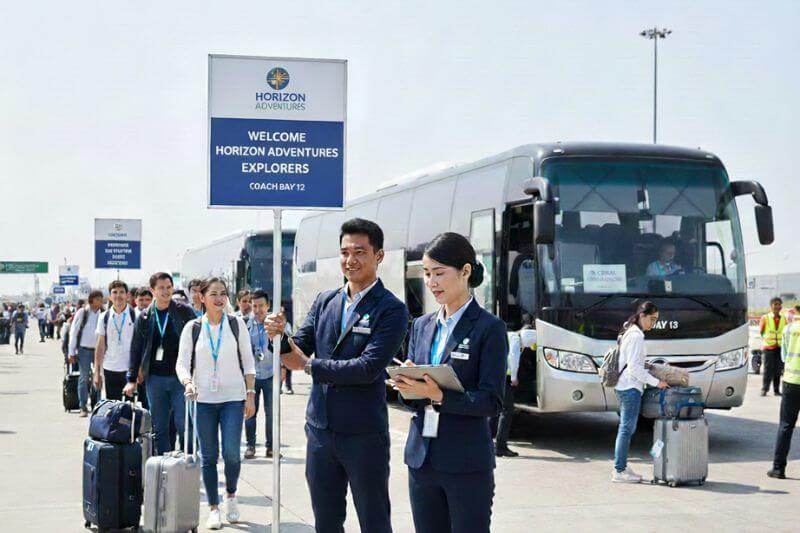
Planning Takeaways
1) What changed in 2025 - and why it affects feasibility, pricing, and duty-of-care
1.1 What your client will notice (and what to pre-empt in proposals)
1.2 Regulatory monitoring and enforcement - why itinerary compression is a planning risk now
2) Practical planning framework for compliant transfers (what your product team can operationalize)
2.1 Lead times you can quote with confidence (by program complexity)
2.2 45-seater planning - seat count is not your true capacity
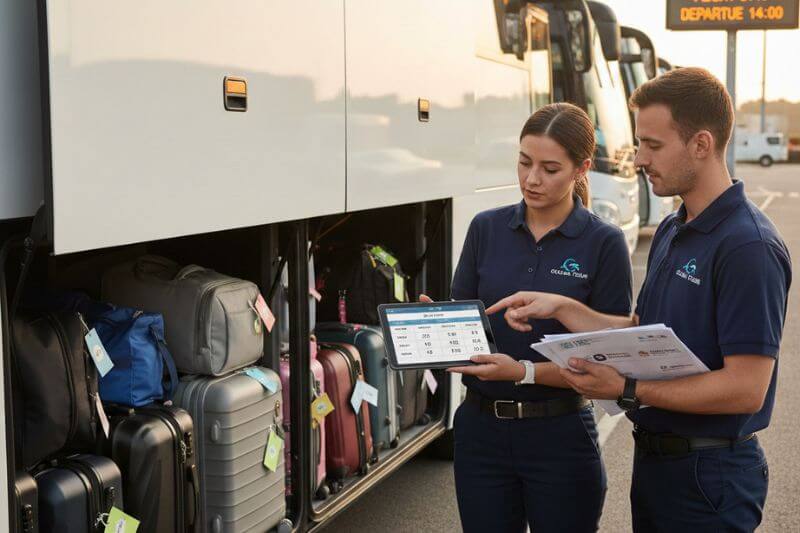
2.3 Luggage and freight scenarios that change the vehicle plan (especially for incentives and MICE)
2.4 Driver rest requirements - how to build compliant days without breaking the guest experience
2.5 Two-driver rotation - what it solves, what it does not, and when it is justified
2.6 Common route archetypes that need redesign under 2025 enforcement
2.7 Data flow for brochure-accurate costing (evaluation-stage requirement)
3) Operational considerations - turning compliance into a smooth guest experience
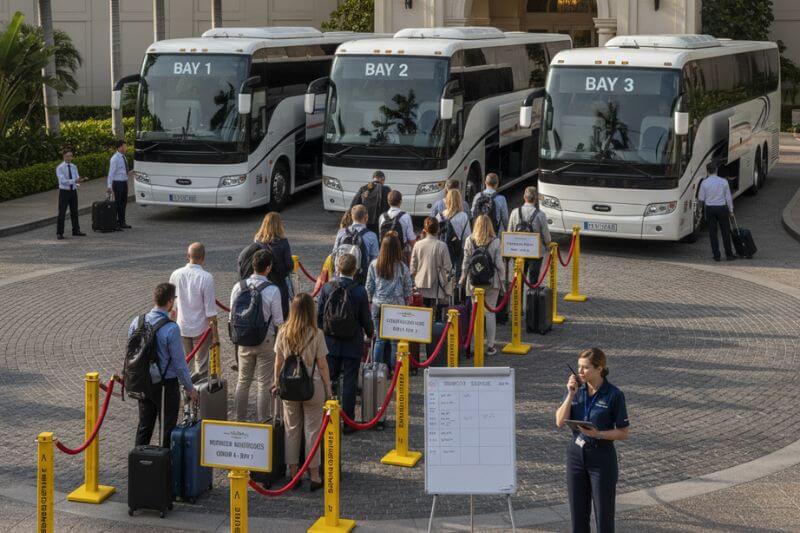
3.1 Seasonality planning - how to protect timings and availability
3.2 Night driving - permitted, but a duty-of-care decision
3.3 Pre-trip compliance pack - what to request from coach operators (and when)
3.4 On-trip logistics that protect your brand (white-label execution)
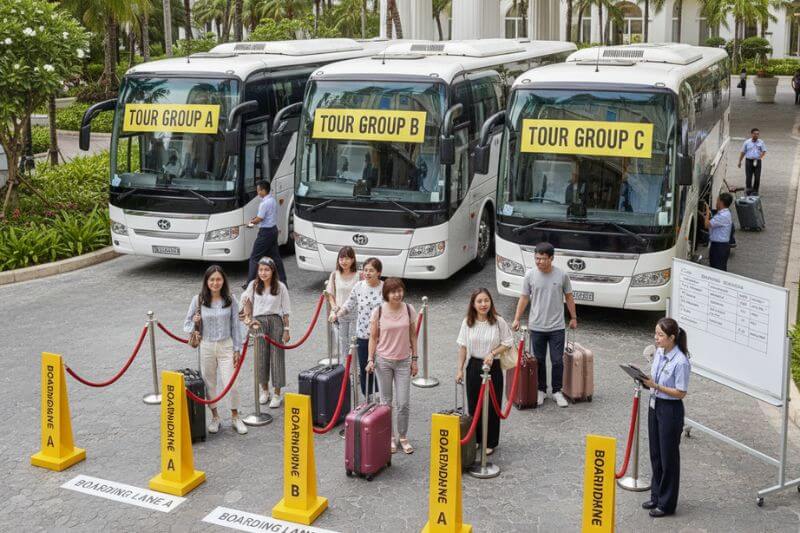
3.5 Contingency and resilience planning - what to pre-approve before departure
4) Partner-ready scenarios you can use in proposals (replicable, measurable, brand-protected)
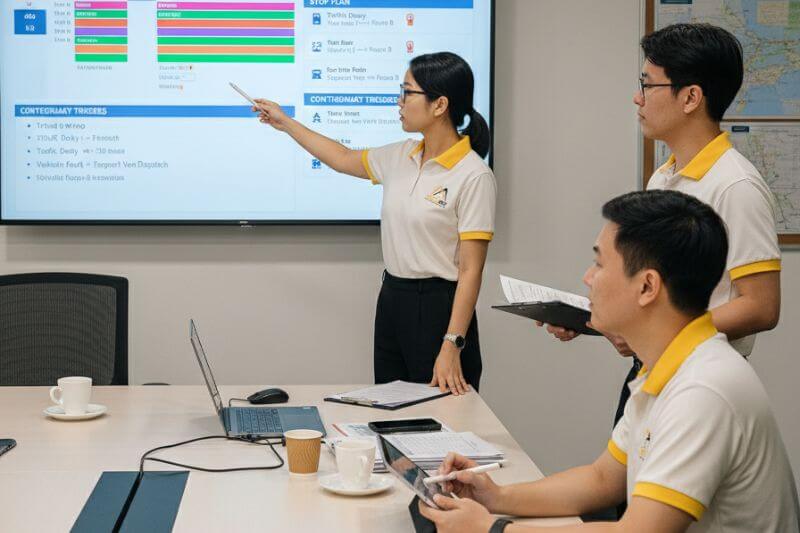
4.1 Success metrics tour operators can quote (to frame ROI and control)
5) Tools and checklists you can embed into your SOP (2025+ Vietnam coach compliance)
Frequently Asked Questions
Get a Vietnam DMC Quote (12-60 Minutes)