 ID
ID IT
IT DE
DE ZH
ZH ES
ES FR
FR
Vietnam Group Dining Planning Guide for Incentive Planners
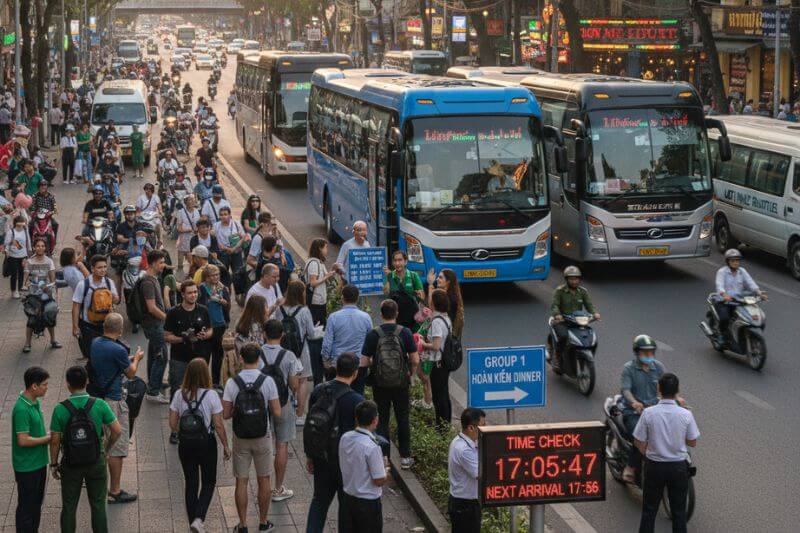
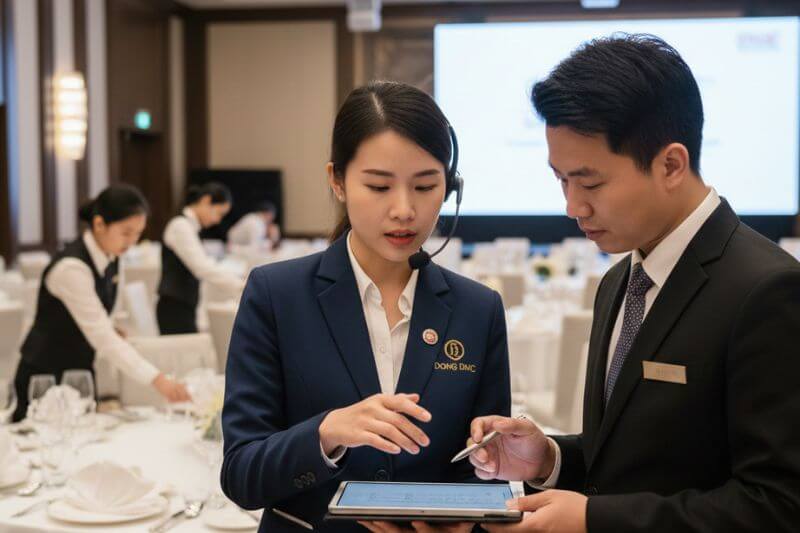
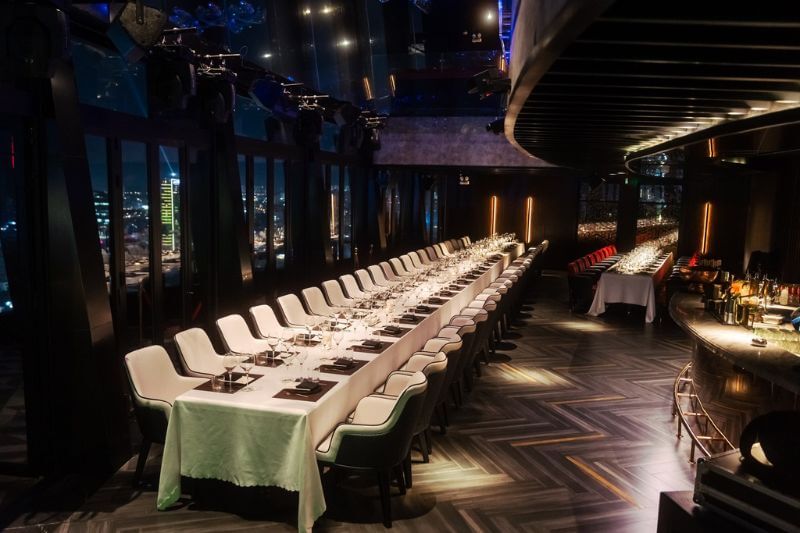
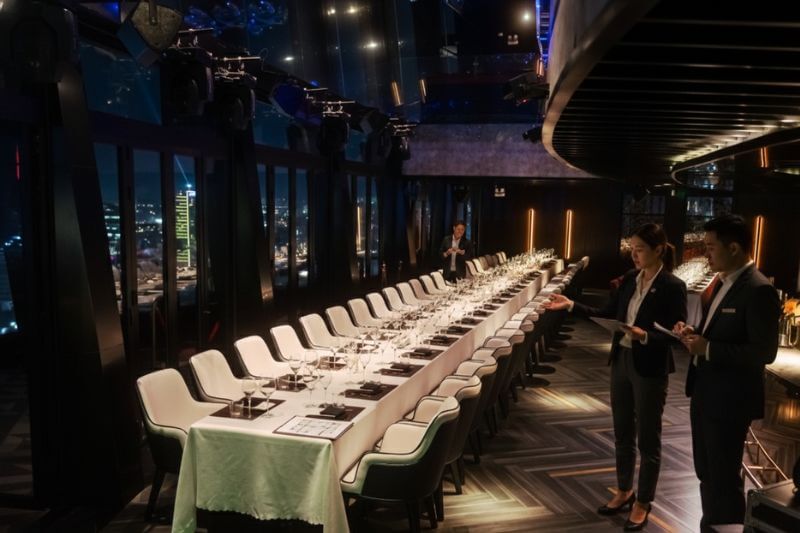
Category: vietnam-dmc-operations-and-planning Keyword: Vietnam group dining capacity planning Target audience: Incentive planners and travel agents operating leisure groups (20-50 pax) | Year: 2026 Reading time: 28-35 min Vietnam group dining capacity planning is where most 20-50 pax programs either stay on schedule or start losing control of timing, budget, and guest experience. The operational challenge is simple: many restaurants do not publish private room specs, layouts change, and minimum-spend rules vary by date and time. This guide gives you proposal-ready capacity ranges, private room confirmation checklists, and a menu pre-order workflow that reduces the two biggest incentive-night risks: (1) the room is smaller or less private than expected, and (2) service pacing breaks the schedule. For transfer and arrival flow risks in major cities, align this with our operational routing and traffic protocols: Hanoi routing playbook and traffic and protocol risks. In Vietnam, group dining planning is relationship-driven and configuration-driven. Many restaurants can host groups, but the “real” capacity depends on how the room is set (rounds vs. long tables), whether partitions are available that day, and whether another group is sharing service corridors or entrances. Because of that, public capacity specs are often incomplete or missing. For incentive planners and travel agents, the correct operational stance is: capacity is confirmed only when the venue confirms layout + exclusivity terms + minimum spend in writing. This is why a DMC network matters: it reduces the time spent “chasing” unofficial information and replaces it with confirmed parameters you can place into a client-facing proposal. Private rooms: 20-120 pax per room (venue dependent). Combinable rooms: 40-200 pax when partitions allow. Buyouts: 200-400+ pax depending on indoor/outdoor mix. Groups 20+ pax: 4-6 weeks. Full buyouts: 8-12 weeks. Peak periods (especially Tet): add an extra 2-week buffer. Prevents last-minute venue changes, reduces delays from live ordering, and avoids unplanned room fees or minimum-spend surprises. If your client requires “no shared spaces,” “award speeches,” “strict timing,” or “VIP privacy,” plan to use either (a) a confirmed private room with clear terms, or (b) a controlled hotel F&B environment as the operational backup. The “most unique” option is not always the safest option unless exclusivity and capacity are locked early. Use this framework to select a venue type that matches your client’s priorities (privacy, timing control, branding moments, budget control) while staying realistic about what can be confirmed early. For 20-35 pax: one private room is usually the best operational fit. It reduces noise, simplifies seating, and improves pacing because one service team can cover the entire room. For 35-50 pax: book a larger private room or two adjacent rooms with a confirmed partition plan. If the venue cannot guarantee a combined space, treat it as two rooms operationally (two service teams, two pacing plans) and adjust your run-of-show accordingly. VIP add-on (12-20 pax): a smaller room or chef’s-table style space works well for top performers, leadership, or hosted buyers. In proposals, position this as a separate dining moment with a shorter schedule and tighter service pacing. When to recommend a full buyout even for 50 pax: If your program includes awards, speeches, brand visibility requirements, media-sensitive guests, or strict timing that cannot tolerate service variance, a buyout (or a hotel function room) provides stronger execution control than most shared restaurants. What to request from your DMC (copy-paste into an email or Agent App request) City + date + preferred time window; pax; seating style (rounds/long tables); private room required (yes/no); exclusivity requirement; estimated budget; dietary list; allergy handling expectation; speech window; AV requirements (screen/mic); coach count; hotel pickup point; and whether you need branded menu cards or signage. To keep proposals flexible while you confirm details, use “venue type descriptions” your client can approve without naming a specific restaurant too early (especially in peak periods). Example language you can reuse: “Private dining room at a vetted local venue, capacity-confirmed for 45 pax, with pre-ordered set menu to ensure synchronized service.” If you are building a multi-city program, keep the same “dining spec” across cities: same seating style, same menu format, and the same timing template. This is one of the easiest ways to protect itinerary consistency and reduce decision friction for your client. Private room availability is the single most common failure point in group dining because “private room” can mean different things operationally: a fully enclosed room, a semi-private partition, a shared terrace with a divider, or a room that becomes private only after a minimum spend is met. To reduce risk, treat private room confirmation like a mini function-space booking. Ask for the same level of clarity you would request for a meeting room: capacity, layout, timing, access, and inclusions. Use this checklist to confirm the space and avoid last-minute changes. These are the items that most often cause “we thought it was private” issues. If you are combining rooms for 35-50 pax (or building flexibility for possible increases), request three items before you confirm: If your run-of-show requires “one moment for all guests” (welcome toast, awards, announcements), it is safer to select a room that can physically keep the group together or move that moment to the hotel before departure. Hotel dining spaces are not always the most distinctive, but they are often the most controllable. Recommend hotel F&B when your client prioritizes: When presenting options to a client, position hotel F&B as the “execution certainty” choice and private restaurants as the “experience variety” choice. This makes tradeoffs clear and reduces expectation mismatch. Below are operationally stable evening flows you can drop into an itinerary. Each one includes timing blocks and the buffer logic that prevents late seating and rushed service. Upgrade options you can offer without creating operational risk: branded welcome signage at the venue entrance (if permitted), printed menu cards with the client logo, welcome drink token system, and small place-setting gifts. Confirm what the venue allows before promising. Group dining is a logistics operation first. Your two main constraints are (1) city access for coaches and (2) kitchen pacing for a fixed schedule. Below is the operating playbook we recommend for 20-50 pax dinners in Hanoi, HCMC, Da Nang, and similar high-traffic areas. In central districts, coaches may not be able to stop directly at a venue entrance for long. Loading zones can be tight, and parking may be off-site. Operationally, plan for a 30-45 minute buffer from hotel pickup to seated time when the venue is in dense areas. For deeper logistics planning, use: hotel access and coach logistics playbook. A reliable run-of-show template for 20-50 pax private dining: If you require AV setup (screen, mic, speaker), plan 1-2 hours prior access for setup and testing. If the venue cannot allow this, move AV to the hotel or switch to a “no-AV” plan with printed run-of-show. Common pacing issue: dishes arrive “as ready,” which can split tables and extend dinner duration. Prevention steps you can document in your planning file: When in-house AV is limited, Dong DMC uses vetted suppliers and confirms setup and teardown timing inside the event order so the program stays predictable. For overall venue planning in the capital, reference: Hanoi MICE venues playbook. The purpose of Vietnam group dining capacity planning is to remove avoidable uncertainty. These are the risks that typically cause program disruption, and the controls you can build into your plan. During Tet and other peak periods, capacity compresses and many venues operate with modified schedules. Operational recommendation for proposals: add a two-week buffer to your hold and confirmation timeline, and select a backup venue early (often hotel F&B) that can execute under peak pressure. Your protection is documentation and repetition. Collect allergies early, confirm the venue’s capability in writing, and repeat critical allergy notes at the pre-dinner briefing. For severe allergies, maintain the client’s insurance and waiver process and ensure the final menu sign-off explicitly notes substitutions. Operational boundary: a DMC can coordinate and document controls, but no operator can guarantee a zero-risk environment for severe allergies in a live kitchen. Your best protection is early disclosure, written confirmations, and controlled menu formats. When you are competing for a group, speed and clarity win. Here is a repeatable workflow that you can show internally (or describe to your client) to demonstrate operational control without overpromising. For proposal budgeting, a common benchmark for Vietnam group set menus is USD 30-60/pax net depending on city, venue level, and inclusions. For private rooms and buyouts, you may also see room fees and/or minimum spends. The important part is not the exact number early on - it is that the minimum spend and inclusions are clarified upfront so your client does not face late cost escalation. If you need a structure your client can approve quickly, present: For execution proof and how we protect partner brands (white-label delivery), see: why partners choose Dong DMC and partner success stories. For agents managing multiple suppliers and approvals, dining is where document chaos usually starts: menu versions, dietary spreadsheets, room confirmations, and last-minute timing updates. Our goal is to keep it in one request thread with a clear approval trail. If you are using the Dong DMC Agent App, structure your dining request so our team can quote and confirm quickly. Use this format to reduce back-and-forth: On dining nights, small delays stack quickly. A controlled workflow reduces uncertainty for the agent and the client: If you want the operational detail behind coach staging and curb constraints, reference: hotel access and coach logistics playbook. Pre-event checklist (T-6 weeks to T-48 hours) On-site checklist (T-60 minutes to T+120 minutes) Q: What is the typical private room capacity in Vietnam for group dinners, and when do we need a buyout? For planning and proposals, use these anchors: private rooms commonly accommodate 20-120 pax depending on venue and layout; combinable rooms can reach 40-200 pax when partitions allow; buyouts are typically used for 200-400+ pax or when exclusivity, branding, and timing control are required. For a 20-50 pax group, a buyout may still be recommended if your program includes awards, high-profile guests, or strict privacy requirements. Q: How far in advance should we book for 20-50 pax vs. 100+ pax programs (and what changes during Tet)? For groups above 20 pax, plan 4-6 weeks lead time to secure strong private rooms and confirm minimum spends. For buyouts or larger programs, plan 8-12 weeks. During Tet and peak weeks, add an additional 2-week buffer and hold a backup option (often hotel F&B) early. Q: How does menu pre-ordering work for groups, and how do we manage dietary requests? For 20-50 pax, the safest approach is 100% pre-ordered set menus with dietary substitutions confirmed in writing. Allow 24-48 hours for specials and custom prep. Manage dietaries via a single spreadsheet (name + restriction + severity), then lock a final menu sign-off and reconfirm 48 hours prior to dinner. Q: What are the most common hidden constraints that impact group dinners? The biggest hidden constraints are coach access/loading limits in city centers, unclear private-room definitions (semi-private vs. fully enclosed), and service pacing when live ordering is allowed. Mitigation is straightforward: build a 30-45 minute transfer buffer, confirm room specs in writing, and pre-order a set menu with a paced service plan. Q: Can we do awards speeches and AV in a restaurant private room? Often yes, but only with confirmation. Ask for screen availability, microphone feasibility, power access, and any sound restrictions. If the venue cannot provide reliable AV or setup time, shift speeches to the hotel before departure, or run a “no-AV” plan (short toast positioned centrally) to protect timing. If your client requires documented responsible operations, align dining choices with venues that can support reduced single-use plastics, clear sourcing standards where available, and practical waste reduction (for example, pre-ordering to reduce overproduction). Our operational policy overview is available here: sustainable operations. This is not a marketing add-on. Clear operating standards reduce last-minute changes and support smoother supplier coordination across multi-city programs. Send us your city, date, and pax count and we will return 2-3 group-dining options per city with confirmed capacity direction, private room availability, and net menu ranges - structured for you to rebrand into a client proposal. Fast quotations (12-60 minutes). Brand-protected operations. Zero missed arrivals. If you want to evaluate our delivery model before requesting rates: why partners choose Dong DMC and Dong DMC Agent App. Because restaurant private-room specs in Vietnam are often not published consistently, this article uses a mix of venue-published private event references (capacity and timing patterns), DMC operational playbooks, and trade context indicators. Capacities, minimum spends, and inclusions should be reconfirmed at the time of booking and again 2 weeks pre-event for any policy changes. Operational standard for 2026 programs: confirm private room assignment, layout, menu, dietaries, access notes, and payment terms in writing, then reconfirm at T-2 weeks and T-48 hours.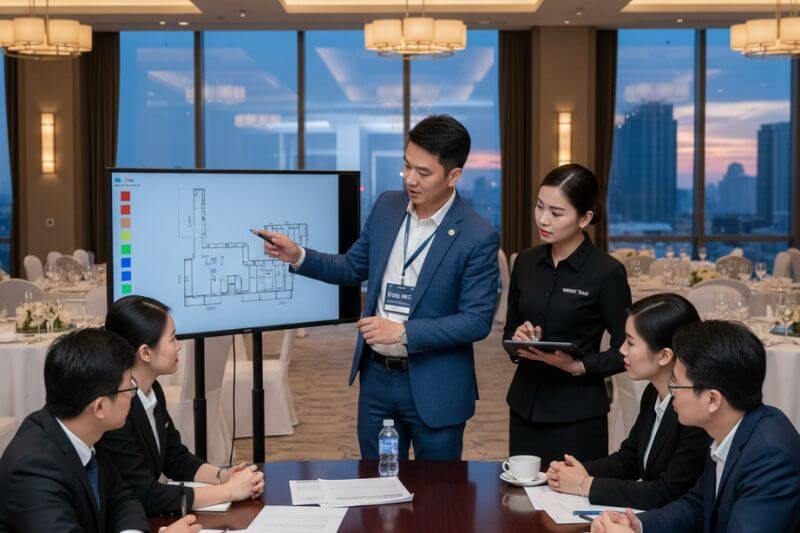
Planning Takeaways
1) Planner context for Vietnam group dining capacity planning (what is different here)
Capacity ranges you can quote (proposal-safe)
Typical lead times to protect your plan
What this protects
2) Venue decision framework (what to book for 20-50 pax)
3) Private room availability: how to secure the right space (and prove it in writing)
3.1 Capacity confirmation checklist (proposal-ready)
3.2 Combinable rooms strategy (40-200 pax scenarios)
3.3 When hotel F&B becomes the default “safe” option
5) Ready-to-sell evening flows around dining (copy/paste into proposals)
Flow A: City highlights - private room dinner - short awards toast
Flow B: Light street-food introduction - private room main dinner (schedule-protected)
Flow C: Activity finish - 90-120 minute dinner window - staged coach departures
Operational Considerations (how to run group dining smoothly)
6.1 Transfers, access, and arrival flow (urban realities)
6.2 Service timing and room setup for speeches (simple template)
6.3 Service pacing risk (what can go wrong, and how to prevent it)
6.4 Basic technical/AV checklist (non-technical, proposal-safe)
Risk management playbook for agents (protect the program and your client’s brand)
7.1 Seasonality and peak periods (Tet and high occupancy weeks)
7.2 Contingencies that actually work
7.3 Allergy and liability handling (documentation, not guesswork)
How incentive planners win: a repeatable “fast quote to confirmed room” workflow (consideration-stage)
8.1 The 5-step workflow (proposal-friendly)
8.2 Net rates and budget clarity (what to show your client)
Agent App workflow and checklists (reduce document chaos, keep everyone on track)
9.1 Copy/paste request form (built for 12-60 minute quotes)
9.2 Real-time tracking + digital vouchers for dining nights (what this changes operationally)
9.3 Printable checklists (for agents and guides)
Frequently Asked Questions
Operational note: sustainability and supplier controls (proposal-safe)
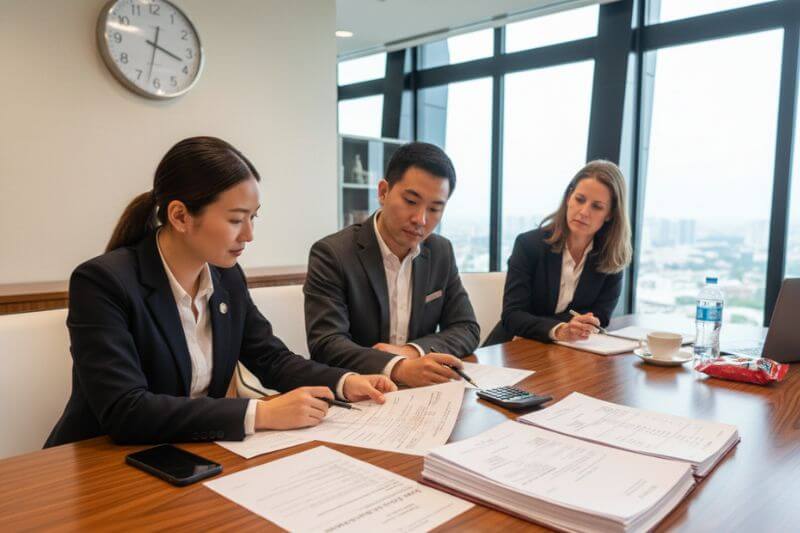
Operational image placeholders (for your proposal deck or internal brief)

Request Itinerary and Net Rates (Vietnam Group Dining Included)
Sources and data freshness (for planning validation)