
 ID
ID IT
IT DE
DE ZH
ZH ES
ES FR
FR
Vietnam Multi-City Transfer Timing Matrix | Ops Planning
Category: vietnam-dmc-operations-and-planning Keyword: Vietnam multi-city transfer timing matrix Target audience: Tour Operators (EU, USA, AU) Reading time: 30-36 min Last operational review: 2026 Vietnam programs rarely fail on sightseeing - they fail on connections. A Vietnam multi-city transfer timing matrix is a packaging tool tour operators can use to set defensible buffers between domestic flights, airport-to-hotel transfers, and the next day program, so a single delay does not cascade across a 10-20 day north-to-south itinerary. This article is built for evaluation-stage planners who need predictability: brochure-accurate timings, fewer missed connections, and client-facing rationale for why certain sectors require 2.5-4 hours of buffer. It also shows how to operationalize the matrix with white-label reporting and data flow - so your team has visibility without exposing a ground partner. If you need city-specific routing constraints (coach access, hotel loading, and realistic drive-time windows), pair this matrix with our operational playbooks: Hanoi routing playbook and traffic and protocol risks. Tour operators package Vietnam most commonly as north-to-south (or reverse) across Hanoi, Da Nang-Hoi An, and Ho Chi Minh City. For groups of 20-50 pax, the operational risk is rarely the flight time itself (1-2 hours domestic) - it is the connection reality around each flight: airport processes, baggage throughput, and urban traffic variability that can add 30-60 minutes at the wrong time. A timing matrix standardizes those “hidden minutes” so your product and operations teams stop re-solving the same problem departure after departure. When you build consistent buffers into templates, you improve three evaluation-stage outcomes that matter to your clients and internal stakeholders: 1) Brochure accuracy: fewer re-issues of client documents and fewer itinerary disclaimers that weaken your positioning. 2) On-time performance KPIs: fewer missed flights, fewer emergency rebookings, and fewer guide overtime hours. 3) Cost predictability: fewer ad-hoc vehicle swaps and fewer last-minute meal or room nights needed to recover a delayed sector. Market pattern to plan around: high-volume touring demand from Europe, USA, and Australia for 10-20 day multi-city programs, typically booked with 3-6 month lead times for groups, with booking concentration and operational pressure in Q4 (Oct-Dec) for the dry season. Where operators get burned most often: Tight same-day connections (arrive, transfer, and re-depart within a narrow window), underestimated airport-to-city transfers (30-120 minutes depending on city and hotel zone), and peak-hour road congestion adding +30-60 minutes, especially around HAN and SGN corridors. A Vietnam multi-city transfer timing matrix is not a static timetable. It is a decision tool that converts flight and routing data into a recommended buffer level, with clear assumptions. This section provides the field structure and buffer rules you can place inside your product build sheets, ops checklists, or client proposals. For each transfer or flight sector, capture the following inputs. These are the items that most directly impact missed-connection probability and cost variance: Flight and airport data: flight number, scheduled arrival/departure, terminal (if known), baggage inclusion (checked bags increase claim time), and whether tickets are through-ticketed or separate PNRs (changes the risk ownership model). Group composition: pax count, luggage count (especially on long-haul inbound sectors), families/elderly, and any special assistance that slows movement through bottlenecks. Airport process assumptions (groups): immigration + baggage claim baseline for 20+ pax is commonly 20-40 minutes, but plan for variability and “wave effects” when multiple flights land together. Ground transfer reality: airport-to-city drive time and hotel loading constraints. HAN is typically 40-60 minutes to central Hanoi depending on traffic; SGN is typically 30-45 minutes to District 1; DAD is around 20 minutes to Da Nang and typically 20-30 minutes onward to Hoi An. Operational constraints: hotel coach access (Old Quarter in Hanoi and central zones in HCMC are often the constraint), number of coaches that can load at once (commonly 2-4), and whether a staggered departure is required. For deeper hotel access considerations, see our hotel access and coach logistics playbook. Timing window: peak congestion is typically 07:00-10:00 and 16:00-19:00, while the most predictable windows are 05:00-08:00 and after 20:00. Your matrix should tag each movement by window because the same sector can differ by 30-60 minutes. A usable matrix should output four items that can be quoted, defended, and executed: (1) Recommended buffer level (standard vs peak vs Tet/monsoon) in hours/minutes. (2) “Wheels rolling” target time from airport (coach departure time) and “report time” for the next flight (arrival at airport). (3) Vehicle plan (coach count and staging plan) that prevents group splits and reduces baggage delay risk. (4) Overnight trigger flag - if true, your product team has a pre-approved alternate pattern rather than improvising under pressure. These are the baseline rules we recommend embedding into multi-city templates for group series and custom departures. They are conservative enough to protect brand outcomes without forcing unnecessary overnights. Rule A - Minimum airport layovers for groups: plan a minimum 3-hour layover at Hanoi (HAN) or Ho Chi Minh City (SGN) for groups, and 2.5-3 hours at Da Nang (DAD) depending on whether the hotel base is Da Nang city or Hoi An. Rule B - SGN rush hour add-on: add +45 minutes for movements to/from SGN during peak windows (07:00-10:00, 16:00-19:00). This protects the most common failure point: arriving late to check-in and cascading into a missed flight or split check-in wave. Rule C - Peak season and disruption windows: avoid buffers under 3 hours in Oct-Apr peak demand and holiday spikes. During monsoon patterns, add +30-60 minutes to the ground component; during Tet, expect traffic to increase sharply and upgrade to 4-hour buffers for 30+ pax groups on same-day flight connections. Rule D - Always target airport arrival 2 hours before departure for domestic flights: build the rest of the matrix backwards from that non-negotiable report time. It is the simplest discipline that prevents “domino delays.” Below are route modules you can drop directly into your program notes, client proposals, or internal operations sheets. They are structured to explain the operational logic in client-safe language: what is included, what the assumptions are, and what buffer is recommended to protect the itinerary. Typical flight time: ~1h20m (domestic). Ground transfer assumptions: HAN airport corridor to central Hanoi typically 45-60 minutes depending on traffic; DAD to Da Nang city is typically around 20 minutes; DAD to Hoi An is typically 20-30 minutes depending on hotel location and congestion near peak arrivals. Recommended buffer (groups): 3 hours between arrival and the next fixed commitment (check-in cutoff, timed activity, or connecting flight). For same-day flight-to-program planning, treat the first 90 minutes post-landing as “non-programmable time” (baggage, regrouping, coach staging). Client-facing justification text (editable): “We include a 3-hour connection buffer to absorb airport processing and traffic variability so the group remains together and the scheduled program is protected.” Typical flight time: ~1h25m (domestic). Ground transfer assumptions: DAD to city is typically ~20 minutes; SGN to District 1 is typically 30-45 minutes, with higher variance at peak hours. Recommended buffer (groups): 2.5 hours in standard conditions, increasing to 3+ hours if the arrival lands close to SGN peak congestion windows or if hotel access is restricted (limited coach loading in dense areas). Operational note for product managers: if you schedule a same-day arrival in SGN followed by a fixed dinner time, build a “floating” block (rest time or briefing) rather than a timed venue commitment. This prevents paid venue holds and reduces claims when delays occur. Typical flight time: ~2h (domestic). Ground transfer assumptions: 45-60 minutes on the Hanoi side; 30-45 minutes on the HCMC side (District 1), with baggage peak effects commonly adding time at busy periods. Recommended buffer (groups): minimum 3 hours between landing and any non-flexible commitment. For large groups (30-50 pax), use the 3-hour minimum as “standard” and upgrade to 4 hours in Tet or high-disruption windows. These sectors often sit adjacent to flights and can create fatigue or lateness if underestimated. Use them as matrix modules in your templates. Hanoi - Ninh Binh: ~2h10m (one-way) under standard conditions. Plan longer if departing during 07:00-10:00 out of central Hanoi. Hanoi - Ha Long: ~3h45m-4h (one-way). For embarkation windows, treat this as a fixed-time operation and avoid stacking it after a late inbound flight. Hue - Da Nang via Hai Van: ~3 hours. Build an extra buffer if you have a timed rail arrival, a lunch reservation, or a flight check-in after the drive. For tour operators, the decision is rarely “can we physically connect same day?” The decision is “can we connect same day without risking the next day’s headline inclusions?” Overnight transit stays are a risk-control tool, not an upgrade narrative. The matrix should make the overnight decision consistent and defensible. Trigger 1 - Arrival after 20:00: late arrivals compress hotel check-in, reduce dinner service options, and increase knock-on lateness the next morning. If the next day includes an early departure or a timed domestic flight, an airport-area overnight often reduces total disruption cost. Trigger 2 - Next-day early flight or fixed embarkation: when a group must report at the airport early or meet a fixed embarkation window (cruise, train, ferry), an airport hotel or a city hotel near the corridor is operationally safer than crossing dense urban zones at peak time. Trigger 3 - Large group with checked luggage (30-50 pax): baggage handling and regrouping time scale non-linearly with pax count. For luggage-heavy segments, an overnight creates slack that prevents splitting and reduces re-issue risk. Trigger 4 - Monsoon windows and Tet travel periods: monsoon patterns can add 30-60 minutes to road time; Tet can spike traffic significantly. During Tet, a 4-hour buffer or an overnight is often the difference between “minor delay” and “missed flight.” Operationally, overnights can be cost-neutral compared to disruption recovery (emergency vehicle replacements, meal compensation, and rebooking). When you propose an overnight option, present it as a protective measure with a clear trade-off: Option A (same-day connection): lower room cost, higher disruption risk; requires strict buffer adherence and flexible evening program. Option B (overnight transit): added room night, reduced missed-connection probability, improved next-day on-time performance. For client proposals, include a single sentence rationale: “Overnight positioning is recommended to protect the next day’s fixed-time services and reduce rebooking risk.” Most operators use HAN and SGN for transit positioning because they are the highest-volume gateways and the most common points of delay. When an overnight is triggered, airport-area hotels (3-4 star) are usually the fastest recovery option versus crossing the city late. A timing matrix is only useful if it changes how you shape the day. The easiest operational win is to align ground movements with predictable traffic windows and shift the flexible elements (briefings, rest blocks, and optional activities) into peak congestion periods. Most predictable windows: 05:00-08:00 and 20:00+ are commonly more stable for airport corridors and cross-city runs. High-variance windows: 07:00-10:00 and 16:00-19:00 are common peak congestion ranges, where the same route can fluctuate by +30-60 minutes. If you must move during a high-variance window, avoid placing a fixed-time commitment immediately after arrival. Instead, schedule a “bufferable” block in the proposal (hotel check-in + briefing, rest time, or flexible meal timing). This reduces guest dissatisfaction and reduces your internal compensation exposure when traffic delays occur. These are not day-by-day itineraries. They are operational skeletons showing where the matrix changes the shape of a day (early flights vs late flights vs overnight) so product teams can standardize templates and reduce rework. Module 1: Hanoi base (city touring modules planned away from 07:00-10:00 departure peaks where possible). Module 2: Hanoi - Ha Long ground sector (treat embarkation as fixed-time; do not stack after a late inbound flight). Module 3: Return to Hanoi - flight to Da Nang (use 3-hour airport buffer at HAN; if arriving late into DAD and sleeping in Hoi An, consider a flexible first evening module). Module 4: Da Nang/Hoi An base - flight to HCMC (use 2.5-3 hours buffer; add +45 minutes if landing into SGN peak corridor). Module 1: HCMC base with at least one “flex block” that can absorb traffic variance. Module 2: SGN - DAD flight timed to avoid SGN peak corridor where feasible; if not feasible, apply +45 minutes rush hour rule. Module 3: DAD - HAN flight with a minimum 3-hour buffer at HAN for onward commitments; consider overnight positioning if arrival is after 20:00 and the next day has an early departure. Add-on rule: If you add Hanoi - Ninh Binh or Hue - Da Nang on the same day as a flight, treat the day as “single headline deliverable” (either touring or flight positioning), not both with fixed-time commitments. If your timing matrix is the plan, your SOP is how you make the plan real. This section is written so you can forward it to a client as “how we operate,” and also use it internally as an alignment checklist with your Vietnam DMC. Step 1 - Pre-arrival flight tracking: your ground team monitors flight status and aligns the coach dispatch time. A standard assumption is a 2-hour wait policy included for pickups, reducing cost exposure for moderate delays. Step 2 - Meet and greet discipline: meet-point is set inside arrivals with clear signage. For brand protection, signage can be partner-branded so your client sees your name, not a third party. Step 3 - Immigration and baggage (group reality): for 20+ pax, baseline processing can be 20-40 minutes, with variability. A matrix should assume regrouping time - not only the first passenger clearing. Step 4 - Coach staging and headcount control: time loss often occurs when coaches are not staged, luggage is not consolidated, or headcounts are not controlled. The target is “wheels rolling” as a single group movement, not staggered departures unless planned. Step 5 - Report time discipline for next flights: for domestic departures, target arrival at the airport 2 hours before departure. Build the ground component backwards from that fixed point. Vehicle capacities (planning baseline): private vehicles commonly handle 3-10 pax per vehicle for airport transfers; group coaches scale up to 45 pax for airport-hotel runs. For larger groups, plan multi-coach solutions rather than overloading luggage space, which causes late departures. When to deploy dual coaches: for 30-50 pax groups with heavy luggage, dual coaches can reduce baggage loading time and prevent “late bag, late group” scenarios. This is often cheaper than recovery costs from a missed flight or delayed check-in wave. Hotel loading constraints: dense hotel zones (Hanoi Old Quarter, HCMC District 1) typically handle 2-4 coaches at loading areas, which may require staggered boarding. If staggered boarding is required, the matrix should treat it as added time, not a last-minute surprise. Group lanes and flow: major airports (HAN, DAD, SGN) can support group flow management, but timing still depends on arrival waves and baggage belt allocation. Coach parking and free-time windows: coach parking availability and short free parking windows (commonly 30-60 minutes) influence meet-point design and staging discipline. If parking windows are tight, a well-timed dispatch and clear regrouping plan are essential to keep the matrix valid. This risk register is designed for proposals and pre-departure packs. It frames risks as managed variables with clear mitigations and decision points, rather than disclaimers. Risk: monsoon patterns (May-Oct south, Sep-Dec north) can add 30-60 minutes to road transfers and may disrupt flight punctuality. Mitigation: upgrade the matrix buffer by +30-60 minutes on affected sectors; avoid stacking a fixed-time activity immediately after arrival; pre-approve an overnight trigger when arrival is late or when the next day has early report times. Client-facing text (editable): “Seasonal conditions can affect transfer times. We plan with additional buffer so the group remains together and the scheduled services are protected.” Risk: Tet travel periods can increase traffic dramatically and compress transport capacity. Mitigation: for 30+ pax groups, plan 4-hour buffers for same-day domestic flight connections, consider airport-area overnight positioning, and pre-block vehicle resources and airport handling windows earlier than usual. Risk: domestic schedule changes, delays, and peak-period inventory pressure can trigger last-minute rework if the itinerary is built with tight margins. Mitigation: structure your day with flexible blocks around flights; maintain a hold-back coach or second guide on large groups; pre-identify recovery hotels (airport-area) for late arrivals. Risk: groups split at immigration, baggage, or hotel loading, leading to staggered departures and missed check-in windows. Mitigation: use split leaders with a defined regroup point, deploy dual coaches when required, and set a “wheels rolling” standard that is built into your matrix and communicated to the tour leader. Tour operators increasingly evaluate Vietnam ground partners not only on vehicles and guides, but on visibility and integration. A timing matrix is only as good as the data that updates it when flights move and traffic conditions change. Flight status ingestion: ability to monitor live changes and push updates to the transfer plan without manual chasing across time zones. Traffic monitoring inputs: corridor-level monitoring to validate when to apply the +45 to +60 minute rule, especially around SGN and HAN at peak periods. Transfer manifests: a single source of truth that includes pax counts, luggage notes, vehicle allocation, and guide assignments per sector. Incident logging: structured logs for delays and exceptions, including reason codes (traffic, flight delay, weather, hotel loading constraints). This is essential for post-tour reporting and continuous improvement. For operator clients who ask “how do you prove performance,” the answer is not a testimonial - it is a report. A white-label reporting pack should be deliverable under your brand and can include: On-time performance: sector-level reporting (planned vs actual), average delay minutes, and variance drivers. Coach utilization: vehicle allocation by day and load factor (useful for cost control and future pricing accuracy). Cost variance vs quote: what changed, why, and whether it was operator-driven (flight move) or destination-driven (traffic, weather). If you need a platform-style workflow with multi-user access, we can align the matrix to your operating process via the Dong DMC Agent App and provide brand-protected reporting outputs. Multi-city programs fail when changes are handled in multiple channels without a single source of truth. For evaluation-stage buyers, clarify these three items with any DMC: SLA windows: response time expectations for schedule changes and reconfirmations, aligned to your working hours in EU/USA/AU time zones. Escalation path: who is accountable when a flight moves inside 24 hours (named roles, not generic inboxes). Change control: how the “final version” of manifests and pickup times is distributed (portal + messaging bridge such as WhatsApp or Teams), and how acknowledgements are tracked. If your client needs reassurance, use measurable execution outcomes rather than generic claims. These are proposal-safe case angles you can adapt, supported by the kind of evidence a disciplined timing matrix creates. Angle A - “Zero group splits across 3 domestic flights” (40-50 pax): matrix-driven buffers + dual-coach strategy + controlled regroup points at each airport. Angle B - “Late arrival recovery without losing the next day”: airport-area overnight trigger + pre-blocked inventory + next-day program salvage with protected report times. Angle C - “Peak-season performance (Oct-Dec)”: documented buffer adherence, incident log reasons, and reduced missed-connection events compared to prior season baselines. For examples of how we document execution for partners, see partner success stories. If you want to show ROI to a corporate buyer or justify operational decisions internally, capture the following metrics per departure: Missed-flight rate (count and cause), average delay minutes by sector, number of reissued tickets avoided (when buffers absorbed disruption), guide overtime hours, and complaints per departure linked to transfers and waiting time. For brand protection, align these items in writing: Signage and on-site branding: partner-branded signage options at airports and hotels. Guide scripting: guest-facing communication aligned to your tone and service commitments. Client communications: changes and incident updates routed through your brand, with the DMC operating as an invisible execution layer. This is consistent with how partners choose Dong DMC: why partners choose Dong DMC. This section is designed to be copied into your internal documents. It focuses on preventing inaccurate costing, data silos, and last-minute operational surprises. Use these fields to standardize your Vietnam multi-city transfer timing matrix across all itineraries: Route / sector: (e.g., HAN-DAD, DAD-SGN, Hanoi-Ninh Binh) Flight number (if applicable): and whether through-ticketed or separate PNR Scheduled arrival/departure time: local time Pax count and luggage assumption: (carry-on only vs checked luggage) Airport processing assumption: immigration + baggage minutes (baseline and peak) Coach dispatch time: and staging location “Wheels rolling” target time: (the measurable start of the transfer) Hotel ETA: with hotel loading constraints noted Next-flight report time: target arrival at airport (2 hours before departure domestic) Buffer level tag: standard / peak / monsoon / Tet Vehicle plan: pax-to-coach ratio, dual coach required (Y/N) Overnight trigger flag: Y/N with reason Manifest cutoff: set a final manifest cutoff and enforce it across sales, operations, and the DMC. Luggage count and special assistance: confirm by segment; do not assume “standard luggage” on long-haul inbound days. Hotel loading rules: confirm coach access, loading bay capacity, and if a shuttle is needed for restricted zones. Airport slot and coach staging: confirm staging and parking constraints at least 24 hours prior for group coaches. Emergency contacts: tour leader, local guide, ops duty manager, and escalation owner. Change control: define which channel is authoritative for changes and how updates are acknowledged. If pax ≥ 30: add +1 hour buffer or deploy dual coaches (choose the lower-cost, lower-risk option for that sector). If arrival after 20:00: consider an overnight positioning, especially if the next day includes an early flight or a fixed embarkation. If SGN/HAN transfer occurs in peak windows: add +45-60 minutes, and avoid scheduling a fixed-time activity immediately after arrival. If travel period is Tet: default to 4-hour buffers for 30+ pax same-day connections, or insert an overnight to protect the next day. Use this to evaluate whether a Vietnam DMC can execute your timing matrix without operational surprises: Portal or app capability: multi-user access with permissions, version control for manifests and pickup times. Integration readiness: ability to ingest flight updates and distribute changes with audit trails (API or structured data exports, if required). Automated reporting dashboards: on-time performance and incident logs that can be white-labeled. Operational evidence: airport/coach slot pre-booking lead times and documented SOPs for large groups. Q: What buffer should we use for 40 pax landing at SGN during rush hour? Plan a minimum 3-hour buffer as baseline for group movements at SGN, then add +45 minutes if the transfer falls in 07:00-10:00 or 16:00-19:00. For Tet or known disruption windows, upgrade to a 4-hour buffer or use an overnight positioning if the next morning has early report times. Q: How do we prevent group splits at baggage and immigration? Use a defined regroup point and split leaders, then stage vehicles so the group departs as one controlled movement. For luggage-heavy 30-50 pax groups, dual coaches reduce loading time and prevent “late bag, late group” outcomes that break the timing matrix assumptions. Q: When is an overnight airport hotel operationally smarter than a same-day connection? When arrival is after 20:00, when the next day includes an early flight or fixed embarkation, when the group is 30+ pax with checked luggage, or during monsoon and Tet periods. In these cases, an overnight reduces missed-connection probability and protects the next day program. Q: What data can your DMC provide to prove on-time performance to our clients? A white-label reporting pack can include planned vs actual timings by sector, delay reasons (traffic/flight/weather), coach utilization, and cost variance vs quote. This allows you to document operational control under your brand and reduce post-tour dispute time. Q: How should we brief clients on buffers without sounding like disclaimers? Frame buffers as itinerary protection: “We include structured connection time to keep the group together, absorb traffic variability, and protect next-day services.” This is proposal-safe and aligns with measurable outcomes (missed-flight reduction and on-time performance). Send us your draft routing (cities, approximate flight windows, pax range, and departure months). We will return a customized Vietnam multi-city transfer timing matrix aligned to your itinerary templates, including buffer levels (standard/peak/Tet), vehicle plan by sector, and overnight trigger recommendations. Fast quotations. Brand-protected operations. Zero missed arrivals. If you are evaluating tools and workflows, include your integration expectations (API/export needs, multi-user permissions, reporting format). We will confirm fit and propose the cleanest data flow for your operations.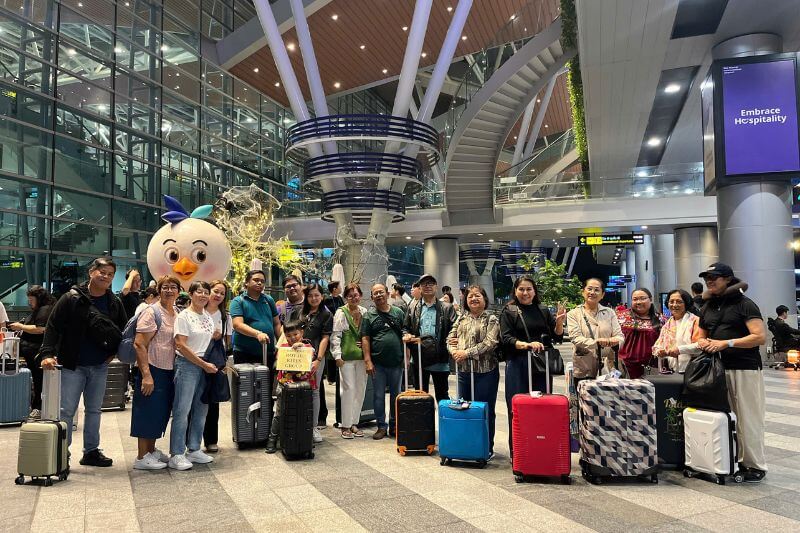
Planning Takeaways
1) Planner context: what the Vietnam multi-city transfer timing matrix solves
2) Build the timing matrix: inputs, outputs, and buffer rules you can embed in product templates
2.1 Matrix inputs: what you must capture (or you will under-buffer)
2.2 Matrix outputs: what the matrix should produce for planners and sales
2.3 Minimum viable buffer rules (2026 planning baseline)
3) Route-by-route matrix guidance (planner-ready, proposal-ready)
3.1 HAN - DAD (connecting onward to Hoi An)
3.2 DAD - SGN
3.3 HAN - SGN direct
3.4 High-use ground sectors (for touring add-ons)
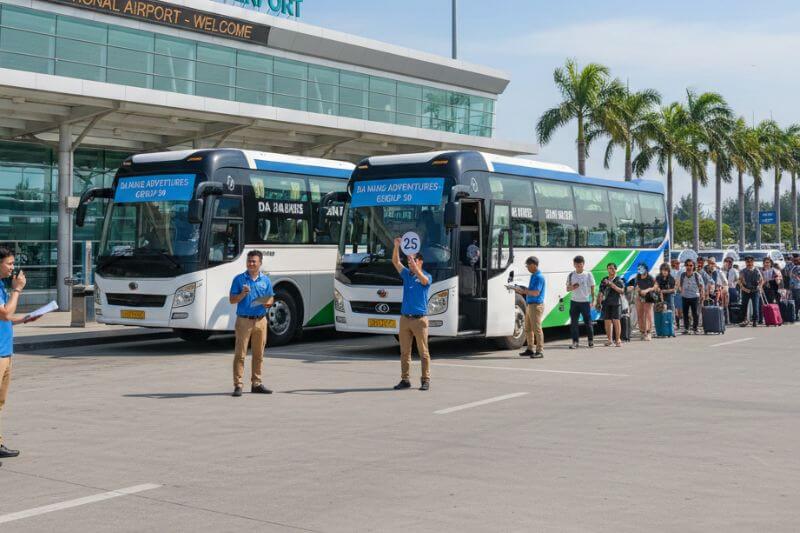
4) Overnight options: triggers that protect the program (and how to explain them to clients)
4.1 Overnight triggers (use as a decision gate in product design)
4.2 How to package overnight stays without inflating your cost base
4.3 Typical overnight positioning points
5) Timing windows that protect the day program (what to move, not what to promise)
5.1 Predictable vs high-variance transfer windows
5.2 Proposal-safe scheduling principle
6) Itinerary packaging skeletons (north - central - south) that align with the timing matrix
6.1 Skeleton A: Hanoi + Ha Long + fly to Da Nang/Hoi An + fly to HCMC
6.2 Skeleton B: Reverse direction (HCMC - central - Hanoi) with early-flight protection
6.3 Skeleton C: Add-on ground touring sectors without breaking flight reliability
7) Operational considerations: SOP flow, capacity planning, and where time is actually lost
7.1 Group transfer SOP (airport arrival)
7.2 Capacity planning you can quote with confidence
7.3 Airport access logistics that affect timing assumptions

8) Risk register and mitigations (client-facing language included)
8.1 Weather and seasonality
8.2 Tet holiday congestion
8.3 Flight delays and overbooking risk during peaks
8.4 Operational disruption: group splits at bottlenecks
9) Technology and data flow for visibility (evaluation-stage requirements)
9.1 What to expect from a Vietnam DMC (data inputs and operational outputs)
9.2 White-label reporting pack (client-ready, brand-protected)
9.3 Multi-timezone communication model (SLA and escalation)

10) Partner success angles you can use in proposals (structure, not hype)
10.1 Case angle structures (operator co-marketing ready)
10.2 Metrics to capture (ROI and operational control)
10.3 White-label protection and role clarity (what your client sees)
11) Tools, checklists, and templates (operator-ready)
11.1 Timing matrix template (field list)
11.2 Pre-departure checklist (reduces cost inaccuracies and operational rework)
11.3 Buffer decision tree (simple rules product managers can apply)
11.4 DMC selection readiness checklist (evaluation-stage)
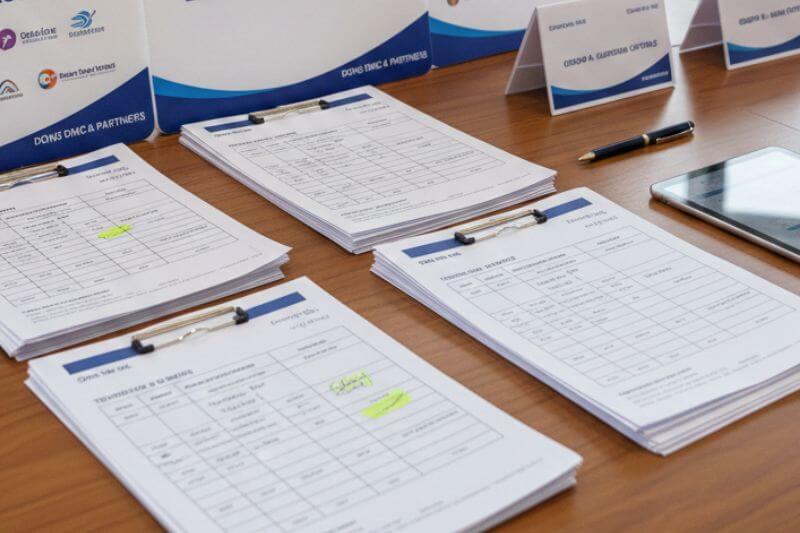
Frequently Asked Questions
Get a Vietnam DMC Quote (12-60 Minutes)