 ID
ID IT
IT DE
DE ZH
ZH ES
ES FR
FR
Halong Bay Series Cruise Ops Guide for Travel Agents
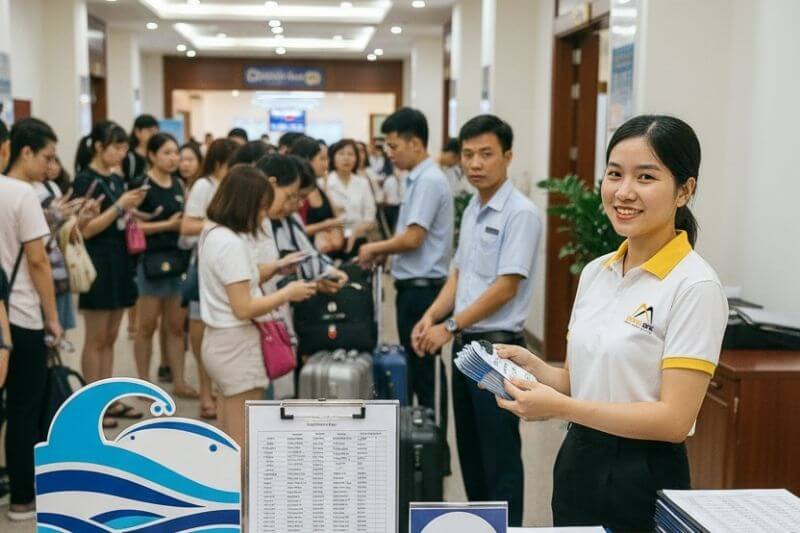
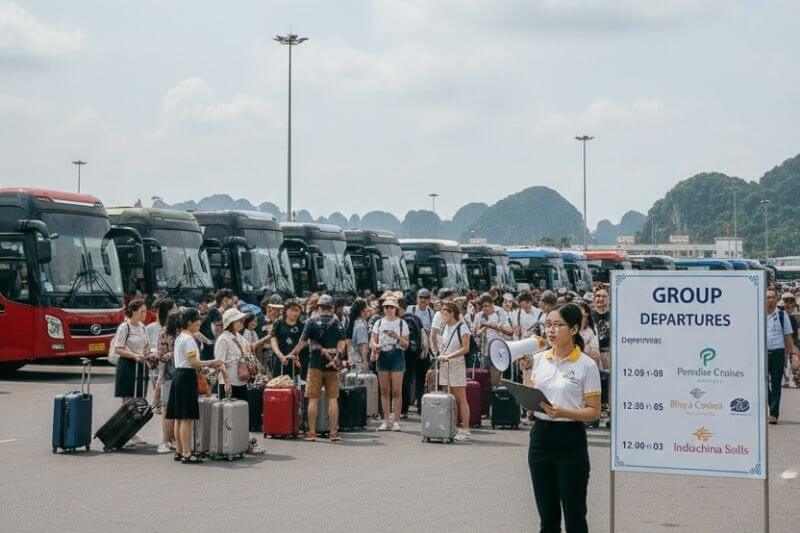
Category: vietnam-dmc-operations-and-planning Keyword focus: Halong Bay cruise group coordination Reading time: 32-40 min Version: 2026 series-ops guidance for travel agents (repeating departures) For series agencies running 20+ departures per year, Halong Bay is rarely the problem on paper. The risk sits in three repeatable failure points: tender boat timing (and pier congestion), cabin allocation stability across departures, and weather cancellation decisions that can change the operating plan on the same day. This guide is written to be forwarded to your client or inserted into a proposal as the operational method statement for a 2D1N Halong Bay component. It focuses on what must be standardized so each departure performs the same: time bands, data deadlines, decision points, refund language, and Plan B modules that protect guest value and your brand. If you also run series routing through Hanoi, align this with your upstream movement and hotel pickup rules. Reference: Hanoi group routing playbook and hotel access and coach logistics playbook. A series program behaves differently from ad-hoc groups or FITs because your success KPI is not one perfect departure - it is consistency across many departures. In Halong Bay, the core causes of variance are predictable: Pier congestion variability Tender boat throughput Cabin inventory fragmentation Weather sail approvals Last-minute passenger data changes Seasonality matters for contracting. Peak season (typically Oct-Apr) runs at high occupancy (often near 90% on stronger operators). In summer and monsoon periods (commonly June-Sep), disruption risk rises. Multiple operator sources consistently cite roughly 8-12 closure days/year due to weather-related sailing suspensions, with higher frequency in June-September and occasional fog-related tender delays. This is not a crisis - but it must be designed into a series product with defined buffers and fallback modules. For repeatability, vessel size is your friend. Halong Bay vessels commonly range from 10 to 56 cabins. For series groups of 10-40 pax, mid-sized 20-40 cabin vessels are typically the easiest to standardize because they balance availability, cabin adjacency, and operational staffing. Very small vessels (10-14 cabins) can deliver strong exclusivity but create higher availability risk for repeat dates. Very large vessels can handle volume but tend to face more complex pier and tender sequencing, especially when multiple buses arrive simultaneously. A practical decision framework for proposal language is: Brand recognition vs operational stability. Halong core routes are easiest to recognize and explain in sales documents. Lan Ha Bay and Bai Tu Long routing can be positioned as a reliability upgrade for summer series because they are less congested and are often cited by operators as having lower cancellation risk (commonly quoted at 20-30% lower disruption likelihood than core Halong routes). The right answer is not always the same bay - it should match your series KPI: on-time departure rate, complaint stability, and disruption handling time. If your client asks why you are recommending a particular bay, a defensible explanation is: routing is selected to reduce tender congestion and weather disruption risk for a repeating series, not to chase novelty. For Halong Bay cruise group coordination, selection should be scored against operational controls. The goal is to reduce the number of moving parts that can change between departures. Use these constraints in your proposal to justify early data deadlines and a structured cabining process. Charter vs partial buyout - rule of thumb for series agencies. If you run consistent 30-40 pax and want stable quality across 20+ departures/year, you generally choose between (a) partial group blocks on a mid-sized vessel with a strong release schedule, or (b) periodic charters on peak weeks to protect inventory. Charters reduce cabin fragmentation risk but introduce stronger commitment terms. Partial blocks are flexible but require tighter cabining discipline to avoid last-minute changes. Bay choice as an operational lever. If your series operates heavily in June-September, consider routing to Lan Ha Bay or Bai Tu Long more frequently and position it as a risk-managed series design (less congestion, fewer simultaneous tenders, and lower disruption likelihood cited by multiple operators). Keep Halong core routing for shoulder and peak months when weather disruption probability is lower. A series blueprint should be expressed in fixed time bands, not exact times. This protects your client expectations when traffic, pier congestion, and sailing approval timing vary. Below is a proposal-ready 2D1N structure that agencies can standardize. Standard time bands (Hanoi - Harbor - Tender - Cruise - Return): Consistency hooks (keep identical across departures). These are elements your team can script and repeat so service feels stable even if the environment changes: Optional upgrades that do not break operations. For incentive or premium buyers, prioritize add-ons that do not require staging, power, or heavy AV (which are limited on most vessels). Typical safe upgrades include a pre-night in Hanoi, a post-night buffer, private transfers, or a small hosted element onboard using basic PA. If a client requests an onboard event, confirm feasibility against vessel power limits and space constraints before selling it as guaranteed. Cabin allocation is where series agencies lose time and consistency. The fix is to treat cabining like airline seating: deadline-driven, rules-based, and controlled through one channel. Cabin plan rules that scale: The 48-hour lock (change-control process). For most operators, reconfirmation 48 hours before boarding is the practical control point. Your internal SOP should state: In proposals, describe this as a quality control method: a locked cabining process prevents day-of boarding disputes and protects guest experience consistency. Tender transfers are standard because many vessels anchor offshore (commonly 1-2 km). For groups, tender is not a detail - it is your critical path. A realistic tender plan prevents missed activities and reduces pier stress. Tender throughput reference (use in planning documents): for a 40 pax group, a typical end-to-end tender transfer can take 30-45 minutes total when managed in 2-3 tender boats and structured waves. Fog and congestion can extend this, so schedule protection is the objective. Best-practice tender sequencing (repeatable SOP): Harbor choice implications (Got Pier vs Tuan Chau). Both are used depending on operator routing and vessel base. For group buses, the operational differences that matter are coach parking capacity, congestion peaks, and how many other vessels check in simultaneously. In series planning, schedule your coach departure to avoid arriving at the same harbor at the same time as multiple series programs. This is one of the easiest ways to stabilize tender start times. A series runbook should assign responsibilities and define control points that are logged every time. This creates measurable consistency and reduces manual follow-up because your team only investigates exceptions. Responsibility matrix (simplified): Step-by-step timeline (proposal-ready control points): Onboard limitations for MICE expectations. Many vessels have basic PA systems, limited AV, and limited power for production. Offshore Wi-Fi is often inconsistent. If your buyer expects presentations, awards, or livestreaming, position the cruise as a hospitality and routing component, and host any technical program in Hanoi or at a land venue before/after the cruise. Reference for land-based setups: Hanoi MICE venues playbook. For client-facing documents, the most important sentence is: sailing is subject to approval by the Halong Bay Management Board. The decision timing can vary by operator communication, but multiple operator sources cite decisions by approximately 3:00 PM (and/or early morning checks around 6:00-8:00 AM) depending on conditions and sailing schedule. This must be described as an authority decision, not an operator choice. What triggers cancellations (simple language for clients): suspensions can occur due to high winds, waves, low visibility, or storm/typhoon proximity. You do not need to present technical thresholds to clients unless requested, but your internal team should expect suspensions to occur with severe weather risk indicators and act early to preserve guest value. Execution scenarios to plan (and to include in proposal terms): Refund and rebooking expectations (standardize in writing). Premium operators often process refunds within 48 hours (confirm per operator and payment channel). Rebooking windows are commonly offered within a defined range (often 3-12 months depending on the operator). In series programs, we recommend adding a clear refund SLA and a rebooking rule in your client-facing conditions to avoid case-by-case negotiation. Operational note for agencies: weather disruption frequency is not evenly distributed across the year. Multiple operator sources cite roughly 8-12 closure days/year, with the higher-risk period typically June-September. In Oct-Apr, cancellation likelihood is materially lower (often cited by operators as under 2% on many dates), making it easier to contract fixed series runs. Series programs need pre-built contingencies that preserve the perceived value of the day and protect margin. The objective is to avoid improvisation, because improvisation is where service consistency breaks across multiple departures. Buffer rules (recommended for series design): Plan B modules (proposal-ready descriptions): Client communication standard (reduce escalations): publish two fixed checkpoints to your clients and stick to them: (1) preliminary update 24-48 hours prior based on weather warnings, and (2) official decision update on the day once authority approval is confirmed. Explain that the final call is authority-led and safety-driven, and that your Plan B protects the day rather than leaving guests waiting at the harbor. In proposals, anchor expectations with a range so the buyer understands why net rates shift across dates and cabin mixes. Retail market references for 2D1N commonly sit around USD 150-400 per person for 4-5 star, depending on vessel and season. Your series net will vary based on allotments, cabin type mix, and private transfer requirements. Common drivers of series net variance: Insurance and liability (client-ready language). We recommend weather-specific travel coverage where possible (some markets reference USD 8-15/day products). For duty of care, clarify that pre-boarding cancellations are authority-led; the operator’s obligations typically sit within the published cancellation terms, while your agency’s value is in fast alternative execution without quality drop. Related operational risk references: Vietnam traffic and protocol risks playbook. Below are execution models that agencies can use as proposal language. They describe methods, not marketing claims. Replace bracketed values with your series parameters. Objective: maintain weekly/monthly departures with stable cabin quality and minimal last-minute re-quotes. Objective: minimize disruption impact when authority sailing suspensions occur. Objective: manage by exceptions, not by chasing every departure manually. If you want examples of how we document and report execution across multi-departure programs, see: partner success stories and (for a series reference format) Indonesia leisure series. Passenger data and deadlines: Cabining and tender documentation: Coach and harbor operations: Template: Weather decision authority Template: What happens if cancellation is confirmed Template: Tender timing expectation For series agencies, consistency improves when performance is scored the same way each departure. Recommended scorecard fields: If you want a structured way to store this per departure and manage by exceptions, see our partner tools: Dong DMC Agent App. Managing 20+ departures/year fails when teams rely on memory, inbox threads, and spreadsheets without exception rules. The objective is not “more data”. The objective is less manual follow-up by letting the system flag only what needs attention. A scalable cadence is: one weekly review that covers only (1) exceptions, (2) KPI trends, and (3) next 7-14 day risk outlook. The result is fewer emails, fewer reactive calls, and better consistency across departures. This operational approach aligns with how we run partner programs: planning beats improvisation, and systems beat heroics. For background on how we structure brand-protected delivery, see: why partners choose Dong DMC. Q: When is the official weather cancellation decision made, and who decides? The final authority is the Halong Bay Management Board. Operators commonly communicate decisions by approximately 3:00 PM (and/or early morning checks around 6:00-8:00 AM), depending on conditions and sailing schedule. For series programs, we recommend publishing two client checkpoints: a 24-48 hour preliminary update and a day-of official confirmation once authority approval is received. Q: How do tenders impact group boarding time for 30-40 pax? Tender transfers are the critical path. For a 40 pax group, plan 30-45 minutes for tender transfer when operated in waves with 2-3 tender boats. Fog and pier congestion can extend this. The mitigation is a tender wave manifest, baggage tagging, and a “last tender” cut-off time communicated by the guide. Q: When can we lock cabin allocations, and what changes are still possible? A practical standard is a 48-hour cabin lock: reconfirm cabin map 48 hours pre-boarding and treat later changes as exceptions that require approval and logging. Changes inside 48 hours can still occur due to operational constraints, but they should be routed through one channel and documented to protect consistency and prevent guest disputes at check-in. Q: What refund and rebooking timelines should we promise clients? Many operators cite 100% refund for pre-departure cancellations due to authority sailing suspensions, and premium operators often target refund processing within 48 hours (confirm per operator and payment method). Rebooking windows are commonly offered within a defined range (often 3-12 months). For series programs, publish a written refund SLA and rebooking rule to avoid case-by-case escalation. Q: Which bay route is most reliable for June-September series departures? For summer series, many operators position Lan Ha Bay and Bai Tu Long routing as operationally more stable due to lower congestion and commonly cited lower disruption likelihood (often referenced as 20-30% lower than core Halong routes). The correct route depends on your series KPI (on-time boarding rate, disruption handling time) and your client’s preference for iconic landmarks vs operational stability. Q: What vessel size is easiest for consistent weekly groups? For repeating 10-40 pax groups, mid-sized vessels in the 20-40 cabin range are typically easiest to standardize because they balance availability, cabin adjacency for group blocks, and tender capacity planning. Very small vessels can be harder to secure repeatedly in peak season, while very large vessels can increase tender sequencing complexity during congested harbor windows. Send us your series dates, group size range, preferred bay routing (Halong / Lan Ha / Bai Tu Long), and your cabining assumptions. We will return a standardized 2D1N operating plan with tender timing bands, a 48-hour cabin lock process, and weather Plan B modules - packaged for client proposals. Fast quotations. Brand-protected operations. Zero missed arrivals. The operational statements above reference publicly available operator explanations of Halong Bay weather cancellations and trade policies, including decision authority and common outcomes for refunds and rebookings. Before contracting a series, verify the following per operator and date range: (1) current Management Board communication process and day-of decision checkpoints, (2) cabin lock commitment and change rules, (3) refund SLA and payment-channel constraints, and (4) tender capacity plan for groups. Selected references used in preparation include operator policy explanations and summaries of weather-related sailing suspensions and procedures: Le Journey Halong Cruise (cancellation policy), Halongbaycruise.vn (what happens if canceled), Halong Bay Lux Cruises (closure frequency and conditions), and Indochina Junk (weather cancellation guidance). Policies are generally consistent across operators but must be confirmed against the specific vessel and season you are selling. If sustainability compliance is required in your RFP, see: sustainable operations. Internal use note for series agencies: If you need a single operational attachment for your client proposal, we can convert this approach into a one-page method statement with: tender wave SOP, cabining lock schedule, and weather Plan B decision tree for Halong Bay cruise group coordination. 
Planning Takeaways
1) Planner context for Halong Bay cruise group coordination (series reality, not FIT reality)
2) Practical planning guidance for repeatable execution
2.1 Series-friendly cruise selection (repeatability beats novelty)
Minimum selection criteria for series (proposal-ready)
Quick capacity and cabining realities
2.2 Standard 2D1N program blueprint (built for replicability)
2.3 Cabin allocation strategy (reduce manual tracking across 50+ departures)
2.4 Tender boat timing (the hidden bottleneck for group punctuality)
3) Operational excellence and risk management (what can go wrong, and how to prevent it)
3.1 Day-of-operations runbook (repeatable SOP for every departure)
3.2 Weather cancellation policies (what series agents must standardize)
3.3 Contingency design for series programs (buffers, swaps, and client communication)
3.4 Cost controls and commercial considerations (what drives variance)
4) Series execution models (client-forwardable examples and measurable proof points)
Model A: Peak-season allotment protection (Oct-Apr)
Model B: Monsoon resilience (June-Sep)
Model C: Operations scalability for 20+ departures/year (reduce manual workload)
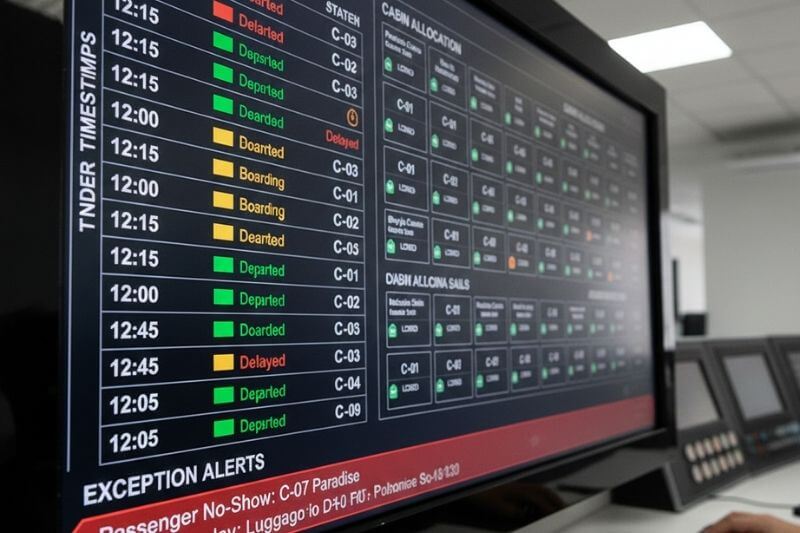
5) Series ops toolkit (templates you can reuse across 50+ departures)
5.1 “Series Departure Pack” checklist (copy into your internal SOP)
5.2 Client-facing communication templates (proposal-ready paragraphs)
“Cruise sailing is subject to approval by the Halong Bay Management Board. In the event that sailing is suspended due to weather or safety conditions, the program will be adjusted using pre-planned alternatives of equal day value. Final approval timing may occur on the day of departure (often communicated by operators around 3:00 PM and/or early morning checks), and the decision is authority-led.”
“If sailing is suspended before the group departs Hanoi, the cruise component will be replaced by the agreed alternative program and cruise costs will be refunded according to operator terms (commonly 100% pre-departure). If suspension occurs after arrival at the harbor, the group will follow the on-site holding and return procedure and the alternative program will be activated to protect the itinerary.”
“Boarding involves tender boat transfers between the pier and the vessel. For groups, guests board in controlled waves to ensure safety and timing. Tender transfer time is planned within a fixed window and may vary depending on pier congestion and conditions; the program includes appropriate buffer to maintain itinerary integrity.”5.3 Vendor scorecard (quality consistency tracking)

6) Technology and automation for series agents (reduce manual tracking burden)
6.1 Minimal data model (what to track per departure)
6.2 Exception-based alerts (recommended thresholds)
6.3 Weekly series review (15 minutes, operations-first)
Frequently Asked Questions (series-focused)
Request Itinerary and Net Rates for Series Departures (2026)
Sources and what to verify before booking (for 2026 departures)