 ID
ID IT
IT DE
DE ZH
ZH ES
ES FR
FR
Vietnam Guide Rotation SOP | Planning, Contracts & Risk
Category: vietnam-dmc-operations-and-planning Keyword: Vietnam group guide rotation SOP Audience: Tour Operators Freshness: Updated for 2026 operations and data workflows Reading time: 32-40 min If you run multi-city Vietnam series, incentives, or VIP delegations, guide continuity is not a “nice-to-have”. It is a controllable variable that directly impacts complaint rate, timing stability, and your brand reputation. Vietnam does not publish one national, public “group guide rotation SOP”. In practice, tour operators and DMCs formalize their own standard within Vietnam’s legal framework (licensed guides + written assignment letters) and competency standards (VTOS Tour Guiding). That gap is where most execution risk appears: last-minute guide changes, inconsistent briefings, and undocumented substitutions that create disputes after the tour. This article provides a Vietnam-specific, proposal-ready Vietnam group guide rotation SOP you can embed into series contracts, operational manuals, and client-facing service level descriptions. It is designed to reduce surprises and protect your brand with auditable documentation and predictable handovers. If you also want the transport side aligned (handover points, coach access, and real-world timing buffers), pair this SOP with our operational playbooks: hotel access and coach logistics, Hanoi routing playbook, and traffic and protocol risks. Reality check Vietnam does not provide a public, unified national SOP for rotating group tour guides. What exists are (1) legal requirements around licensed guides and written duty assignments, and (2) professional competency frameworks such as VTOS Tour Guiding. The operational standard (handover method, briefing consistency, substitution approvals) is set by the operator-DMC partnership, not by a national template. Commercial impact For tour operators selling under their own brand, “guide continuity” is not only a service promise. It is also a cost model. A full-program lead guide can require positioning days, transit days, per diem, and accommodation. If you do not define this upfront, you will see margin leakage or client dissatisfaction (sometimes both). Risk impact The most common post-tour disputes we see in Vietnam are linked to the same root causes: unclear continuity promise, insufficient documentation during substitutions, and inconsistent guest messaging across cities. These issues are preventable with a documented SOP that is (a) compliance-aware and (b) integrated into your tour file and change control. Decision framework (use in internal planning and client proposals) Every program sits inside a four-way tradeoff: Continuity Cost Capacity Compliance Your SOP should state, in writing, where you prioritize continuity (VIP delegation, incentive, technical itinerary) versus where you prioritize capacity and cost (budget series, city-stay with day tours). When partners can see the rules, they can sell confidently and defend decisions to their clients. Market expectation patterns (proposal-ready language) In our experience supporting international tour operators, expectations commonly differ by market segment (this is an operational observation, not a legal standard): EU/UK/USA/AU/NZ (and often Japan/Korea) - higher preference for an escort-style experience (one lead guide across multiple cities), especially for first-time long-haul travelers and premium series. Regional Asia series - typically accept city-by-city guide changes if (a) language coverage is correct, (b) handovers are clean, and (c) timing discipline is strong. How to position this without brand risk: do not promise “same guide always” unless you are contracting it. Promise a defined continuity model with a documented substitution rule set. Peak season capacity reality (Oct-Apr) For 2026 group operations, peak months (Oct-Apr) are still the highest risk window for guide availability, especially for rare languages and multi-province loops. If you have 18+ month planning cycles, the highest ROI action is simple: lock the continuity model early, then lock named guides at a defined gate (T-14 or earlier for premium series). In Vietnam group operations, “rotation” generally refers to one of four execution patterns. Your SOP should define these explicitly because “guided tour” is too vague for operational control. Rotation types you will see Type A - Full-program lead guide continuity: one Vietnam-based lead guide stays with the group throughout, sometimes supported by local step-on specialists. Type B - Regional segmented continuity: one guide per macro-region (e.g., North/Central/South) stays for 3-5 days per block; handovers align with flights and hotel changes. Type C - City-by-city guides: different guide in each city; strict briefing and documentation are mandatory to avoid service variance. Type D - Step-on specialists: a lead guide (or escort) remains primary, with licensed step-on guides for specific sites or specialist content where appropriate. Common triggers for guide changes (build into expectations) In Vietnam, guide changes are often operationally linked to: domestic flight sectors (HAN-DAD-SGN), provincial boundaries and supplier networks, duty-time fatigue on long overland days, rare language scarcity, and last-minute program changes caused by weather or venue reconfirmations. Commercial implications (budgeting levers you can quote) If you contract Type A continuity, your costing usually needs to include one or more of the following: 1) guaranteed paid days on transit/positioning days, 2) accommodation and per diem when outside the guide’s base city, 3) a continuity premium during peak dates or for rare languages, 4) a “named guide” guarantee clause (with an equivalent replacement fallback). This section is designed to be used in proposals and internal product manuals. The goal is to standardize how you select the rotation model, describe it to clients, and cost it with minimal variance. Use this rule set when building brochures and series departures: If continuity is part of the brand promise (premium series, first-time long-haul, VIP, incentive, technical delegation): prioritize Type A or Type B. Price the continuity premium transparently. If the itinerary is flight-led (HAN-DAD-SGN with short stays): Type B is typically the best balance. Handovers occur at natural reset moments. If the product is modular city-stay (3 nights Hanoi + day tours; 3 nights HCMC + day tours): Type C can work, but only if you implement strict briefing scripts and shared logs. If you sell specialist content (heritage interpretation, religion-based groups, CSR programs): consider Type D (step-on specialists) to control content accuracy while keeping operational control centralized. Example applicability (operational guidance, not a consumer itinerary) For a classic multi-city loop (Hanoi - Ninh Binh - Ha Long - Hue - Hoi An - HCMC), Type B segmented continuity typically reduces handover frequency to 2 changes while keeping local knowledge strong. For Sapa/Ha Giang add-ons, continuity risk increases (guide fatigue + road-day length), so plan assistant support or adjust duty blocks. Client-facing service level statement (Type B example) “Guiding is delivered with regional continuity to ensure consistent service standards while optimizing local expertise. Guests are supported by a licensed, [language]-speaking guide in each region (North/Central/South). Each guide receives a standardized briefing pack and handover log to maintain consistent messaging and guest care throughout the program.” Client-facing explanation when a guide change is expected “Guide changes align with flight sectors and hotel transitions to minimize disruption. Handover is conducted via a standardized briefing and the new guide is present before guests exit the coach or enter the terminal, ensuring seamless continuity.” Client-facing protection line for compliance “All guides are licensed and carry written assignments for their tour segments in line with Vietnam’s guiding regulations and VTOS-aligned service standards.” Vietnam does not publish a universal guide-to-pax ratio in law for all scenarios; however, operational norms are consistent across professional DMC delivery and are execution-tested for groups. Recommended guide staffing by group size (day touring) Up to 20-25 pax 1 main guide (per language) is typically sufficient if timing is realistic and the itinerary does not require constant split-flows. 20-29 pax 1 guide + driver is common, with assistant support added when there are flight complications, multiple arrivals, or high VIP density. 30-50 pax 1 guide + 1 assistant guide + driver is recommended for headcounts, luggage control, split movements (e.g., restrooms, photo stops), and on-time departures. Comfort and control cap (proposal-ready) For incentives and tight schedules, many tour operators cap at 40-42 pax on a 45-seater to improve seat rotation, reduce boarding time, and stabilize punctuality. This is a service level choice, not a legal maximum. When you quote guiding in Vietnam, the main cost drivers are not only day rates. They are continuity mechanics. Continuity premium levers 1) Guaranteed days: paying the guide on transit days and low-service days to keep the same person attached to the group. 2) Positioning logistics: flights or long transfers required to keep continuity across regions. 3) Per diem + accommodation: when guides overnight away from base, especially on multi-province loops. 4) Rare language multipliers: Spanish/Italian/German/French can be manageable in major cities but tighten quickly in peaks; “equivalent replacement” must be defined to avoid forced downgrades to English. 5) Peak date scarcity: Oct-Apr increases substitution risk and can require earlier deposits or earlier data lock for named confirmations. How to justify an upgrade to clients (without tourism language) “This program uses a continuity model designed to reduce service variance and maintain consistent guest messaging. It reduces operational risk during flight sectors and multi-province routing, and it provides a single accountable point for timing control and guest care.” If you want guide performance to be predictable, contract the inputs, not the hope. The fields below are what we recommend tour operators include in series contracts, confirmations, or service-level appendices. Required contracting fields for a Vietnam group guide rotation SOP 1) Continuity model: Type A / B / C / D (defined in writing). 2) Guide category and compliance: licensed guide appropriate for foreign groups; license copy available on request; license validity tracked (expiry date stored). 3) Language specification: primary language + acceptable fallback language(s) (if any), with explicit rule for “no downgrade without approval”. 4) Seniority level: senior / standard / junior, with a definition (years guiding, route familiarity, group size comfort). 5) Max pax per guide: define thresholds for assistant guide activation (e.g., 30+ requires assistant; 45+ requires two guides or split coaches). 6) Substitution notice windows: T-14 / T-7 / T-24h rules and who must approve. 7) Named guide clause: either (a) guaranteed named guide, or (b) “equivalent replacement” clause with equivalency criteria. 8) Documentation deliverables: assignment letters per segment, guide log access, and a substitution record for any change. 9) Authority model: define who controls timing and guest messaging when there is a source-market tour escort plus local guides. Named guide vs equivalent replacement (how to avoid credit note disputes) Named guide clause is appropriate when your client purchased continuity as a feature (VIP, incentive, technical). It must include a fallback: if the named guide becomes unavailable due to illness, force majeure, or compliance issue, a replacement of defined equivalency will be used. Equivalent replacement clause is more scalable for series. Define equivalency by: license validity, language, seniority band, route familiarity, and group size experience. This keeps operations stable and reduces argument after the tour. Remedy design (reduce refunds, protect reputation) Instead of defaulting to refunds, define service recovery options in advance. For example: an added assistant guide on a heavy day, a dedicated airport fast-track handler where available, or an upgraded private room for the tour leader for operational control. Documented remedies reduce credit-note friction because expectations were set upfront. Mixed leadership setups (escort vs local guides) If you use a source-market escort plus Vietnam guides, define “who is in charge” operationally: - Escort owns group culture, client relationship, and overall satisfaction signals. - Vietnam lead guide owns timing discipline, local coordination, and compliance alignment with drivers, venues, and authorities. - Step-on guides deliver specialist content only and do not change routing or add stops without approval. Guide changes are not automatically a problem. Unmanaged handovers are. Your itinerary structure can make handovers feel seamless if you attach them to low-friction moments and remove ambiguity about meeting points and authority. Best handover anchors (Vietnam execution reality) Use places where the group naturally pauses and where signage and headcounts can be controlled: - Hotel lobby before departure or at check-in block - Restaurant entrance (pre-arranged seating and coach parking confirmed) - Airport arrival hall (domestic sector) with partner-branded signage - Coach parking zone where boarding is controlled Non-negotiable rule: the new guide must be present before pax disembark or disperse. If the group exits into a public flow first, you have already lost control. Align handovers with “Day 1 reset” moments If you must rotate guides, do it when guests already expect a reset: after a flight sector, after a hotel change, before a welcome dinner, or at the start of a morning departure. Avoid handovers mid-day at an attraction unless it is an emergency. Buffer design (15-30 minutes) that protects both guide and transport duty blocks Build explicit buffers into your tour file at: - airport arrival meets and baggage collection - hotel check-ins (especially for 30+ pax) - intercity traffic and rest stops This is not padding for comfort. It is a control mechanism that reduces late departures, missed meal slots, and fatigue accumulation which increases substitution risk. Most “surprise substitutions” are not caused by bad intent. They are caused by data silos: the operator thinks a guide is confirmed, while the DMC has swapped due to capacity or a compliance issue but the change never reached the right approver. This is solvable with an integration-ready data model and change control. If you want the Vietnam group guide rotation SOP to be enforceable across teams and time zones, standardize these fields in your “single source of truth” (operator system, DMC portal, or shared controlled document): Guide identity and compliance guide_id, full_name, language_primary, language_secondary, license_number, license_category, license_expiry_date, experience_band (senior/standard/junior), city_base Segment assignment (the rotation anchor) segment_id, segment_city, segment_start_datetime, segment_end_datetime, assignment_letter_id, assignment_letter_file_url Operational pairing coach_plate, driver_id, hotel_id, flight_sector, pickup_point_gps, handover_anchor (hotel/airport/restaurant/coach parking) Group context group_size_sold, group_size_loaded, tour_leader_name, vip_flags, mobility_flags, dietary_flags Contact tree and escalation ops_manager_contact, after_hours_duty_contact, hotel_duty_contact, guide_whatsapp, driver_phone Minimum standard: every guide allocation or substitution must create a change log entry: change_id, timestamp, changed_by, change_type (guide swap / timing / flight update), reason_code (illness / capacity / compliance), approved_by_operator, approval_timestamp This is the simplest way to reduce approval disputes across time zones and to keep your commercial team and operations team aligned. Define who can edit which field. For example: - Tour operator account manager: can approve substitutions, can view license status, cannot edit guide roster. - DMC guide coordinator: can allocate guides, can upload assignment letters, can propose substitutions. - After-hours duty manager: can execute emergency swap, must log reason and notify approver within agreed SLA. If you want a reference implementation approach, see our partner tooling overview: Dong DMC Agent App and our partner positioning: why partners choose Dong DMC. A rotation SOP is only useful if it is executable at 22:30 during a delayed arrival or at 05:30 during a split departure. This section is an ops-ready blueprint you can audit against and include in a proposal as your delivery method. Execution blueprint (end-to-end) Pre-tour brief - Day 1 guest briefing script - Daily log - Segment handover - Substitution playbook - Post-tour reporting Transport compliance linkage (why guide duty blocks matter) Guide performance degrades when the itinerary ignores transport constraints. In Vietnam, coach planning commonly works with driving caps (continuous / daily / weekly). If you push driving blocks too hard, you increase late arrivals, compress briefings, and create fatigue that leads to service inconsistency. We recommend aligning guide duty blocks and handover points with your coach plan. For transport planning detail, use: hotel access and coach logistics playbook. 1) Correct licensing and scope For foreign groups, guiding must be delivered by appropriately licensed guides. Using unlicensed or improperly categorized guides can trigger administrative sanctions and creates immediate brand risk if inspected. Operators should require the DMC to verify credentials and store license validity in the tour file. 2) Assignment letters as the rotation anchor Vietnam guiding practice under the Tourism Law framework requires guides to carry a written assignment from the tour program organizer. Operationally, this document becomes your rotation control: each guide change is tied to a specific assignment letter ID and segment scope. Store assignment letters digitally in your portal/tour file for audit readiness. 3) Documentation retention (defense against disputes) Retain: assignment letters, guide daily logs, substitution records, incident notes, and operator approvals. This package is what allows you to defend “service delivered as contracted” when there is a complaint or inspection. Consistency is not personality-based. It is system-based. Use two layers of briefings, supported by checklists, aligned to VTOS and practical tour management standards. Layer A: Pre-tour briefing (guide to DMC/operator), 24-48 hours before first service Minimum reconfirmations and deliverables: - Latest itinerary version + timing grid (including buffers and handover anchors) - Guest manifest + rooming list (latest) - VIP list, mobility needs, dietary requirements, medical flags (if shared) - Contact tree and escalation roles (including after-hours duty) - Assignment letter for the segment + confirmation of valid license - Known risks: weather sensitivities, protocol events, restricted parking, venue rules Layer B: On-tour guest briefing (arrival/Day 1), scripted and standardized This should be uniform across cities and guides: - Introductions (guide, driver, assistant, tour leader roles) - Itinerary overview and any approved changes - Timing rules: departure times, stop durations, meeting point discipline - Safety and local etiquette (temples, road crossing, public conduct) based on official guidance where applicable - How to contact the guide and what to do if separated Distribution method (how you operationalize consistency) Provide the briefing assets as templates: white-label PDF, mobile-friendly checklist, and a “Day 1 script” in the partner portal. Require guide sign-off that the briefing was delivered (timestamped) and store it with the daily log. Objective: the passenger experience remains stable even when the guide changes. Standard segment handover process Step 1 - T-24h internal check Confirm the next-city guide and assistant(s). Push the latest itinerary, manifest, and incident notes to the next guide. Issue or verify the correct assignment letter for that segment (ID recorded in the Ops Sheet). Step 2 - End of last day with current guide Current guide completes a daily log including timing variances, guest notes (VIP and sensitive items), and any service recovery already initiated. Tour leader is briefed on next-day meeting point and who the next guide is. Step 3 - Guide-to-guide handover Structured call agenda (15-20 minutes, logged): group dynamics, risk flags, repeated messages needed (punctuality, safety), approved deviations from printed itinerary, and any supplier issues that might reoccur. Step 4 - First-contact protocol New guide meets at the defined anchor. The guide introduces themselves, confirms next steps and timing, and references prior segment context to signal continuity of care. Operationally: new guide is in place before pax disembark or disperse. Step 5 - Documentation closure File the handover log, assignment letter, and any approvals into the tour record. This is your audit trail for both compliance and client care. Your substitution rules should be explicit because substitutions are inevitable in long planning horizons. The goal is to control them, document them, and keep messaging consistent. Planned substitution (T-7 to T-3 window) Use this for foreseeable conflicts (leave, schedule collisions, operational optimization): - DMC proposes a replacement guide that matches the equivalency criteria (license validity, language, seniority band, route familiarity). - Operator approval threshold is triggered if it is a named guide program, a VIP group, or a language downgrade risk. - Provide replacement profile and a confirmation note that briefings and handover logs will be executed as per SOP. Emergency substitution (illness, incident, compliance issue) Immediate actions Guide informs DMC duty channel without delay. DMC triggers escalation: duty manager + guide coordinator + client service. Continuity rule If safe, complete the current movement and swap at the hotel. If not safe, place the group in a controlled safe-hold location (hotel lobby, venue lounge, cafe) while a licensed replacement is dispatched. Dispatch requirement Replacement guide arrives with the correct assignment letter for the segment. Operator/tour leader receives ETA and interim plan. Service recovery memo Document time, reason, actions taken, and any guest impact. Provide a recovery action recommendation (added assistant on next heavy day, adjusted pacing, dedicated meet-and-greet support) rather than defaulting to refunds. Common failure modes (and mitigations) - Rare-language shortfalls in peak season: mitigate with early locks and a tiered roster (A/B backup). - Authority conflicts with source-market escort: mitigate with a written authority model and escalation path. - Unapproved deviations (extra stops/shopping): mitigate with scripted briefings, daily log review, and “no deviation without ops approval” rule. These are not “inspiration” stories. They are operational case structures tour operators can reference to explain delivery method, staffing logic, and risk controls to clients. For execution examples, see partner success stories. Case concept 1: Incentive, 120 pax, split movements + late arrivals - Staffing: lead guide continuity + assistant guides per coach, dedicated arrival handlers - Rotation logic: one lead guide holds messaging; assistants manage split flows - Measurable outcomes to report: reduced waiting time at arrivals, improved on-time departures, fewer “where is my group” incidents Reference format for case framing: staffing plan, timing grid, escalation tree, and post-tour report pack. Case concept 2: Multi-city leisure series across 3 regions (North/Central/South) - Continuity model: Type B segmented continuity - Controls: scripted Day 1 briefings + daily logs + handover calls - Measurable outcomes: consistent guide ratings across cities, stable departure punctuality, reduced complaint variance by segment Example case link structure: Indonesia leisure series (execution methodology reference). Case concept 3: Rare language in peak season with “named guide” requirement - Commercial approach: continuity premium justified by guaranteed senior guide + backup roster - Controls: early data lock + substitution equivalency rules + operator approval gates - Risk avoided: no last-minute downgrade to English; client satisfaction protected because expectation was contracted and delivered White-label enablement (what you can show your client) - Operator-branded briefing sheets (Day 1 script and timing rules) - Guide allocation visibility (who, where, when, assignment letter ID) - Post-tour reporting pack: incidents, recoveries, guide performance notes, substitution log (if any) If you standardize the Vietnam group guide rotation SOP and integrate it into your data workflow, you can measure operational ROI beyond “guest happiness”. These metrics also help procurement and product teams justify continuity premiums when needed. Recommended KPIs (program-level and series-level) - Substitution rate: % of groups with any guide substitution; track planned vs emergency. - On-time departure adherence: departures within agreed tolerance (e.g., +5 minutes) by city/segment. - Incident resolution time: from incident logged to containment action completed. - Complaint volume by segment: identify whether issues correlate with handover moments. - Guide rating consistency: variance across cities; a low variance indicates SOP consistency. Efficiency metrics (technology and workflow) - Fewer email loops: measure number of messages to confirm guide names and changes. - Faster reconfirmations across time zones: average time to approve substitutions. - Reduced credit notes: track disputes related to guide changes before and after SOP adoption. If your organization needs auditability, ensure the metrics are traceable to your change logs and assignment letter IDs. This section is intentionally templated so your product and operations teams can paste it into series agreements, briefing packs, and supplier SOP appendices. Clause A: Continuity model (select one) “This program is contracted under continuity model Type [A/B/C/D]. Guide changes, where applicable, will occur only at defined handover anchors and will be executed using standardized handover briefings and documentation.” Clause B: Staffing ratios “Guiding staffing is planned as follows: up to 25 pax - 1 guide; 30-50 pax - 1 guide + 1 assistant guide. Assistant guide activation is mandatory above [X] pax or when split flows are required at arrivals/departures.” Clause C: Documentation deliverables “For each segment, the DMC will provide and retain: guide license verification, assignment letter ID, daily guide log, and substitution record (if any). Documentation will be available for audit or dispute resolution.” Clause D: Substitution notice and approval “Planned substitutions must be communicated by T-7 to T-3 days where possible. Emergency substitutions may occur within 24 hours due to illness, incident, or compliance issues. Named guide programs require operator approval for any substitution; series programs allow equivalent replacement within the defined equivalency criteria.” Clause E: Remedy framework “Where a contracted seniority level cannot be met due to emergency substitution, service recovery may be delivered via agreed alternatives (e.g., added assistant guide on heavy days) rather than automatic refunds, subject to operator approval.” Use these gates for multi-city groups and series: T-6 weeks confirm continuity model feasibility, language capacity, and high-level roster hold for peaks. T-2 weeks reconfirm guide allocations and assistant thresholds; align with coach and hotel reconfirmations. T-14 days lock named guide (if contracted) and issue segment assignment letter IDs. T-7 days finalize flight details, rooming list version, VIP flags; confirm handover anchors. T-24 hours final ops check: contacts, signage text, timing grid, and contingency notes; run handover call agenda where applicable. Provide each guide (and assistant) a pack containing: - assignment letter (by segment) + ID - license verification copy - guest manifest + rooming list (latest version) - timing grid with buffers and handover anchors - contact tree + after-hours escalation channel - contingency notes (weather-sensitive items, alternative venues) - briefing scripts/checklists (pre-tour and Day 1) To reduce data silos, ensure the following are accessible in one place: - guide credentials and license expiry - segment assignments + assignment letter files - change logs with approvals - emergency contacts + duty manager channel - attachment repository (briefing PDFs, manifests) Q: Can we guarantee the same guide throughout Vietnam? Yes, if you contract a Type A continuity model and budget for positioning/transit days, per diem, and peak-date scarcity. For series products, Type B (regional continuity) is often the best balance. If you require a “named guide” guarantee, include an “equivalent replacement” fallback with explicit equivalency criteria and an approval gate for any changes. Q: What documentation proves guide compliance during rotations? At minimum: valid guide license verification, a written assignment letter for the relevant segment (stored with an assignment letter ID), and a substitution record if any change occurred. For audit readiness and dispute protection, keep daily logs and change log approvals in your tour file. Q: What happens if the guide is sick mid-tour? An emergency substitution SOP should activate: immediate escalation to duty manager, group placed in a controlled safe-hold location if needed, dispatch of the nearest licensed replacement guide with the correct assignment letter, and a service recovery memo documenting the event and mitigation. The operational target is continuity of care with minimal guest uncertainty, not improvisation. Q: How do you keep guide messaging consistent across cities if guides rotate? By enforcing a two-layer briefing SOP (pre-tour pack + scripted Day 1 guest briefing), requiring daily logs, and using a structured guide-to-guide handover agenda. Consistency is also strengthened when the operator has visibility via portal fields and change logs, not only via email updates. Q: How early should we lock guides for 2026 peak departures (Oct-Apr)? For multi-city groups and rare languages, plan to decide the continuity model at contracting stage, then target named confirmations by T-14 (or earlier for incentives and VIPs). Use reconfirmation gates at T-6 weeks and T-2 weeks to reduce substitution probability during peak scarcity. For routing and day-by-day timing control that reduces handover friction, use: Hanoi group routing playbook and Vietnam traffic and protocol risk playbook. VTOS Tour Guiding (2013, English PDF): competency and conduct standards widely used in Vietnam guide training and service design. Reference. Vietnam tour company and guiding regulation summaries: guidance on licensing, assignment requirements, and sanctions for improper guiding. Reference. Briefing and tour conduct training reference: Swisscontact participant guide modules used as practical operational training inputs (briefing structure, guest communication content). Reference. Operational alignment references (Dong DMC): transport and arrival handling constraints that guide rotations should align with: hotel access and coach logistics and traffic and protocol risks. Note for 2026 planning: Vietnam regulations and enforcement practices can change. Tour operators should request up-to-date licensing verification processes and document retention practices from the appointed DMC at contracting stage. If you want this SOP packaged into your program file, send us your draft itinerary structure (cities + dates), group size, language, and your preferred continuity model (Type A/B/C/D). We will return a rotation-ready quote with staffing ratios, reconfirmation gates, and substitution rules aligned to your brand promise. Fast quotations. Brand-protected operations. Zero missed arrivals. For teams building multiple departures, we can also provide a one-page “Guide Rotation Clause Pack” and an integration field checklist aligned to your portal/API workflow. 
Planning Takeaways
1) Planner context for a Vietnam group guide rotation SOP (why you must codify it)
1.1 What “rotation” actually means in Vietnam programs
2) Practical planning guidance (choose a model, cost it, and sell it safely)
2.1 “Choose your model” tool for common Vietnam itineraries
2.2 White-label wording you can paste into proposals
2.3 Staffing ratios and control points (group norms used by DMCs)
2.4 Costing levers (how to budget continuity without margin surprises)
2.1 Contracting and product design: what to specify up front (proposal and SLA ready)
2.2 Itinerary design tips to reduce perceived disruption during rotations

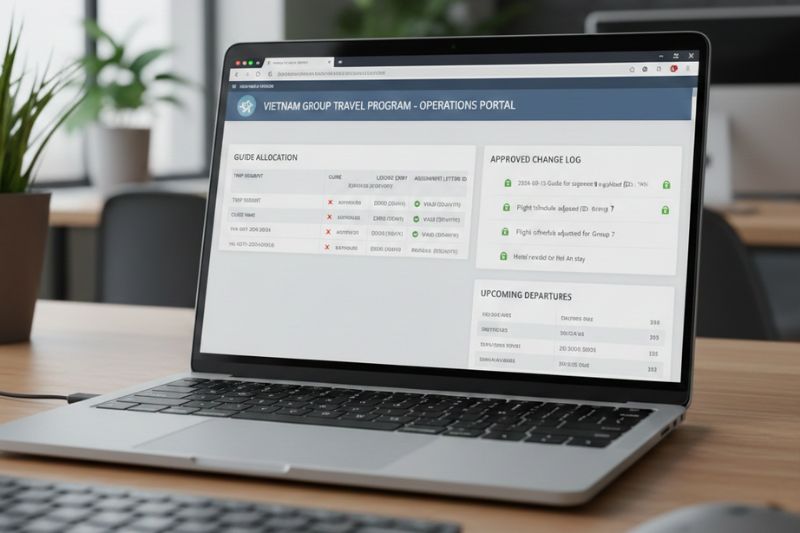
2.3 Data and integration requirements (reduce visibility gaps and approvals risk)
2.3.1 Recommended Ops Sheet data model (portal/API-ready)
2.3.2 Version control and change logs (the part that prevents “I didn’t approve this”)
2.3.3 Multi-user permissions (avoid accidental edits)
3) Operational excellence and risk management (how to run it smoothly on the ground)
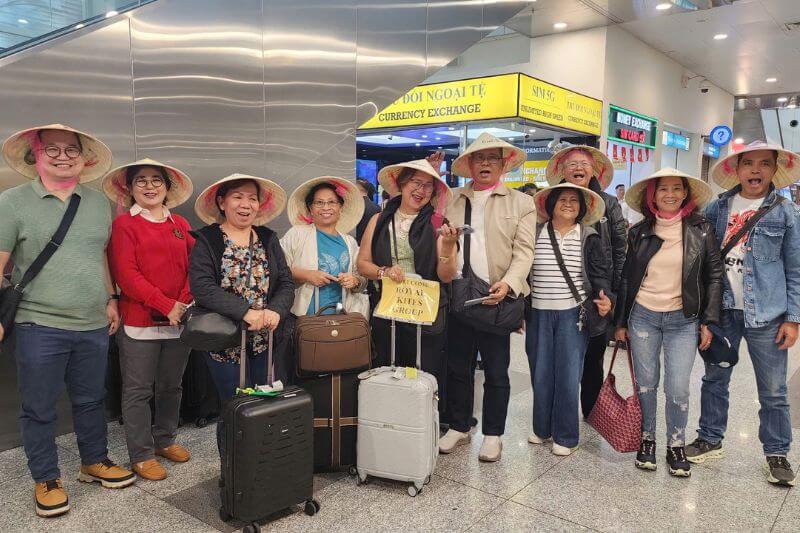
3.1 Compliance essentials (must be true for every guide on every segment)
3.2 Briefing protocols that keep service consistent across different guides
3.3 Rotation handover SOP (step-by-step, ops-ready)
3.4 Substitution procedures (planned and emergency)
4) Partner success framing (case study ideas you can use in proposals)
4.1 Metrics tour operators can use to prove ROI internally (SOP-driven efficiency)
5) Tools and checklists you can drop into your ops manual (copy-ready)
5.1 Guide Rotation Clause Pack (contract insert)
5.2 Reconfirmation timeline template (aligned to transport and hotels)
5.3 Standard guide pack checklist (digital-first)
5.4 Portal/API field checklist (integration-ready)
Frequently Asked Questions

Sources and compliance references (for proposal appendices)
Get a Vietnam DMC Quote (12-60 Minutes)