A planning note for travel professionals weighing two questions: why add Mui Ne to a Vietnam programme at all — and if you do, why place your clients at Pandanus Resort?
Every property note should leave a planner able to defend the decision in front of a client. So rather than describing the resort, this note is organised around the two answers you will actually need: the case for the destination, and the case for this property within it — plus where the case does not hold, and what to verify before contracting.
The case in brief
Why add Mui Ne to the programme:
- It is reachable from Ho Chi Minh City by road in 3–4 hours — beach time without adding a domestic flight, which matters most for short regional programmes.
- It is dry from November to April, so it stays usable through November–December, the end of Central Vietnam's wettest period (roughly October to December) — it fills the calendar gap in a Vietnam beach product.
- The red and white sand dunes and Fairy Stream look like nowhere else in Vietnam — the itinerary photographs differently from the standard HCMC–Nha Trang–Da Nang circuit your competitors sell.
- A slower final chapter after city touring measurably improves how clients remember the whole trip — the extension lifts the review of the entire programme, not just the beach days.
Why place your clients at Pandanus:
- 174 Superior rooms — series consistency and large single-group blocks that Mui Ne's five-star properties (roughly 90–130 keys) cannot hold.
- A whole incentive under one roof — meeting, gala, team-building, dinner and accommodation on one 10-hectare property, with no venue transfers.
- Room tiers from Superior to beachfront bungalow — differentiate VIPs, winners and couples without splitting the group across two hotels.
- All-inclusive options that remove on-site spending friction for incentive and premium-leisure clients.
- A predominantly European clientele today — service, breakfast and F&B standards already calibrated to long-haul leisure expectations.
- Upper-midscale pricing with five-star-scale grounds — the budget stays mid-premium while the property still feels like a destination.
The rest of this note is the evidence behind those bullets — and the honest limits of the case.
- Location
- Mui Ne, Binh Thuan — 3–4 h by expressway from Ho Chi Minh City (resort figure; see routing note)
- Tier
- Large upper-midscale garden resort; sits below the small five-star properties on the strip and above the guesthouse-style stock
- Inventory
- 257 rooms across 7 categories, 30–83 sqm; 48 beachfront bungalows
- Grounds
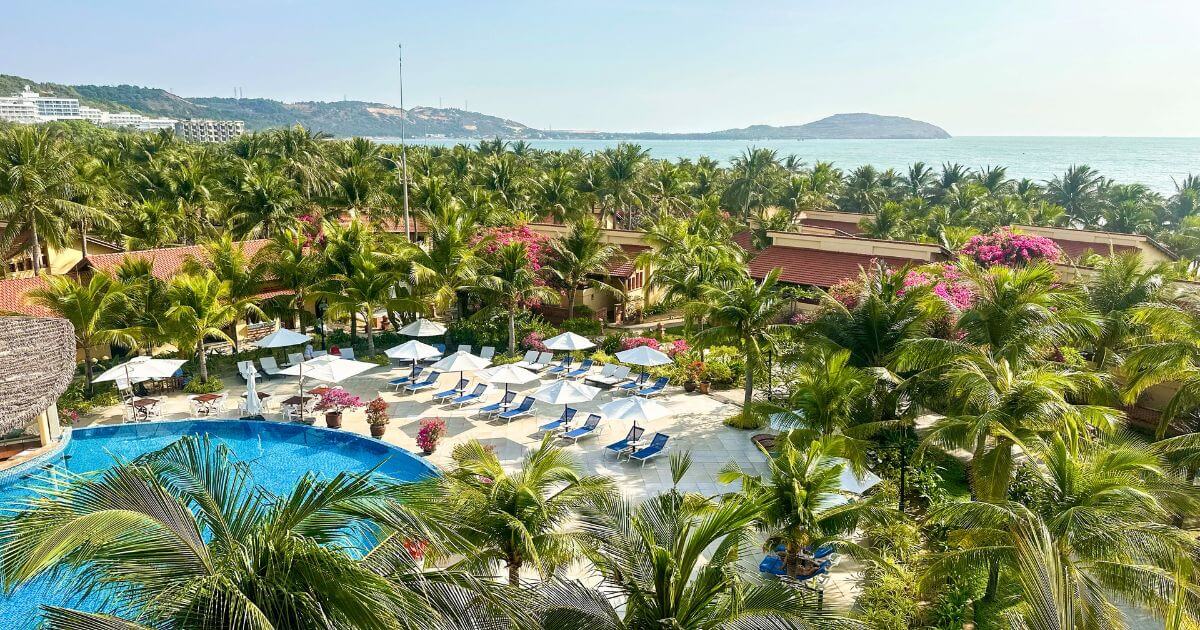
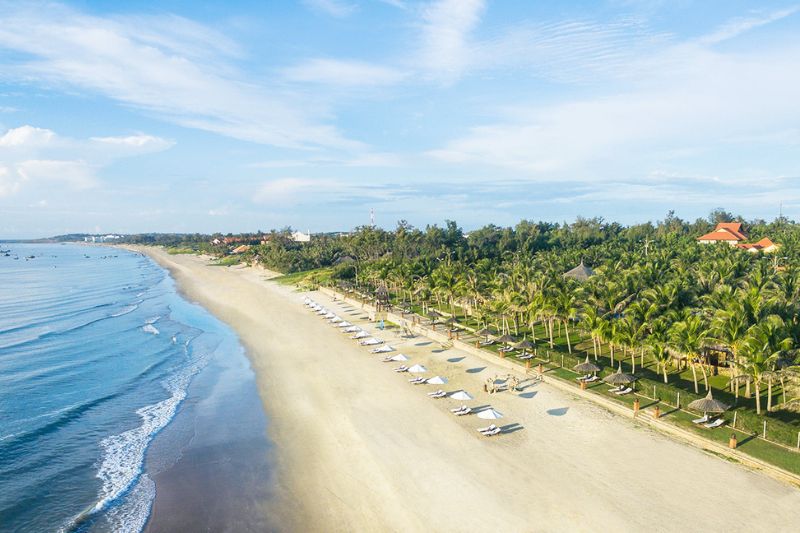
- 10+ hectares, 300 m beachfront, two pools
- Events
- Champa Centre 650+ sqm, up to 500 pax (theatre); three breakout rooms 10–40 pax; outdoor function space
- Board options
- Room-only, Standard All-Inclusive, Premium All-Inclusive (3-night minimum)
- Best fit
- 2–3 night beach extension after HCMC; leisure series; families; couples; contained incentives up to ~250 pax banquet
- Weaker fit
- One-night stays; urban/nightlife-led clients; sightseeing-heavy groups on all-inclusive; groups that require a five-star brand name
Why add Mui Ne at all? Because it is the beach that needs no flight
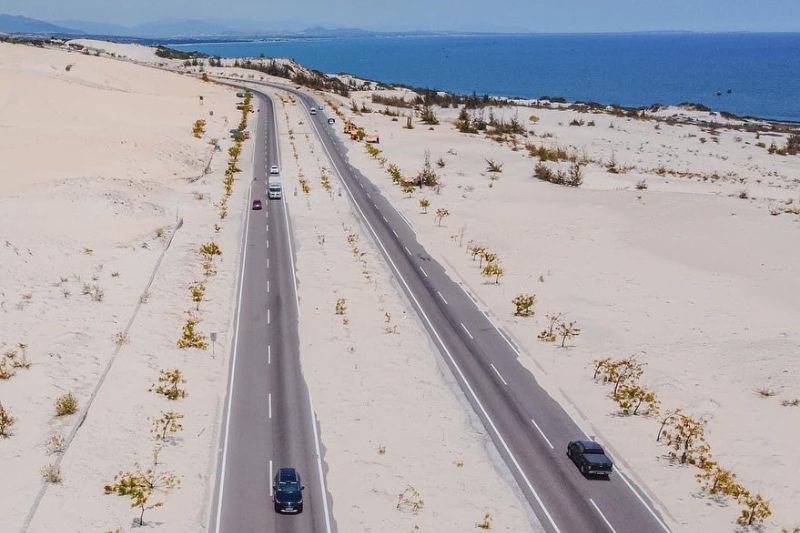
Most Vietnam programmes that want beach time pay for it with a domestic flight — HCMC to Nha Trang, Da Nang or Phu Quoc. That flight costs money, half a day of programme time, and one more airport experience your clients will remember if it goes wrong. Mui Ne is the exception: a realistic 2–3 night extension from Ho Chi Minh City by road. Pandanus places the drive from central HCMC or Tan Son Nhat at approximately 3–4 hours via the Dau Giay–Phan Thiet expressway. That figure holds for a private car or minivan on a weekday. Our operational adjustments:
- Coach groups: plan 4–4.5 hours door to door including one comfort stop. A 45-seat coach does not keep car timing on the expressway exit and coastal road.
- Weekends and Vietnamese public holidays: add up to one hour on the HCMC–Dau Giay section. Friday-afternoon departures are the worst case.
- Rail option: the Saigon–Phan Thiet train gives FIT and small groups a no-coach alternative; road transfer from Phan Thiet station to Mui Ne is roughly 30–40 minutes.
The routing that suits regional source markets most is Ho Chi Minh City → Mui Ne → Ho Chi Minh City: city touring first, then a slower beach environment, with no additional domestic flight. Mui Ne is also not a dead end. Two onward routings are workable for longer programmes:
- Mui Ne → Da Lat (approximately 4 hours by road) — beach into highlands, then fly out of Lien Khuong.
- Mui Ne → Nha Trang (approximately 5 hours by road, or road to Phan Thiet and rail) — a coastal chain ending at Cam Ranh airport.
From the resort, the Red Sand Dunes are approximately 0.5 km, Mui Ne market 2 km, Fairy Stream 5 km, and the White Sand Dunes around 25 km. That gives a workable balance: destination activities outside, meaningful resort time inside — and the dunes give the itinerary a visual signature no other Vietnam beach destination has.
Seasonality: Mui Ne fills the gap in your Vietnam beach calendar
Mui Ne is one of the driest coastal destinations in Vietnam — and that is a commercial argument, not just a weather note. From roughly October to December, Central Vietnam's beaches (Da Nang, Hoi An) are at their wettest, which is exactly when many source markets travel. A programme that needs reliable beach weather in those months has few road-accessible answers; Mui Ne is one of them. The factor to plan around here is wind, not rain.
- November–April (dry season): reliable sun, but afternoon onshore wind is strong, particularly December–March. This is the kite-surfing draw and it also means beachfront dinners, outdoor galas and beach team-building should be scheduled with wind in mind — morning or sheltered garden venues rather than open-beach evening setups.
- May–October: lower wind, warmer sea, short showers rather than washout days. Good for swimming-led family programmes; carry a wet-weather alternative for any outdoor function.
For an incentive planner the practical consequence is simple: confirm the outdoor venue against the travel dates, not against the brochure photograph.
Why Pandanus: a resort with enough scale for groups, without feeling like a city hotel
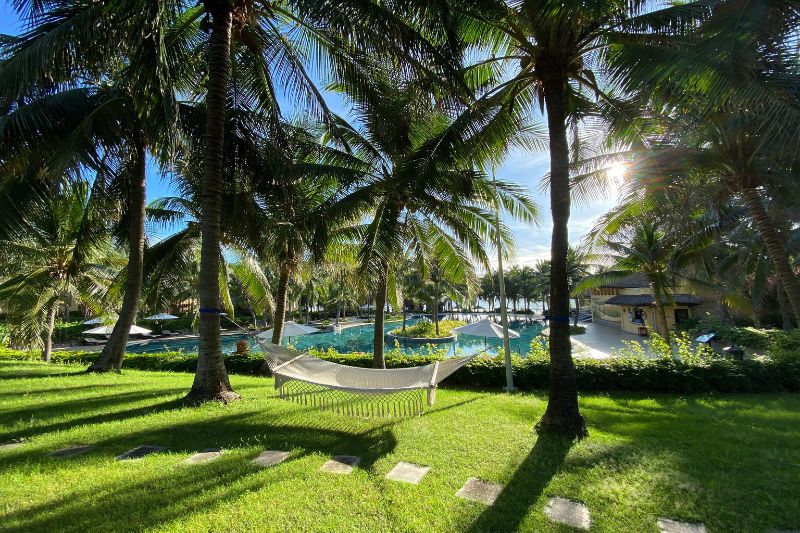
Pandanus spreads over more than 10 hectares of tropical gardens and coconut palms with Cham-inspired architectural details, a 300-metre beachfront and two large pools. Rather than concentrating everything in one high-rise, the resort is distributed through landscaped grounds — relevant when the hotel is expected to carry part of the experience rather than only provide the bed.
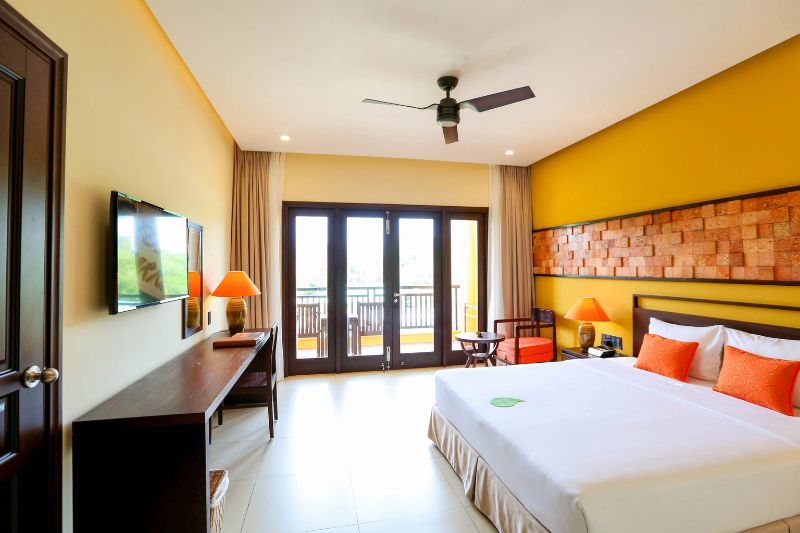
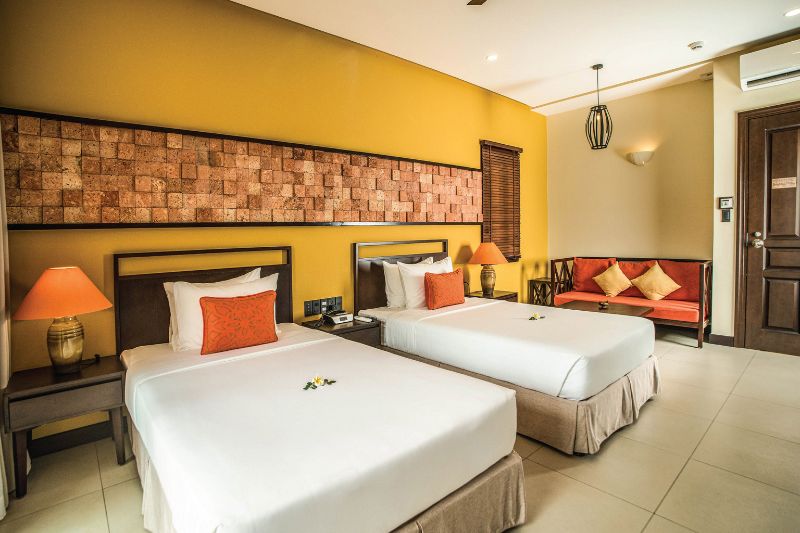
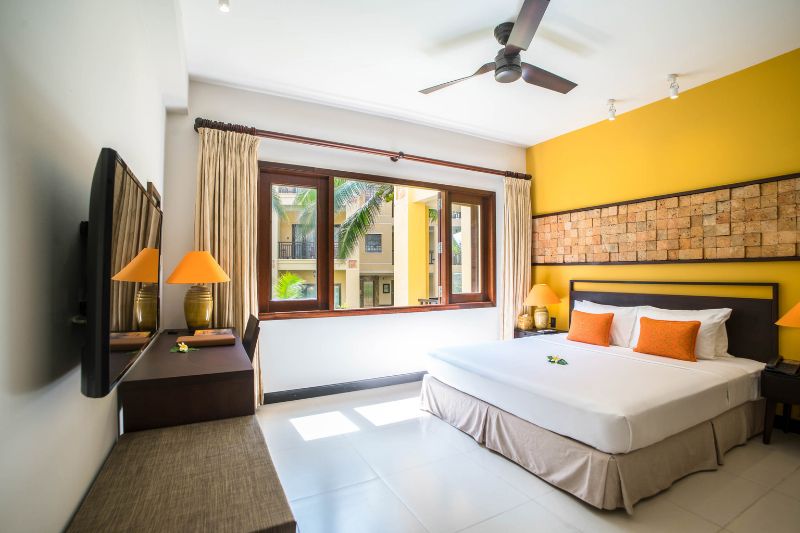
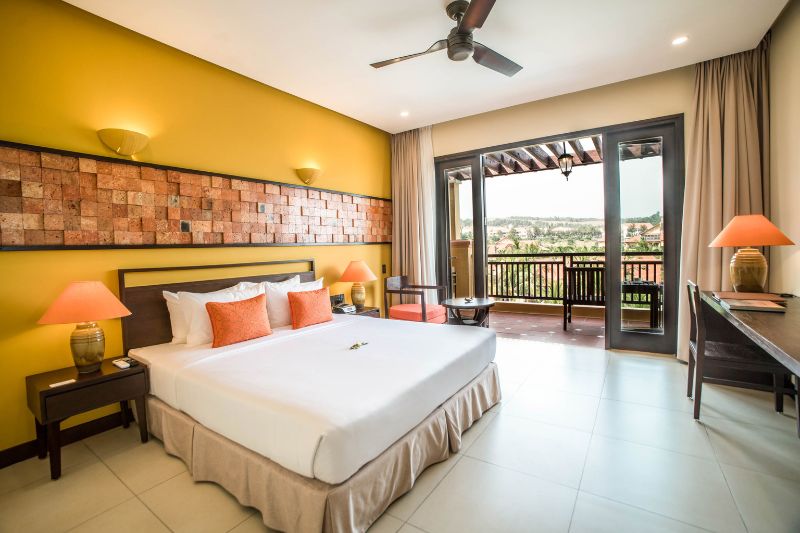
The room inventory is broad and, for group planners, the Superior categories are the ones that matter for series consistency:
| Category |
Rooms |
Planning use |
| Superior Standard |
72 |
Core block for series and larger movements (174 rooms combined) |
| Superior Deluxe |
80 |
| Superior Comfort |
22 |
| Family Suites |
12 |
Family and three-generation bookings |
| Executive Suites |
11 |
VIP and executive-tier upgrades |
| Signature Suites |
12 |
Top-tier incentive winners, couples |
| Bungalows (53 sqm, beachfront zone) |
48 |
Couples, VIP, differentiated tier within one incentive group; private outdoor bathing |
Room sizes run from approximately 30 sqm to 83 sqm by category. The 174 Superior rooms are the number that decides whether a group series can be accommodated consistently; the bungalows and suites are what let a planner differentiate accommodation inside one movement without moving the group to a second property. That single fact — one property, seven tiers — is why Pandanus answers briefs that would otherwise force a two-hotel split.
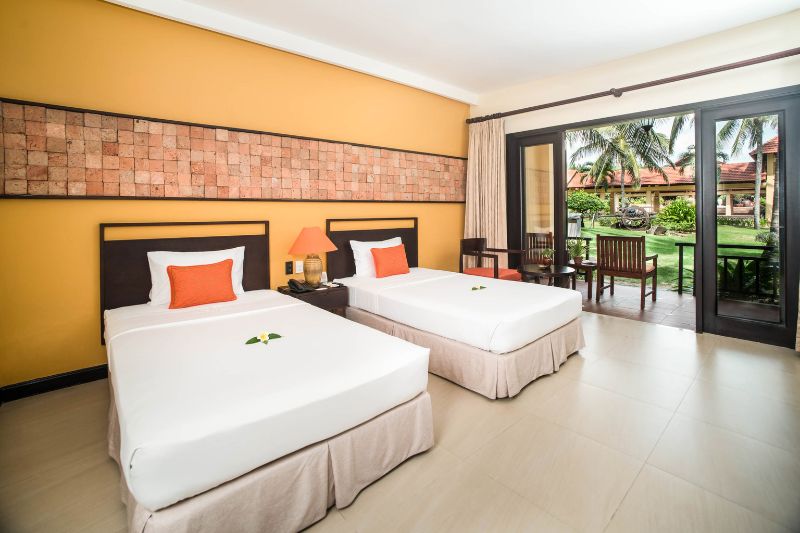
Superior Standard
Superior Deluxe
Superior Comfort
Family Suite
Executive Suite
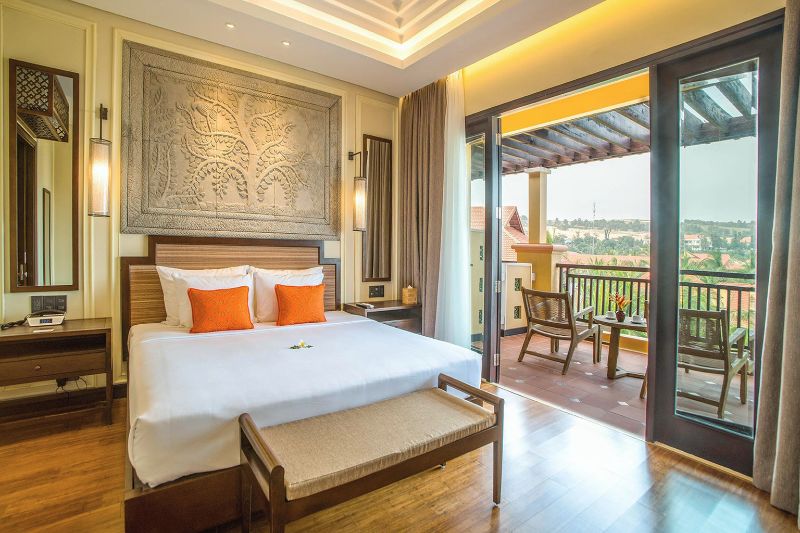
Signature Suite
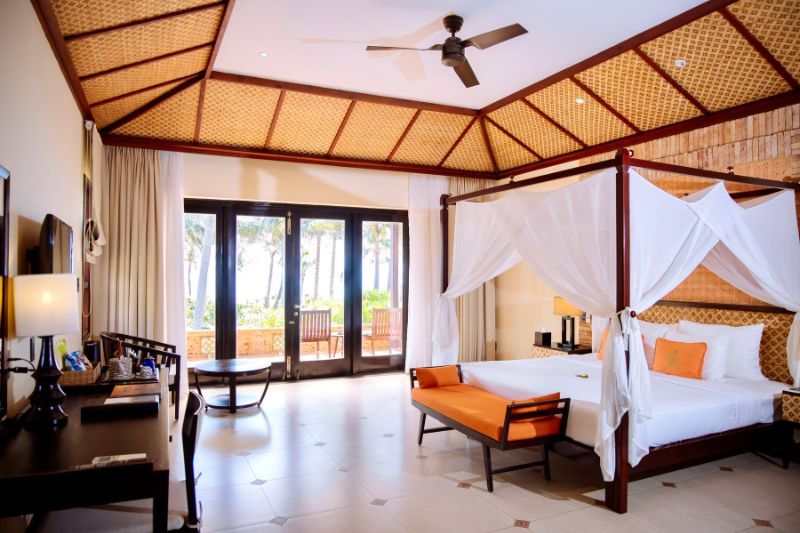
Beachfront Bungalow
The programme does not have to leave the resort every day
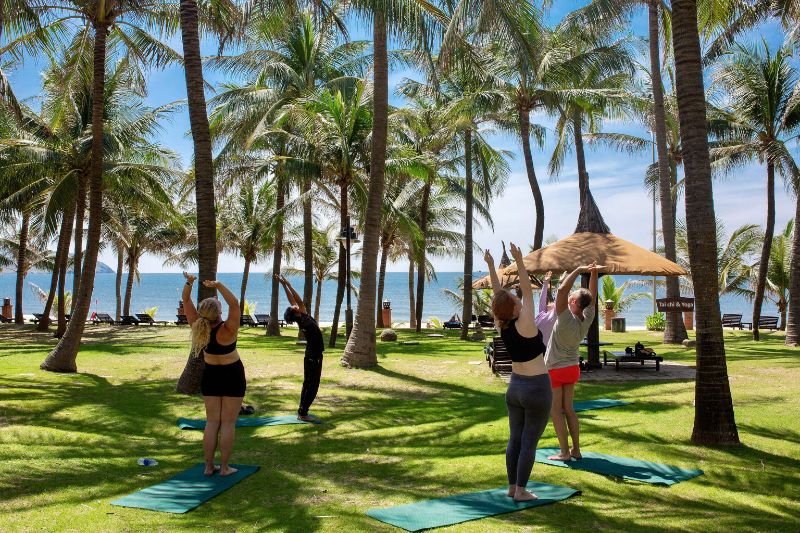
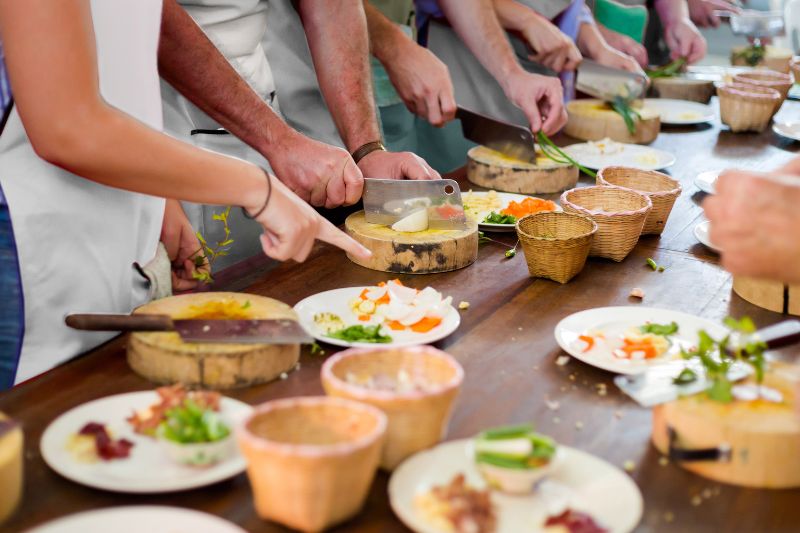
A common planning error with beach extensions is over-filling the itinerary: clients arrive at a resort and are put straight back on a coach for another full day of touring. Pandanus has enough on-property programming to make a lighter structure possible — Mui Ne walking tours, bicycles, yoga, tai chi, cooking classes, tennis, pickleball, volleyball, football, billiards, scheduled shuttles and guided tours on request.
A three-night stay does not require three days of external sightseeing:
- Day 1: Ho Chi Minh City → Mui Ne (morning departure to arrive for a late lunch) → resort afternoon
- Day 2: Sand dunes and Fairy Stream (early morning for light and temperature) → resort afternoon and evening
- Day 3: free time, spa, beach, resort activities
- Day 4: onward transfer to HCMC, Da Lat or Nha Trang
For incentive, family and premium leisure segments that breathing room is usually worth more than one additional attraction.
Food and beverage as part of the programme
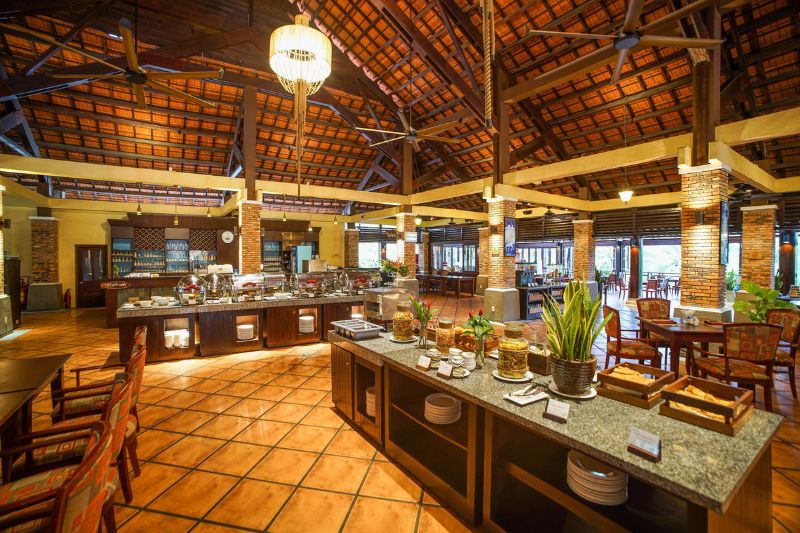
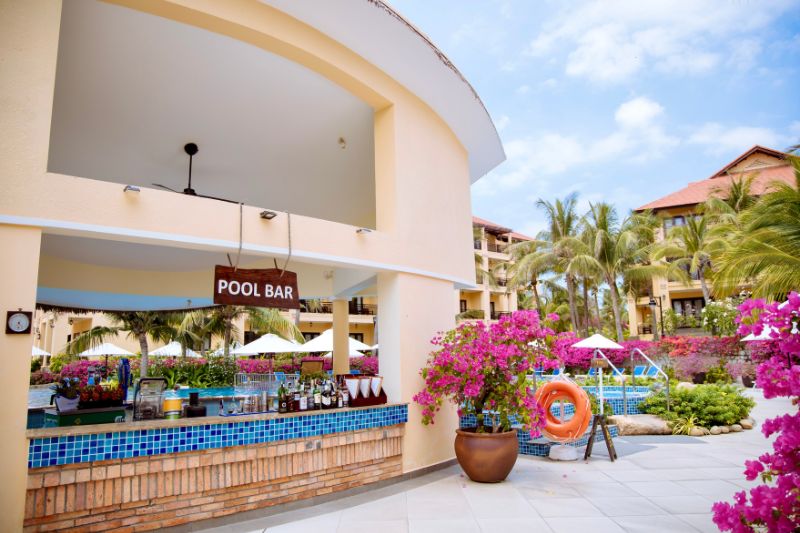
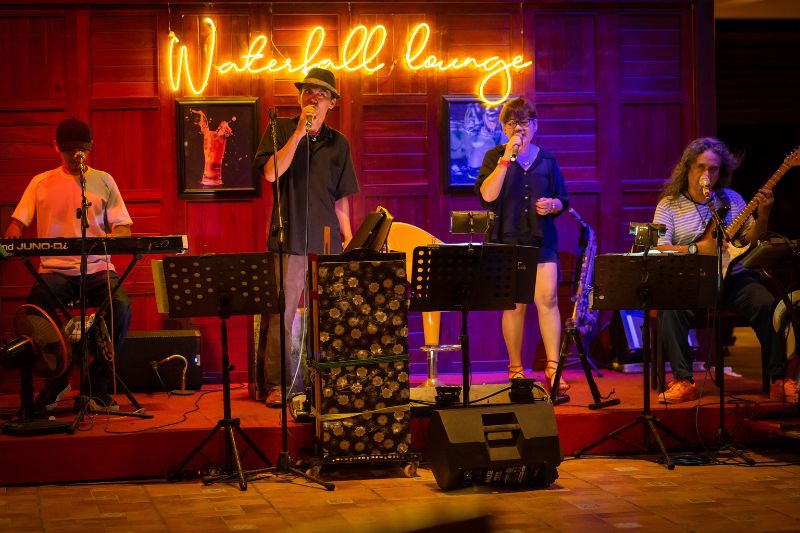
The resort operates Café Blue Lagoon, Waterfall Lounge, Sun Terrace and the Pool Bar, with international and Vietnamese dining, cooking classes, live music and poolside functions. The one item with direct programming value for leisure and smaller incentive groups is The Taste of Mui Ne, currently scheduled every Saturday evening: a beachside seafood barbecue buffet with local dishes, drinks, live music and fire performance.
Operationally, this lets one evening be built around an existing resort event instead of another restaurant transfer. For a group, fewer movements are frequently worth more than another venue. If the group's dates do not fall on a Saturday, ask whether the format can be run privately; that is a contracting question, not a given.
Where the all-inclusive option solves a planning problem
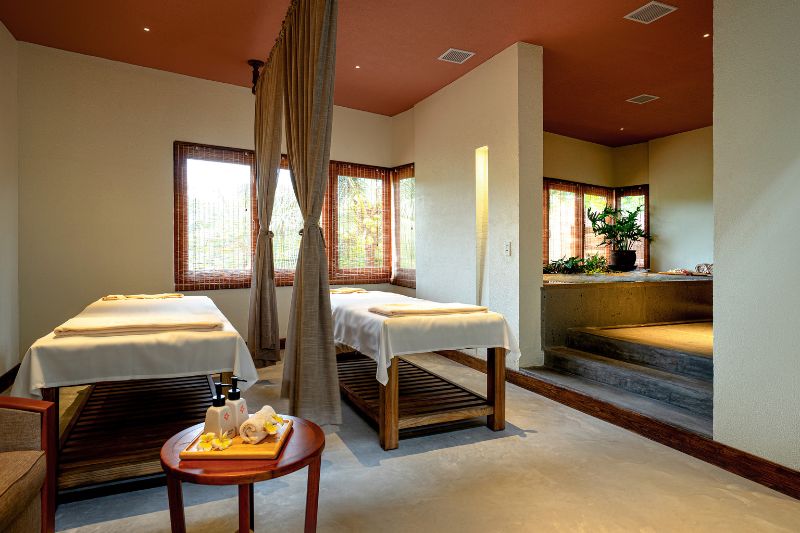
Pandanus offers Standard and Premium All-Inclusive plans. The Premium package currently includes meals, room service, beverages, selected culinary experiences, the weekly seafood barbecue, a daily 55-minute spa treatment and laundry, on a three-night minimum. Standard All-Inclusive has no equivalent minimum.
This will not suit every market. It is relevant where the programme is deliberately designed around resort time — incentive extensions, premium leisure, couples, small groups wanting predictable on-site spend — because it removes the daily question of what is and is not included. For conventional sightseeing groups spending most of the day outside the property, the value equation is different and room-and-breakfast will usually cost less.
For incentives and MICE: what the 10-hectare footprint actually allows
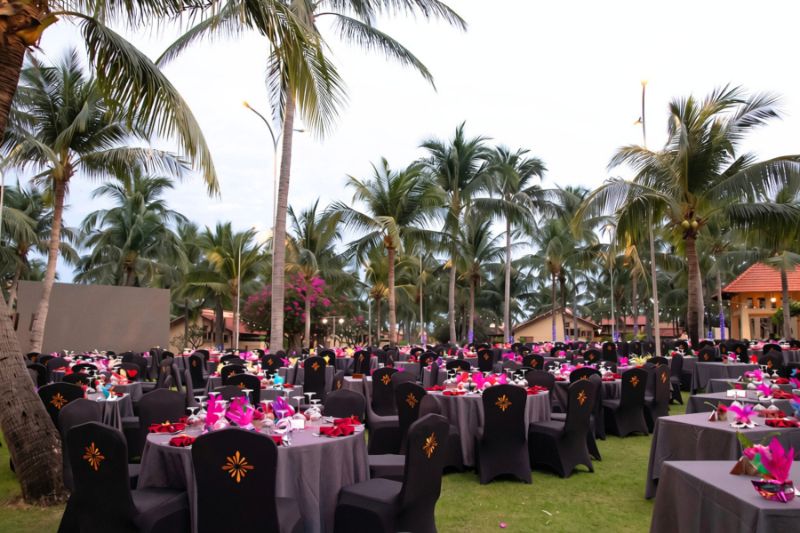
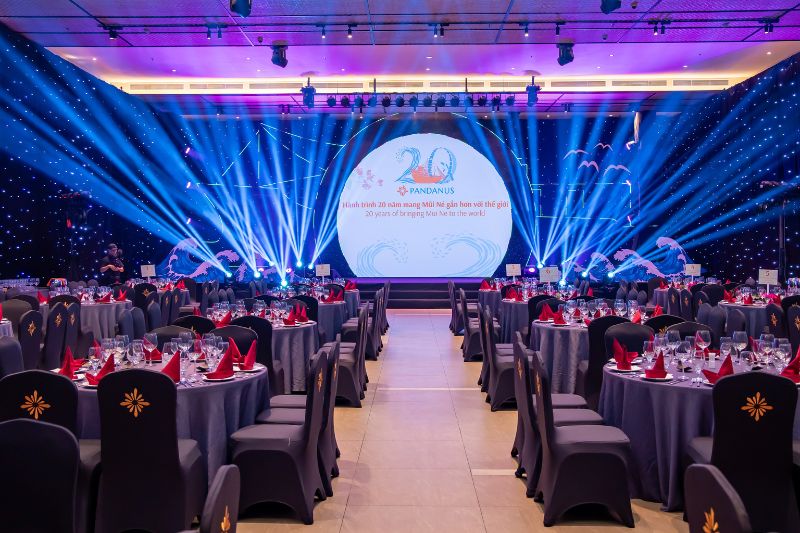
The Champa Centre provides more than 650 sqm of meeting and banquet space with a stated capacity of up to 500 guests. That figure is theatre-style. For a seated gala at round tables, plan on the order of 250–300 pax before the room becomes tight; anything above that moves outdoors, which brings the wind and weather considerations above back into scope. Three smaller rooms take approximately 10–40 guests with AV.
The larger asset is the grounds: identified space for outdoor functions, team-building and ceremonies across the property. For an incentive of roughly 80–200 pax this permits meeting + activity + dinner + accommodation within one property, which removes venue transfers and simplifies coach scheduling and supplier sequencing. It does not make Pandanus the right MICE venue for every programme, but it is materially more flexible than a resort built around guestrooms and a pool.
Where Pandanus sits among Mui Ne properties
Mui Ne's resort stock splits into three broad bands, and the shortlisting decision is usually made between bands before it is made between properties.
| Band |
Typical properties |
Where it wins |
Where it loses |
| Small five-star |
Anantara Mui Ne (approx. 90 keys), The Anam Mui Ne (approx. 130 keys) |
Brand-name requirement; high-touch incentive winners; couples on a luxury brief |
Series of 40+ rooms; banquets above ~150 pax; per-room cost on a mid-premium budget |
| Large upper-midscale garden resort |
Pandanus Resort (257 keys), Bamboo Village, Sea Links City (golf-led) |
Series consistency; one-property incentives of 80–250 pax; families; all-inclusive structure |
Clients who expect a five-star brand; very small groups that would be lost on 10 hectares |
| Boutique / three-star strip |
Mia Resort, Sailing Club and the guesthouse-style stock along Nguyen Dinh Chieu |
FIT, kite-surf and budget leisure; short stays |
Group meal handling, coach access, contiguous room blocks |
In practice the trade-off is this: a five-star property in Mui Ne is a stronger answer for a 20-couple luxury incentive, but it cannot hold a 60-room series or a 200-pax gala in one place. Pandanus can. For the group business that most trade partners send to this coast — mid-premium leisure series, family programmes and contained incentives — the middle band is where the decision usually lands, and within that band Pandanus has the widest room-tier spread and the largest indoor event space.
Which clients and which source markets?
One data point worth knowing before positioning the property: Pandanus currently serves a predominantly European clientele. For a planner that means service standards, breakfast and F&B formats already calibrated to long-haul leisure expectations, and a guest environment that reads as international rather than domestic-weekend. It also means Asian-market group requirements — no-pork menus, halal handling, group breakfast timing — are contracting points to raise explicitly rather than assume (see the checklist below).
We would place Pandanus higher on the shortlist for:
- Leisure groups combining Ho Chi Minh City with two or three nights of beach time.
- Families — room mix and on-property activities let different ages follow different programmes.
- Couples and premium leisure using bungalow or suite categories with enough time to use the resort.
- Incentive groups that benefit from rooms, grounds, beach, activities and event space in one location.
- Groups needing a slower final chapter after Hanoi, Central Vietnam or HCMC touring.
By desk: this is a natural fit for Australia and New Zealand, US and Canada, and Singapore and Malaysia leisure and couples programmes, and for incentive extensions from any market where the group is already in HCMC. It is a weaker fit for sightseeing-dense Philippines and Indonesia group series unless the operator specifically wants a beach close; for those markets, the value is the HCMC-plus-beach combination without a domestic flight.
Where we would be more cautious
Pandanus is less relevant when clients want an urban environment, prioritise nightlife and shopping directly outside the hotel, or only have time for one night in Mui Ne. It is also not the answer when the brief requires a five-star brand name on the itinerary. The proposition strengthens only when guests are given time to use the property. A good hotel placed in the wrong itinerary is still the wrong hotel.
What you can tell your client
Three answers a planner can use directly, in client-facing language:
- "Why are we going to Mui Ne?" — "It is the one beach in Vietnam we can reach from Saigon without another flight. You finish the city, and three hours later you are on a 300-metre beach next to sand dunes that look like the Sahara. No airport, no repacking for a flight, no lost half-day."
- "Why this resort?" — "It is one of the few resorts on this coast big enough to keep our whole group together — rooms, meals, the beach, the evening event, all inside one 10-hectare garden property. Nobody gets bussed anywhere after check-in."
- "Is three nights too long for a beach stop?" — "That is the point of it. Day one you arrive, day two you see the dunes, day three is yours — spa, pool, beach, nothing scheduled. It is the part of the trip you will describe to friends as the holiday inside the holiday."
If the brief does not match those answers — the client wants nightlife, a five-star badge, or only has one night — say so and route them elsewhere. The credibility of the recommendation is worth more than any single booking.
What to confirm before contracting a group
The lookbook covers the physical product. These are the points we verify for any specific movement, and they should be matched to the actual client profile rather than assumed from the specification:
- Room allocation: exact twin/double availability by category for the travel dates, and whether Superior categories can be blocked as one contiguous allotment for a series.
- Group meals: menu structure, private dining options, dietary, halal and no-pork requirements relevant to the source market.
- Group arrival: luggage handling, coach access and parking, staggered check-in for the expected group size.
- Events: venue configuration, banquet capacity, wind-sheltered and wet-weather alternatives, technical requirements and restrictions on outdoor functions for the season.
- All-inclusive packages: exact inclusions and exclusions applying to the contracted period.
- Transportation: current road conditions, transfer timing for coach versus car, and train schedules at the time of travel.
Our planning view
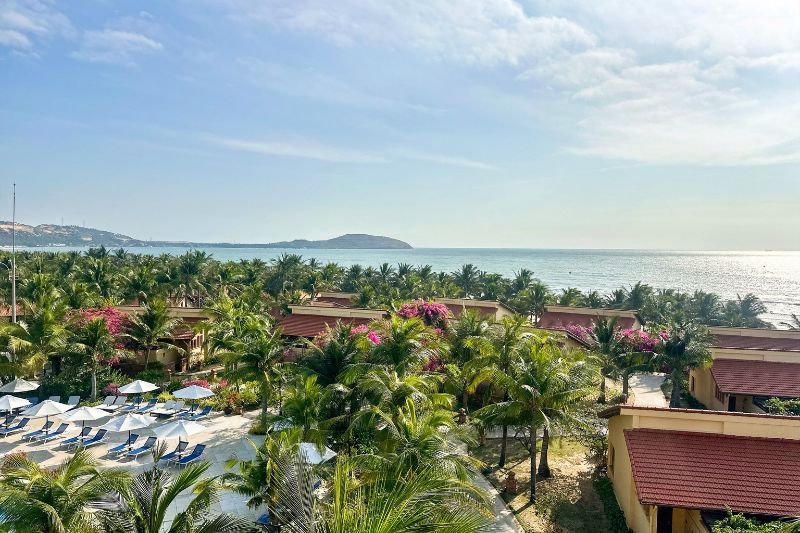
Pandanus Resort is not a property we would position as another beach resort in Mui Ne. Its useful role is as a resort where the hotel itself can carry part of the itinerary. The combination of 257 rooms, extensive grounds, beachfront, on-property activities, multiple room tiers and meeting capacity gives planners several ways to use it — from a straightforward leisure extension to a contained incentive programme — at a tier below the small five-star properties and with a scale they cannot offer.
So: why add Mui Ne? Because it is the beach extension that costs no flight, holds its weather when Central Vietnam does not, and gives the itinerary a signature. Why Pandanus? Because within Mui Ne it is the property that can hold a whole group — rooms, tiers, meals, events — in one place. If a given client's brief matches those two answers, it belongs on the shortlist; if it does not, this note has told you where else to look.
Planning a Mui Ne programme?
Share your programme requirements with our team. We can review where Pandanus — or another Mui Ne property we contract — fits your routing, room mix and client profile.
Contact Dong DMC
B2B enquiries · Net rates · White-label ground support
Dong DMC is a B2B destination management company in Vietnam specialising in group, incentive, MICE and luxury travel for tour operators and travel professionals. Founded 2008. Tour Operator License 79-168/TCDL-GPLHQT. 50–70 group programmes delivered monthly across 20+ source markets. Disclosure: Pandanus Resort is a contracted Dong DMC property. Property figures in this note are taken from Pandanus Resort's 2026 product material as presented to Dong DMC in August 2026; operational timings, banquet estimates and peer comparisons are Dong DMC's own planning assessments and should be reconfirmed at time of travel. Dong DMC contracts multiple properties in Mui Ne and receives no payment for editorial coverage.
Related planning resources
Frequently asked questions
Why should I add Mui Ne to a Vietnam itinerary?
Mui Ne is reachable from Ho Chi Minh City by road in 3–4 hours, so it adds beach time without a domestic flight. It stays dry from November to April, covering November–December, the end of Central Vietnam's wettest period (roughly October to December), and the sand dunes give the itinerary a visual signature no other Vietnam coast offers.
Why choose Pandanus Resort for a group?
Pandanus has 174 Superior rooms for series consistency, seven room tiers to differentiate VIPs within one property, and meeting, gala, activity and dining space across 10 hectares — so a group of 80–250 pax can run its whole programme without venue transfers. Mui Ne's five-star properties are smaller and cannot hold that scale in one place.
How far is Pandanus Resort Mui Ne from Ho Chi Minh City?
Approximately 3–4 hours by private car via the Dau Giay–Phan Thiet expressway; plan 4–4.5 hours for a coach group, and add up to an hour at weekends and public holidays.
How many rooms does Pandanus Resort Mui Ne have?
257 rooms across seven categories, including 174 Superior rooms suited to group series and 48 beachfront bungalows.
What group event capacity does Pandanus Resort offer?
The Champa Centre has over 650 sqm with capacity for up to 500 guests theatre-style; seated banquets are lower, and three breakout rooms take 10–40 guests. Outdoor function space is available across the 10-hectare grounds.
Is Pandanus a five-star resort?
No. Pandanus is a large upper-midscale garden resort. Mui Ne's five-star options are smaller properties suited to luxury couples and small incentives; Pandanus is the choice when a group needs scale, room-tier spread and event space in one location.
Does Pandanus Resort have an all-inclusive package?
Yes. Standard All-Inclusive has no minimum stay; Premium All-Inclusive requires three nights and adds room service, beverages, selected culinary experiences, the weekly seafood barbecue, a daily 55-minute spa treatment and laundry.
When is the best season for a Mui Ne group programme?
November to April is dry with strong afternoon wind, best for sightseeing and morning or sheltered functions; May to October is calmer and warmer with short showers, better for swimming-led family programmes.
How many nights should a Mui Ne extension be?
Two to three nights. One night does not justify the transfer time, and the resort proposition only works when guests have time to use the property.

 ID
ID IT
IT DE
DE ZH
ZH ES
ES FR
FR